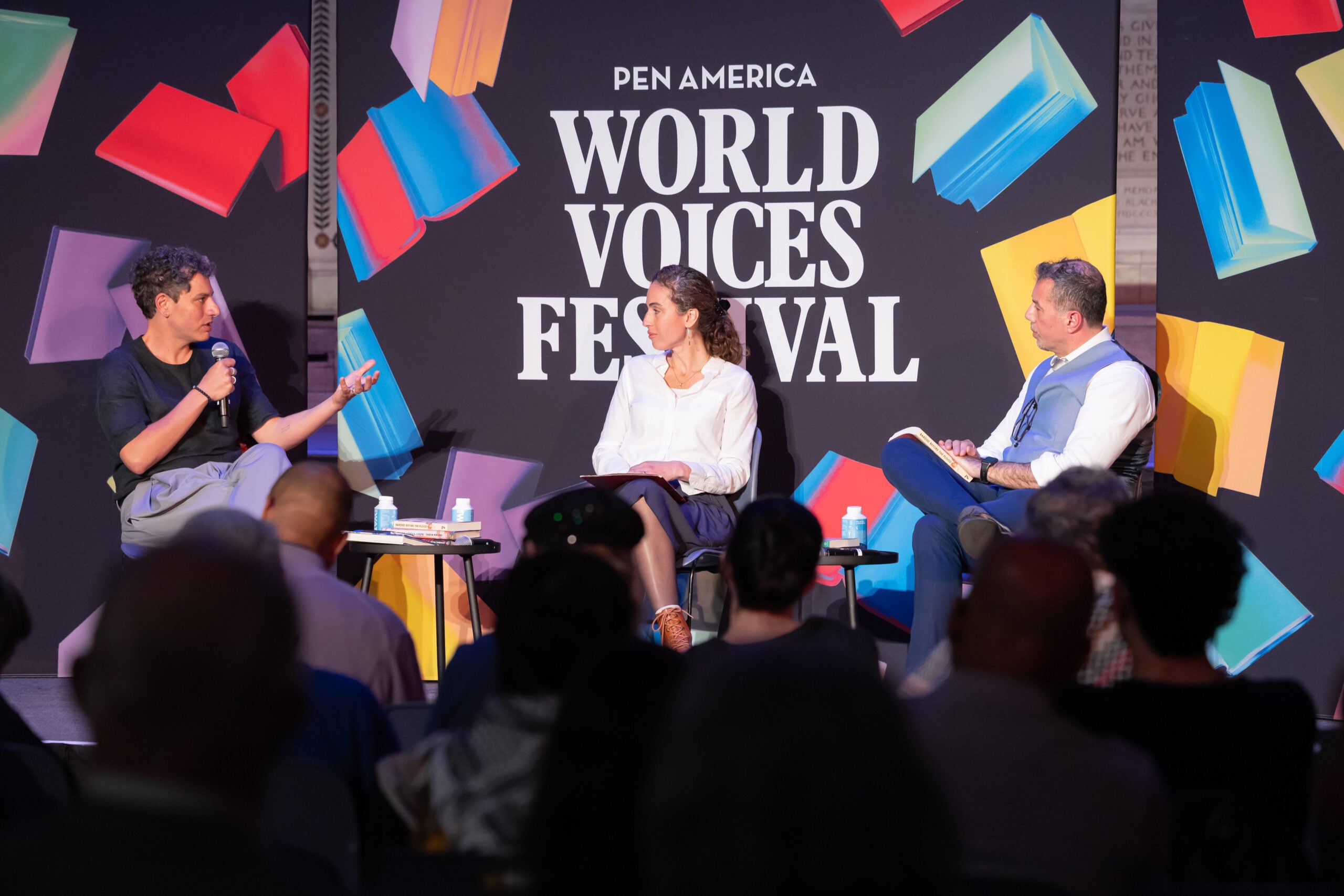
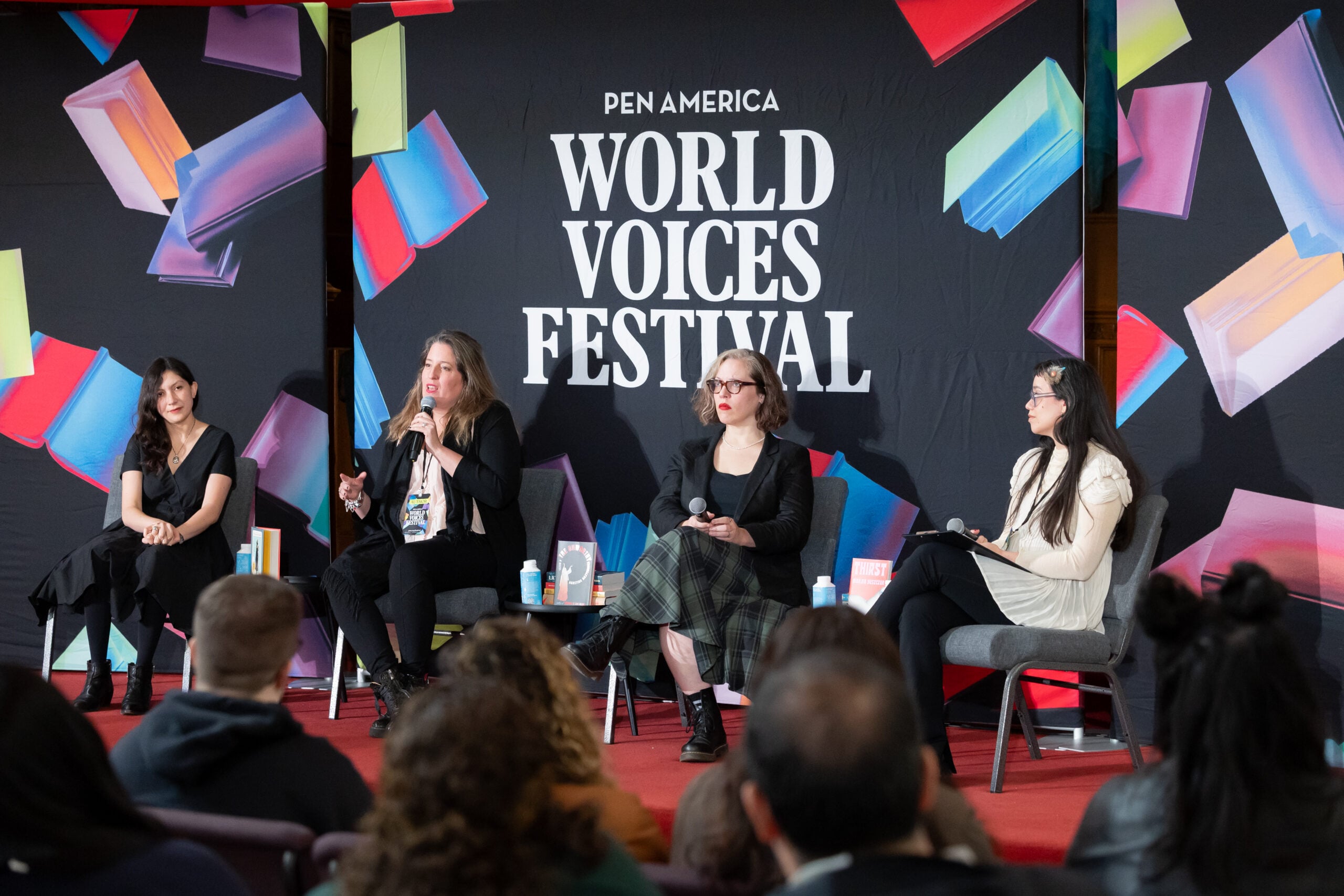
How do we honor our ancestors after death? At the 2026 World Voices Festival panel “¡Viva Las Antepasadas!/Long Live The Ancestors!,” three writers gathered to discuss the importance of female voices and how to protect their legacy. The wide-ranging conversation highlighted how, for generations, women have used literature to fight against the patriarchy and systems of oppression in Latin America.
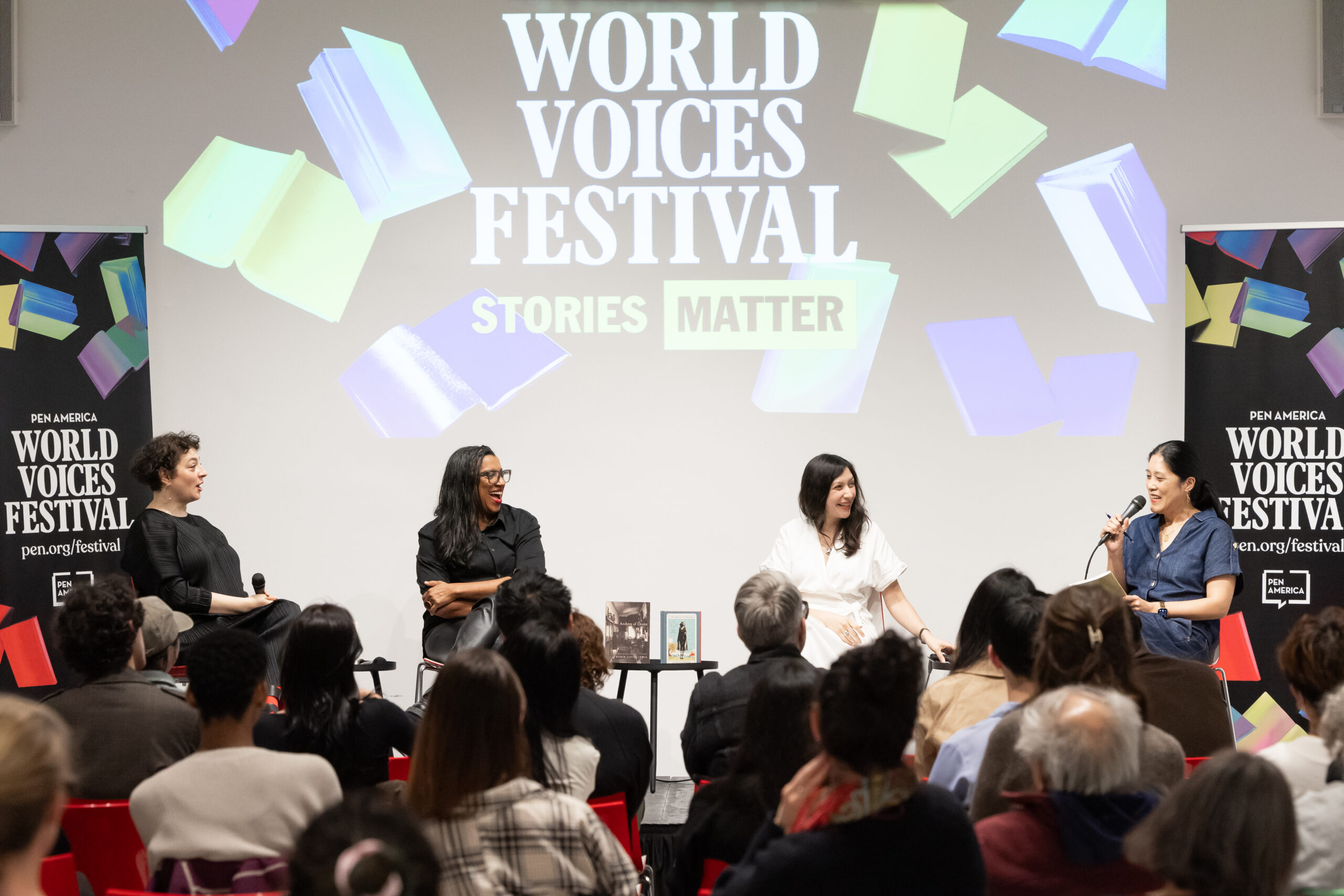
The bilingual panel, co-presented by FIL de Ciudad de Nueva York, featured Jazmina Barrera, whose book The Queen of Swords explores the life of Mexican writer Elena Garro; Agustina Bazterrica, author of The Unworthy, a dystopian tale about self discovery when lost in a world filled with ideological extremism; and Marina Yuszcuck, author of Thirst, a Gothic vampire novel that experiments with themes of female agency and the fragility of mortality. Moderated by writer and curator Lily Philpott, the authors described how they write narratives inspired by their lived experiences as well as the political and social climate of their countries.
This writeup was edited and translated by PEN America communications intern Alex Lee.
On honoring the ancestors
Each of the panelists took a moment to honor their ancestors and explain how they helped them in their lives and their writing, while also acknowledging the hardships that their loved ones and generations of women in Latin America have faced.
Barrera: “La fantasma que me acompaña hoy en día todo el tiempo es mi madre que falleció hace algunos meses y estoy terminando una novela que no es nada autobiográfica esta vez. Son personajes que inventé por completo, pero que suceden en el espacio de mi infancia, que es una zona de la Ciudad de México que se llama Xochimilco. Y mi madre, a pesar de que eso no es autobiográfico, está por todas partes en esa novela.”
“The ghost that accompanies me all the time these days is my mother, who passed away a few months ago, and I’m finishing up a novel that isn’t autobiographical at all this time. These are characters I completely invented, but it takes place in a setting of my childhood, a zone in Mexico City called Xochimilco. And my mother, though this isn’t autobiographical, is in every part of that novel.”
Yuszczuk: “Lo que fuimos aprendiendo [cultura machista] en nuestra crianza, en nuestra formación. Creo que las generaciones nuevas ya no tienen eso, pero particularmente las mujeres de mi edad si y rompimos con eso. Entonces por un lado, sí viva las antepasadas, pero por otro lado también pienso que ahí hay una cultura machista que nos heredaron y que estamos de alguna manera con nuestras novelas matandola”
“We learned [sexist culture] in our upbringing, in our education. I think the newer generations don’t have that anymore, but particularly women my age do and we broke that. So on one hand, I do live for the ancestors, but on the other hand I think there is a sexist culture that we inherited and we’re somehow killing it with our novels.”
Bazterrica: “Quiero honrar a mi gran antepasada, que es mi abuela materna, que fue una de las primeras mujeres en Buenos Aires que estudió economía. Eran en la clase dos mujeres nada mas. Y mi abuela fue la persona y mi madre también, grandes lectoras. Yo iba a su casa y ella tenía libros, obviamente en espanol, en inglés, en francés, y solo hablábamos de literatura”
“I want to honor my great ancestor, my maternal grandmother, who was one of the first women in Buenos Aires to study economics. There were only two women in the class, nothing more. And my grandmother, and my mother too, were great readers. I would go to her house and she had books, obviously in Spanish, in English, in French, and we only talked about literature.”
On real-life issues that inspire new stories
The authors discussed the ways that history and politics have influenced their work.
Barrera: “Durante el movimiento del 68 en México [Elena Garro] acabó en una posición muy cuestionable y muy incómoda. Y el caso es que pasó de haber sido una de las escritoras más prominentes, una figura reverenciada en México, a ser de pronto una paria y saber que nadie iba a publicar sus libros. Sin embargo, ella seguía escribiendo”
“During the 1968 movement she [Elena Garro] ended up in a very questionable and very unfortunate position. And in fact she went from being one of the more prominent female writers, a revered figure in Mexico, to suddenly being an outcast and knowing that no one was going to publish her books. However, she continued to write.”
Yuszczuk: “Yo la escribí un año antes de la pandemia o dos, pero una de las cuestiones históricas que tomé fue una fiebre amarilla que hubo en Buenos Aires en la década de 1870… Bueno, toda esta situación aparece en la novela narrada desde el punto de vista más inesperado para mi, que es justamente un personaje que regodea en toda esa muerte, que es esta vampira.”
“I wrote this a year or two before the pandemic, but one of the historical issues I took up was a yellow fever epidemic that happened in Buenos Aires in the 1870s… Well, this whole situation appears in the novel narrated from the most unexpected point of view for me, which is precisely a character who revels in death, who is this vampire.”
Bazterrica: “En Argentina, por lo menos lo que está pasando, tenemos un presidente que está absolutamente en guerra con las feministas … Entonces, yo voy a luchar hasta el fin de mis días, por todas las mujeres y las minorías, digamos. Eso es lo que me interesa y por eso también escribí esta novela.”
“In Argentina, at least, what is happening, we have a president who is absolutely at war with feminists… So, I’m going to fight until the end of my days, for all women and minorities, let’s say. That’s what interests me, and that’s also why I wrote this novel.”
On the reality of mortality
Philpott started the talk with a quote from writer Elena Garro, who said “Un muerto es siempre una verdad.” [Every dead person is a truth.] She asked how the panelists view or use themes of mortality.
Barrera: “Este libro, La Reina de Espadas, es un libro sobre la escritora mexicana Elena Garro, que es una escritora del siglo XX mexicana, y esta frase con la que empieza el libro se pone a discusión durante todo el libro en realidad. Porque Elena Garro es una mujer que tuvo más que una vida como 20 vidas en una.”
“This book, The Queen of Swords, is a book about Mexican writer Elena Garro, a 20th-century Mexican writer. And this phrase, which the book begins with, is actually discussed throughout the entire book. Because Elena Garro is a woman who had more than one life, she had 20 lives in one.”
Yuszczuk: “Entonces, me parece que eso [mortalidad] no enfrenta con algunos dilemas, que es que supuestamente tenemos que celebrar el cuerpo y todo lo que nos permite hacer y cuidarlo y amarlos, pero solamente mientras, no falle, mientras no se derrumbe, mientras no se muero, mientras no nos recuerde que en realidad los cuerpos que habitamos son mortales.”
“So, it seems to me that this [mortality] confronts us with some dilemmas, which is that supposedly we have to celebrate the body and everything it allows us to do and take care of it and love it, as long as it doesn’t fail, as long as it doesn’t collapse, as long as it doesn’t die, as long as it doesn’t remind us that the bodies we inhabit are mortal.”
Bazterrica: “No hay manera de que nosotros podamos ficcionalizar nuestra muerte, a no ser que volvamos como fantasmas, ¿sí? Pero si no es como el fin. Entonces, me pareció muy fuerte esta frase [“Los hechos son la palabra del mundo”] que la conecte con hoy con esta pregunta de la muerte es la palabra final del mundo.”
“There is no way we can fictionalize our death, unless we come back as ghosts, right? But if it’s not the end. So, I found the phrase [“Facts are the word of the world”] very powerful, and I connected it with today’s question of whether death is the final word in the world.”
On putting yourself in the story
The panelists were asked how they begin their stories and how they decide to weave their personal voice and experiences into a narrative.
Barrera: “Me parecía que era más fácil que las lectoras se hicieran su propia imagen de Elena Garro si yo era honesta respecto a como estaba construyendo ese libro y por eso es que aparezco, no tanto, aparezco un poquito, pero si, si estoy ahí.”
“It seemed to me that it was easier for the readers to form their own image of Elena Garro if I was honest about how I was constructing that book, and that’s why I appear—not a lot, I appear a little, but yes, I am there.”
Yuszczuk: “Por lo menos los primeros capítulos de un libro siempre son para mi los más difíciles, por que son los capítulos donde uno no sabe bien qué forma va a forma el texto e más allá de las ideas previas y también está todo el proceso de aceptar que el texto es otra cosa de lo que uno se había imaginado y es terriblemente doloroso.”
“The first chapters of the book are always the most difficult for me, because they’re the chapters where you don’t really know what form the text will take beyond your preconceived ideas, and there is also the whole process of accepting that the text is something other than what you had imagined, and that’s terribly painful.”
Bazterrica: “Yo creo que en el texto es imposible que no se filtren cuestiones muy íntimas. Lo que pasa que me parece que muchas veces uno no es consciente de eso… Como a veces con la literatura exorcizamos ciertas cosas y a veces nunca te das cuenta”
“I think that in the text it’s impossible for very intimate matters to not be revealed. The thing is, I think that there are many times one is not aware of that… sometimes we use literature to exercise certain things, and sometimes you never realize.”
Want more?
Check out the panelists’ books:
- The Queen of Swords by Jazmina Barrera, tr. Christina Macsweeney
- Thirst by Marina Yuszczuk, tr. Heather Cleary
- The Unworthy by Agustina Bazterrica, tr. Sarah Moses