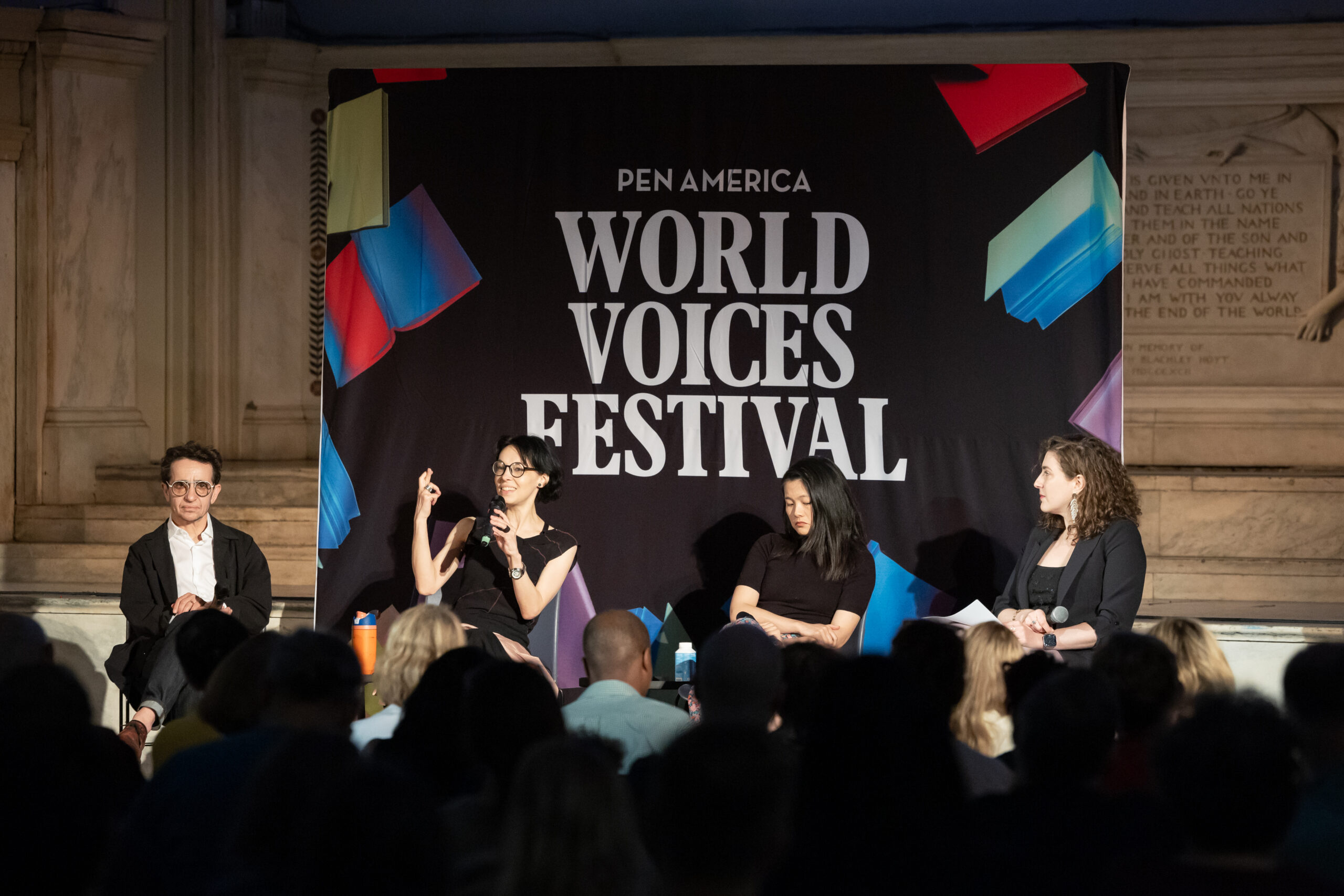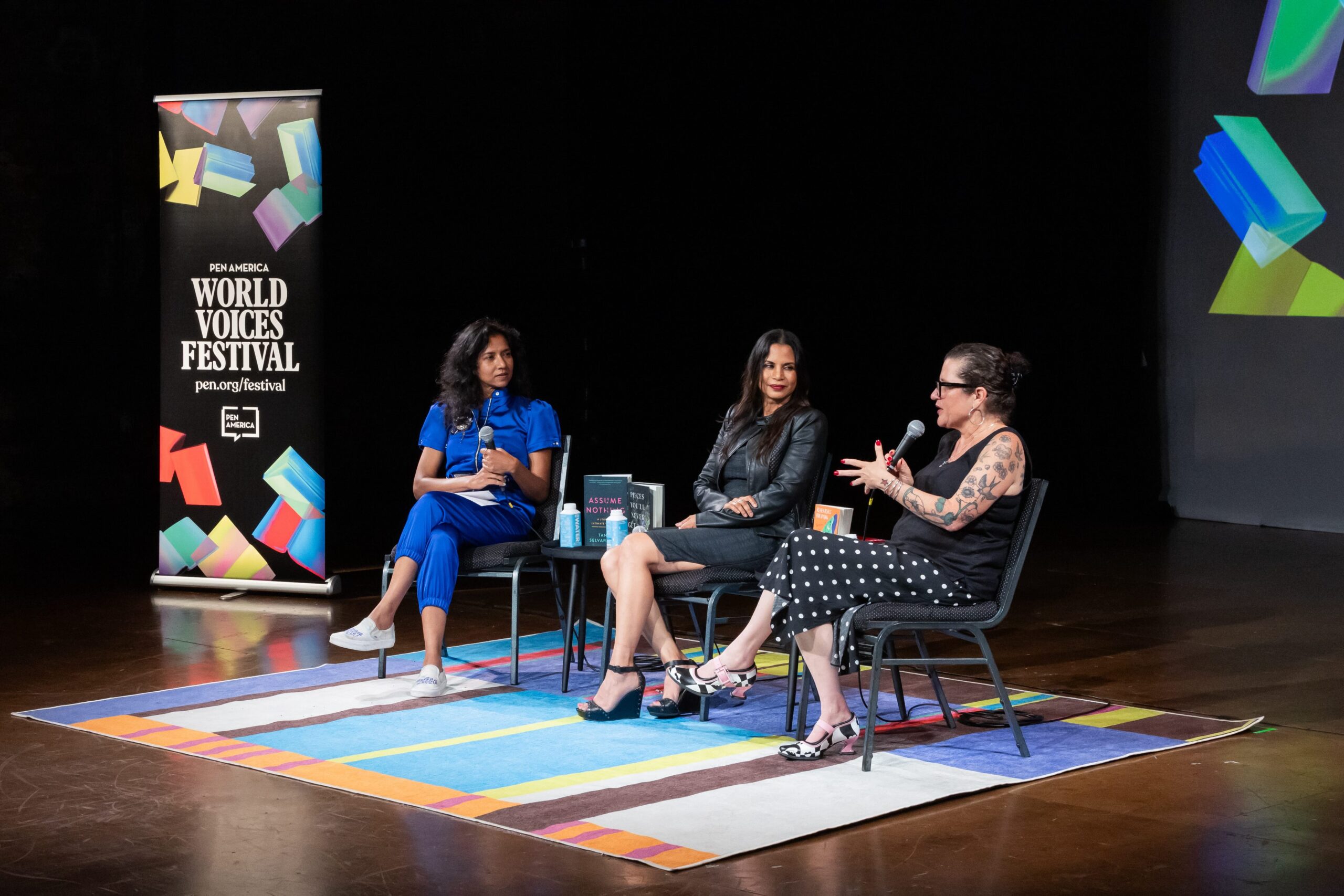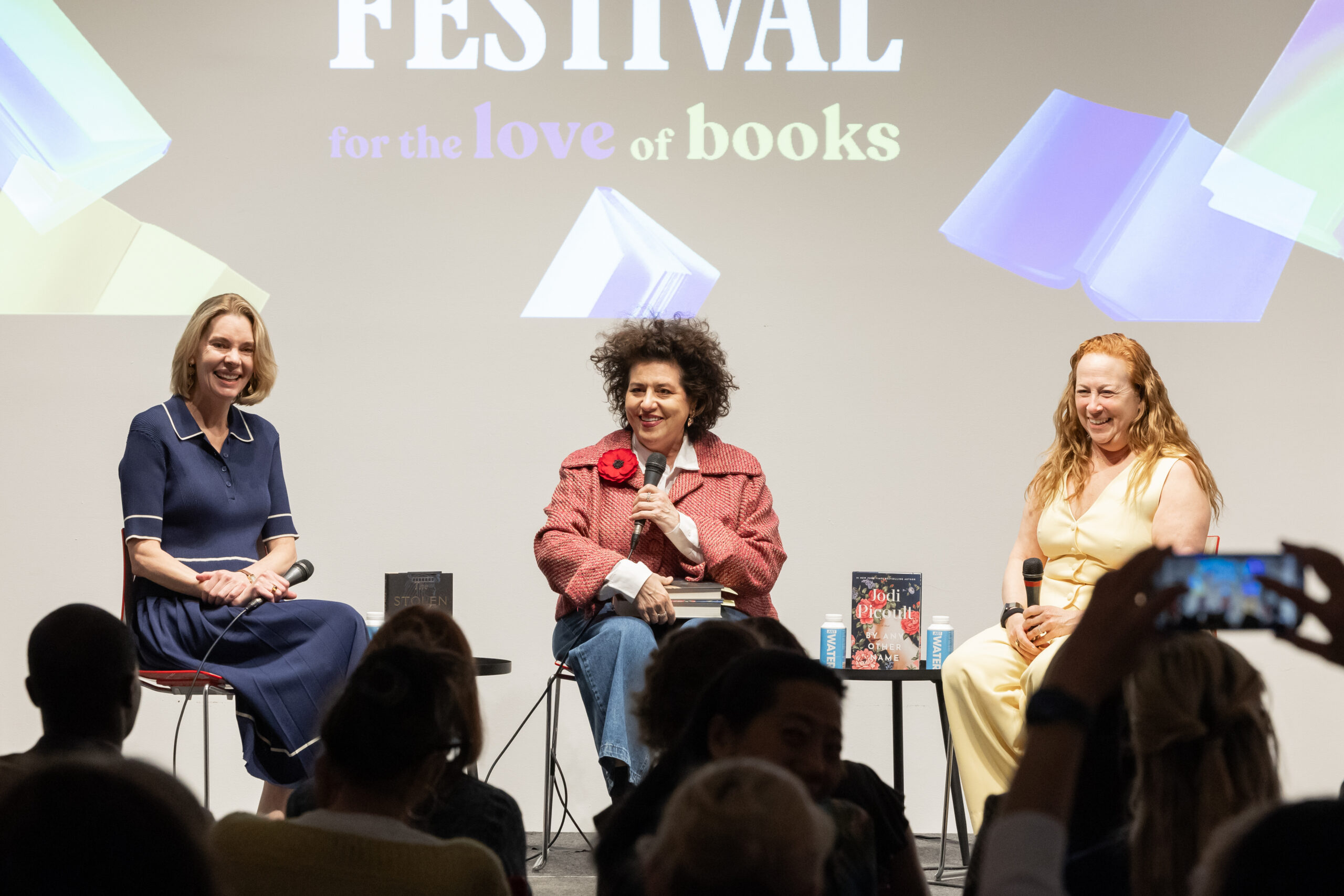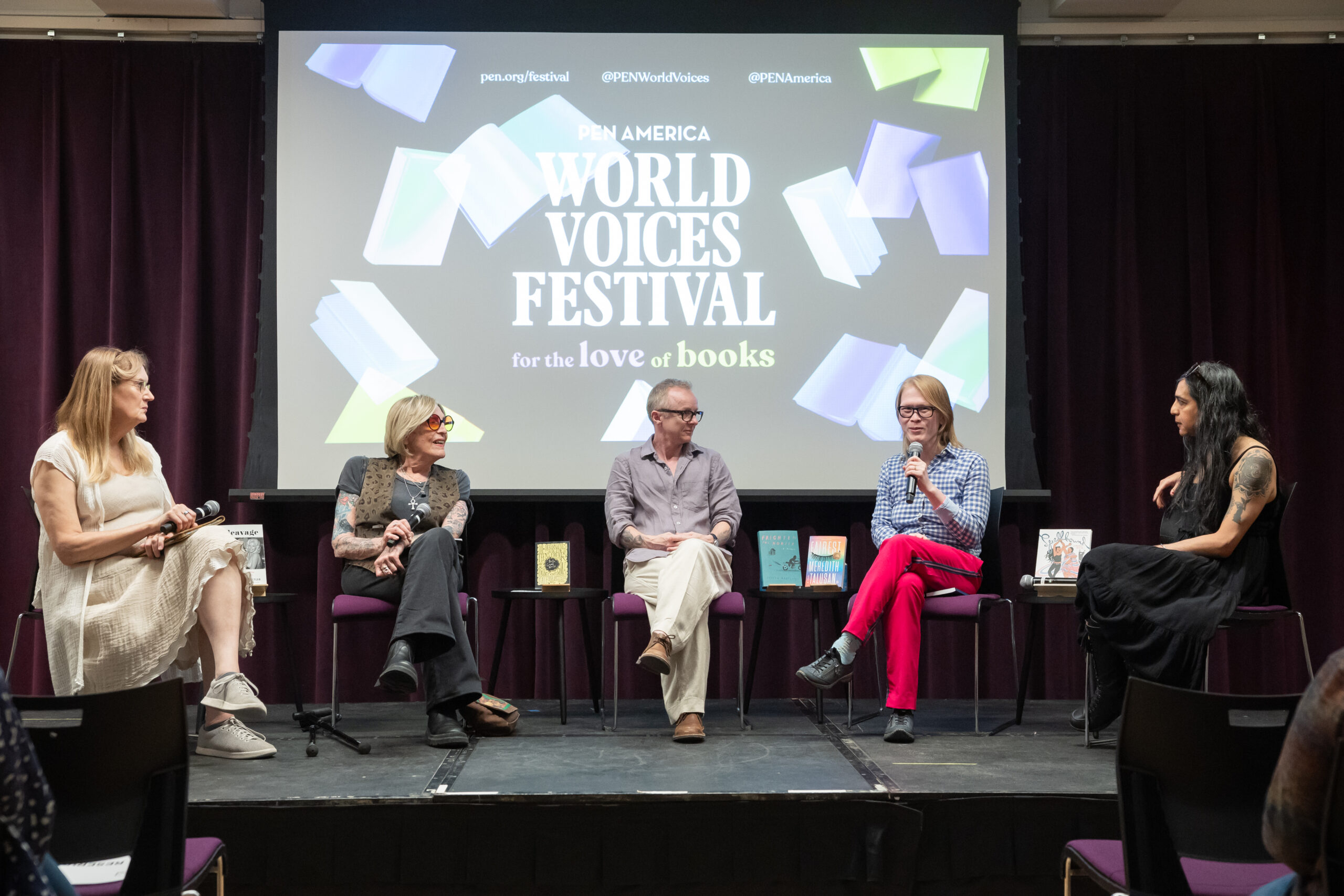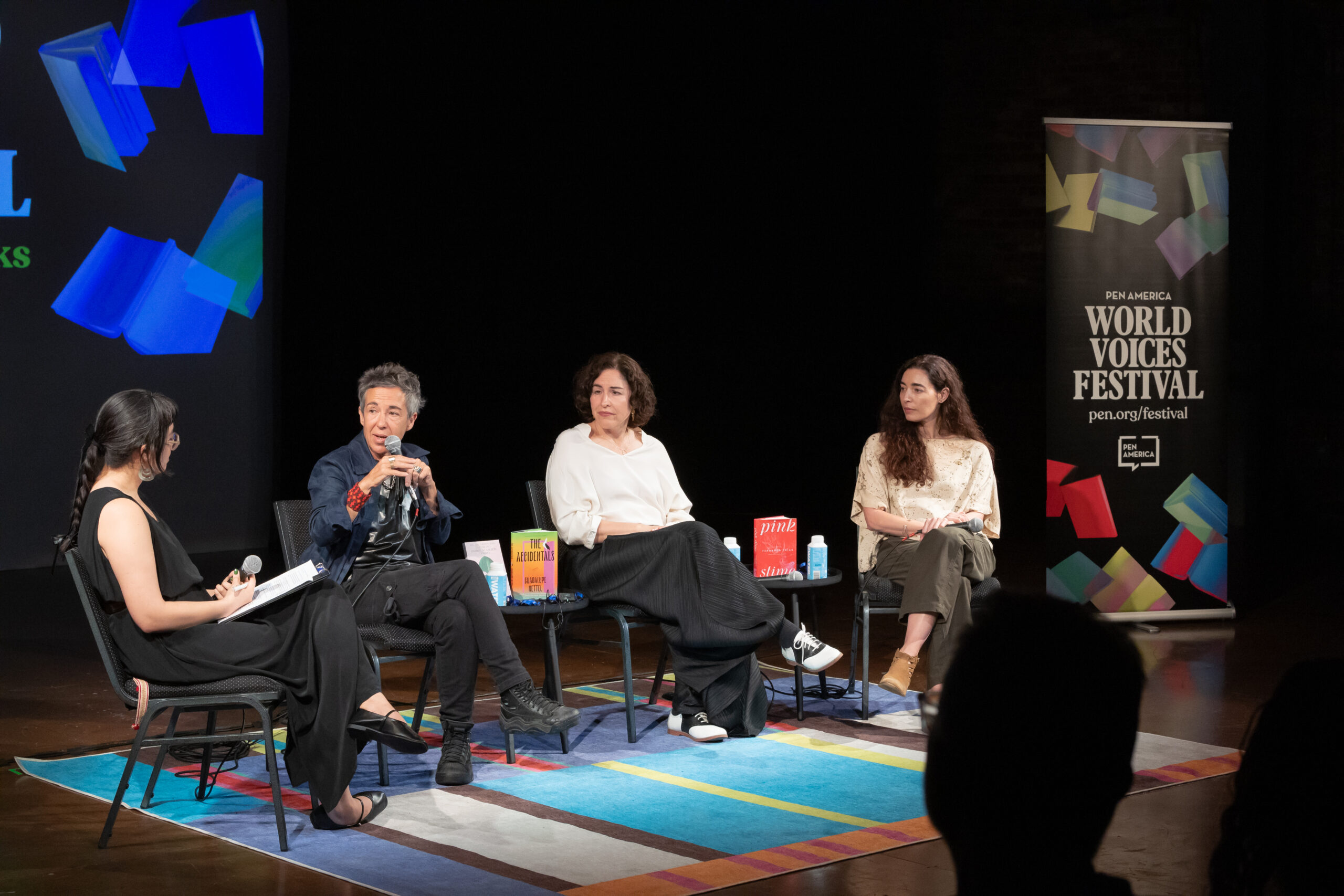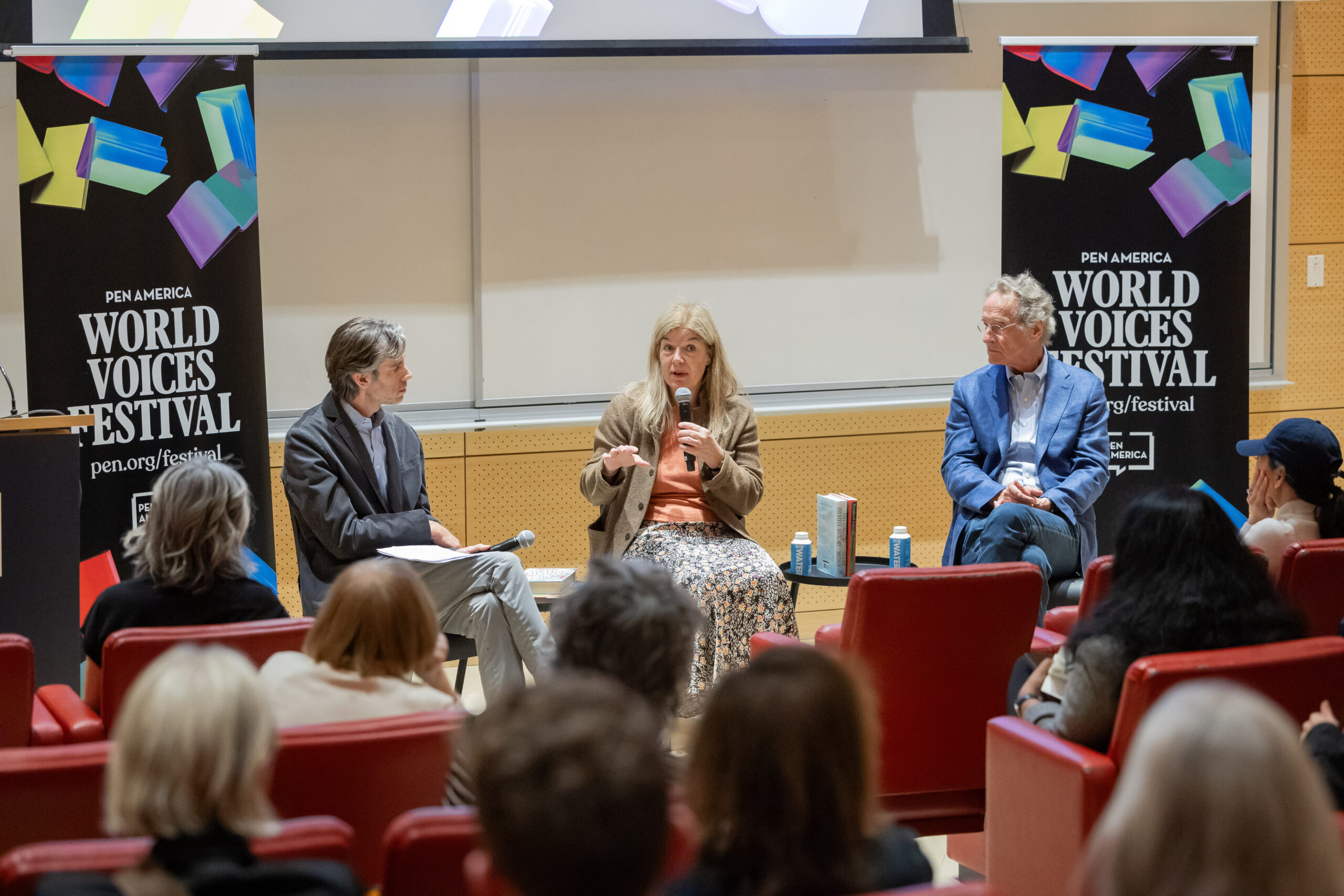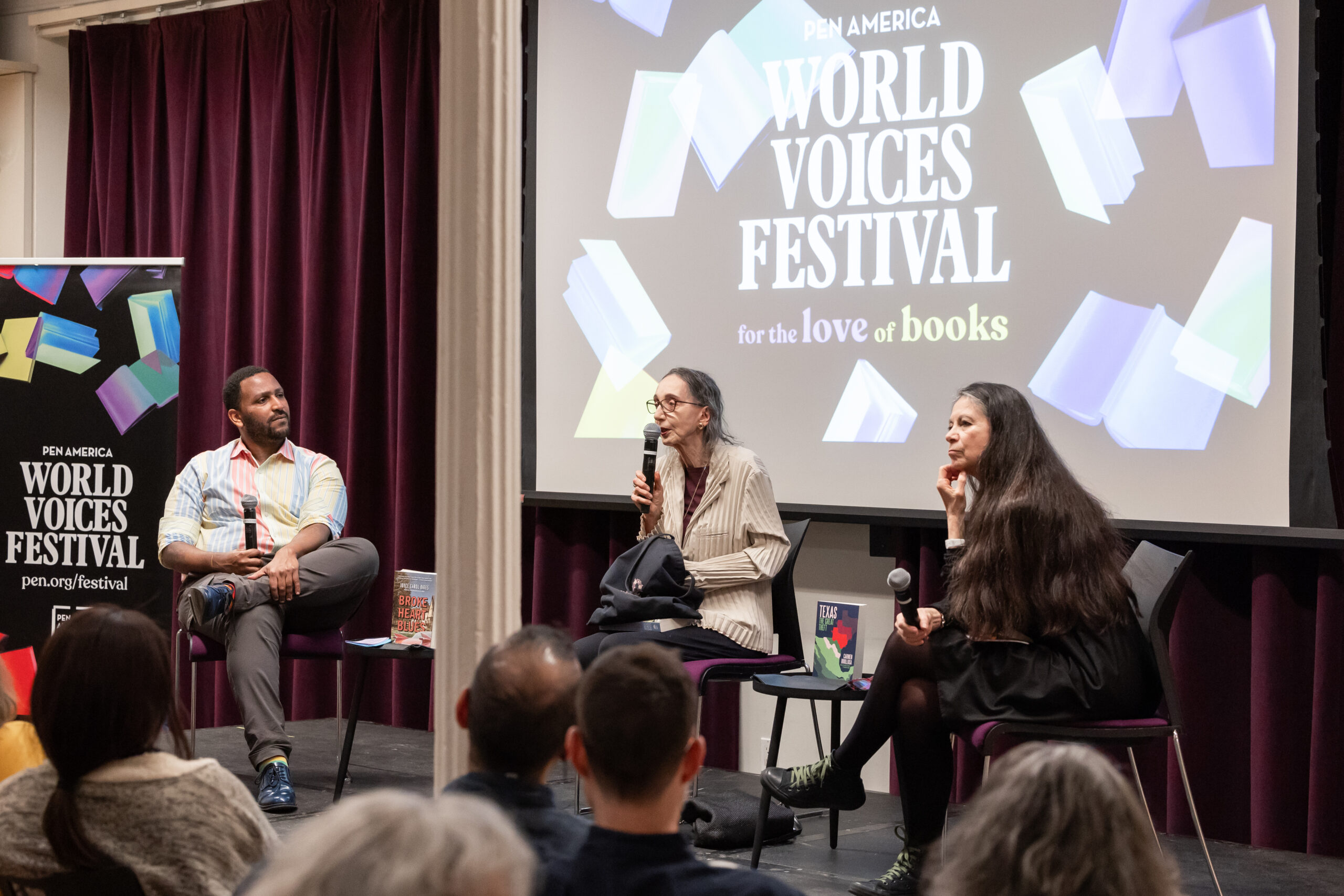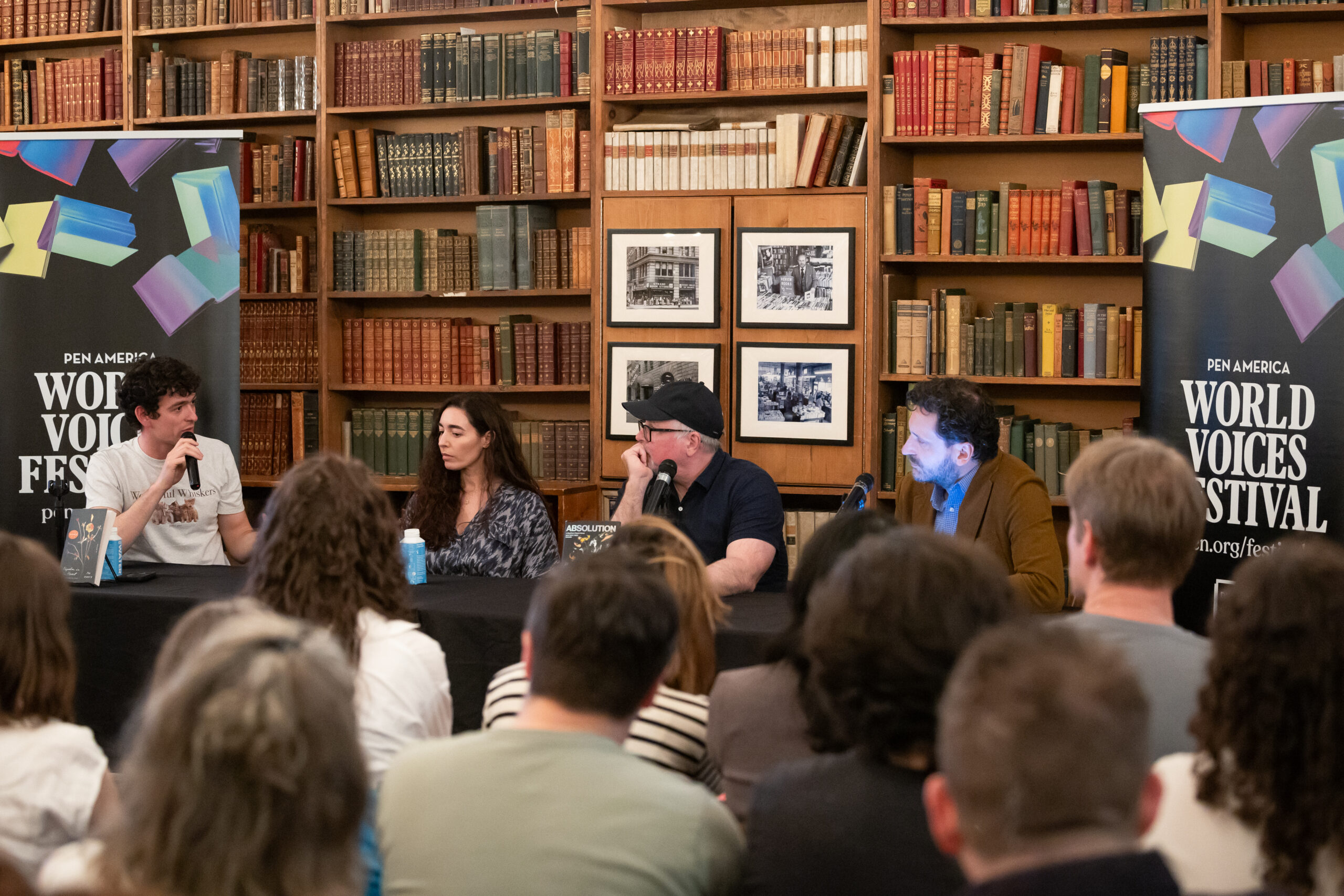
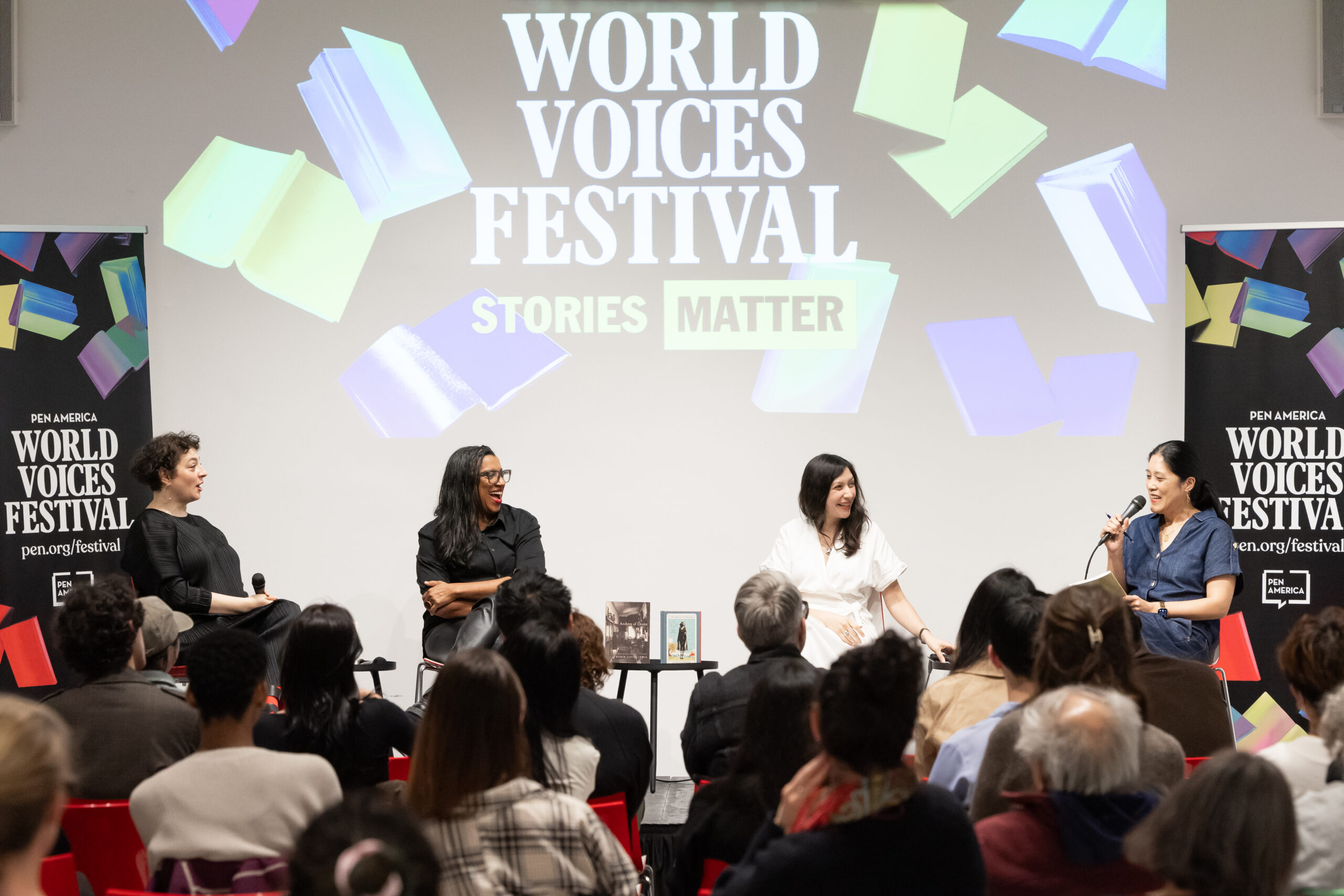
At the 2026 World Voices Festival, an interdisciplinary panel gathered three writers who drew heavily upon archival materials for their latest books. Their illuminating discussion covered what they found digging through the archive, its inherent limitations, and what their own archives might one day contain.
“Illuminating the Archive” featured Robin Coste Lewis, whose poetry collection Archive of Desire is inspired by the work of the Alexandrian poet C.P. Cavafy; Jazmina Barrera, whose novel The Queen of Swords explores the life of the Mexican writer Elena Garro; and Victoria Chang, whose book of poems With My Back to the World engages with the paintings of the Canadian-American Agnes Martin. Kate Zambreno, the author of Animal Stories, moderated the panel.
Here’s what the authors shared.
On Their Explorations of the Archive
At the start of the talk, the panelists described what it was like to venture into the archive and feel close to the artists whose lives were the central focuses of their books.
Lewis: “The most phenomenal thing is I got to touch [poet C. P. Cavafy’s] handkerchiefs, his notes, his letter to his brother. One of the best things was his letter — I wrote it out in the book — to Leonard Woolf, Virginia Woolf’s husband, declining his offer of publication.”
Barrera: “I think that was what was most exciting for me: finding the doodles in the notebooks, and looking at what kind of pen [the writer Elena Garro] used, what kind of notebook she chose. There is an aliveness in all of that, this intangible aura of time … That was the magic of the archive.”
On the Subjects of Their Books
Each of the panelists discussed the intimate relationships they adopted to the subjects of their books throughout the writing process.
Chang: “I didn’t realize until I finished [the book] that I called her Agnes the whole time — so inappropriate — and I didn’t even realize because I developed such an intimate relationship with her and her work that feels appropriative. … I feel like the whole act of writing sometimes feels wrong, but we do it because somehow we must.”
Lewis: “I don’t know if there’s any work I’ve published yet that I haven’t walked into somebody I don’t belong [to], technically, but then part of that’s just like, there is not a continent whose blood is not flowing in my body. That’s partly what it means to be Black to me. That’s also what it means to be queer to me, right? I’m a very porous person.”
Barrera: “I really understand that there’s responsibility in taking on someone’s life. Every life is precious, and [Garro] in particular is a woman who has been misunderstood for forever. … I think really, really engaging with a person’s life and being respectful to that person means trying to understand them in their whole complexity, in their entire humanity.”
On the Limits of the Archive
The panelists also acknowledged the violence and gaps of the archive. Chang, whose forthcoming book Tree of Knowledge required her to research Chinese Americans who were forced out of their homes in California in the 1800s, spoke about the racism she encountered in archival materials.
Chang: “[The archive] requires the person doing the research to actually be critically minded and to bend in your research style and be open to learning but also distrusting. And that distrust … I think can really inform whatever it is you’re working on in really interesting ways.”
Lewis: “In terms of the African diaspora, the archive is a goddamn lie, right? If you have, for 16 generations, prohibited people from learning to read or write, what can the archive possibly say in their voices? Nothing, nada, absolutely not, right? And so what’s interesting to me, especially for all diaspora people who work with the archive, is all the clever ways we work around the absence.”
On Archives of Their Own
An audience member asked whether, as the authors hunted down information about the subjects of their books, they began thinking about their own archives.
Lewis: “I’m terrified. I’ve kept a diary every day since I was 14. I am one of those people who have volumes on volumes of notebooks. It terrifies me. … Mostly because ‘None’ya,’ as my father used to say. ‘None of your business.’”
Barrera: “I do have a lot of notebooks, but I have one thing going for me, which is that my handwriting is terrible. It’s really terrible. I don’t know that anyone is going to understand that anyway.”
Chang: “The thing I fear the most are group chats. I have friends that I’ve been emailing for decades, and I’m thinking, ‘Oh my god, 99% of the things that we have written [are], like, not good.’”
Want more?
Check out the panelists’ books:
- With My Back to the World by Victoria Chang
- The Queen of Swords by Jazmina Barrera
- Archive of Desire: A Poem in Four Parts for C. P. Cavafy by Robin Coste Lewis