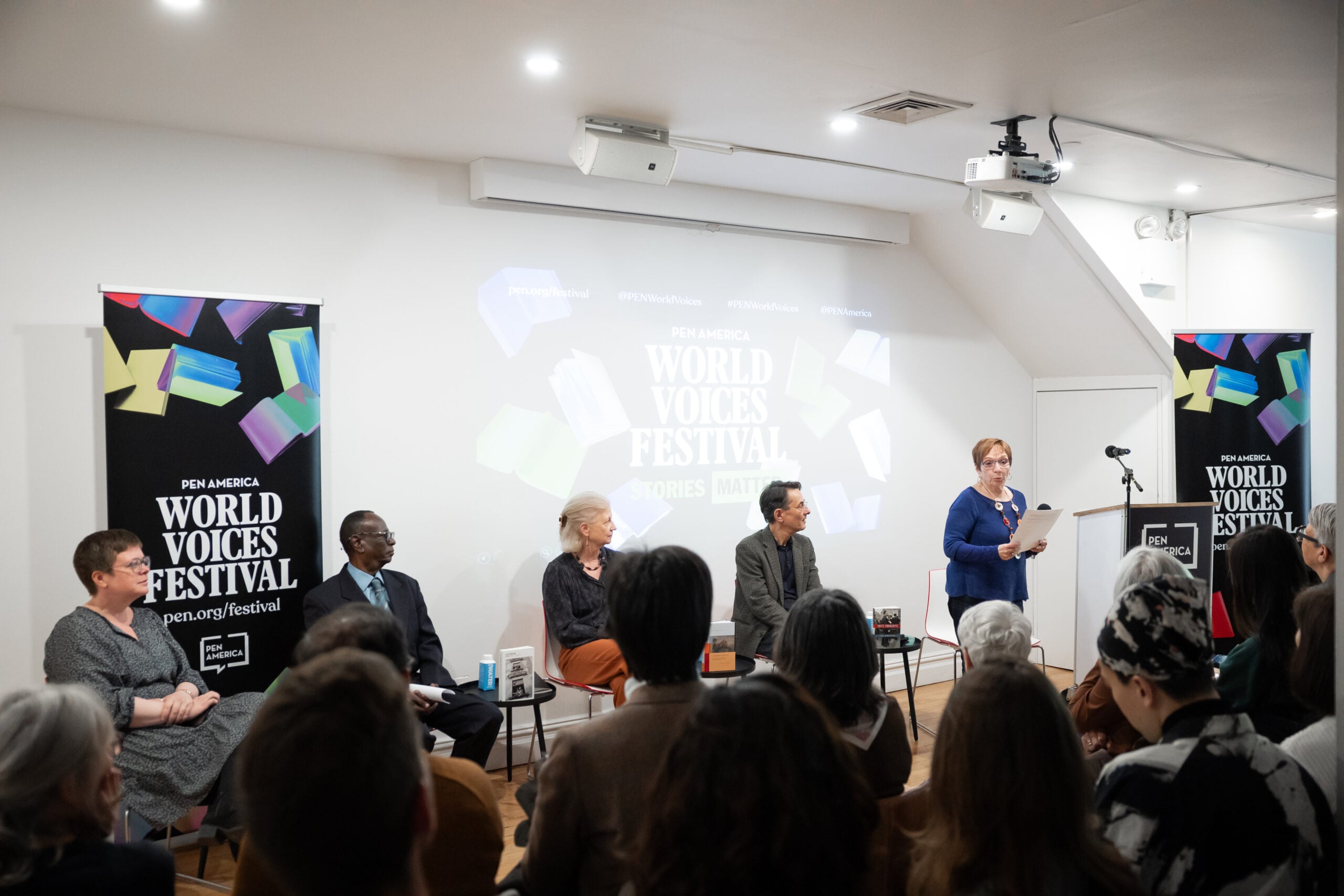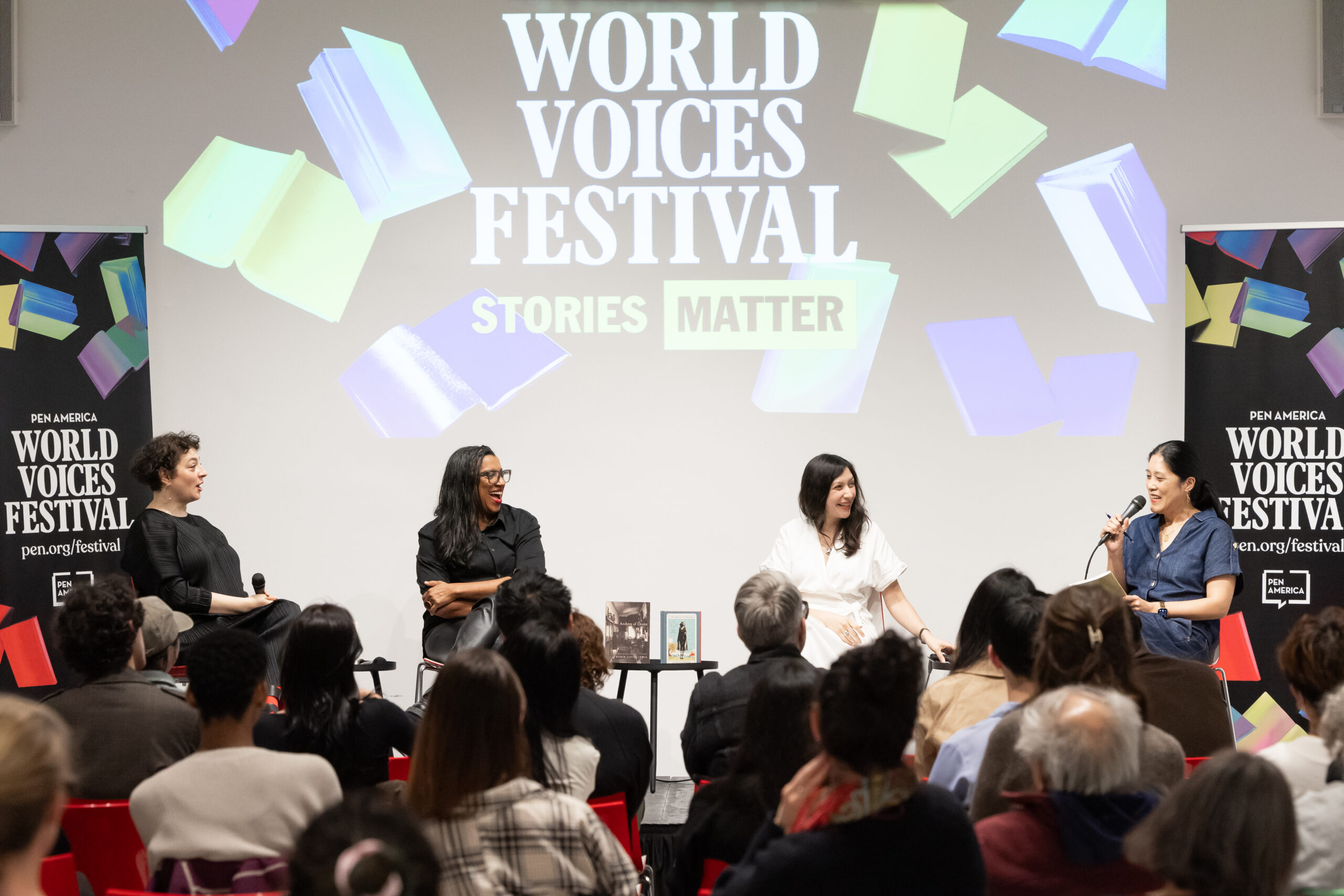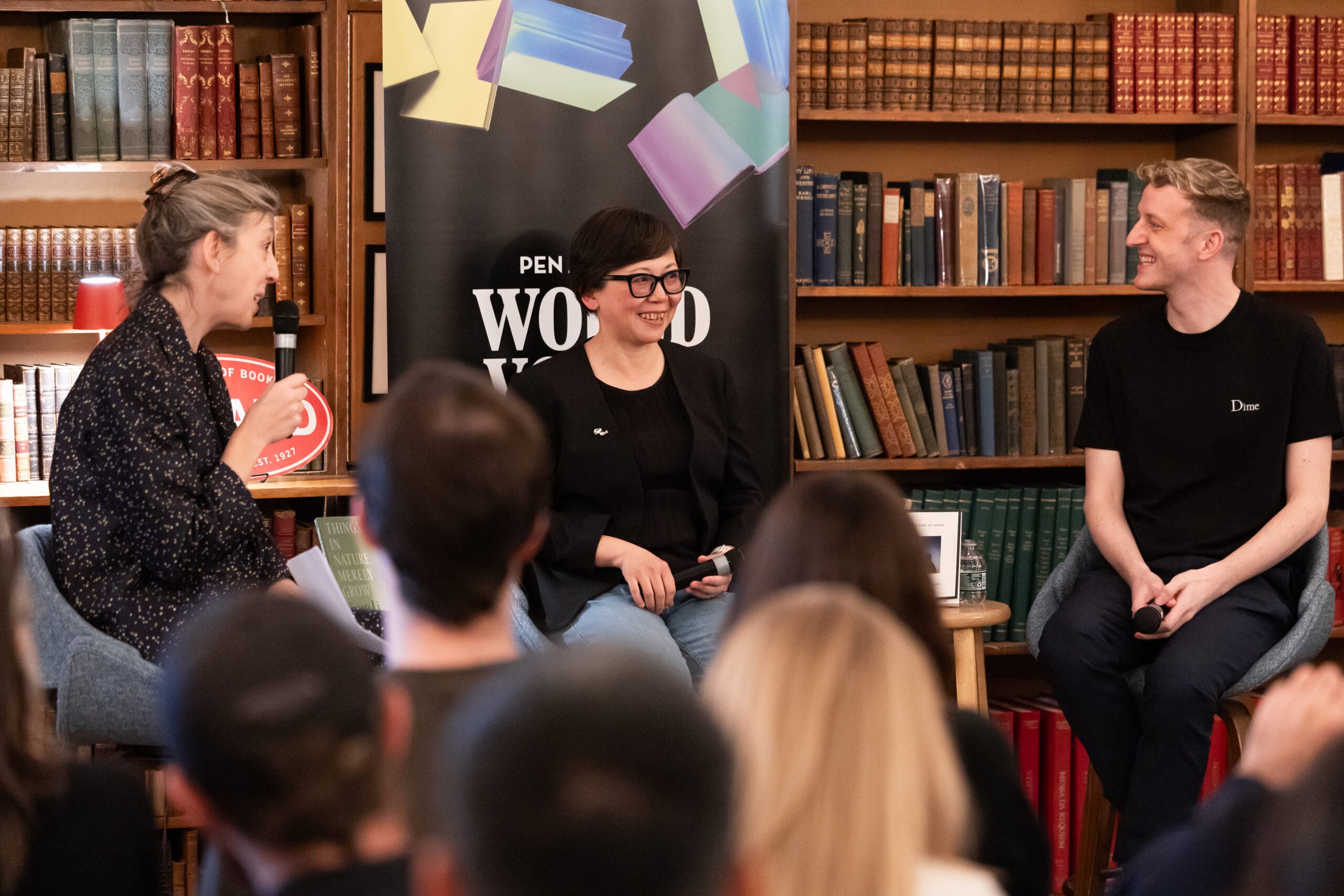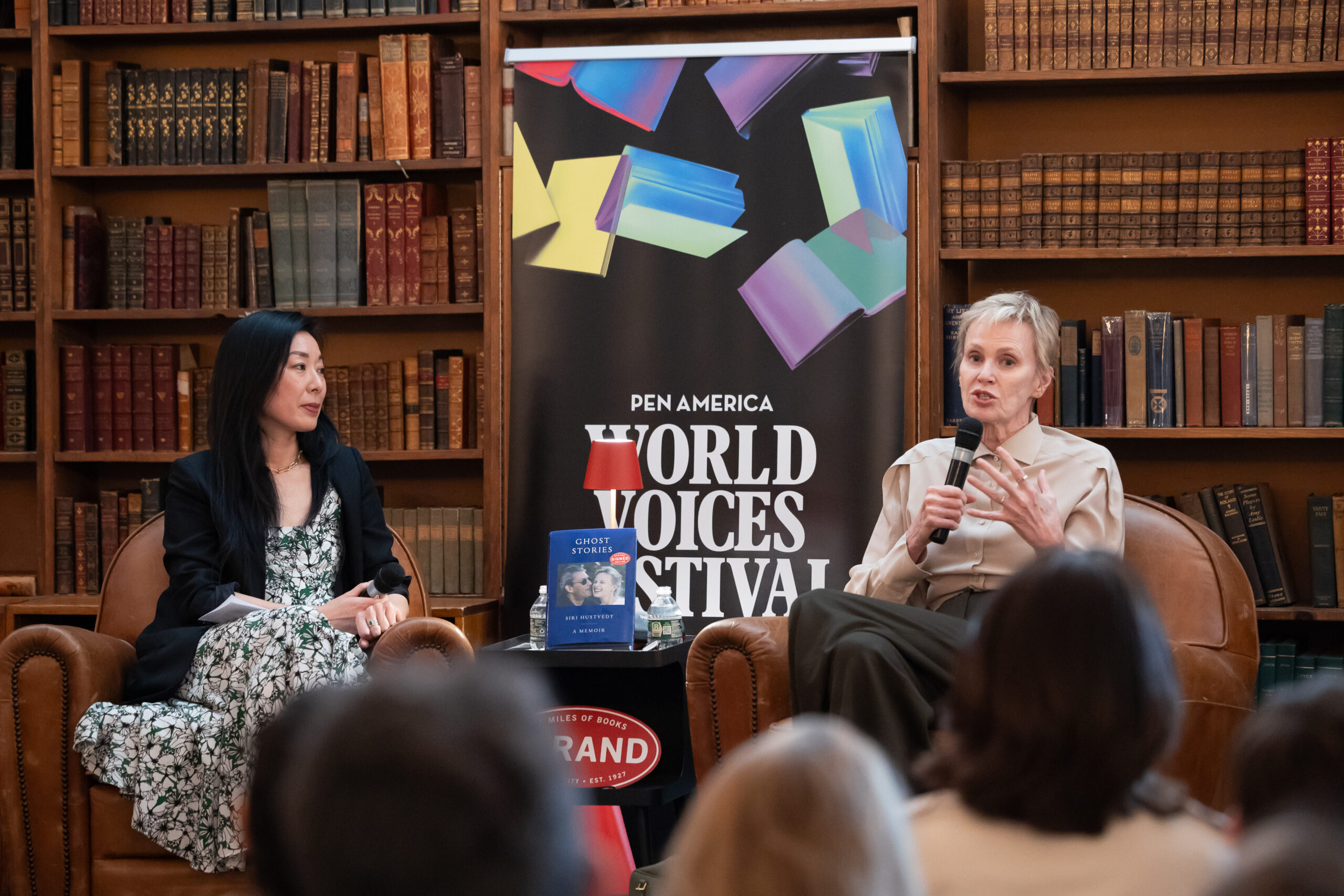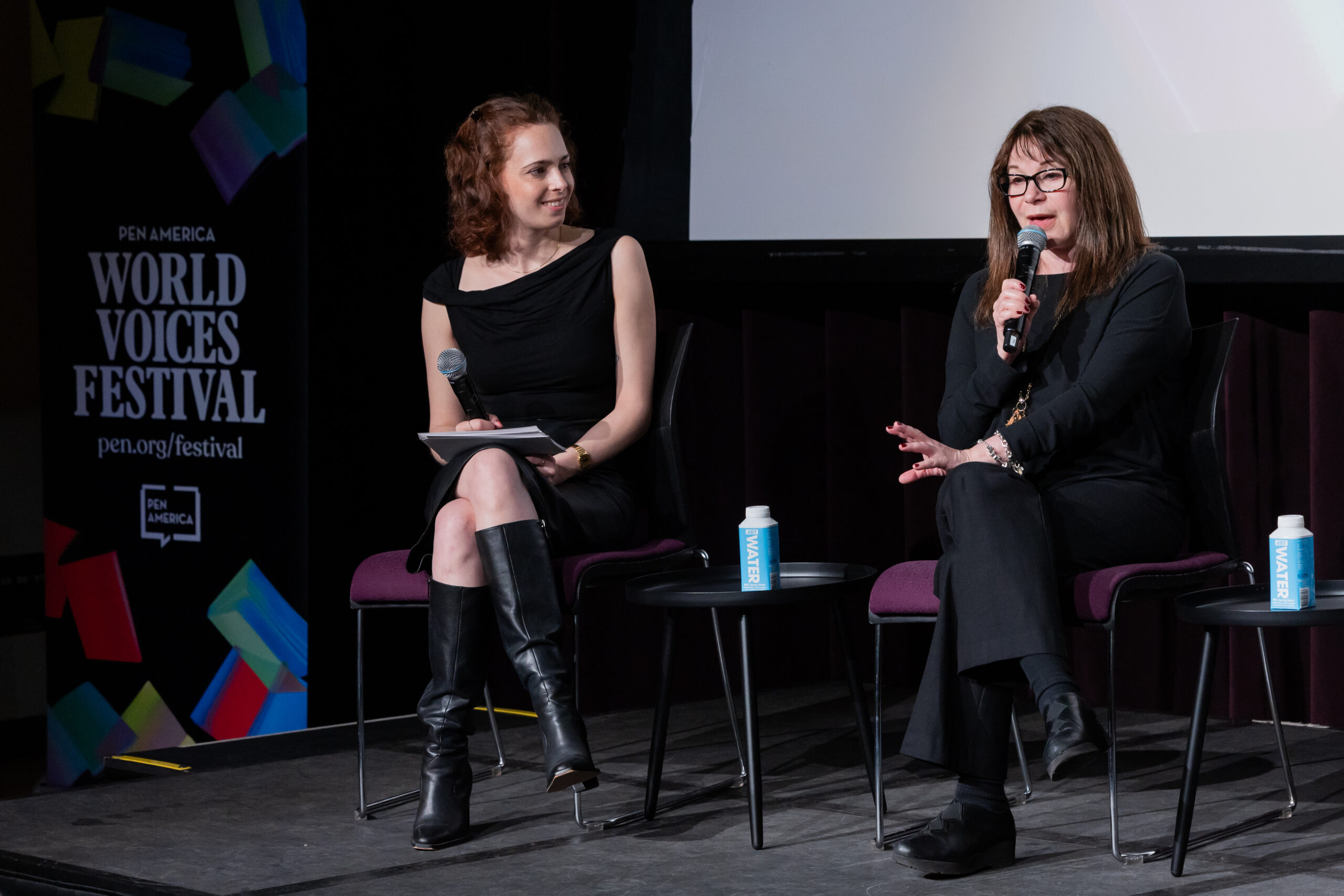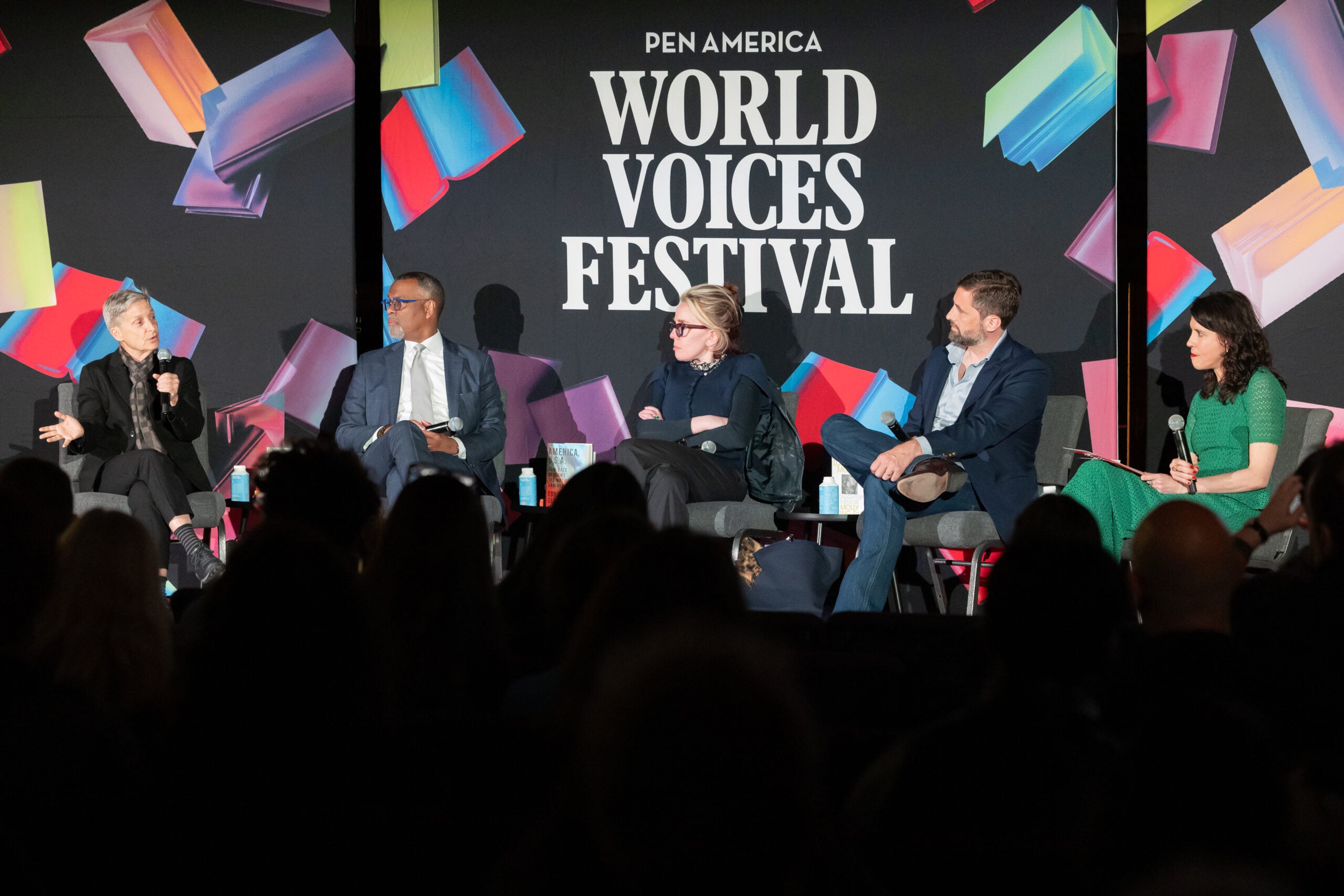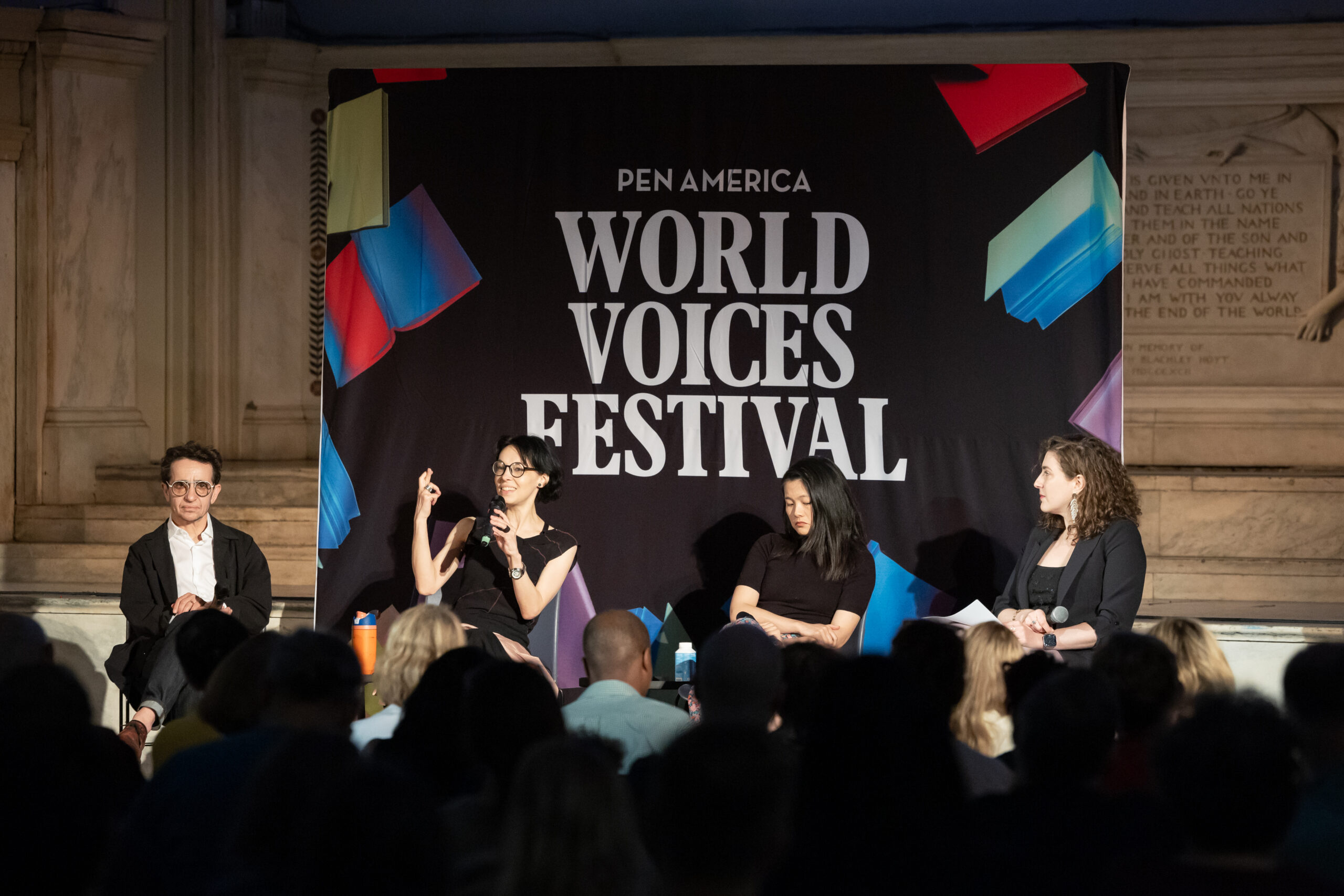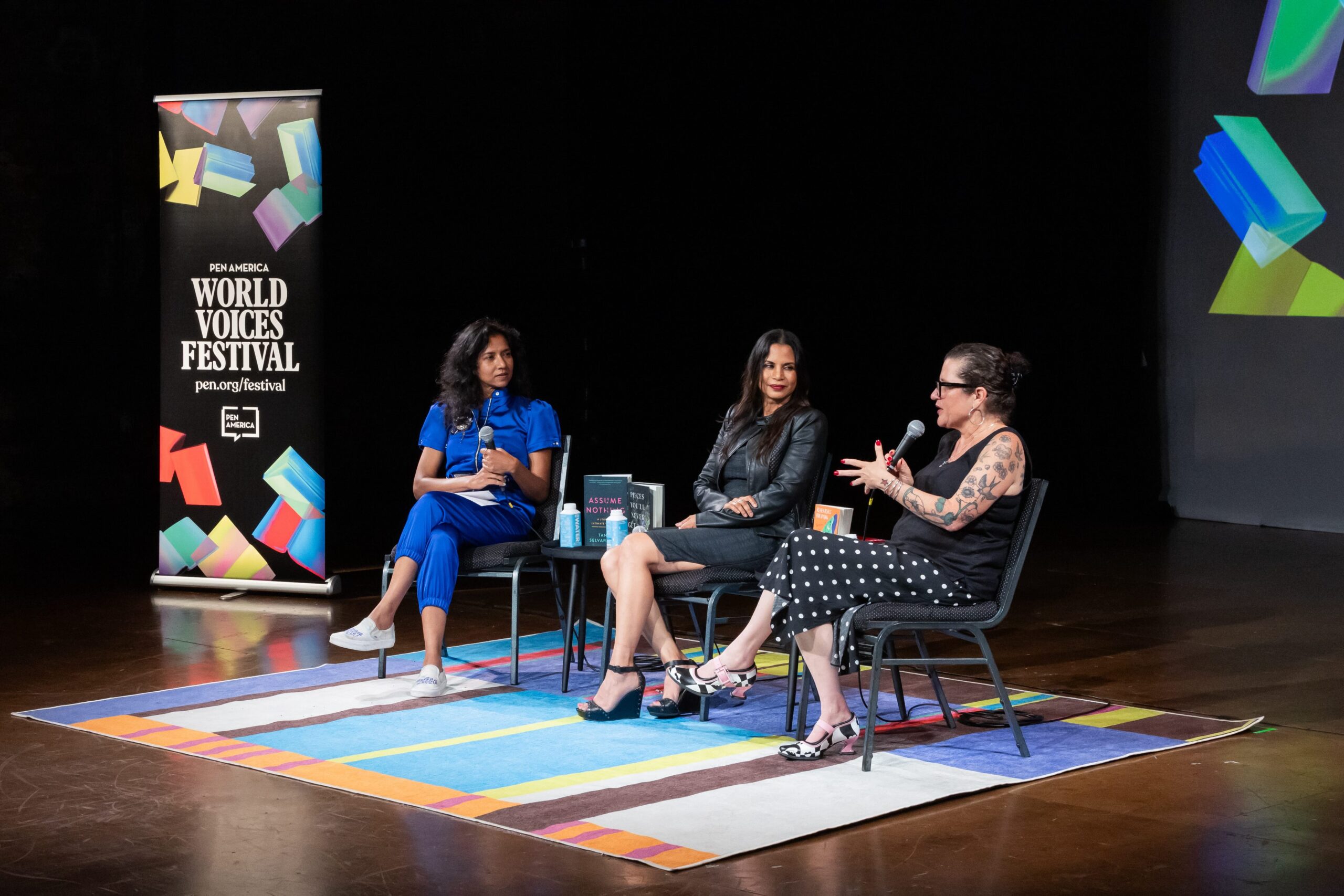
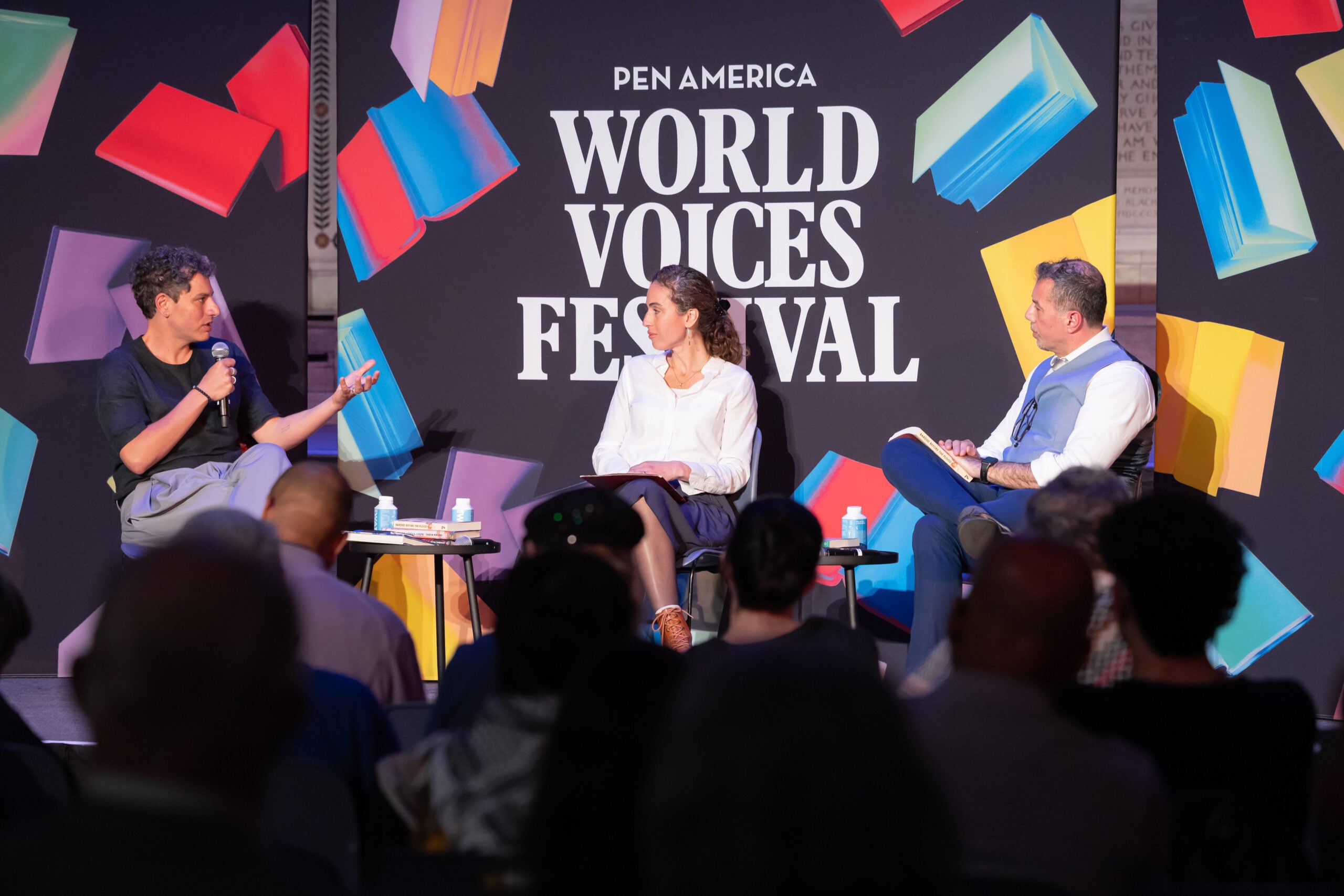
The 2026 PEN World Voices Festival hosted “Narrating Palestine: Family, History, and Displacement” in New York City, an intimate and powerful conversation that felt less like a panel and more like a necessary reckoning with how Palestinian stories are told.
Moderated by novelist Zaina Arafat, author of You Exist too Much, the event centered two writers whose work reclaims Palestinian storytelling: Tareq Baconi, author of Fire in Every Direction, which traces his family’s displacement from Haifa in 1948 through Lebanon and finally to Jordan, and Ramzy Baroud, who wrote Before the Flood, a reflection on Palestinian history and the personal stories of his family and their village. The three writers shared their perspective on the ways Palestinian memory is preserved, distorted, and fought for through family storytelling and the act of writing itself.
Why storytelling?
Both Baroud and Baconi have spent years writing analytically about Palestine, interpreting its politics, history, and the dispossession of its people. So what pulls a writer toward something more personal, a memoir, “subversive storytelling”?
For Baroud, the answer goes back to arriving in Seattle in his twenties, after growing up in a refugee camp, and being confronted with how Palestine was discussed in the U.S. He arrived carrying grief and stories, and found none of it reflected anywhere. That disconnect clarified everything for him. This kind of writing, he said, is not sentimental, not emotional, “it’s critical and essential as a foundation in trying to understand the Palestinian people.”
Baconi got at something similar from a different angle: “When you move away from the analytical and you are able to embody the reality of how we [Palestinians] live in our diversity, it becomes a challenge to the reductionist way in which Palestinians are portrayed.” Telling the full story, in other words, is itself a “subversive” act.
Memoirs as Method
Memoirs are functional, Arafat argued. They allow you to challenge the numbers, to get inside what statistics and abstract studies can’t reach. Storytelling isn’t about humanizing Palestinians — that framing already concedes too much — it’s about explaining what other forms of writing simply cannot.
For Baroud, his task is to find the micro story that carries an entire collective experience inside it. And he does it without inserting his views. They are irrelevant, he said. “I don’t apologize, I don’t correct, I don’t create a distance between myself and the movement.” His goal, he said, is “to tell the story in a functional way — I don’t use people to convey my own beliefs but I create spaces for them to communicate their political discourse in a way that makes sense to them.”
The burden of representation?
The idea that Palestinian stories need to “humanize” their subjects is a trap, said Baconi. He doesn’t feel the burden of representation because he rejects the premise entirely. As he said, “[W]e are human, obviously, every story is a human story, and the premise that Palestinian stories need to earn that is itself the problem.”
The tradition of storytelling among Palestinians runs so deep precisely because it has had to in order to survive in structures designed to silence them. He adds, “it’s not about convincing anyone, it is about staying grounded in our truth and letting others accept it.”
Writing through pain
Baroud got emotional talking about what it means to write through genocide. He has already lost 110 members of his family and part of what drove him to keep writing was his sense of the urgency of preservation, the fear that the stories would disappear before they could be told. People he wrote about in the first chapter were killed before he had reached the third. The book became a form of grief, but also a form of healing.
‘Love is political’
When asked about balancing the intimacy of a love story and politics in his book, Baconi said that “love is political, our individual lives are so intimately shaped by these political forces, that I don’t think of them as disentangled.” Narrating the stories his grand-mother—Al-Nakba survivor—passed down to him through food and culture are all embedded in politics, in displacement, in the way loss shapes everything it touches.
Want more?
Check out the panelists’ books”
- You Exist too Much by Zaina Arafat
- Fire in Every Direction by Tareq Baconi
- Before the Flood by Ramzy Baroud