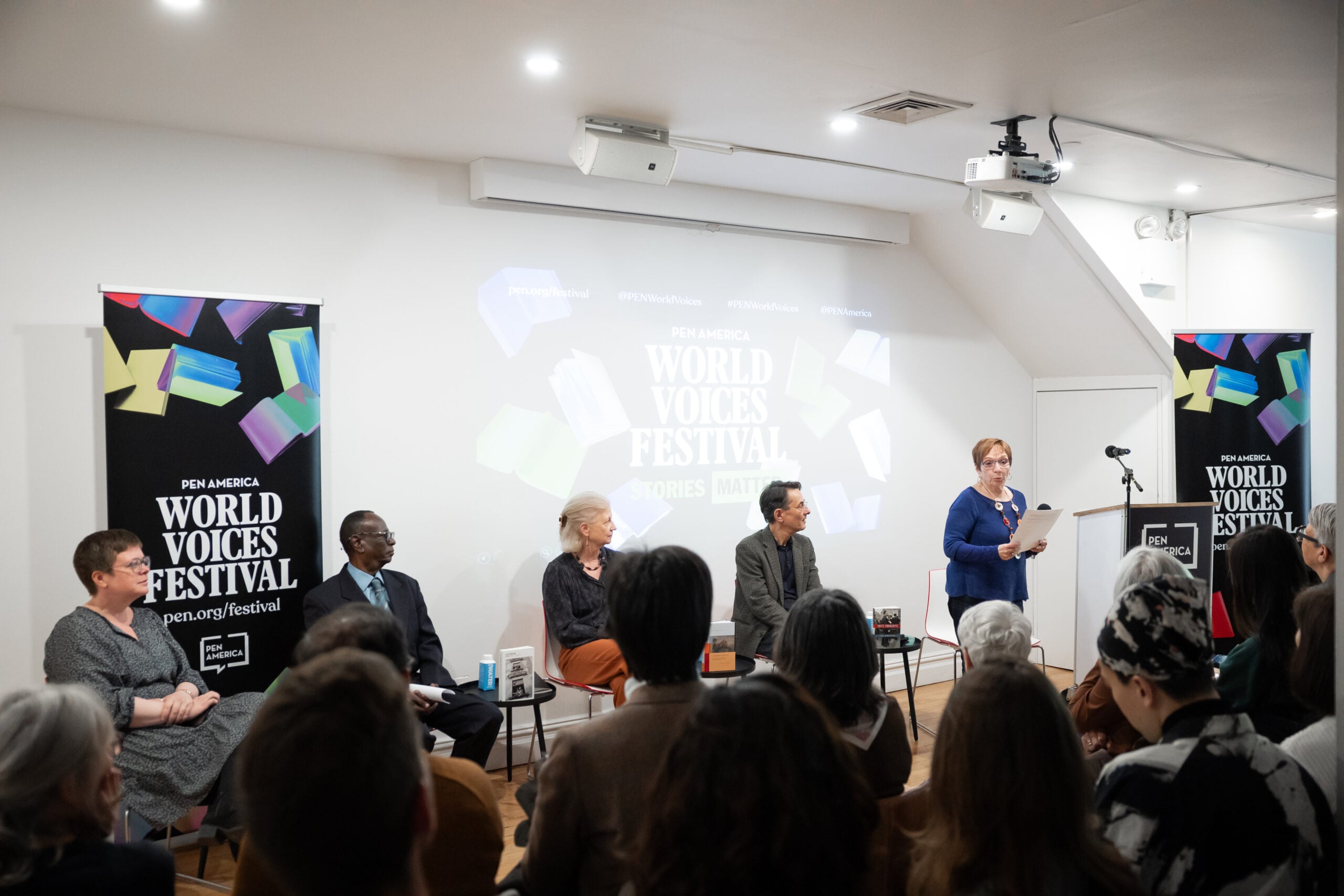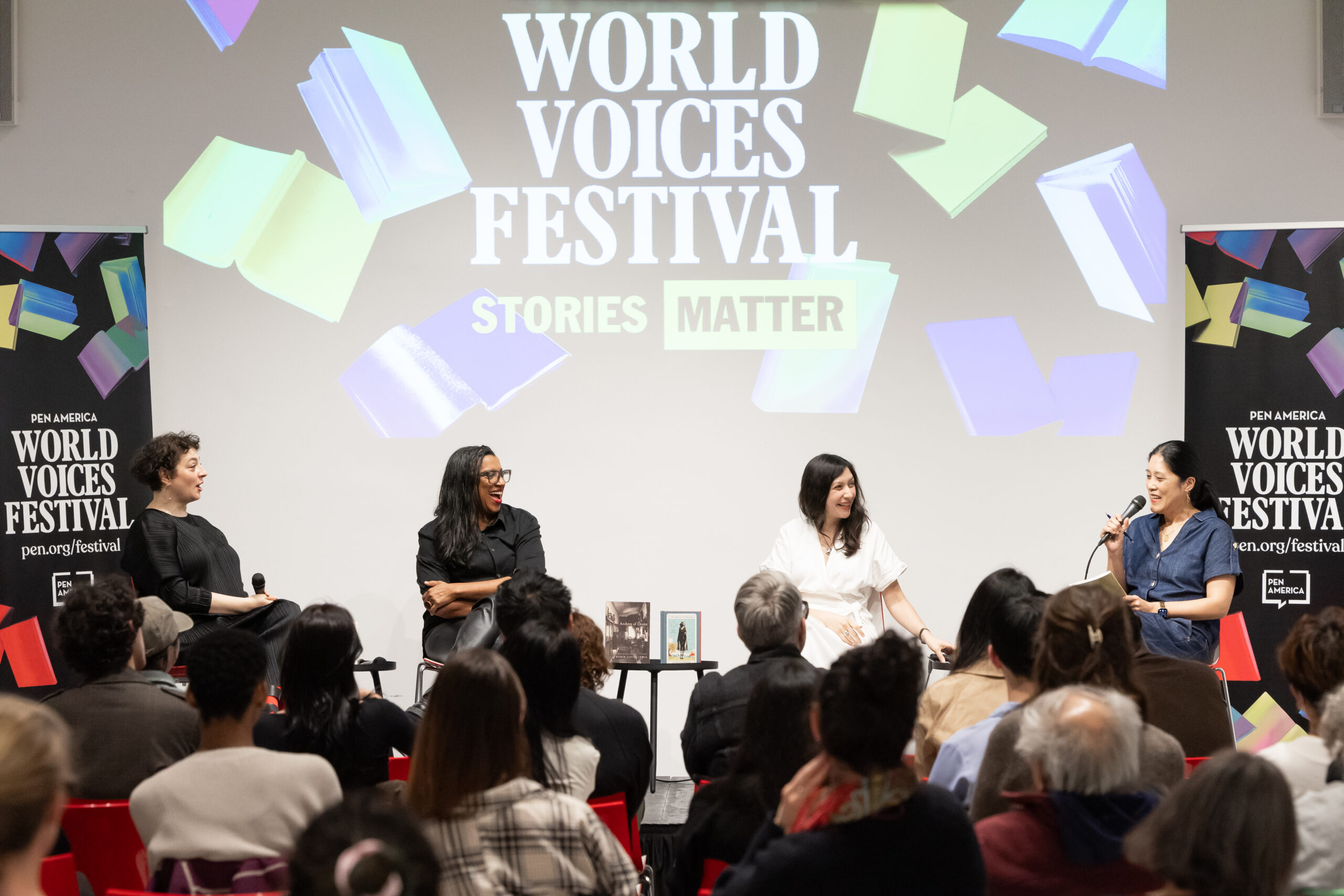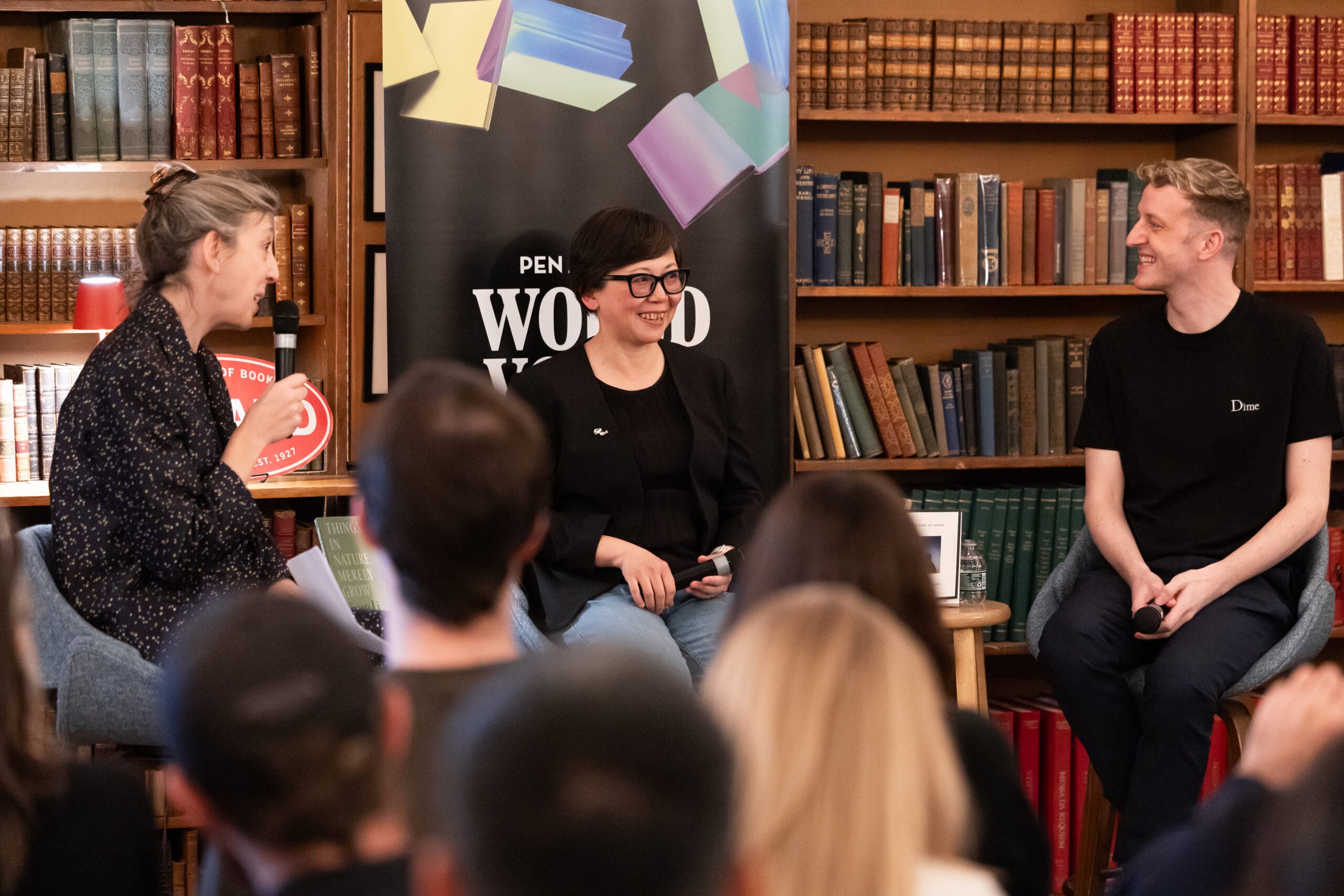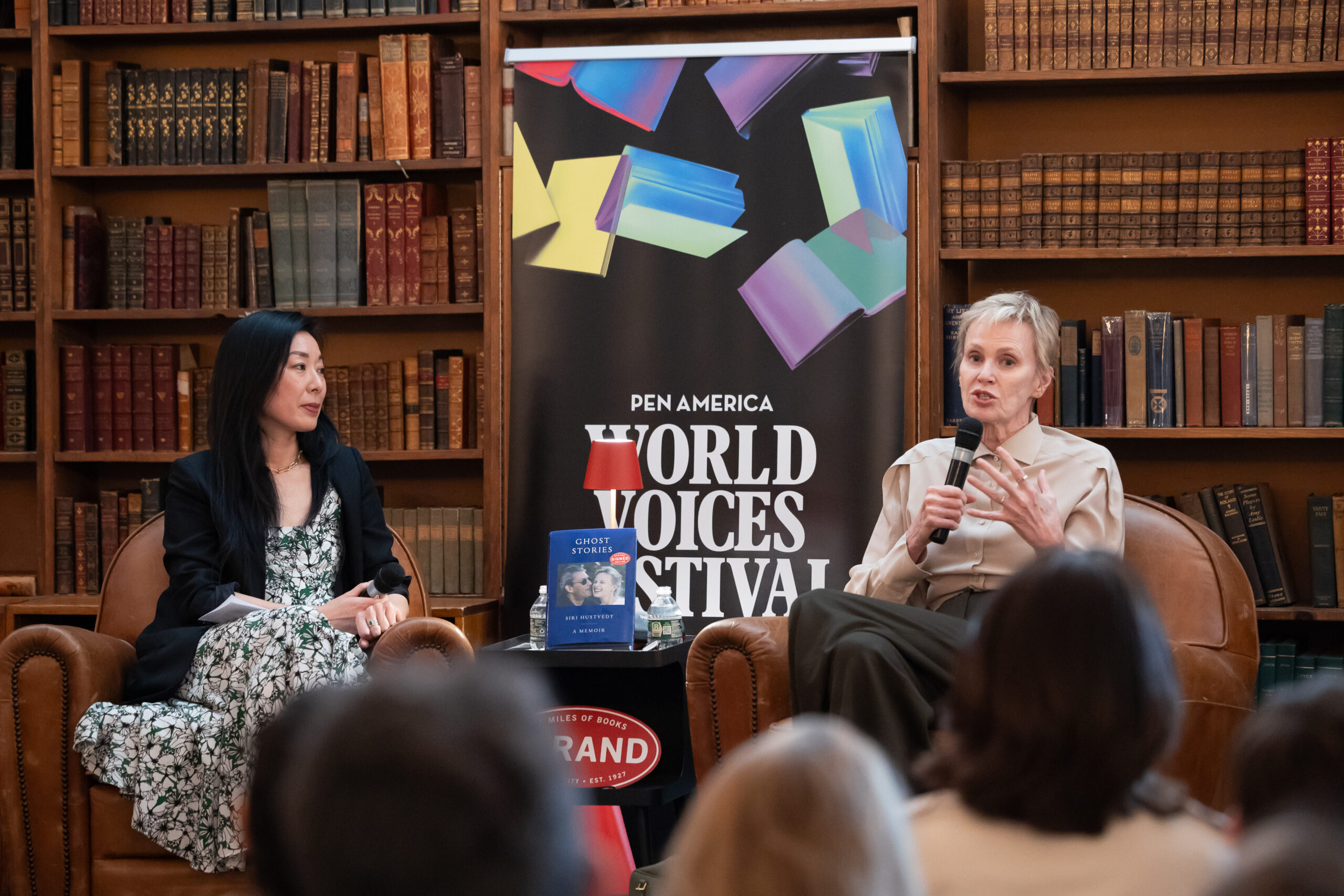
When novelist Tash Aw started writing characters who bore similarities to his parents into his books, they were confused. “Why don’t you write about more interesting people?” they asked him. “Why don’t you write about people who have done better things in life — grander people, more famous people?”
“In a way, [my father] became part of the conspiracy of the dominant class to marginalize stories of people who are already marginalized, because he’d internalized so much of that,” said Aw, author of The South. “He couldn’t see that actually the act of putting him, or a person like him, in a novel would eventually be a very empowering thing.”
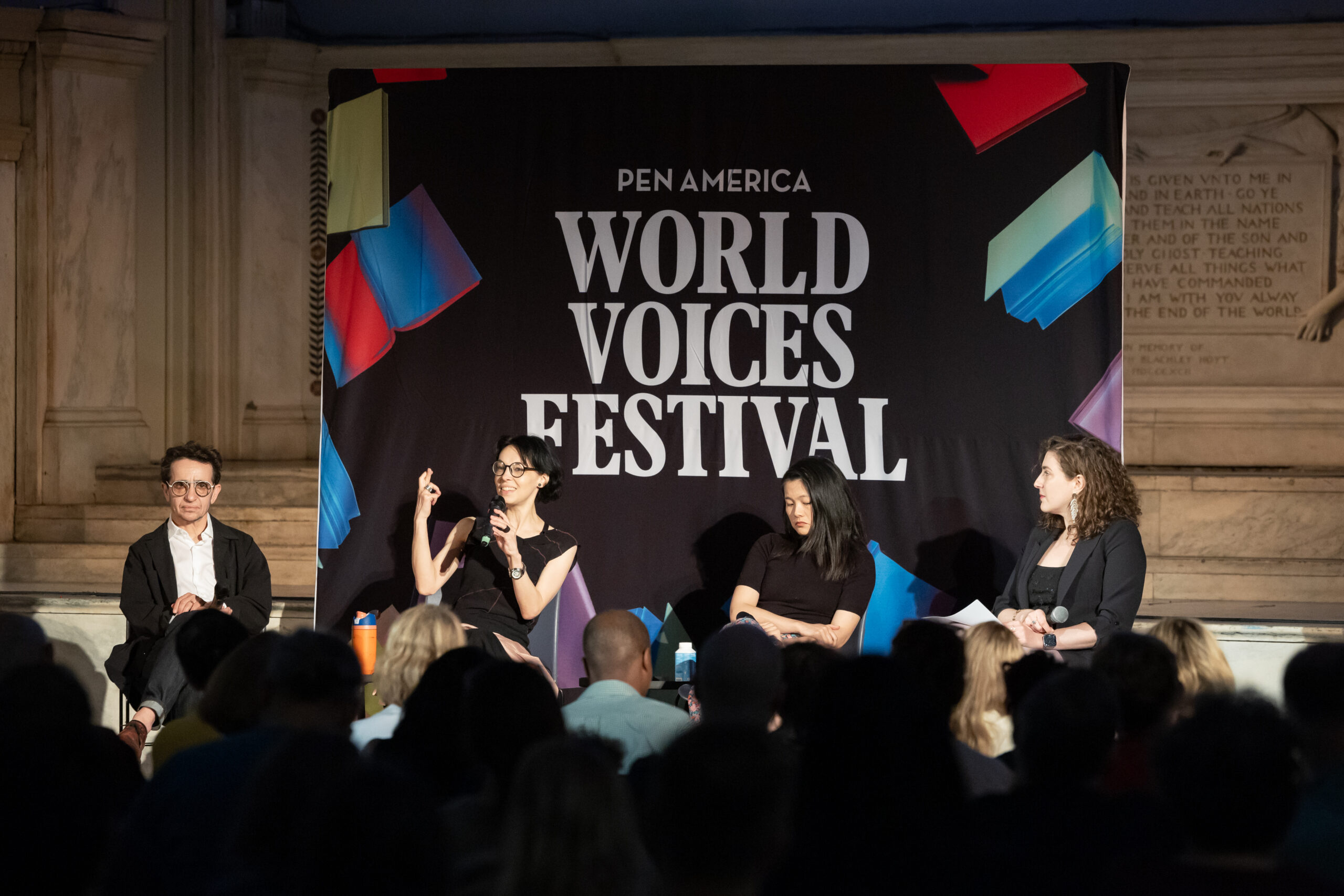
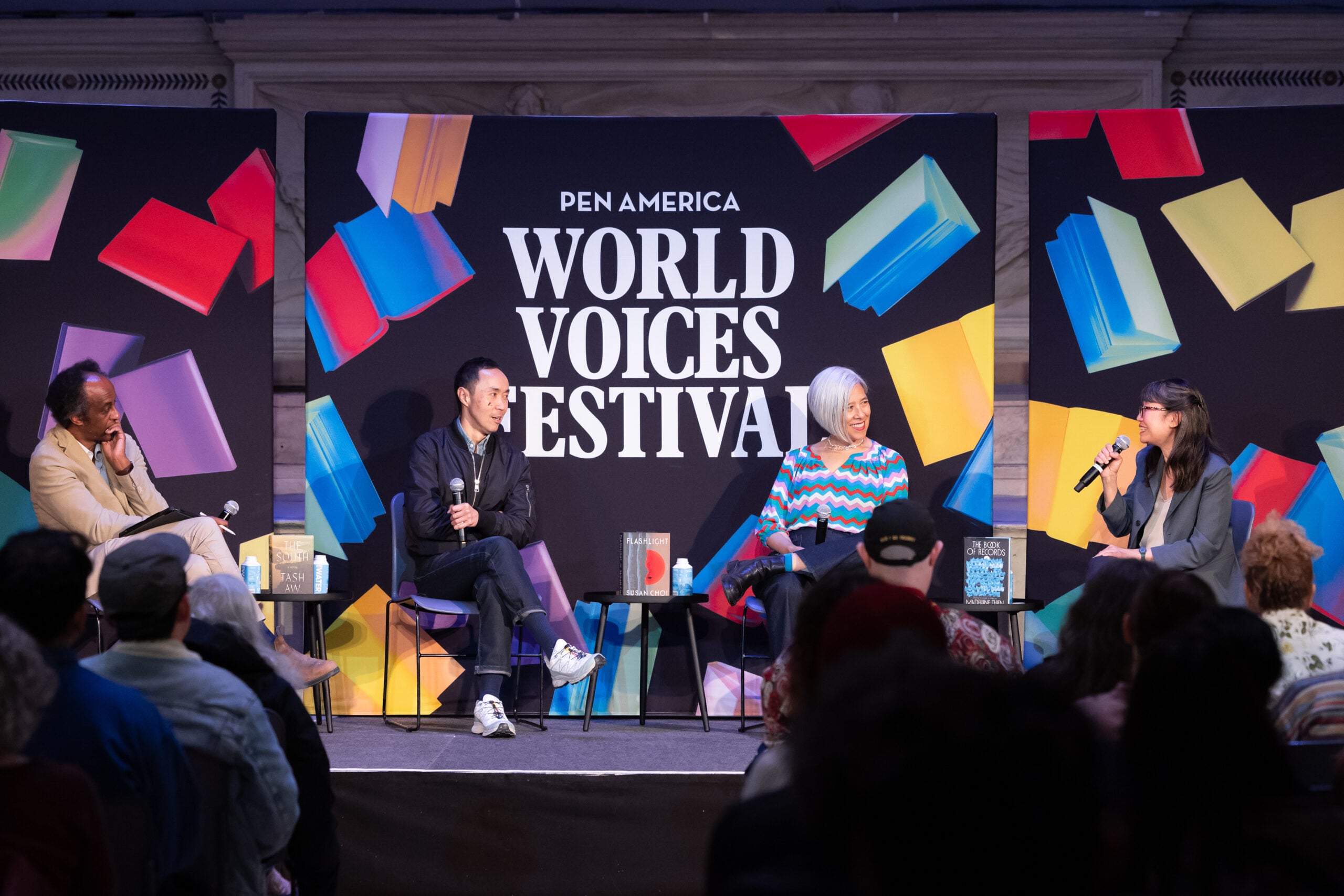
For the closing night of the 2026 World Voices Festival, Aw joined the acclaimed novelists Susan Choi, author of Flashlight, and Madeleine Thien, author of The Book of Records, for a conversation about literature’s obligations to marginalized communities, the complexities and contradictions of the concept of home, and the political and cultural forces that shape our lives.
Here are excerpts from the panel, titled “Who Belongs? Stories Against a Narrowing World” and moderated by Dinaw Mengestu, president of PEN America.
On the Concept of Home
Mengestu asked the panelists to reflect on how home functions in their novels as both a metaphorical and physical space.
Aw: “What I feel we’re required to assume is that home is a place of respite, home is a place of refuge. But in fact, for a lot of people, home is a much more complicated thing. Certainly, that’s the experience that I’ve had. It’s the experience, therefore, that a lot of the characters that I write have. Home is the place that they would like to belong to but actually find it almost impossible to do so.”
Thien: “When I was writing this book, something that I had never thought about before came to the forefront, which was the idea of home as a relational place. Home is something that exists between us, and the idea of friendship as home — that’s an idea I feel I would like to live out, perhaps because we live in very fraught times about belonging and land and rootedness.”
Choi: “My father’s story was that he didn’t know until he was six or seven that he wasn’t Japanese. Why would that have occurred to him? He wasn’t being told by his parents, ‘We’re a colonized people. You’re speaking not your mother tongue. We have been dispossessed of all of our rights.’ … One of the things that I wanted to try to explore in this book was that experience of, if you have a home feeling, where does that come from, and what if it turns out to be completely wrong?”
On the Forces That Shape Their Characters’ Lives
The novelists also discussed the historical and political factors that determined the lives of their characters, even if the characters didn’t recognize them as such.
Aw: “Like this very big concept of home, we don’t wake up every day and think, ‘Oh my God, what kind of a political structure am I living in? What is the intersection between economics and personal life?’ No one thinks that. We wake up and we have stuff to do, we have to get up and live, but it doesn’t mean that stuff isn’t happening in the background.”
Choi: “I was really interested in trying to illuminate … these large-scale social, political, cultural structures that the characters are living inside of, and that they may not, as a function of living inside of them, be able to see or grasp in their entirety, but hopefully the reader would be able to see.”
Thien: “One of the things that sometimes made me most sad was when my parents failed to assimilate in some way … they always, always blamed themselves, never the structures. And I have to say, it was the heartache of my life watching the way they carried that responsibility, but I also understood that for them it was also a way to insist on their agency.”
On Illuminating Political and Cultural Structures for Readers
Mengestu prompted the panelists to reflect on a claim Édouard Louis made at a panel on the opening night of the World Voices Festival: that the role of the writer is to make visible structures that the people who are embedded within and affected by the structures can’t see themselves.
Choi: “I was worried that a lot of American readers might experience a life of such relative tranquility that the turbulent lives of these characters that are really very much at the mercy of geopolitical forces might seem kind of quite foreign or strange. Of course, the book published into this particular moment in our country, in which we’re, as Americans, experiencing a very heightened level of sensitivity to the contingencies of our lives.”
Thien: “Because I was writing about Spinoza, Hannah Arendt, and Du Fu, I was actually almost the opposite, the inverse. They could see much more than I could see. … I needed them to show me what they could see, and the hope in writing the novel was that I might learn to see a little better my own conditions.”
Aw: “Writers have an obligation to go towards people and societies and cultures that might not be able to see themselves as part of literature. That’s very much part of all our work. The very appearance of certain characters in literature is itself a really radical thing. The whole point of being a writer, or being a reader, in fact, is to enlarge the scope of what we think of as literature, and not just assume that literature is going to reproduce itself as a product of middle-class, educated people.”
On Stories That Put Their Authors at Risk
At the Q&A, a budding writer from China asked whether she should tackle topics in her work that could prevent her from returning home.
Aw: “I think when you start to write about those things, you will know what to write and what not to write. You will know what you are willing to sacrifice and what you are not willing to sacrifice. … I know from my personal experience that these are also questions that I’ve had to ask myself and that I still have to ask myself every single time.”
Choi: “Speaking personally, as a writer who was born in this country and whose career has been based in this country, the fact that I don’t have to contend with the sort of question that you’re posing is owing to extraordinary circumstances that exist in our democracy that we have to protect and cannot take for granted and that PEN is working to protect. So, thank you, PEN.”
Want more?
Check out the panelists’ books:
- The South by Tash Aw
- Flashlight by Susan Choi
- The Book of Records by Madeleine Thien