Sociologists have conducted an experiment where they draw a box, which they call the “man box,” and ask elementary schoolers which behaviors should go inside of it and which don’t. The students always have answers to share.
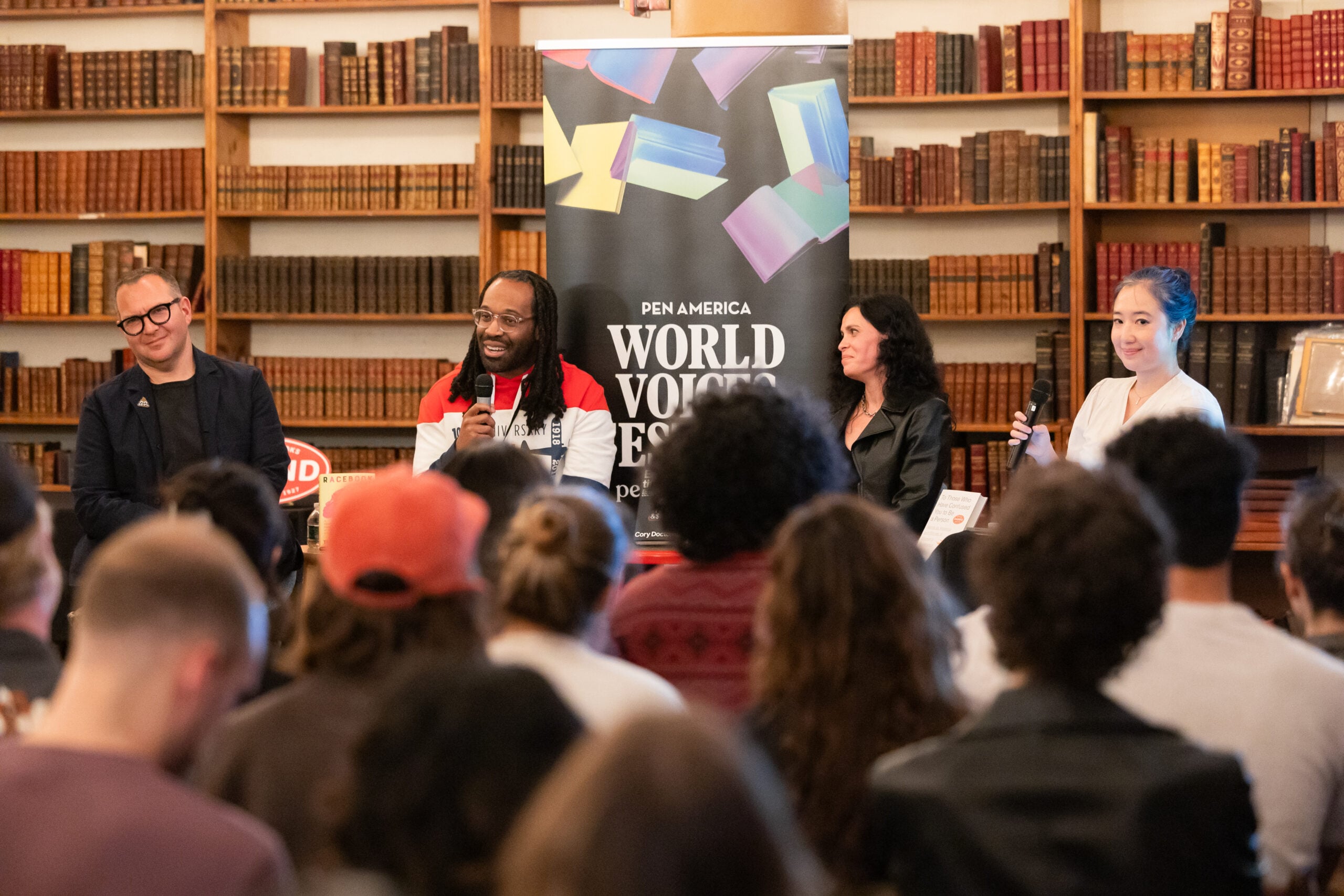
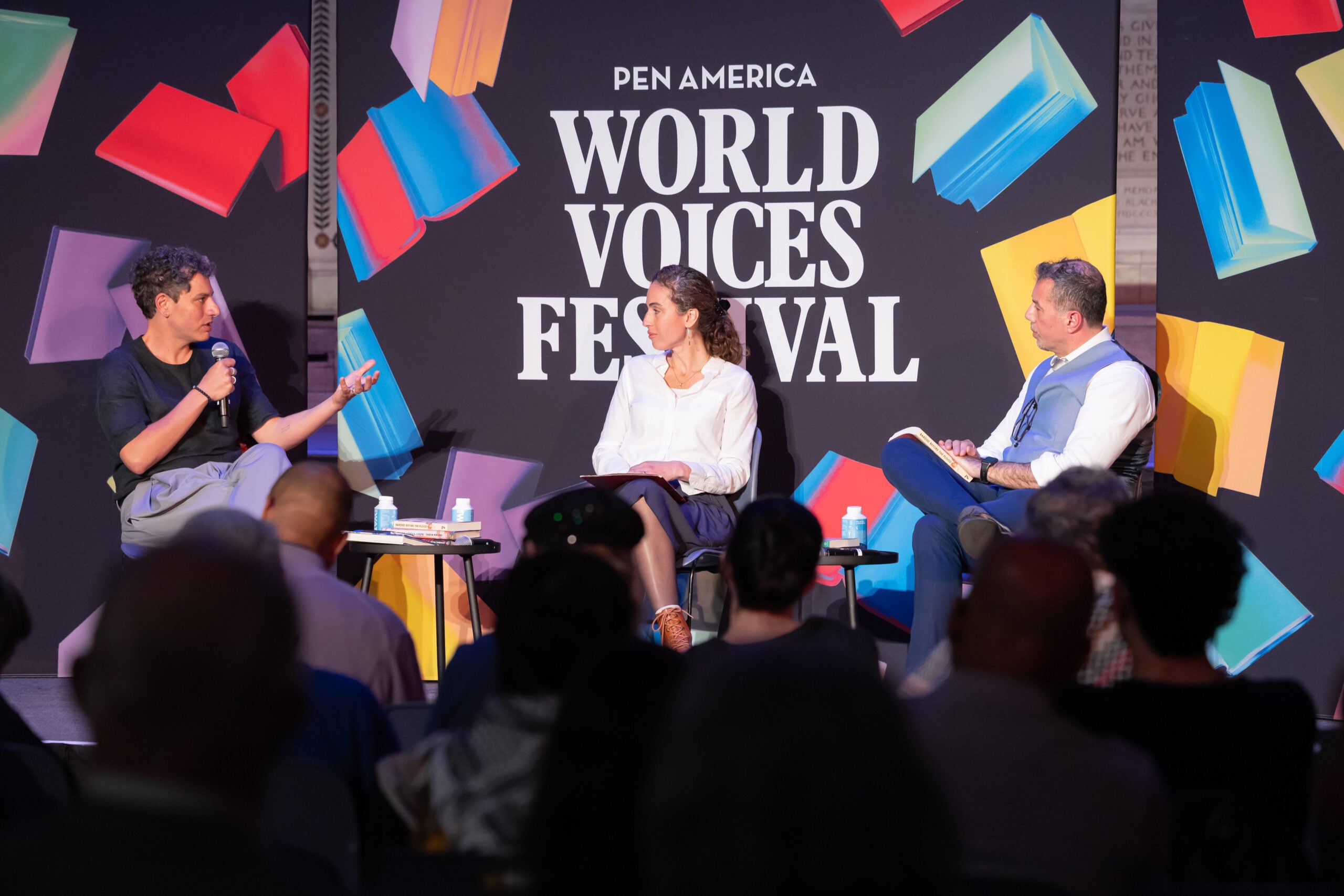
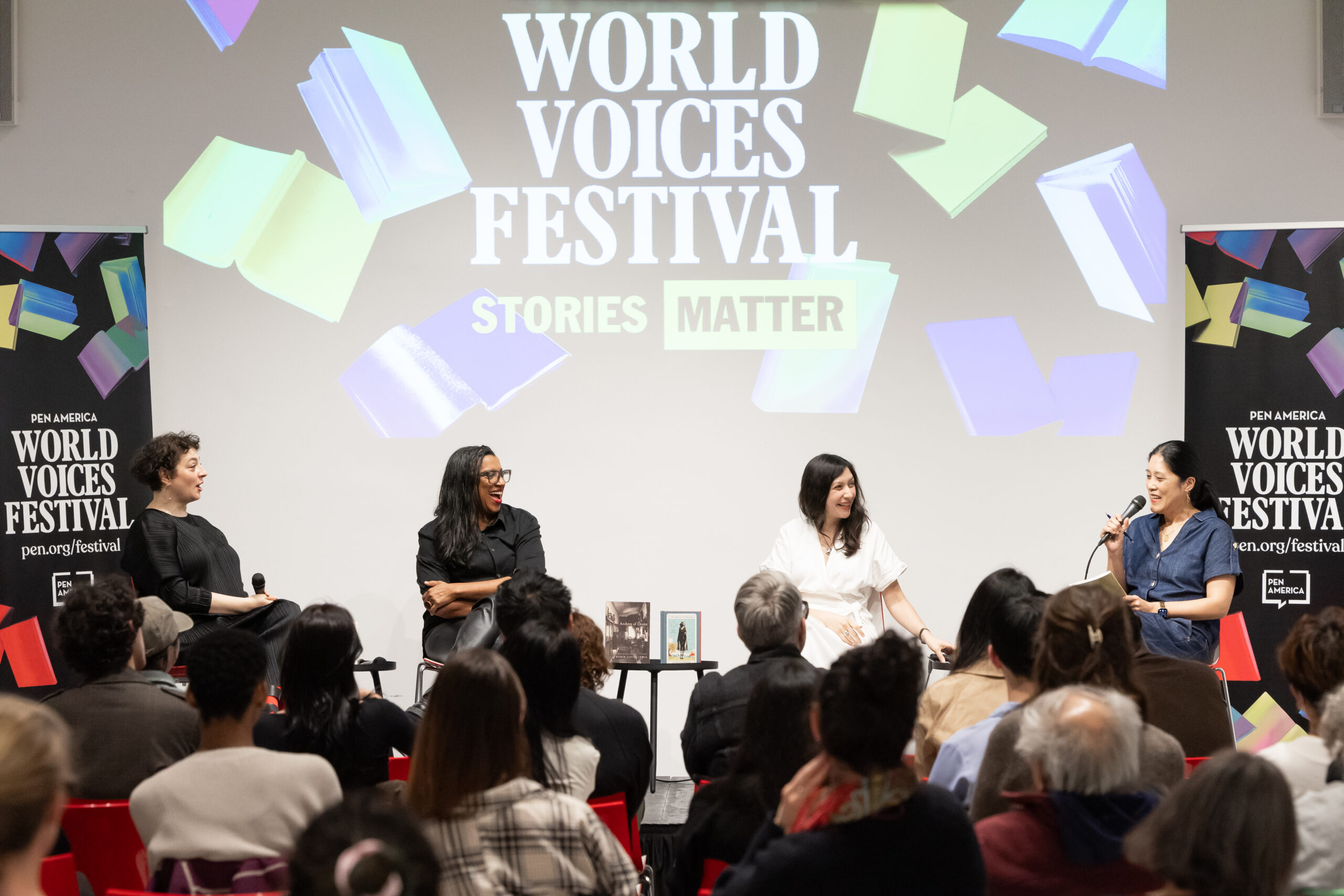
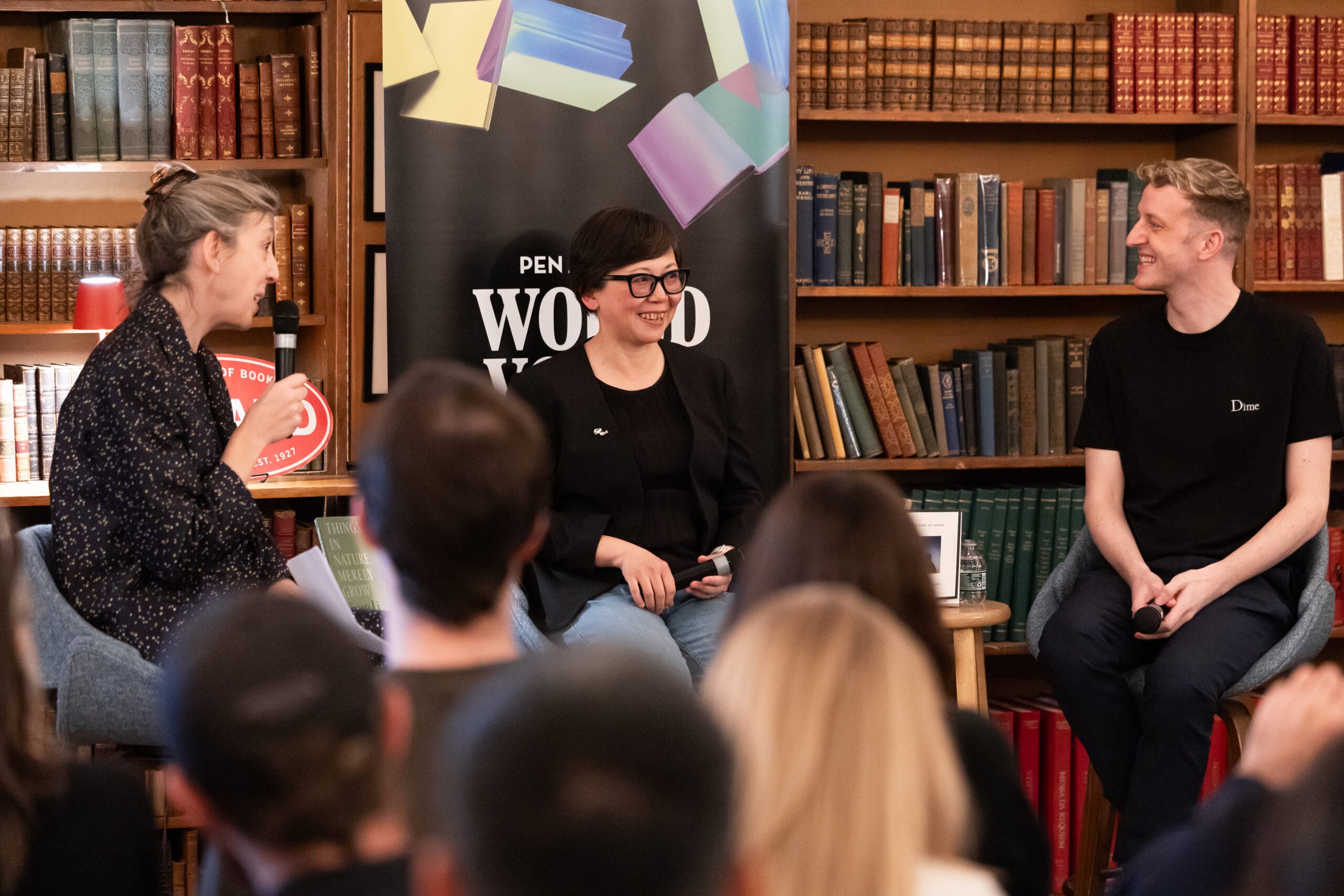
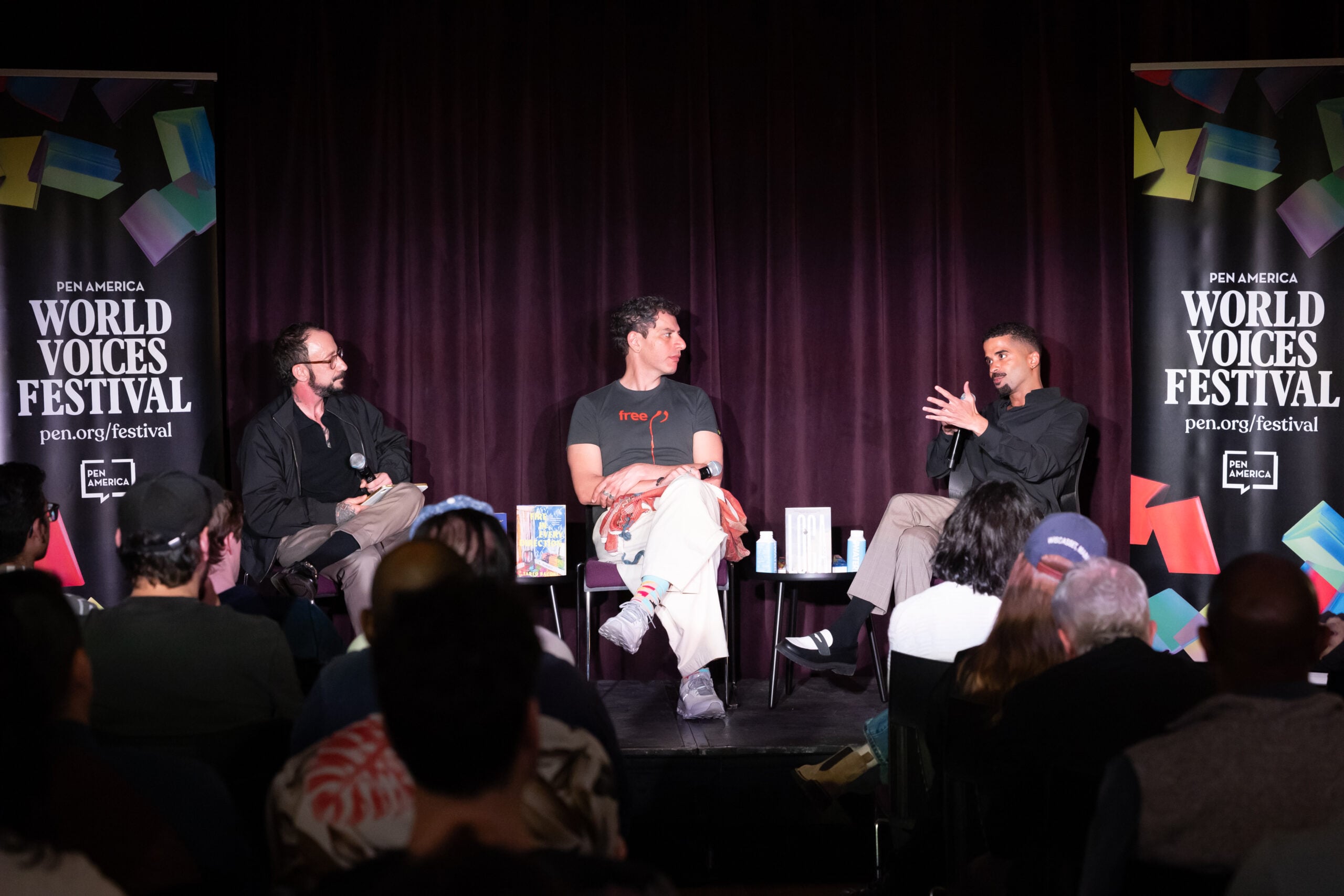
Memoirist Thomas Page McBee explained the experiment as a way of framing “Queerness, Masculinity, and Class,” a World Voices Festival panel that featured the writers Tareq Baconi and Alejandro Heredia.
“As your books illustrate, the specific restrictions aren’t the same globally, but the fact of restrictive masculinity is,” McBee told them. “Talking through these restrictions, and how for queer men and trans men especially, masculinity can be both this prison but also a site of possibility and desire and transgression, sometimes all at once — that’s really exciting.”
In his memoir Fire in Every Direction, Baconi tells the story of how he fell in love with his childhood best friend, another young boy, as the pair grew up in Jordan. And in Loca, a novel by Heredia, an Afro-Dominican writer, two best friends navigate their lives together as immigrants in New York, grappling with unresolved trauma, queer heartbreak, a controlling partner, and uninspiring jobs.
At the 2026 World Voices Festival, the writers gave voice to the unspoken rules of masculinity, how queerness defies those rules and threatens patriarchal and authoritarian systems of power, and the ways their identities as immigrants and queer men intersect. Here are excerpts from the panel.
On the Motivations Behind Their Books
Baconi: “I always knew that I wanted to write the story of falling in love with another boy in Amman when I was growing up. … It felt like this formative experience in my life had just never been articulated. I was living in its silence, and I wanted it out.”
Heredia: “Sometimes what I am trying to do is to allow certain kinds of people to be entirely human on the page in ways that political arguments don’t always make possible. … Part of what I was trying to do in Loca was to allow the two main characters, Sal and Charo, who are both immigrants battling different issues, to be flawed in ways that I think actually might be inconvenient to our very useful political ideas.”
On Providing New Forms of Representation
Heredia: “I grew up watching things like Sex and the City and other kinds of media representations of New York. … Part of the intervention that I was just trying to make was to say, ‘Hey, these white girls would not be having all the fun that they’re having if it wasn’t for all the working-class people that make that kind of life possible.’”
Baconi: “There was no queerness in my world. I grew up in Amman — that’s where I was raised — and there was no queer presence around me, and so I think my book was very much a desire to puncture that silence, to put forward a queer narrative.”
On Performing Masculinity
Baconi: “Certainly growing up as a queer boy in Amman, even though there’s no reference around me about what queerness is, there’s an intuition that you’re not necessarily able to perform masculinity in the way that it’s being performed around you — either unable to or unwilling to.”
Heredia: “Part of what I wanted to do was to just point to the hyperpolicing and how easy it is for a man to be deemed not a man, and then also what kind of choices are offered to people once they decide, like some of the characters do, ‘Maybe I’m not a man and I have no allegiance to masculinity.’”
On Queerness and the Diaspora
Baconi: “I’m not in my homeland. I’m not home here, I’m not quite home there, I’m living in these margins, in these liminal spaces, and I actually think that’s what queerness is. … What queerness did is helped and continues to help me inhabit the dislocation.”
Heredia: “Queerness combined with being an immigrant has made it possible for me to be a writer. In order to survive as a young, queer person, in a lot of the spaces that I grew up in, which were mostly working-class neighborhoods, you have to be hypervigilant. You have to watch yourself very carefully, you have to pay very close attention to how language is used, how you can use language to defend yourself.”
On Queerness as a Threat to Systems of Power
Baconi: “What queerness does is it refuses to abide by the silences that are necessary for patriarchy and authoritarianism to function. … It disrupts the system, and so I think that’s something that’s very threatening to people and to structures, because you’re suddenly saying, ‘Actually, I’m not playing by the rules of your game.’”
Heredia: “Queerness, for me at least, forced me to think. Political ideology, authoritarian ideology, all these ideologies that reduce our lives only work if they are invisible, if you are not paying attention, and I think just by the fact of being a queer person, you are thrust against these norms, and you’re forced to contend with [them].”
Want more?
Check out the panelists’ books:
- Loca by Alejandro Heredia
- Fire in Every Direction by Tareq Baconi