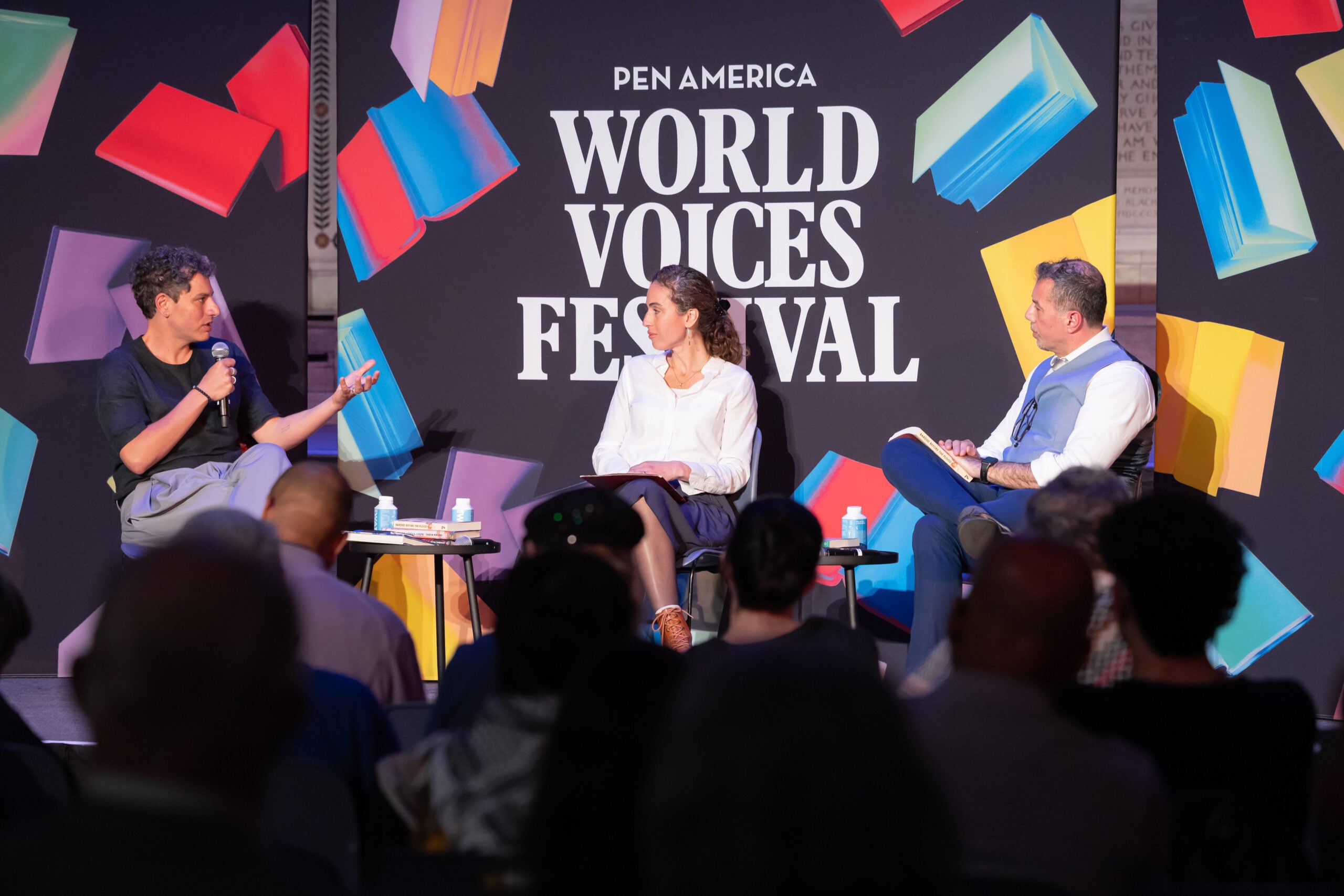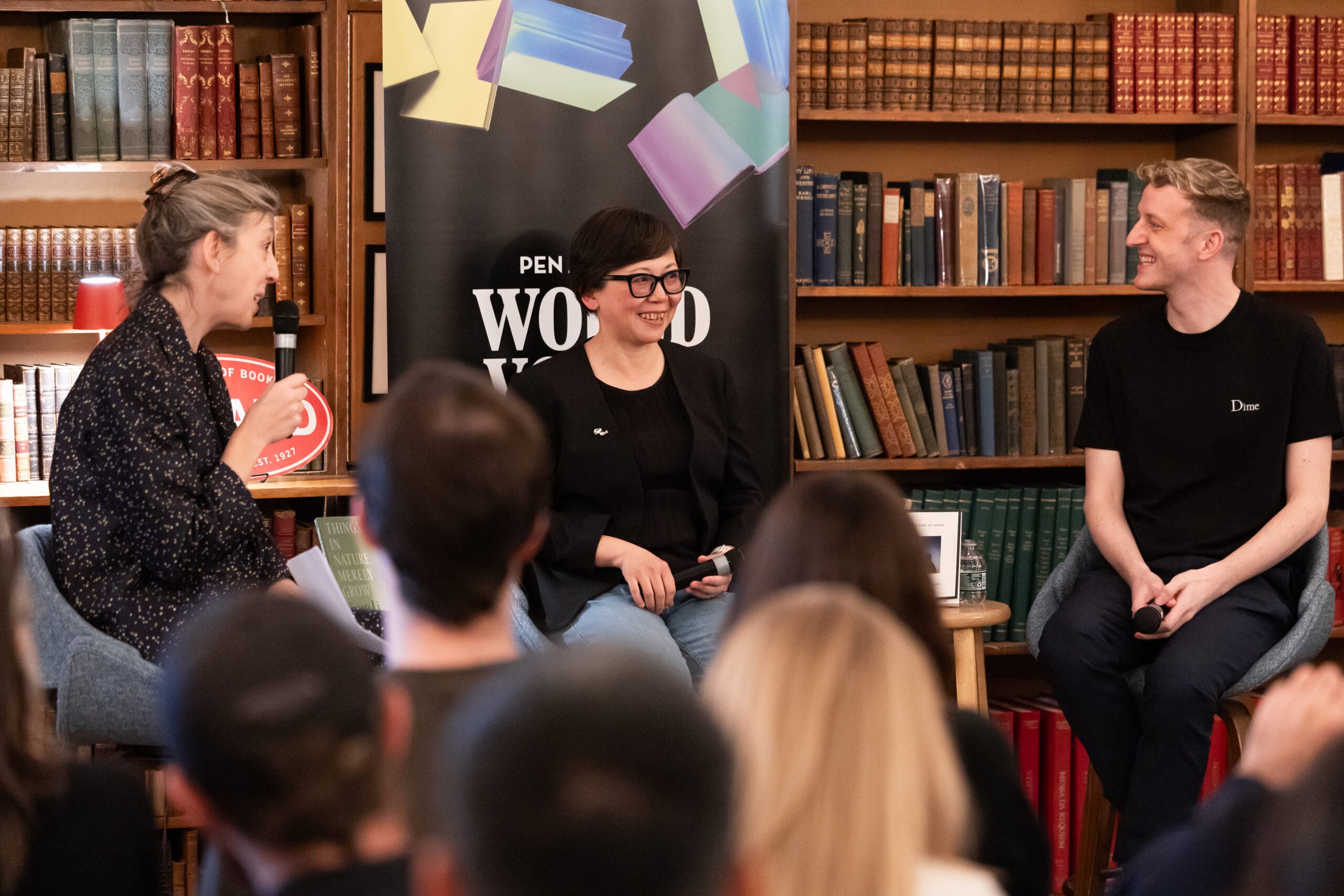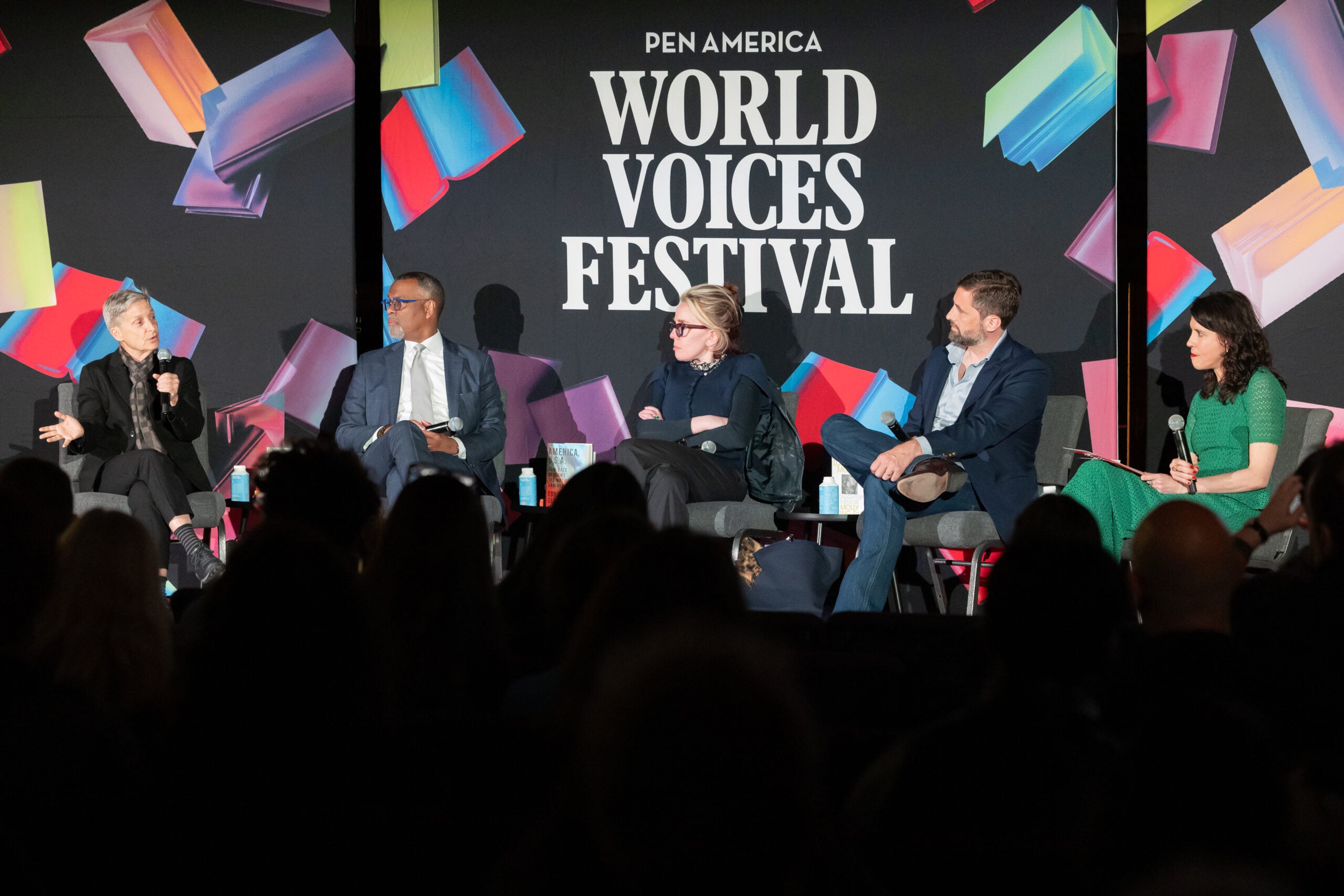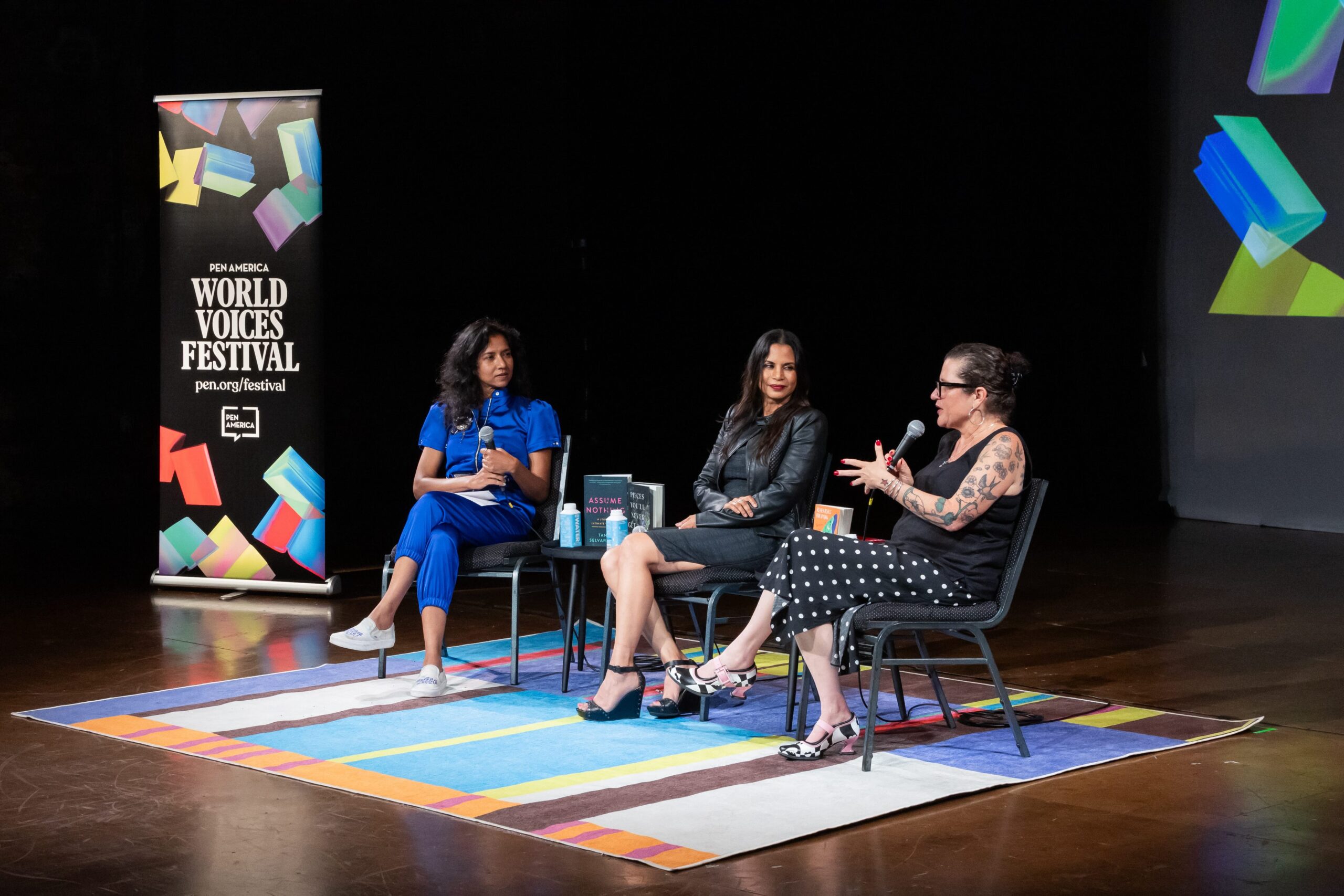
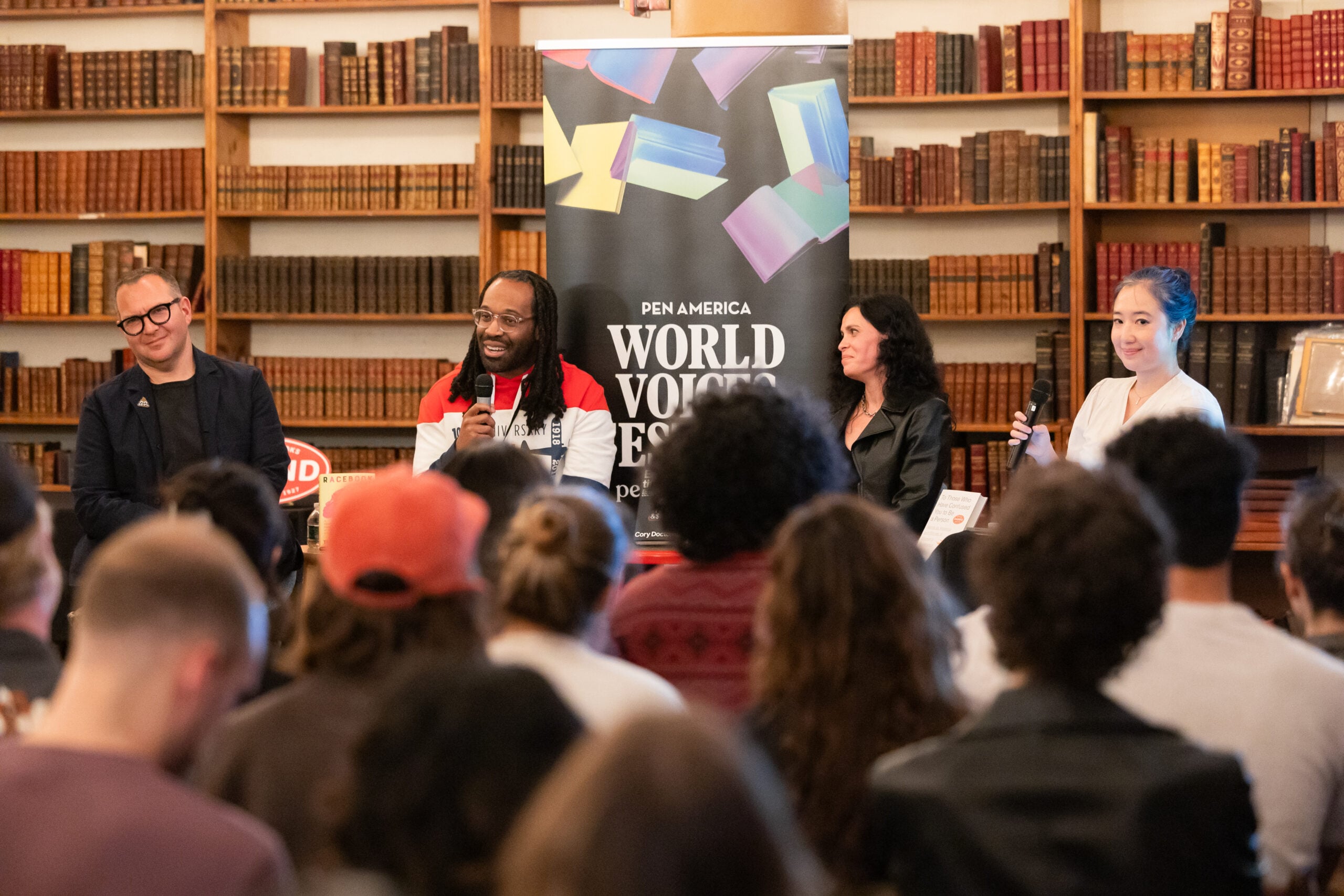
Once envisioned by users as a free and global community, being on the internet today feels like bracing for a Techidemic. “I’m not even going to point to any one thing because everyday it’s something new,” said award-winning tech journalist Sarah Jeong, who moderated the conversation at the Strand’s Rare Book Room during the 2026 World Voices Festival.
The April 30 panel featured Tochi Onyebuchi, author of Racebook, which draws on three decades of his online life to reflect on race and the internet; Alia Dastagir, whose book To Those Who Have Confused You to Be a Person investigates the offline impact of online abuse against women, including her own experience; and Cory Doctorow, who coined the word and title of his book Enshittification to outline why the internet is getting worse and the policy decisions that enable it.
In a wide-ranging conversation, these three writers reflected on the degradation of the digital world and how to make it a little more human. Here are some excerpts of what they shared.
On backlash to technology
“People do not like technology right now, and that’s something that runs through all three of your books,” Jeong said, kicking off the conversation. She asked each author to reflect on what prompted them to write their most recent books.
Dastagir: “When it came to at least some of the mainstream conversations and coverage that I saw around the issue of online abuse, it felt like the language was so efficient and precise that it was almost kind of sterilizing the experience. … I wanted to advance a conversation, but I also wanted to slow it down. I wanted to take the time and an opportunity to look at this issue more humanly and more intimately, while still affording the subject’s dignity.”
Onyebuchi: “I got through the writing and publishing process of Goliath and decided to take stock of where I was in my career as a writer. …I had to ask myself if the Tochi of back then, who was most deeply in love with writing, would recognize the Tochi of now… And the more I asked this question, the more I started to realize that maybe the internet was a part of it.”
Doctorow: “For almost 25 years I’ve worked for the Electronic Frontier Foundation… and the job of a digital rights activist, it’s a little like the job of a climate activist: it’s trying to get people to care about things that are very technical and very abstract and a long way away. … I’ve come up with narratives, even other words, but it turned out that this dirty word – with the minor license to vulgarity that came with it – was the secret to unlocking normies’ interests in these abstract, technical, distant questions and making them very immediate.”
On generative AI and (in)efficiency
Jeong honed in on an idea Onyebuchi mentioned: How might people have reacted to ChatGPT if it was introduced in the 1990s, at a time of economic expansion in the United States? She asked the authors to explore how much of today’s feelings about technology are about the tools themselves as opposed to economics.
Onyebuchi: “Everything is expensive and getting more expensive, and then this thing swoops in and the big narrative about it is how now it’s going to take your job. … I’m not saying things were perfect by any stretch of the imagination, but I do think the economics of people’s lives now and the economics of the world – the idea that we are now in what really smart people are calling a K-shaped economy – has a lot to do with how everybody is looking at something like generative AI. … It’s like, why are you trying to use this technology to write books? There’s no money in that.”
Dastagir: “If there is transparency around books that are written with or by AI, then the reading public has its own questions to ask itself about what it’s willing to consume and what is valuable. … When I think of writing, I do not think of efficiency. I think of failure, and suffering, and lots of missteps, and cycles of really crippling self-doubt. … Sometimes you’ll spend literal years devoting yourself to trying to understand a single moment – and that is just so deeply inefficient, but to me, so valuable.”
Doctorow: “To understand AI, you have to understand that companies, when they stop growing, cease to have the valuation of a growing company. …So they cook up all these stories about how they’re going to grow … and the latest one’s AI. …Take away all the salaries of all the working writers, and it’s a rounding error. So my conclusion is this stuff is just demos. …Like, talk about inefficient. ‘I spent $1.4 trillion to write a novel’ is stupidest thing I’ve ever fucking heard.”
On holding onto hope in technology
“Do we have any good feelings about technology at all?” Jeong asked the panel, in between a bit of laughter from the audience. “What’s the hope that we’re holding onto?”
Dastagir: “People are more awake. They’re disillusioned in a way that I think can be really productive. … We have an opportunity to do things here that can really make an impact. Things like better laws around privacy, enforcing the laws that we already have around antitrust, but we have to be quite careful not to be so reactive that we basically endorse really bad solutions to this because we’re frustrated and we’re afraid – legitimately so.”
Onyebuchi: “There’s a clip of Ryan Coogler watching this Sinners edit [on TikTok] made by this 16-year-old kid and geeking out. That’s, for me, the quintessential good internet moment. The fact that stuff like that can happen, in the face of this mass enshittification, that’s the thing that gives me hope. …These little islands of connection.”
Doctorow: “Now we have this breaking all land speed records to build and occupy a post-American internet, and there is a race on around the world to develop the disenshittifying tools that jailbreak all these shitty American tech exports. … We, I think, are closer to a new, good internet that can be the nervous system of our species while we fight genocide, climate emergency, and rising fascism than we’ve been at any time in my career.”
Want more?
Check out the panelists’ books:
- Racebook: A Personal History of the Internet, by Tochi Onyebuchi
- To Those Who Have Confused You to Be a Person, by Alia Dastagir
- Enshittification: Why Everything Suddenly Got Worse and What to Do About It, by Cory Doctorow