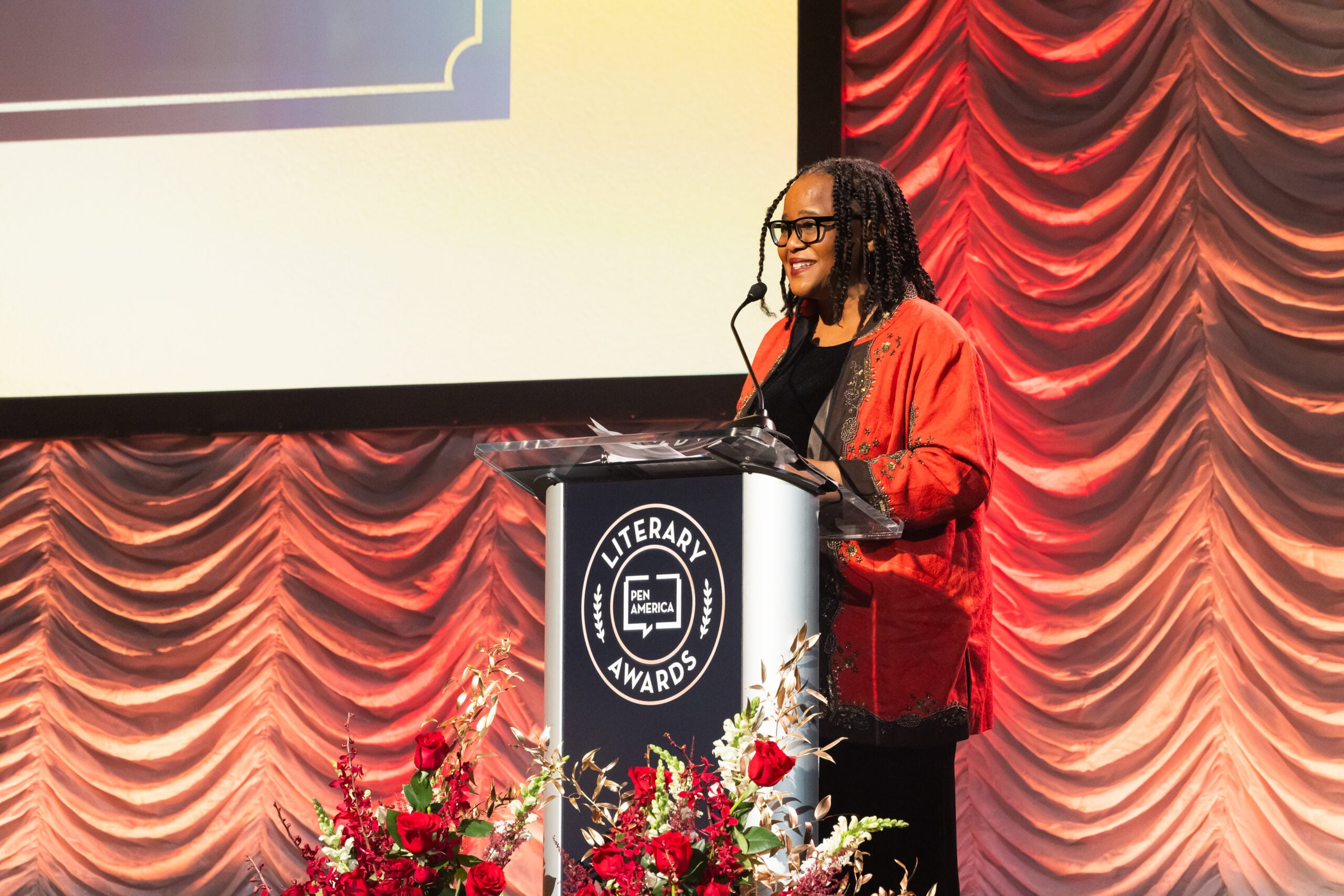
Haitian-American novelist Edwidge Danticat calls winning a career achievement award “surreal.” After all, she’s only 57, and she has plenty ahead, including her forthcoming 2026 novel, Dèy.
But in more than three decades of writing, Danticat has inspired writers around the world with her lyricism. In awarding her the 2026 PEN/Nabokov Award for Achievement in International Literature, a $50,000 prize conferred on a living author whose body of work represents the highest level of achievement, the judges called her a border-transcending author “overdue for global recognition.”
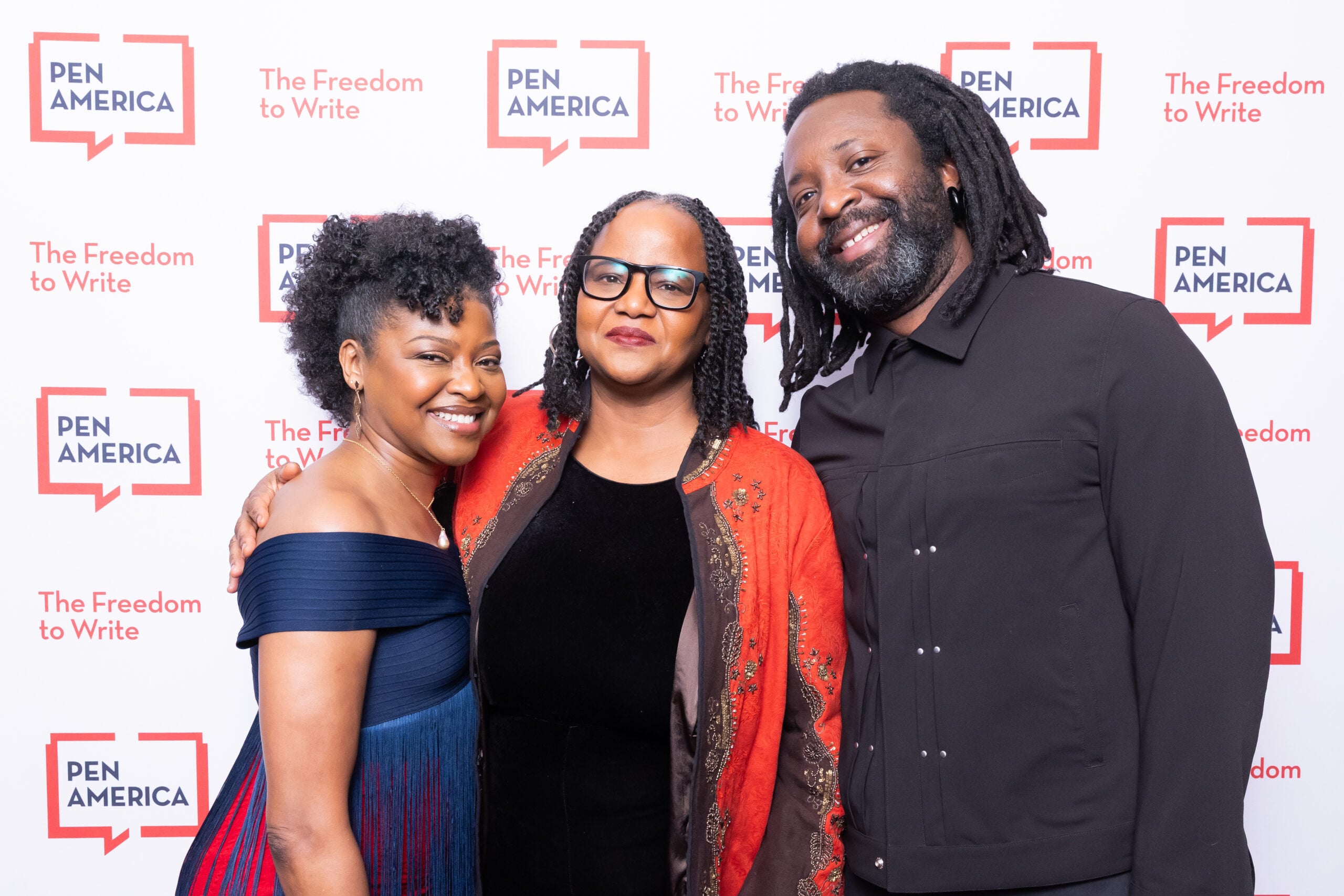
“Danticat’s career is that rare combination of big bangs and steady influence, of power and elegance,” they wrote. In presenting the prize at the 2026 PEN America Literary Award ceremony, Marlon James called Danticat “someone who has changed the very nature of contemporary literature, a uniquely powerful voice for identity and against erasure, and someone who has redefined and continues to redefine the Caribbean and the American experience.”
Tony-nominated Haitian-American actor Pascale Armand gave a world-premiere reading from Dèy (Knopf, August 2026), which follows a Haitian-American woman whose understanding of self is upended after a random act of violence on a sunny Florida day.
We spoke to Danticat about her achievement, the courage required to be a writer now, and her hopes for the future of free speech in the United States.
How does it feel to be recognized for your entire body of work?
It actually feels surreal, because I feel like I’m still in the middle of my career … I see it as affirmation, and an encouragement to relaunch into this work, which I think now feels like communal work. I was very moved when I was told, and also to have the folks that you work with, your friends, your colleagues, come out and make that effort to read the text or to just be present – I’m deeply grateful for that. I have actually been on the jury for this particular award, so I know that they have an abundance of choices, so it’s an honor, and I’m really humbled and happy to receive it.
It’s interesting to hear you describe it as encouragement. Earlier tonight, the playwright Julia Cho described responding to the political environment by getting quiet. Do you ever feel like that? Is it difficult to be a writer now?
Oh, absolutely. I think that was extraordinarily brave of her to say, because I think the truth is that so many people feel like that. Maybe we don’t feel it all the time, but there are definitely these moments where we’re accounting or considering what the risk is, or what it would be. What I’ve said to my writer friends who feel that way is that we don’t all have to do all the work all at the same time. We can take turns. I think what she said was very true for so many people, because just in the climate right now, there’s so much fear, and it’s purposeful fear. It’s meant to silence people. It’s meant to quiet people. It’s meant to make you pre-comply. But I think courage, as many people have said, is not the absence of fear. It’s trying to do what we can and in the presence of fear. And I think the more we feel supported, the more we feel that there are people behind us, the stronger we get.
In the climate right now, there’s so much fear, and it’s purposeful fear. It’s meant to silence people. It’s meant to quiet people. It’s meant to make you pre-comply. But I think courage, as many people have said, is not the absence of fear. It’s trying to do what we can and in the presence of fear.
Your work has shed so much light on the immigrant experience. Why is it important to tell those stories right now?
I think it’s important to tell the stories right now because another story is being told about immigrants, a very dehumanizing story, a very silencing story. As a Haitian American, the most powerful people in the country were telling the whole country that we eat cats, that we eat dogs. So we need counter narratives to those types of stories, because the story that’s being told is actively dehumanizing us.
Who or what has inspired you in your life to speak your truth?
Well, I grew up in Haiti during a dictatorship, and often we were told about speech, about speaking freely as a kind of cautionary tale. So we would be told this person said the wrong thing at the wrong time, offended the wrong person and ended up in jail or ended up killed. So that everyone who then defied that, the writers, the novelists, the journalists, my cousin who put on a play that he wasn’t supposed to then inspired for me the idea of free speech, and I think helped me to understand that courage. We’re not always courageous, we’re not always brave, but it is something to aspire to.
When you came to this country, did you think you were being liberated from that kind of censorship and that kind of overlord with your speech?
No, I wasn’t necessarily idealistic about what I was coming to. It was interesting, because even when we were in this country, my parents would say, you know, you still have to watch what you say, because what you say here can affect what happens to your family members back home. So that was still around. But when we got here, I think I was very cautiously observing to see, oh, what can people say? So it wasn’t for me like, oh, liberation. I knew that there was a different mode of leadership, but we still felt like this could be transferable. Whatever we had left could also be transferable here, because when you’re a child, powerful people seem to just have whims and can decide whatever they want. You still felt that.
My wish is that, of course, people can fully express themselves without political jeopardy, without physical jeopardy. But also that speech is more democratized … And in a way, I think we might have to go back to sort of community media.
Taking the temperature, what would you say is the state of free speech in this country right now?
I think free speech is very much in jeopardy in this country. I’m a writer surrounded by writers with banned books and, when books are banned, the people who are banning their books realize the power of these ideas. But also, I think there are different ways that people can be silenced through these massive social media platforms that can single you out and make your life hell. So there’s very different ways that speech is controlled, where, for example, someone says something and then your employer is called and you lose your work, or you’re made a social pariah. I think there is an environment in this country now of people and organizations or certain types of institutions instilling fear so that people pre-comply, so they may not necessarily have to silence you, but people censor themselves. I think we’re at that stage in the country where people are self censoring, including writers, teachers and other people who are like, I don’t need this heat. I might as well just kind of silence myself, or just stay off the radar.
If you had a wish for this country in the future, for free expression, what is your wish?
I think my wish for free expression is that we don’t have, for example, the media environment that’s just controlled by the most powerful people – and you can tell by the fact that billionaires are buying these venues of expression that they see the value of it. My wish is that, of course, people can fully express themselves without political jeopardy, without physical jeopardy. But also that speech is more democratized, that just as you have large publishers, we have small publishers, that we also have a variety of sources to listen to. And in a way, I think we might have to go back to sort of community media, you know, just like in the Black community and the Haitian community. How do we communicate in our communities, from church bulletins to community papers, to groups within communities, where we sit down and discuss our like issues that are specific to these communities, because now we’re driven so much by algorithms that make us feel angry and so people can say anything that they want, but we’re also being rage baited to kind of hate one another, so that speech also becomes a weapon, and division, and hostilities.