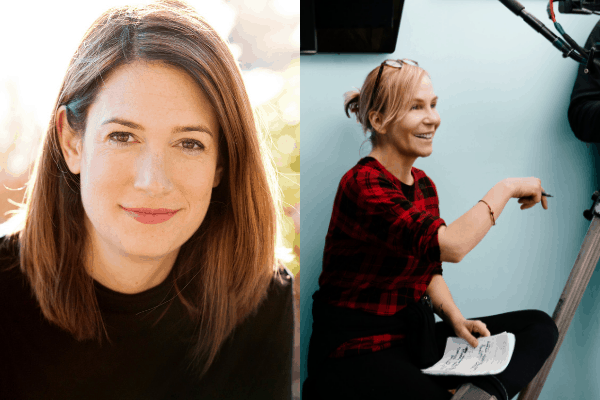
Asako Serizawa labored over her debut book, Inheritors, for more than a decade. Through the ambitious collection, which tells the stories of five generations of a family scattered across Asia and the U.S. by World War II, she sought to examine the roots and legacies of Japanese imperialism.
But the book was published in the summer of 2020, just months after the pandemic hit. Public readings and signings couldn’t take place, and online events hadn’t yet gained popularity, so Serizawa figured she was simply out of luck. “This book is coming out,” she kept thinking to herself, “and it’s going to sink before it even leaves the harbor.”
The following year, however, PEN America named Inheritors the winner of the PEN Open Book Award, which is granted annually to an author of color who, prior to the submitted book’s publication, has not received wide media attention. The news provided Serizawa with a glimmer of hope: Inheritors, she realized, had a real chance of washing ashore somewhere, landing in the hands of readers who would appreciate her hard work after all.
Formerly the Beyond Margins Award, the PEN Open Book Award is a $10,000 prize created to expand racial and ethnic diversity within the literary and publishing communities. Previous winners include the renowned writers Chimamanda Ngozi Adichie, Claudia Rankine, Richard Blanco and the U.S. Poet Laureate Joy Harjo.
Five years after she took home the award, Serizawa is serving as one of its judges. And as the political landscape grows bleaker, she said, the PEN Open Book Award remains a much-needed source of hope for her.
“Often you hear about repressive times and the importance of imagination, because that’s where everything starts: If you can’t imagine a future or imagine different ways of living, you really can’t move forward,” she said. “As a judge, if imagination is vital, then I’m witness to this vitality. … I just see the innovation in everybody’s work and the way that imagination is being used to find a way forward.”
The award has no restrictions on genre: In recent years, authors have taken it home for novels, experimental memoirs, poetry, and vignette collections. For the past five years, PEN America has also conferred $10,000 upon the winner.
“At a time when the government is actively trying to narrow the scope of the stories we’re allowed to hear, the Open Book Award provides some much-needed celebratory defiance,” said Melinda Page, program director of PEN America’s Literary Awards. “The books it honors, which are all rooted in very particular truths, provide an antidote to the idea that our differences are dangerous, that our diversity is a deficit. That’s because we tend to find the universal in the specific, and the details contained within these books serve as an important reminder of our shared humanity.”
For the writers who receive it, the award provides a vital boost.
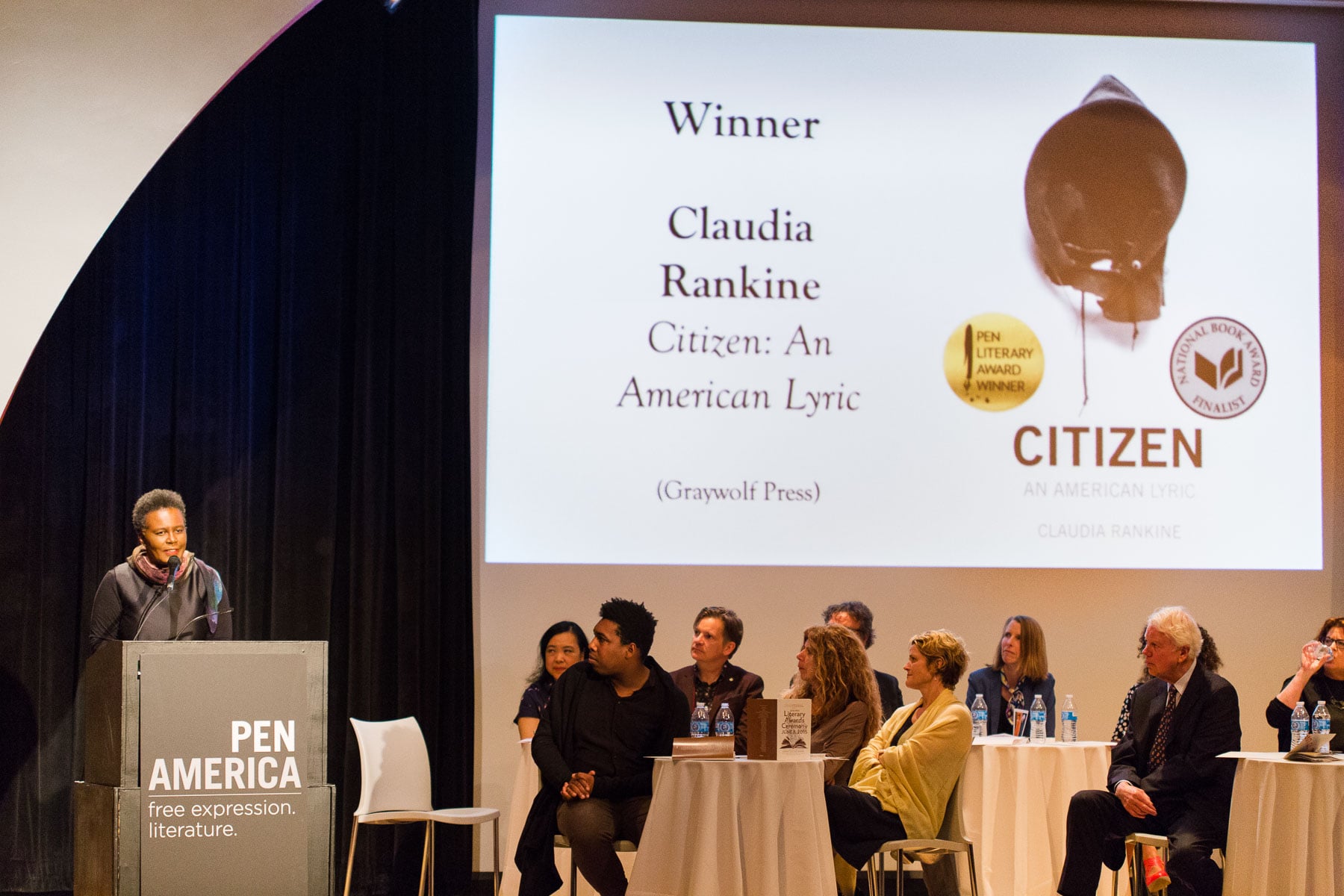
“Any award from PEN America, including the Open Book Award, signals a writer’s commitment to considering justice and equality in contemporary life. I was proud to have my work associated with this commitment,” said Rankine, who earned the award in 2015 for Citizen: An American Lyric, an unflinching confrontation of racial dynamics in the 21st century.

Blanco was especially honored to bring home the award in 2006 for his sophomore poetry collection, as they tend to garner less attention than debuts. “The Open Book Award shined a wonderful spotlight on my book, for which I was, and remain, very grateful,” he said. “Such an acknowledgment also encouraged me to continue pursuing my vocation as a poet with renewed confidence and conviction.” Blanco’s winning collection, Directions to the Beach of the Dead, raises questions about identity and belonging from his perspective as a Cuban-American.
Since 2015, winners of the PEN Open Book Award have also attended a fully funded artist residency at Civitella Ranieri, located in a 15th century castle in Umbria, Italy. Six weeks long, the residency offers its fellows almost entirely free reign over their schedules, though they are invited on weekly excursions to local cultural heritage sites.
Michaela Olson, Civitella Ranieri’s coordinator for programs and operations, said that since its inception, the residency has been dedicated to bringing diverse populations of artists from across the world to its grounds. “And the PEN fellows that have come through have been incredible parts of the community at the castle and have really enriched the conversations,” she added.
The residency was “magical,” Serizawa said, highlighting the opportunity to speak with other artists and find points of intersection across their projects. Cohorts at Civitella are typically composed of 12 to 15 fellows and include visual artists and composers in addition to writers.
Divya Victor, who received the PEN Open Book Award for in 2022, described her six weeks at Civitella as “profound and transformative.” It was the first time in her life she could write without working another job — and coupled with the self-assurance the award gave her, the scale of her ambition expanded, she said.
Victor’s winning book, Curb, maps the rise of domestic terrorism against South Asians following 9/11. “I never thought that I would receive public recognition for that particular thrust in my writing, that particular drive, because I work within the academy, where certain forms of radicalism are actively being curtailed,” she said. “The Open Book Award really rewards risk taking and swimming against the current of normative narratives.”
During her time at Civitella, Victor turned her attention to Kin, a collection of essays that explores kinship catalysts in the South Asian diaspora. Graywolf Press will publish the collection next spring.
And Victor isn’t the only recipient who said the PEN Open Book Award emboldened her to dive deeper into her intellectual pursuits. Harjo felt similarly after earning the award in 2002 for A Map to the Next World, which draws on her identity as a member of the Mvskoke Creek Nation in its investigation of America’s violence against Native Americans.
“The prize helped to introduce my work to a wider readership, which opened the path for my next two decades of writing,” she added. “When I think about all that led to my position as the 23rd U.S. Poet Laureate, the generosity and recognition provided by the PEN Open Book Award is very much a part of that story.”
This year’s finalists for the PEN Open Book Award are The Devil Three Times by Rickey Fayne; Ibis by Justin Haynes; Natural History by Brandon Kilbourne; Medicine River by Mary Annette Pember; and No Rhododendron by Samyak Shertok. The winner will be announced at PEN America’s 2026 Literary Awards Ceremony on March 31.