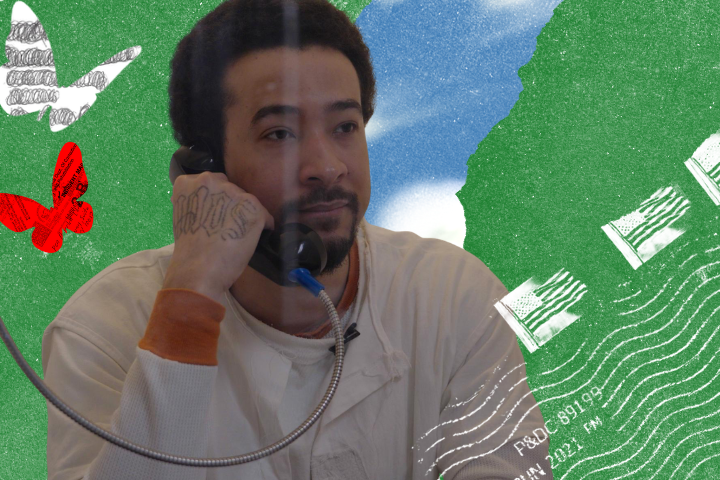
In 2001, the up-and-coming rapper McKinley “Mac” Phipps Jr. was convicted of manslaughter, after a man was shot and killed during a melee in a Louisiana club where he was performing. The then-22 year old was sentenced to 30 years in prison–despite another man confessing to the crime–after prosecutors leaned heavily on lyrics from his album, Shell Shocked, as evidence. He was imprisoned for 20 years before his sentence was commuted and he was finally released on parole in 2021.
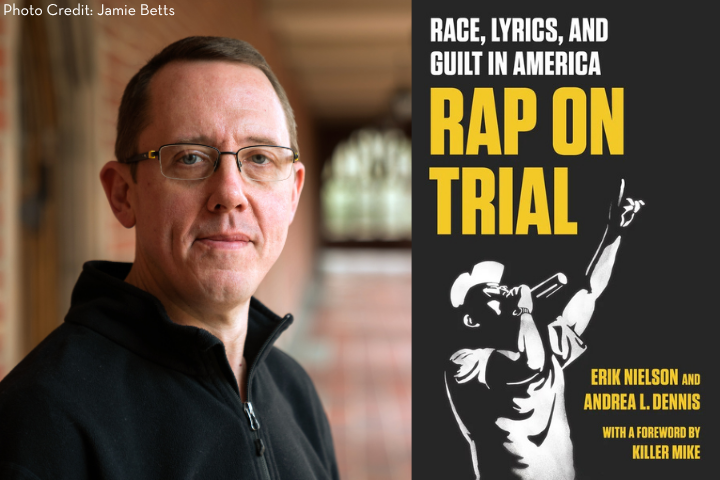
Mac’s case is among the most famous where lyrics written by rappers were used as evidence in courtrooms; but it is far from the only one. In fact, it was one of hundreds tracked by Erik Nielson, a professor at the University of Richmond, and Andrea Dennis, a law professor at the University of Georgia. They documented their findings in the 2019 book Rap on Trial.
No other form of creative expression has been treated this way in the courts, they have found, and advocates are working to place limitations on the way lyrics–or any form of creative expression–can be introduced as evidence in trial.
As Nielson has emphasized, this is an issue that is fundamentally rooted in systemic racism, given that the practice of using lyrics as evidence has been squarely used against rap and hip hop music largely created by Black and Latino men. But the universal free expression principles at stake in these cases affect us all.
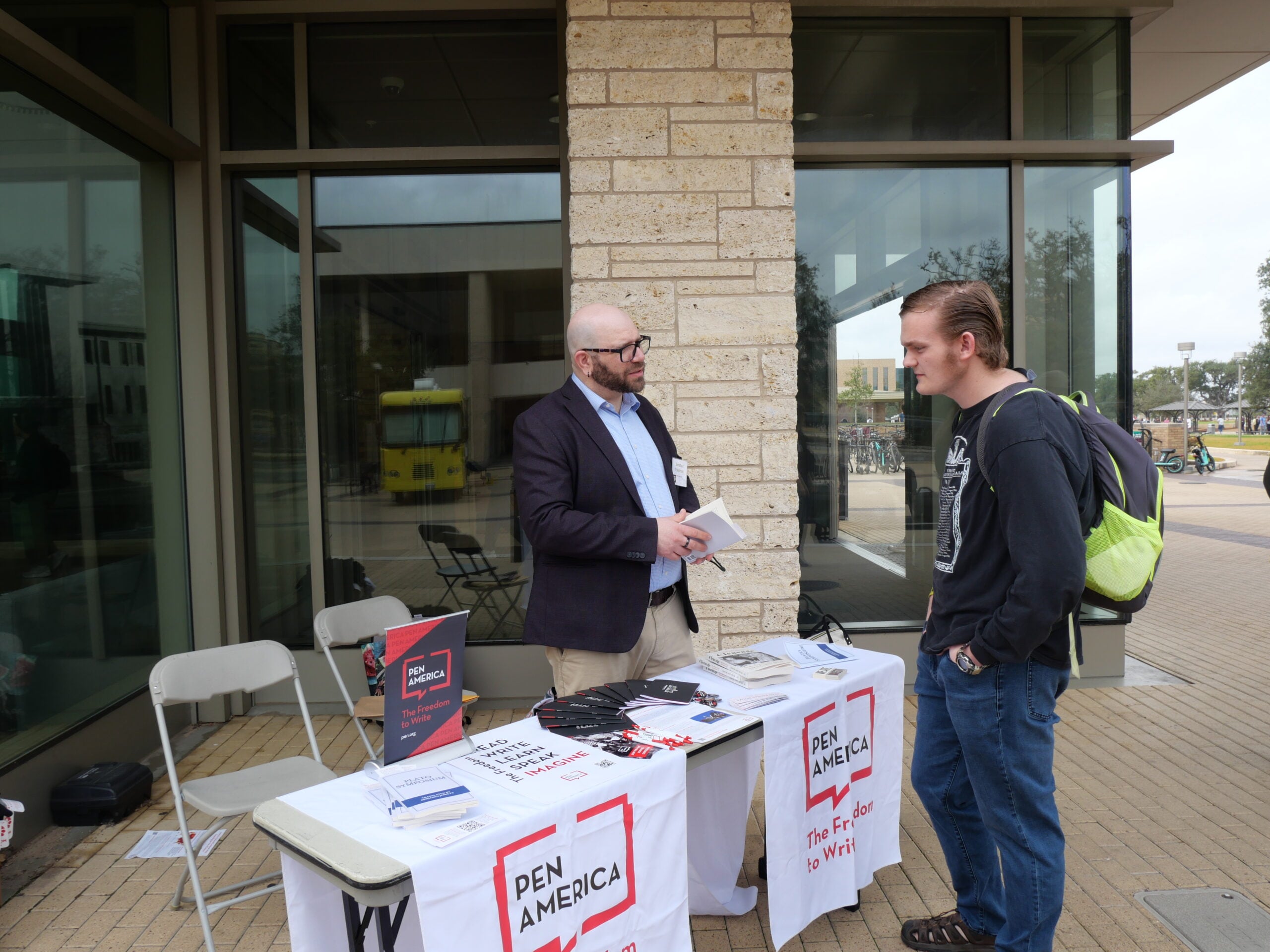
With a recent law signed in Maryland, and bills introduced in several other states, PEN America’s Jonathan Friedman spoke with Nielson about how artistic expression is used against creators in criminal trials, and the state of efforts to pass laws that restrict this common practice.
Their conversation has been edited for length and clarity.
Jonathan Friedman: Erik, thanks for talking with me today. You are co-author of the book Rap on Trial with Andrea Dennis. What’s the book about?
Erik Nielson: Our book looks at the use of rap lyrics as evidence in criminal cases. Our goal with the book was not only to draw attention to this practice, but also to convince people that we need to change the criminal justice system, certainly with the way it weaponizes creative expression.
In what ways does it weaponize creative expression?
It’s very common, incredibly common, for prosecutors who might charge somebody with a particular crime to go into their catalog of music and to look for lyrics that support their accusations. We see all the time that a young man—and it’s almost exclusively young men, Black and Latino—a young man might write a song about a shooting. If he’s been accused of shooting somebody, prosecutors will go and look at his creative expression, his lyrics, and argue that those are actually autobiographical, that they should not be understood as figurative or artistic, that these are actual confessions to actual crimes.
Now, you’ve been looking at this issue specifically in the genre of rap and hip hop lyrics. Why did you choose that? Hasn’t this been done by prosecutors for all kinds of artistic expression?
No, it hasn’t, and that’s why I chose it. I chose it because it became clear that the criminal justice system was targeting rappers in particular. Over more than a decade, I’ve been compiling a list of cases involving creative expression that’s been used this way. We’ve found over 800 examples of rap music. And going back to the 1950s. Working with The New York Times, Jaeah Lee did an investigation and found exactly four examples of other fictional forms being used in similar ways. So, no, this is not something that is happening across the board. This is something that is targeting rap artists and rap music in particular.
That fascinated me when I read about this, because I think of songs that are very popular where the lyrics are sort of confessional, like Bob Marley with “I Shot the Sheriff” or Johnny Cash singing that he “shot a man in Reno” in “Folsom Prison Blues.” I don’t think listeners understand these singers to have committed these crimes. Why is it the case that, in rap and hip hop, this has become so prevalent for Black and Latino men?
Well, I think within the question is kind of the answer. Which is, as we say in the book, this issue is not a First Amendment issue with racial implications, it’s a racial issue with First Amendment and other implications. It’s very clear, based on our data set, but also a growing body of empirical research, that the reason why rap is being targeted is because the primary creators of this art form are young men of color. And that is a group that the justice system has long targeted and has found new ways to target via criminalizing artistic expression.
Our goal with the book was not only to draw attention to this practice, but also to convince people that we need to change the criminal justice system, certainly with the way it weaponizes creative expression.
It’s really astonishing. You said that you found over 800 cases where lyrics played some role, where creative expression plays some role, in district attorneys seeking criminal convictions. What can you tell me about the different kinds of ways in which you’ve seen that happen?
The use of rap as evidence can be broadly divided into two categories. The primary category, where the vast majority of cases happen, is when the lyrics, or the videos–or some combination of those–are used to establish the defendant’s involvement in an underlying crime. So, if someone is charged with a shooting, it’s common for police to go look into his music catalog and anything else he may have, and look for lyrics that might mention “shooting,” and they will then characterize those lyrics as either confessions to a crime or certainly confessions of intent to commit that crime. That’s by far the most common use of lyrics.
A smaller subset is when the lyrics themselves are the crime, when they are charged as true threats, the argument being the lyrics should be understood literally as an imminent threat towards another human being. That’s a smaller subset, but that’s primarily the other way lyrics are used.
And again, we’re only seeing that with rap?
Only with rap music.
I imagine there’s a range of ways that rap lyrics are introduced as evidence, sort of the different ways in which they can persuade a jury. Are most of these cases ones where the lyrics were the determinative factor? Are the lyrics a minor factor? You said a minute ago, “this is a racial issue with some First Amendment implications.” How do we understand the universe of First Amendment implications here?
Well, it’s not always easy to determine what role the lyrics played in the overall prosecution of an individual, because oftentimes the lyrics are paired with other forms of evidence. And it’s uncommon for us to know, from a jury’s perspective, which pieces of evidence influenced their verdict, and which didn’t. However, we have seen a number of cases where the physical and other sort of traditional evidence was very, very weak, and so the state relied heavily on rap lyrics in order to persuade the jury of someone’s guilt. When, like I said, a lot of the evidence that you would expect in a case of that nature was lacking.
You’re saying that these lyrics, which are often the reflection of someone’s imagination, come to stand in for the lack of other evidence?
They absolutely do. But we have to understand that this is what the market asks for. This is what these young men, often with very limited opportunities for upward mobility, what they see as a pathway towards success that has helped thousands and thousands of people. The types of lyrics that tend to get them in trouble are also the types of lyrics that many of us consume and demand. And so we put them in an impossible situation of having limited opportunities for growth, but then, when they pursue this one legitimate way, we close the door on them in a different way.
Unfortunately, what you see here is that the First Amendment is not applied evenly, and there is a very clear double standard when it comes to rap and the people who produce it.
It’s almost like an area that the First Amendment seems to have forgotten.
Absolutely. One of the things that sets America apart is that it does have a First Amendment, and I believe very strongly in the value of that. Unfortunately, what you see here is that the First Amendment is not applied evenly, and there is a very clear double standard when it comes to rap and the people who produce it.
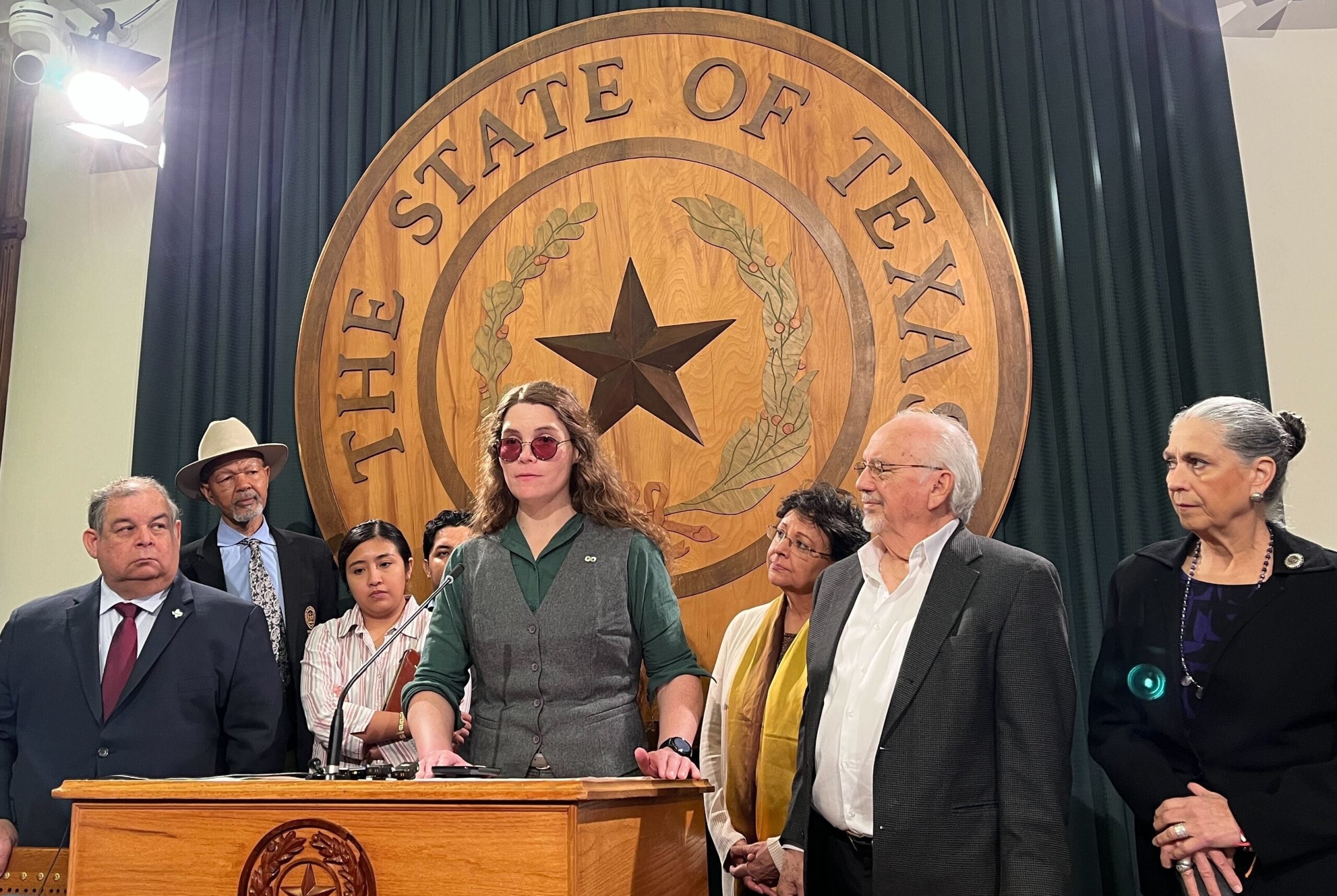
Let’s talk about the PACE Act, or Protecting Artists’ Creative Expression Act, which I know you have been a champion of and which was signed into law recently by Governor Moore in Maryland. What does it do?
What it does is it creates some guardrails to make it harder for prosecutors to introduce creative expression as evidence in criminal cases. It does not ban the practice outright. It just requires prosecutors to demonstrate that this evidence is necessary, that lyrics were actually intended to be literal, that there is a close connection factually to the charged crimes. Things like that, that you would hope prosecutors were already being required to do by judges, but based on my experience and all of our work, we know that’s not been happening. So this takes some of the discretion away from judges, and I think correctly so, just to make sure that we are respecting people’s First Amendment and creative rights.
So the law is establishing a standard?
It’s a presumption of inadmissibility. Essentially, overall the position in this law is that we’re not going to use people’s creative expression as evidence against them. But it does create a pathway where if it’s very clear that somebody is knowingly, intentionally confessing to something and just rhyming that to a beat, that’s absolutely still fair game as evidence. In my experience, that is not a common thing at all, and so I’m hopeful that the outcome of this law will be that we see far fewer instances of rap lyrics being introduced as evidence in the state of Maryland.
What do you think this state law could do for this issue?
I would like to think it will resolve the issue fully. I don’t think that’s going to happen. I think what you’re going to see, though, is that it’s going to bring a certain level of honesty to the criminal justice system, to the process. It’s going to go further than most other states in ensuring that defendants receive a fair trial. And that’s really the only goal here, it isn’t to argue for somebody’s guilt or innocence. It’s just to acknowledge the highly prejudicial, the highly inflammatory nature, of this type of evidence. In addition to the way that it’s commonly misrepresented and mis-presented by prosecutors to a jury, it’s really just making sure that if someone’s going to be convicted of a crime, it’s based on real evidence, not somebody’s imagination. And I’m very hopeful that this law will go a long way toward ensuring that.
Now, this law was just signed in Maryland. And I understand this is the third state, after Louisiana and California, to take some action on this issue. Where do you see the fight to pass this legislation going next?
Unfortunately it just stalled in the New York Assembly, after passing the Senate there. New York was, to my knowledge, the first state to take this up a few years ago, so, now they’ve been at it the longest there. But we are hopeful that the momentum we’ve gained, especially from Maryland, will help to gain traction in other states like Georgia and Missouri.
It strikes me that in the absence of laws like this, when you talk about such rampant abuse of the First Amendment, that these criminal prosecutions may have had an impact, a ripple effect, let’s say, in the field of rap and hip hop music. Is it your sense that it has?
Yes, there has been a chilling effect. It’s hard to demonstrate that, because it’s hard to demonstrate the absence of speech that somebody, presumably, self-censored himself and didn’t produce. It’s also hard to make that argument when rap is so prevalent and so influential. It doesn’t seem like a form that’s been chilled at all, but it very clearly has been.
I’ve seen in the last decade, in particular, rappers taking great pains, especially in their videos, but in their lyrics as well, to include disclaimers, saying, ‘This is not real. I’m just reminding you this is fictional. None of this is true. This is not real contraband.’ Things that in the past rappers would not have done. In fact, in the past, rappers tried to convince their audiences that they did lead these criminal lives. Now, they’re going in the opposite direction, and there’s no question that’s because they’re aware of the surveillance that they are under and the repercussions, if their lyrics are used against them in court.
We are all better off as a society when people are able to express themselves creatively, and artists in every other genre have benefited from that. Let’s make sure rappers benefit from it, too.
It’s certainly a situation where freedom of expression as we think of it, and as we cherish it, is clearly being abridged.
Without a doubt. And as Americans, this should be an affront to our core values, especially when you factor in the communities who are targeted by this. I mentioned, it’s primarily young Black and Latino men. We should be encouraging opportunities for upward mobility. We should be encouraging people who may lead challenging lives to find creative outlets. That is healthy for us. There are lots of pro-social elements to this form of creative expression, even if on the surface it sounds violent or is somehow offensive to others. I’ve seen firsthand how it has changed lives in a variety of ways, and this is the type of thing that we should be encouraging, not punishing.
What’s your message to other writers and regular citizens out there who don’t know much about this issue?
The message is you, at least in America, in the United States, you live in a country that has given you an exceptional amount of freedom to pursue your art. And I am certain that whatever your medium is, it has benefited from that type of license, that type of freedom. Rap is no different. Whether it’s a form you like, or that you practice, or not, you need to defend it, because we are all better off as a society when people are able to express themselves creatively, and artists in every other genre have benefited from that. Let’s make sure rappers benefit from it, too.
Where should people go to learn more?
They should visit rapontrial.org, which is a site that I maintain exclusively with help from my students. They can Google the issue all they want, and they will find all kinds of media attention, and I would encourage folks to visit the Free Our Art website. It’s a new organization that is focused on legislative advocacy around this, I would expect to see more from that site and from that organization in the months to come.
PEN America is an active member of that coalition. Let’s hope that we can see this change in New York and in Georgia and Missouri, and wherever we can go next. Thanks so much for being here, Erik.
Thank you. PEN America is a welcome ally in this and an influential one, and I look forward to what we can achieve together.