UPDATED 5/1/2026: Since the publication of this blog post, James Broadnax was executed despite new evidence in his case. The United States Supreme Court, the Texas Board of Pardons and Paroles, and Governor Greg Abbott all denied appeals for stays of execution and clemency.
James Broadnax was executed yesterday.
He had been sentenced to death by a Texas jury in 2009. In the absence of any criminal record other than one non-violent offense or other evidence that Broadnax had a pattern of violent tendencies, state prosecutors relied extensively (but selectively) on 40 pages of lyrics Broadnax had written as evidence of his “future dangerousness,” a required and determining factor in capital sentencing for criminal defendants under Texas law.
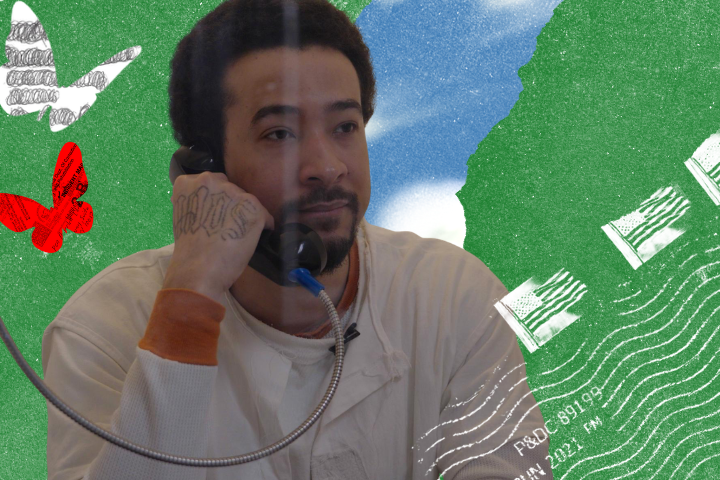
In other words, the state used Broadnax’s own artistic expression to condemn him to death.
Among several efforts to stay the execution on the basis of new evidence and allegations of a discriminatory trial and sentencing was a petition for certiorari to the United States Supreme Court to review the use of his lyrics in his sentencing. The Supreme Court denied the petition.
Unfortunately, Broadnax is not alone in having his art used against him. In particular, the use of rap and hip hop lyrics as evidence against defendants in criminal trials is an ongoing and pressing issue in the American judicial system. Racist and discriminatory perceptions of rap music that denigrate it as an art form have contributed to a pervasive perception that its lyrics are entitled to less creative protection than other forms of art. As legal scholar Andrea Dennis has noted, “the conception of rap music lyrics as truth rather than art is consistent with the stock image of gang-members and rappers as criminals.” Since the 1990s, prosecutors have used that bias to their advantage and have become adept at presenting rap as evidence of criminality.
There is no other art form used in this manner; that hip-hop and rap are fundamentally black art forms is not a coincidence. Most people do not believe that short stories, traditional poems, and other fictional art forms directly reflect the reality or mentality of their authors. Lyrics in other musical genres are not taken as verbatim confession either. But rap lyrics are frequently presented in court as direct reflections of their authors’ actions and motivations.
Not only is rap treated differently from other art forms, its use as evidence is actively prejudicial. This racial and cultural bias is not speculative—social psychologists have found that when presented with identical lyrics, study participants are more likely to find them to promote “violence, riots, and civil unrest” and “be dangerous or harmful to society” when they are told those lyrics are from a rap song than when they are told they are from a country song.
There are legitimate and serious concerns that this bias was at play in Broadnax’s trial and sentencing. Broadnax was convicted and sentenced by a nearly all-white jury. (Seven Black prospective jurors were struck down during voir dire–one was reinstated by a judge only after the court found “a disproportionate number of African-Americans being struck from the panel.”) Whether conscious or not, the bias likely allowed prosecutors to present Broadnax’s creative expression as authoritative evidence of criminality.
Broadnax’s case differs from many other criminal cases that put rap on trial in that his lyrics were not used as evidence of his actions or even of his guilt in the case. Rather, they were used as evidence of his fundamental character—proof of his “future dangerousness.” But over the course of his 20 years on Texas death row, Broadnax’s writing has demonstrated the opposite. It has been an outlet for creative expression and a means of holding onto his humanity under unimaginable circumstances.
It is both a grave violation of free expression and an insult to Broadnax’s art and to rap music more broadly that it is used as a direct stand-in for authors’ actions and motivations in criminal trials. The First Amendment applies equally to all forms of art. However, in an unjust system, it is not always applied equally.
In their seminal book, Rap on Trial, Erik Nielson and Andrea L. Davis write that in the criminal justice system, “it has become apparent that rapper defendants are not considered legitimate artists and rap music does not merit the artistic recognition granted to other forms of art.” This perspective explains the paucity of First Amendment case law on this issue. Legal challenges to the use of rap lyrics as evidence—including Broadnax’s—rarely hinge on the First Amendment. In fact, carve-outs in First Amendment jurisprudence, such as those for obscenity and true threats, are often used against rap. Because rap is not given the recognition as protected expression it deserves, the rules of evidence and other procedural questions become the battleground in determining whether or not lyrics can be introduced, allowing prosecutors and judges to use defendants’ own art against them without having to answer to the fundamental principles of free speech enshrined in the Constitution.
Because courts have consistently failed to view rap lyrics as protected expression, many advocates have advanced state-level legislation that would shield rappers from having their art used against them in criminal trials. Artists, music industry professionals, scholars, advocates, and organizations like Free Our Art (of which PEN America is a coalition member) have pushed for bipartisan state legislation to limit how art can be used against artists. One such bill, Maryland’s Protecting Artists’ Creative Expression (PACE) Act, will be signed into law in early May.
James Broadnax did not live to see that change. Broadnax’s case lays bare the stakes of using rap as evidence in criminal trials—this issue is bigger than rap, and it can have life or death consequences. When creative expression is used as evidence of criminality, it denies people like James Broadnax their humanity.
And, in this case, it has helped justify his execution. Read more about new evidence in Broadnax’s case and the campaign to stay his execution here.