If you check out the winners of the PEN/Heim Translation Fund Grant, it’s unlikely that you’ll recognize the titles of their projects. But give it a year, and you might stumble upon a glowing review of their book in a newspaper, learn that it’s going to be adapted into a movie, or spot it on the shortlist for the International Booker Prize.
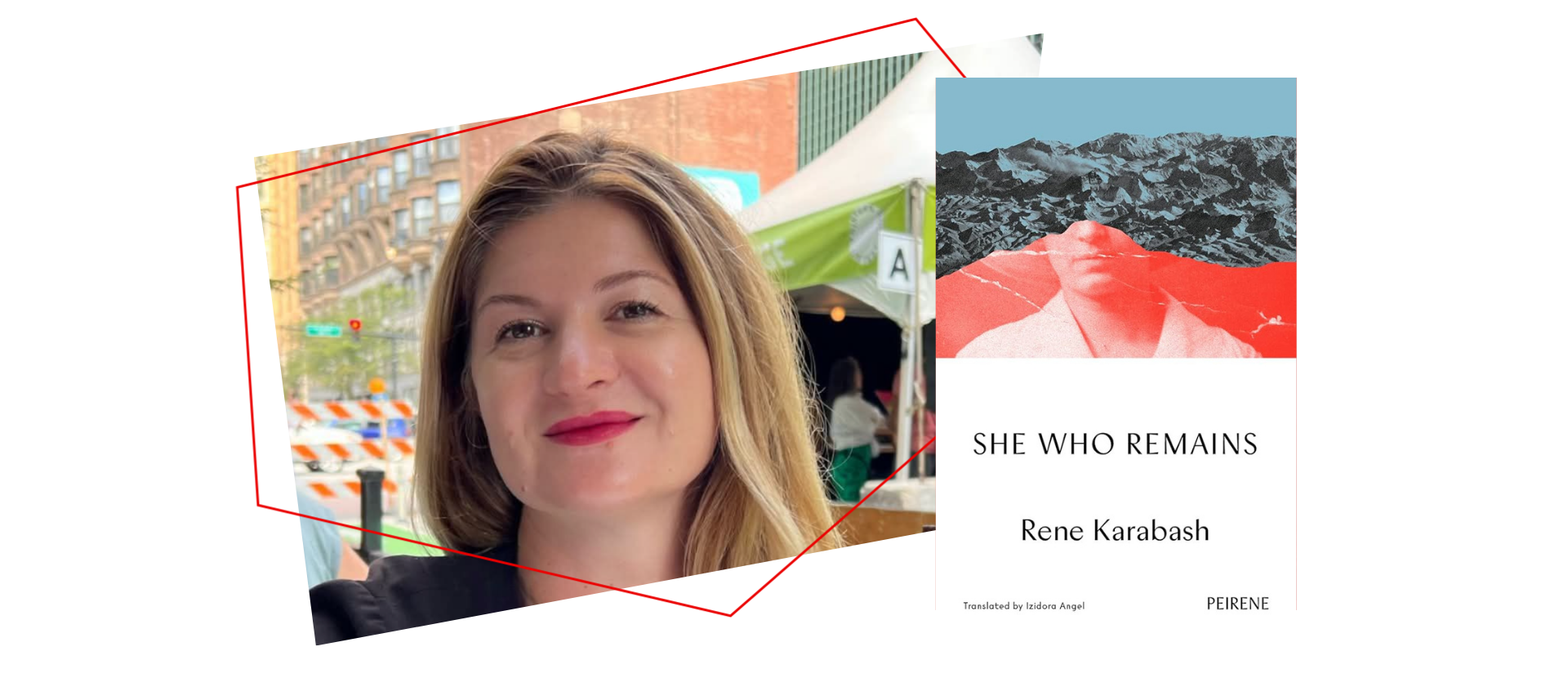
Or all three in the case of translator Izidora Angel, who last year won the prestigious $4,000 grant for She Who Remains. Originally written in Bulgarian by Rene Karabash, the novel follows a teenage girl in rural Albania who swears a vow of chastity to escape an arranged marriage, renouncing her womanhood to live as a man. The judges, who selected 10 winners from a vast field of applicants, described it as a “darkly fascinating and poetic novel about identity, gender, love, and societal norms” that is “culturally profound and relevant universally.”
Since the fund’s establishment in 2003, it has awarded grants to nearly 200 in-progress literary translations from more than 35 languages, giving preference to translators at the beginning of their career, translators of underrepresented identities, and translators working in underrepresented languages. In addition to receiving favorable reviews in magazines including The New Yorker, The New York Review of Books, and The Paris Review, 20 percent of the published projects have won or been shortlisted for major literary awards.
Last month, Angel learned that her translation had joined the mix: The judges of the International Booker Prize had shortlisted the “dark and poetic novel,” deeming it “an unforgettable modern fairy tale.” “Told with understated poetry, this novel perfectly captures the slippery uncertainty of painful memories,” they said.
PEN America spoke with Angel about how the PEN/Heim Translation Fund Grant judges’ citation provided her with valuable language for describing the book as well as the confidence to ask her publishers to nominate it for the International Booker Prize. “This is just such an Indie hit success story,” she said. “It warms my heart.”
This interview has been edited for length and clarity.
Tell me a little bit about She Who Remains. When did you initially discover the book, and what drew you to it? What inspired you to translate it into English?
I’m working from Bulgarian, which is a very small language — you know, ‘minority literature.’ And so my challenge is to create demand where there is not demand, because I don’t have editors banging down my door asking me, ‘What are you working on? We must publish the next Bulgarian book.’ And so the way I create traction is by getting a small excerpt published, or entering some kind of contest, or applying for residency, or just something that would get a little bit of traction to create interest where there perhaps isn’t any.
As a translator, I have to have an editorial eye as well: ‘What’s the right time for something? What’s the urgency of this now?’ I had to kind of read [She Who Remains] a couple times, little excerpts here and there, before I was like, ‘Oh my God, this is really innovative, really amazing. Let me see what I can do with this.’ And when I read it, I was just completely captured from the first page on, because it’s this stream-of-consciousness, really raw, really beautiful, almost biblical meditation on womanhood and gender and queerness and violence and familial relations. And so I did a short excerpt, and that ended up winning the Gulf Coast Prize in Translation. That gave us this huge momentum, huge push forward. And then, of course, when we won the PEN/Heim, that was another huge thing for us.
How far into translating She Who Remains were you when you received the PEN/Heim Translation Fund Grant?
By the time we got word of the grant, I had already submitted the first draft to my publisher. … Getting those emails is the best, because you get so many other emails: the rejection emails. And it’s to the point now where you get like 15 rejection emails for every one that you might get that’s really, really good. And this grant is really amazing. Four thousand dollars is not a small chunk of change. It’s really helpful. It’s not just that you’re one of 10 projects in the world — because this is open to anybody working from any language into English in the entire world. There’s no residency requirements, there’s no citizenship requirements, and this makes it an enormous pool of potential applications. So for a project to stand out and to be one of 10 in the entire world that’s supported and financed, just that numbers game is dizzying. To be on the winning side of that is obviously really huge. I was like, ‘This year is going to be amazing,’ and in so many ways it was.
The high-profile nature of the grant and the visibility was really, really amazing. But also what was said in the judges’ citation also just ended up being so incredibly helpful for positioning the book, and you will see little remnants of it even now, if you look at the Booker Prize and the things that the judges are saying there. The DNA of what the judges said for PEN/Heim is still there. So that’s incredibly powerful, and that’s a kind of momentum that you can carry through to the biggest prize in the field. It just shows you that getting that early-stage support is so crucial. What PEN does with the grant cannot be overstated.
How did the public recognition of the award affect your confidence as a translator and your hopes for the project?
What was said about the book gave us — me, Rene, and Peirene [Press] — so much confidence. Because you have to believe against reality that you could submit a project like this to the International Booker. There are some very concrete parameters, and every publisher can only [submit] three books from their entire list that year. So this language is what gave me the guts to go to my UK publisher, Peirene, and say, ‘I think we really need to submit this to the International Booker.’ To make a case for the book to be submitted was, I think, enormously helped by what PEN/Heim did. And my publisher was like, ‘Absolutely, we agree.’ I don’t think that they were like, ‘Oh, we hadn’t thought of that.’ It was a same-page kind of thing. … But yes, what PEN/Heim did to give me confidence and help with the positioning was absolutely essential.
It just shows you that getting that early-stage support is so crucial. What PEN does with the grant cannot be overstated.
Do you remember the moment you heard the news that you received the grant?
It was Submittable coming through with the most beautiful message: ‘Congratulations, you’ve been selected.’ My kids were home, actually, at the time, which was really great, because usually, as a writer, you get this news, it’s very quiet around you. But my kids were home both for the PEN/Heim news and for the Booker news, which made it so much more special, because I got to hug them and celebrate in real time.
And what was it like when you learned that you were shortlisted for the International Booker Prize?
As we got closer to the date they announced the longlist, I just felt this … I can’t even describe it. You just feel something, and then you’re like, ‘But am I just a fool? Am I just imagining that this is even a possibility?’ And then I got a text from my publisher very early in the morning saying, ‘Give me a call when you get up.’ And then I wept for the entire day, because it was just such a validation at the highest possible level. All the rejection, all the disinterest from editors, from publishers, from magazines, from people that don’t return your emails — all of that, that I had been holding onto for a really long time, just released itself. And then we found out we were on the shortlist a couple weeks after that.
To have a book that’s critically and commercially successful is a miracle. It’s impossible. And to have come from small, small publishers, from a tiny language? It’s against all odds. So to have a critical and commercial success, it feels amazing. I won’t lie. It feels amazing.
Bulgarian is a highly gendered language; English is not. How did Rene Karabash, the author of She Who Remains, examine or probe gender in Bulgarian? How did you carry those details over to English?
Yes, there’s an English neutrality that doesn’t exist in Bulgarian because there’s a gendering of nouns. There’s a gendering even of the speaker [expressed through their dialogue]. And so I was really struck by the fact that Rene, in most instances, kept it feminine, even when the main character is referred to by their masculine name, Matija. Of course, that disappears in English. So I had to find little ways to make sure that it didn’t go away completely with some lexical choices and social cues and things like that. But I just love the fact that it was just not such an easy binary. I just love the complexity and the nuance of the way gender was presented. And I think the way that the book really successfully presented the in-betweenness was precisely through the stream of consciousness.
To have a book that’s critically and commercially successful is a miracle. It’s impossible. And to have come from small, small publishers, from a tiny language? It’s against all odds.
Right, She Who Remains is told through free-flowing text rather than traditional prose. What were the challenges of translating such a lyrical piece of writing?
The challenge was that you have a lot of repetition. You have things that repeat in surprising places in the book. And I knew it was supposed to be very similar to the way it had appeared in the text before, but it sounded different to me. And the reason it sounded different is because it’s appearing somewhere else, somewhere new, and it’s supposed to evoke a different emotion in you. And so I rendered it a little bit differently each time, because I was going based on my instinct of how it made me feel.
What does the success of this novel — which challenges assumptions about gender and centers a queer love story — mean for Bulgaria, where gay marriage is still banned? Has it been censored or received any backlash for its themes?
Not censorship, but it’s funny, because Rene and I really differ in our approaches to this. She is a queer woman, and she is [in Bulgaria]. She’s been on every single talk show, every single newspaper, everything, and literally not a single one has mentioned the fact that this is a forbidden love between two women. Not a single one.
Rene is like, ‘Listen, they see it. They know it’s there. They’ve read the book. The fact that they don’t want to talk about it? That’s on them.’ I was like, ‘Wow, that is really, really smart.’ Because I’m yelling from the rooftops. That’s my privilege. I was very, very struck by how smart she was about it, because she says, ‘My activism is in my literature. That’s how I let the world know what I think.’
What’s the riskiest choice you made while translating She Who Remains?
I’m just so lucky that my publishers embraced the book, because so many others would just completely back down. The riskiest thing is publishing the book. It wasn’t necessarily individual word choices as much as the book itself. This is just such an Indie hit success story. It warms my heart.
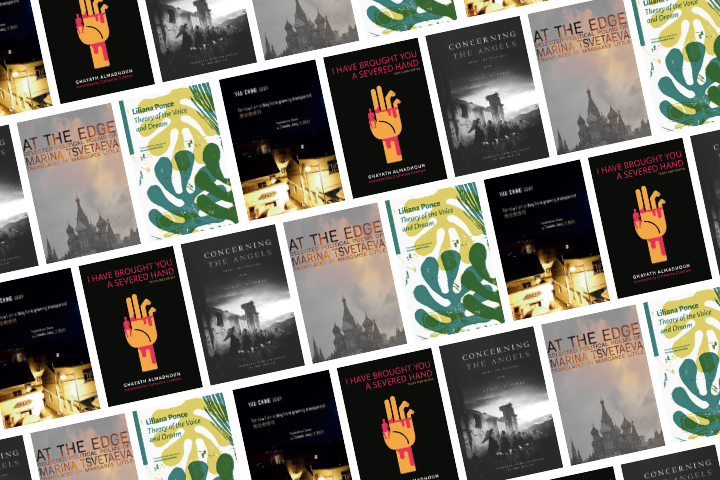
Want to learn more about PEN America’s translation grants and awards? Check out our recent interview with this year’s judges of the Poetry in Translation Award.
Interested in hearing more from International Booker Prize–nominated authors? Read our interview with last year’s winner, Deepa Bhasthi.