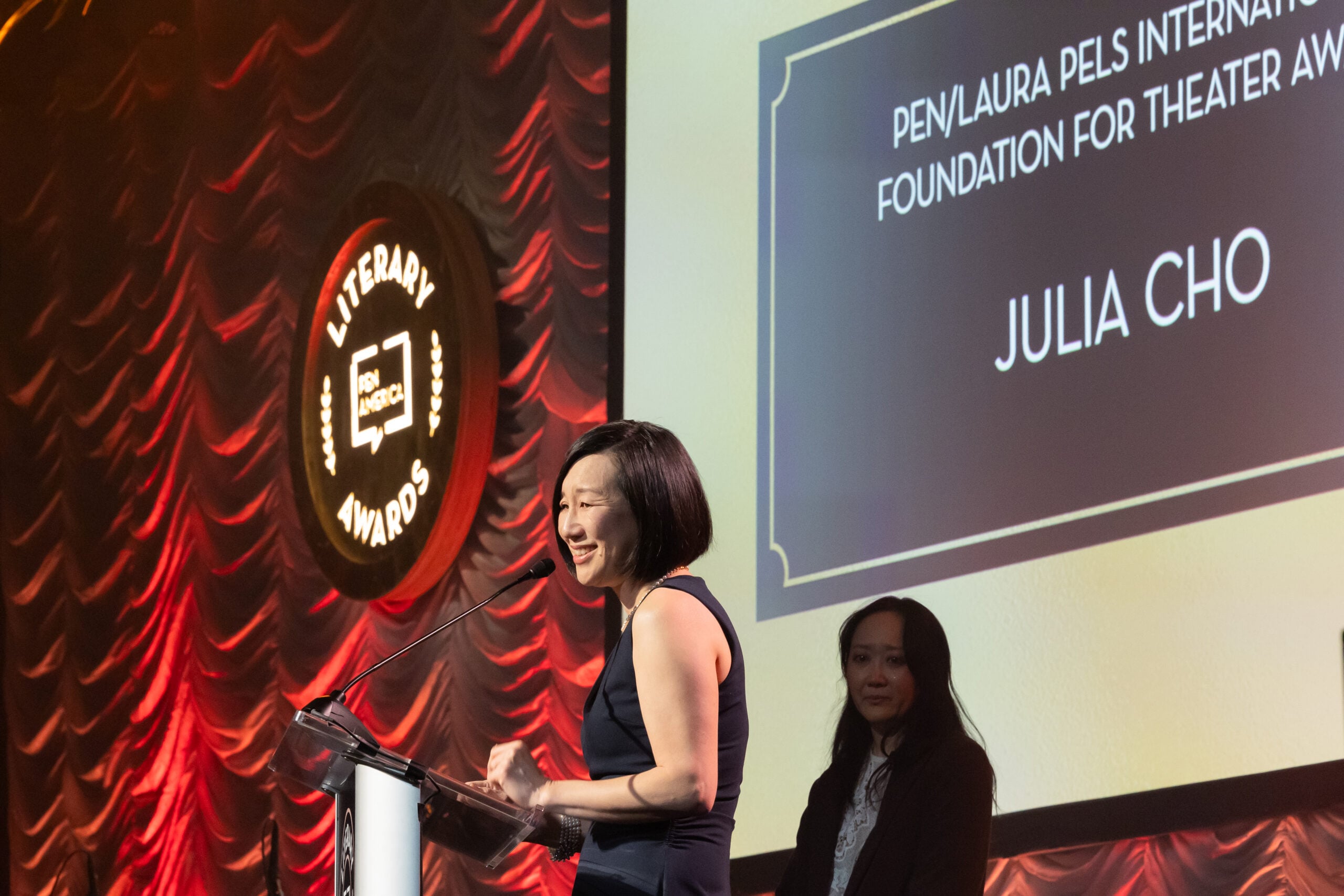
In accepting the PEN/Laura Pels International Foundation for Theater Award, playwright Julia Cho thanked the theater community and her family — and then, discussing the fear and sadness that has overcome her in this political moment, she teared up.
“The reaction I had was the exact wrong one,” Cho said. “I became quiet. I became silent. So most of all, thank you for waking me up. Thank you for reminding me who I am — that I’m a writer, that it’s the time now more than ever to write, and I will do my best to create work to be worthy of this honor.”
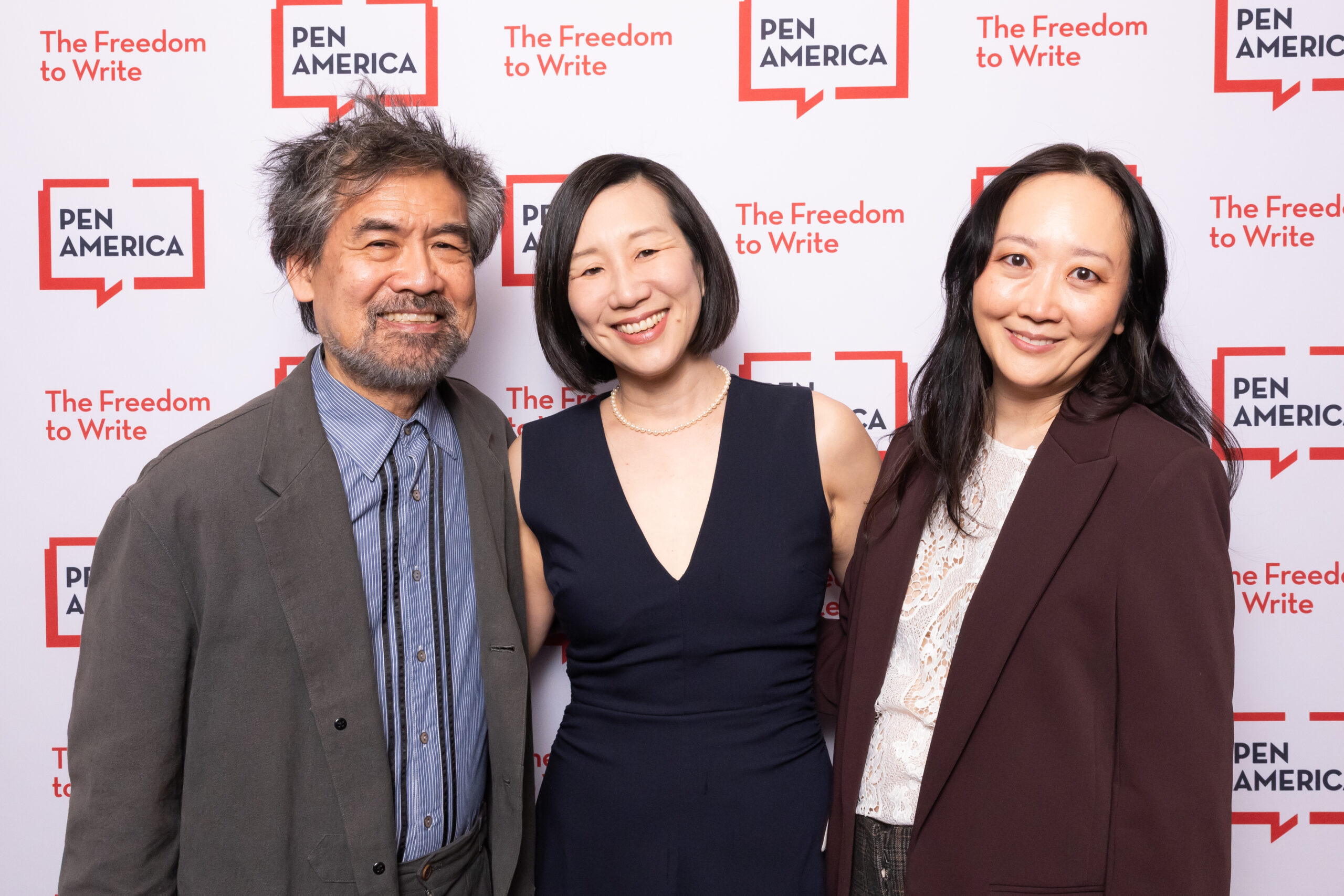
The judges honored Cho with the $10,000 career achievement award, which recognizes a mid-career playwright “working indisputably at the highest level of achievement,” for her “vital and memorable” body of work. Her plays tackle wide-ranging themes, from the horrors of gun violence to food’s capacity to serve as a tender expression of love.
Tony Award-winning playwright David Henry Hwang, who mentored Cho through the Cherry Lane Mentor Project, presented her with the award. “Getting to know her keen dramatic instincts, theatricalism, and thoughtful commitment to probing ever deeper into her characters’ humanity proved not only a joy but also an education for me,” he said. “So thank you, Julia, for being my mentor.”
Actress Sue Jean Kim, who appeared in the New York premiere of Cho’s Aubergine in 2016, also performed an excerpt of the play at PEN America’s 62nd annual Literary Awards Ceremony.
Backstage, PEN America caught up with Cho about what AI can’t take away from creators, the prophecy her dad gave her as a child, and where she turns for support when, in moments like these, writing grows tough.
What does this win mean to you?
I think it was just such a shock to get the news. It was something I’d never really dreamed of. I was aware of the award and have been aware of PEN’s work all these years, so the meaningful part to me was just being familiar with PEN, familiar with the amazing writers who make up PEN, and to be recognized by them just felt really surreal and incredible and truly one of the great honors of my life.
You were a screenwriter for the animated films Turning Red and Elio. It seems like AI is a particularly pernicious problem for animation. Why is it important to keep animation human?
I think that creativity and creating things is what makes us human. So it’s funny because I don’t necessarily know what to make of AI on the receiving end — you know, how people feel about receiving AI creations versus real human creations. But I do know that what we make is what makes us, and so I feel very strongly that the human need to create is something that AI can’t take away, that there are things that will be created by AI but that humans will still, in our dark corners, make poems, make blankets, make whatever it is. Because I think as humans, we just need to create and to make. That, I feel, is something that will never go away.
It’s by doing it that you become a writer. It’s not by the recognition you get. It’s by the act of doing it. And so to be a writer, to make a life of writing, all it requires is just to take the time to write.
Is there anyone who’s inspired you to get to this moment?
There are so many people who have inspired me. That’s hard. But I will say the one thing that stands out to me right now is how my father, who passed away, would always say to me that I had a big job to do, like I had a thing I had to do, and he would never tell me what it was. But I think that in some ways, my figuring out ‘Well, what is my work? What is my big job to do?’ has probably been more productive for me — to not have given me the answer.
When writing grows difficult, who or what do you turn to for support?
I pray. I get down on my knees, and I pray to God, the universe. I pray for help, and I pray that I will get out of my own way and let whatever needs to come come.
And what’s your best writing advice for others in our community?
I think my best writing advice is to just keep going. I think there is so much stopping us from writing, and so much of it is our own insecurities, our own voices. So I think that the thing I would just advise most is just to keep going, if you can, however you can, just to keep that little pilot light on, and to just persevere — because it’s by doing it that you become a writer. It’s not by the recognition you get. It’s by the act of doing it. And so to be a writer, to make a life of writing, all it requires is just to take the time to write. And it’s not easy to do, but I would say that just not giving up would be my best advice.