Are you a writer on the hunt for a new reading group? Look no further.
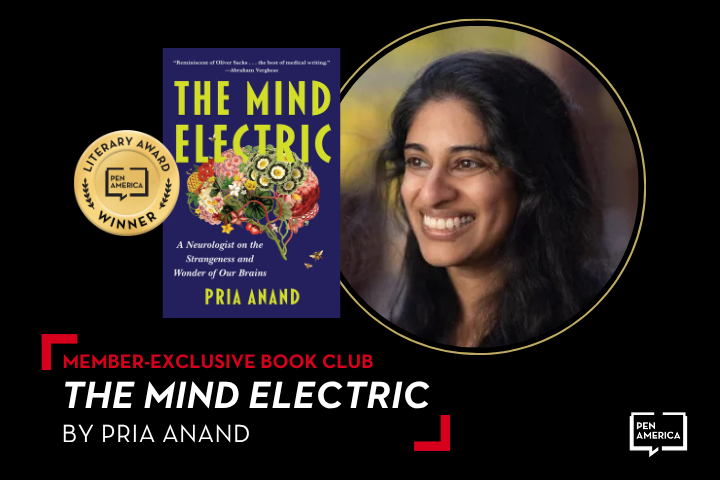
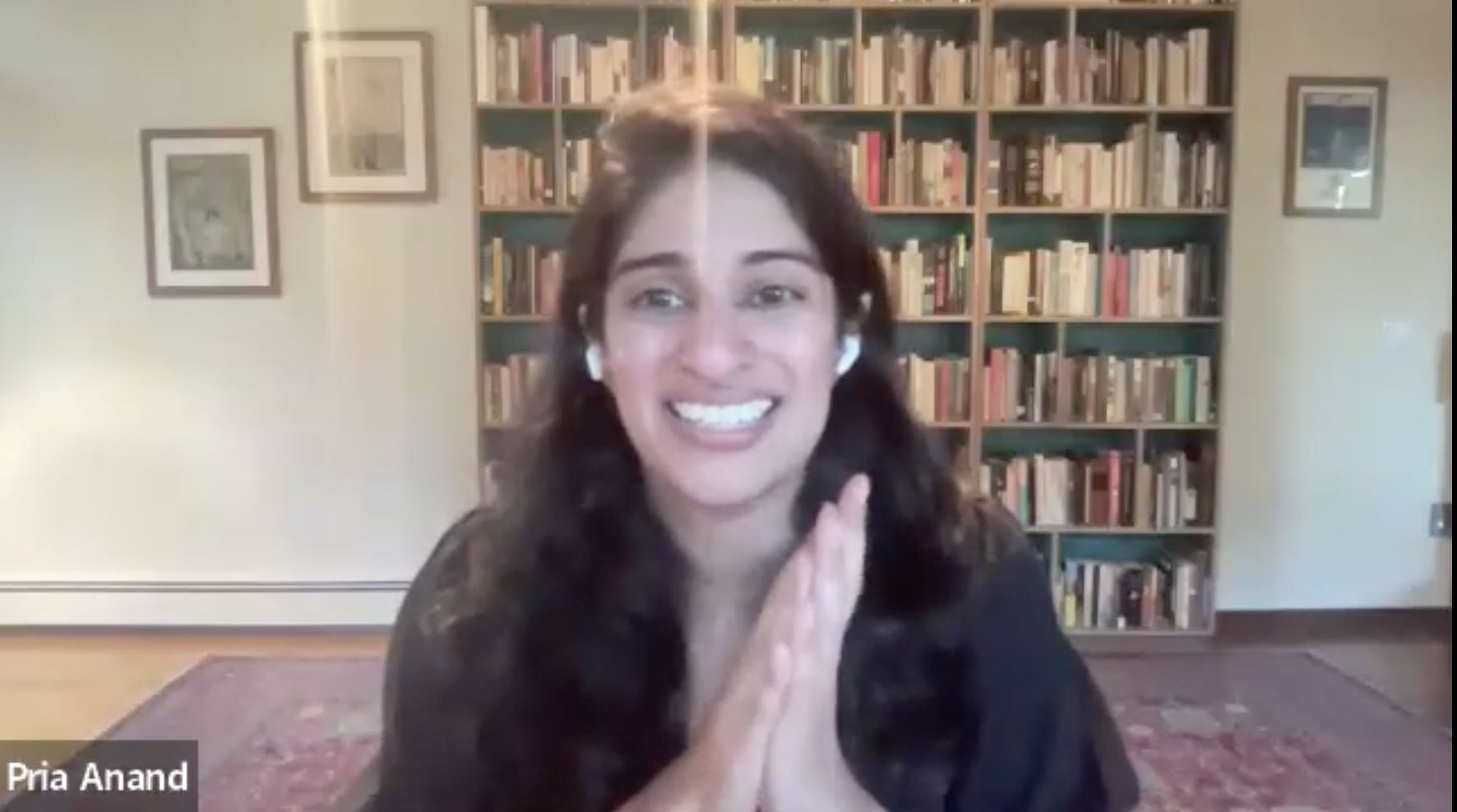
PEN America’s online book club, exclusive to professional members, kicked off in June with an engrossing discussion about neurologist Pria Anand’s The Mind Electric, which interweaves case study, history, fable, and memoir to shed light on the strangeness and wonder of our brains.
“This is science writing at its best: wisdom, insight, and clarity that does not sacrifice poetry or beauty,” wrote the judges of the 2026 PEN America Literary Awards, who honored Anand with the PEN America E.O. Wilson Literary Science Writing Award.
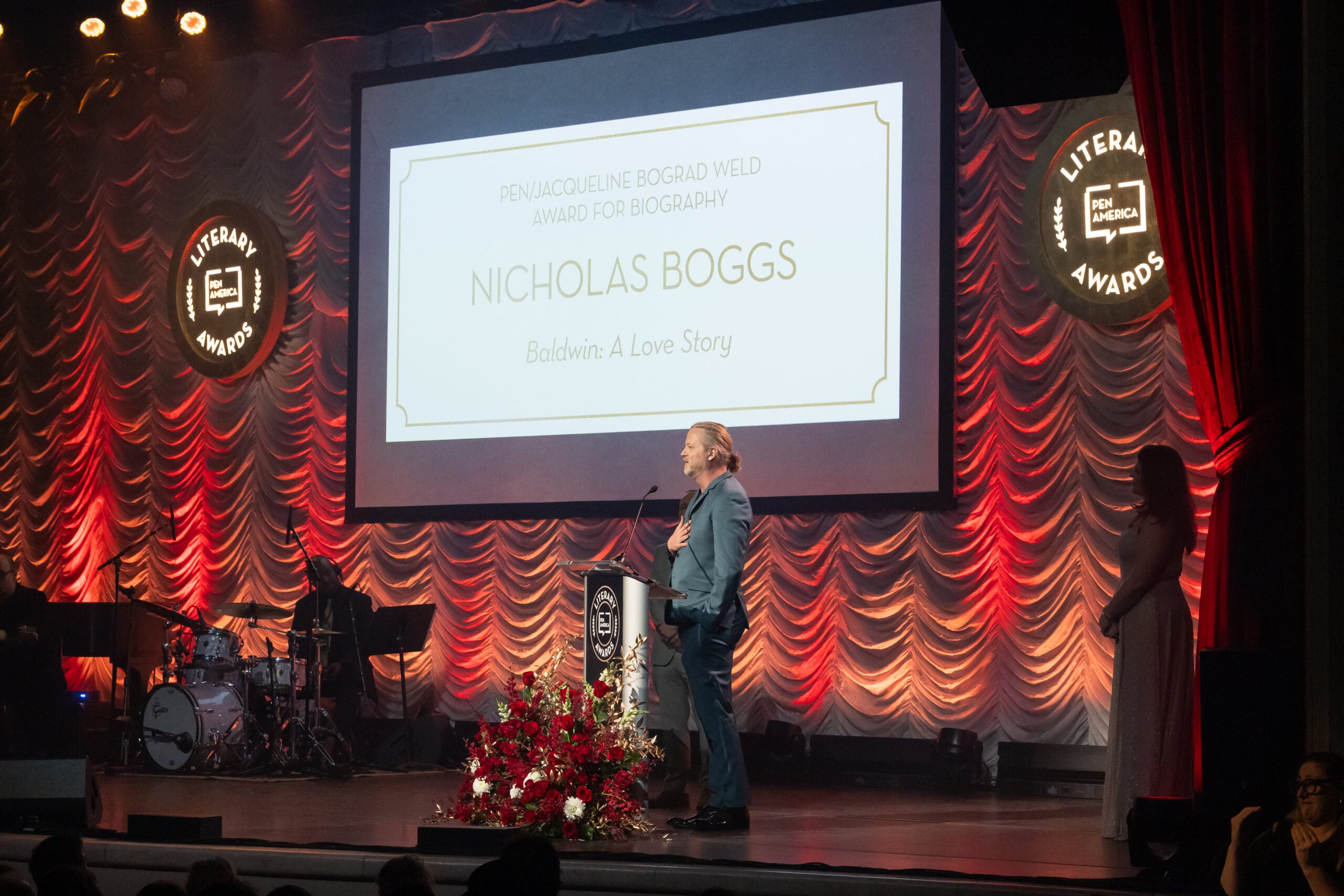
“Of all the awards in the world, this is the one that I think means the most,” she told us at the PEN America Literary Awards Ceremony.
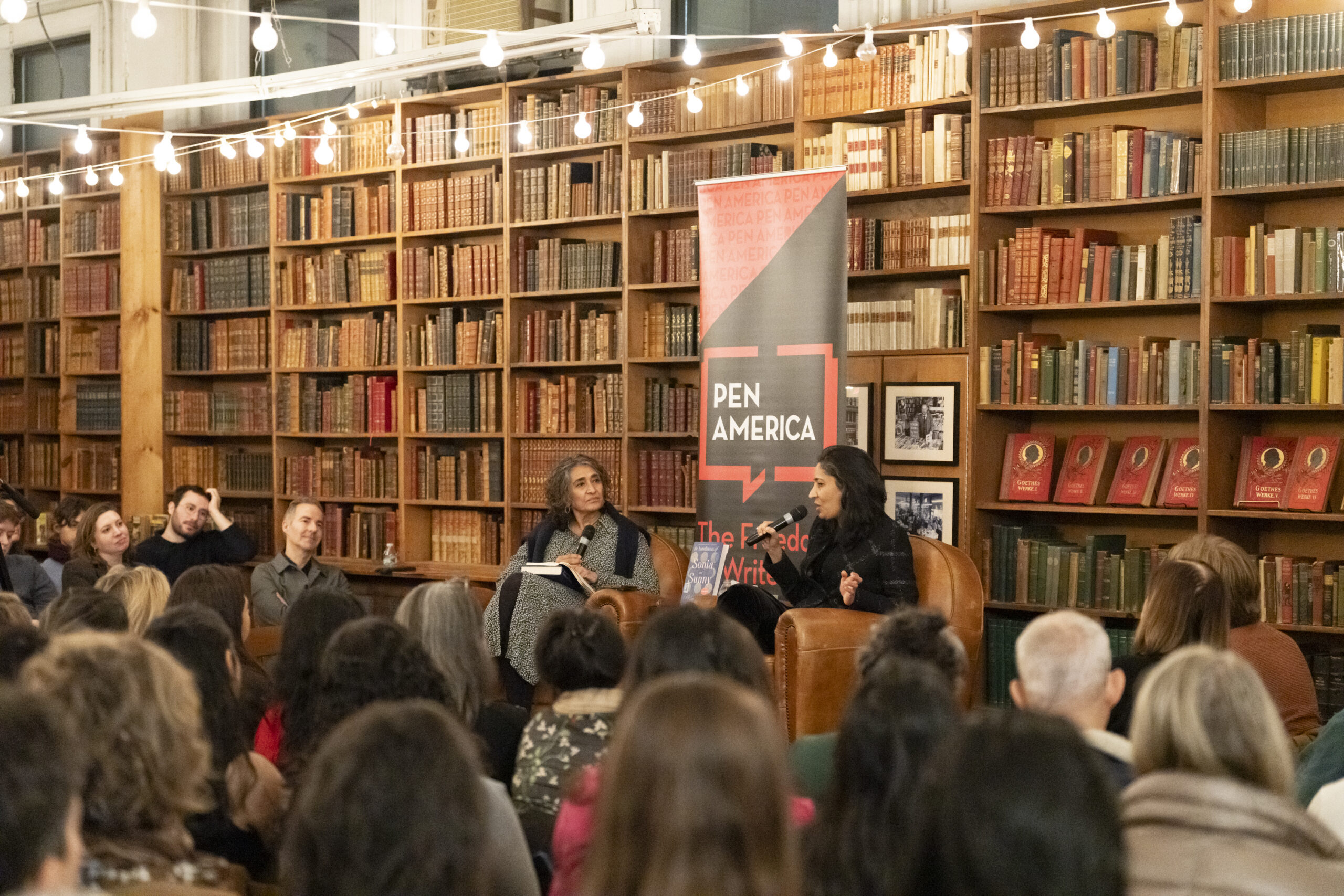
At the club’s inaugural meeting, Anand spoke about the inspiration behind The Mind Electric, what literature can illuminate for us that neurology can’t, and the oral and written stories that animated her childhood. Afterward, members chatted among themselves about the accessibility of science writing and the strength of personal narrative.
Later this summer, the book club will dive into Jared Lemus’ Guatemalan Rhapsody, a kaleidoscopic portrait of an ever-changing country that won the PEN/Robert W. Bingham Prize for Debut Short Story Collection. (“Rare is the debut that arrives fully rendered and delivers a writer whose voice and talent promise even greater things to come,” the judges gushed.) Become a professional member of PEN America to make sure you don’t miss this conversation and others that will follow.
Below is the Q&A held at the first meeting. It has been edited for length and clarity.
When and how did you turn to writing, and how did you think of your day job as a subject for your book?
Thank you so much to all of you for making time in your lives to read this book and for caring so deeply about books and language and being a part of PEN. I actually am a big admirer of PEN America because before I wanted to be a doctor, I actually wanted for a very long time to be a journalist. I love this idea that you could interview someone and alchemize their story into something that other people could read and see themselves in, something that felt really universal. So that was what I wanted to do for a long time before I became a doctor.
And then I worked in the prison system as a medical case manager, and I was working with people who were transitioning from being incarcerated back into the community and helping connect them with mostly addiction (care) and HIV healthcare. I took that job because I was really interested in the criminal justice system. That job was very transformative for me because I feel like I wound up with this sense of, if there is a universal story, it’s the story of bodies and of illness. And I went to medical school, and it turns out that neurology doesn’t disappoint when it comes to stories and universal truths that we all share.
So I wanted to be a writer long before I wanted to be a doctor, and I really admire the work that this group does in making sure that writing can still be free and accessible. And then I actually started writing this book. I didn’t write at all when I was a resident, not because I was so tired or busy, but just because I feel like my hunger for stories was really satisfied. I was making rounds and hearing stories, and it just felt like all the ways that I wanted to learn about people, about humanity and people’s life experiences, was being satisfied.
I didn’t really start writing this book until I was away from the hospital on maternity leave with the first of two toddlers, and I was not sleeping and had just experienced this radical transformation in my own body, and I feel like I was relating to my body and my brain in a very different way than I ever had as a physician. I just wanted to remember what that felt like, because everything felt so elusive — like if I didn’t get it down it was going to slip away. So I started writing it when I wasn’t sleeping very much, and that is a recurring theme throughout the book.
Your prose is so lyrical, which I think gives access to the idea that everything medical doesn’t have to be heavy and jargony. There’s also beauty to learning about your brain. How did you find a balance between lyricism and cold, hard facts?
I think when you use jargon, you don’t have to understand something — like you don’t have to understand what actually is happening or what it actually means, and I am not a big fan of a lot of medical jargon for that reason. One of the things that was really lovely about writing this book is that it felt like it helped me to see my work in this whole new way, just because I was forcing myself to try and understand things well enough to describe them in a way that was free of jargon. That was harder than I thought it would be, but also I think it, maybe paradoxically, made me a better scientist and a better doctor.
I love being a neurologist. I think it is a tremendous privilege, and I hope my kids someday find something that brings them as much meaning and joy as my work brings me, but I also feel like you go through this process of residency training — where you’re not sleeping and you’re witnessing a lot of grief and a lot of suffering and you’re trying to move from one patient to the next in this way that’s efficient — and it’s really easy to lose sight of what is weird or special or magical about the work that I get to do. I feel like I witness a lot of miracles, and I witness a lot of heartbreaks, and it’s really easy to lose sight of that, and so in writing this book, I wanted to capture that weight. We flatten illness and experiences into a single-word diagnosis, but it’s not a flat experience. It is larger than life, and it fills up an entire room or an entire family.
There’s something about the subjective experience of illness that I think is captured by literary works that there’s no way to learn from the science.
How did your love of reading inform your craft of writing? Were there any books that you discovered while writing?
Oh, that’s such a great question. I have been a lover of books since I was very, very small, and there are many, many doctor writers that I admired, and many, many science writers that I admired, and many, many writers of literary fiction that I admired. Part of what I wanted to get at is this idea that a single-word diagnosis can flatten the experience of illness, so I write a little bit about how reading Dostoevsky gives you this window into his experience of epilepsy, and the ways that it animates a lot of his prose. I feel like there’s something that you can gain from reading a description of Prince Myshkin’s moment before he tips into a seizure that no electroencephalogram or diagram of the electricity coursing through your brain can give you. There’s something about the subjective experience of illness that I think is captured by literary works that there’s no way to learn from the science.
You talk a little bit about the difference between the mind and the brain, and I saw later you distinguish between pain and suffering. I wonder if you could talk a little bit about those dichotomies. I also noted how you highlighted your own fallibility as a practitioner and as a human. It helped me trust you more, and I’m wondering if that was your intent, or why else you wanted to refract things through the lens of your own fallibility.
First of all, thank you so much for reading so carefully and for those thoughtful questions. It is such a delight to have spent a lot of time thinking about something and then have someone read it with such care that they encounter things in it that didn’t even cross my mind as I was writing.
You brought up the question of pain and suffering. You can diagram what’s called nociception, the way that that pain is experienced in your skin or in your viscera and carried as an electrical and then chemical signal into your spinal cord and senses something that makes you flinch. But the experience of pain as suffering, as anguish, this idea of a psychic pain — that is a much, much more complicated thing that I think very much eludes science and is not captured by the simple machinery of nociception. There’s a component of pain that’s affective. It’s funneled in the same parts of your brain that experience love and terror and emotion. So suffering and pain are not just distinct, but they can actually be separated, and someone can experience one without experiencing the other.
I think science makes the mistake of thinking that because it understands one, it understands the other. I think that was a very, very important dichotomy for me to understand, because it gets at how much medicine cannot fathom about experience and pain.
And then I think there are a lot of narratives of doctors who are heroic and do really great things, and that’s not my experience in medicine at all. And there are many other books you could read to get that sort of version of the story, but I just think that we are living in this moment of profound distrust of science and medicine, and I have lots of different thoughts about what the salve for that is, but I think part of it is confessing uncertainty and the imperfections of science and medicine.
Suffering and pain are not just distinct, but they can actually be separated, and someone can experience one without experiencing the other. I think science makes the mistake of thinking that because it understands one, it understands the other. I think that was a very, very important dichotomy for me to understand, because it gets at how much medicine cannot fathom about experience and pain.
Really, your greatest interest seems to be in stories. I wonder if you could talk a little bit about your very earliest experience of stories: the people involved in it, what it was like.
I love that question. I write a little bit about this, but I read many different versions of The Arabian Nights when I was younger, and then also the Panchatantra, and all of the South Asian folklore upon which that text is based. All of these folklore and fables and mythologies really animated my childhood.
I also have a very big, very close extended family, and I grew up with this tradition of oral storytelling where in my family, there are all of these stories of how people experienced, for instance, the partition of India and Pakistan, or illnesses — all of these things that attain sort of mythic proportions, that get told from generation to generation. No one in my family is a doctor, but everyone in my family is a really excellent storyteller, so those are some of my earliest inspirations of stories.
In a lot of the book, you are witness to people’s stories. What would you say is the doctor’s role in being witness?
I think physicians are making a mistake if they think that they are sharing the experience of the people under their care. Sometimes I think that’s the most and best that we can do: Witness someone suffering, and sometimes even give a name to what someone’s experiencing, even if you don’t have a cure. I think it’s maybe the most essential part of our work, something I care very deeply about. Right now, we’re talking a lot about the question of how LLMs and AI are going to reshape medicine, and I think that to imagine that you can reduce a physician to interpreting a bunch of lab tests is to miss part of the essential point of what we do, which is to witness.
Want to ask questions of your own at future Q&As? Become a professional member of PEN America today.