For emerging writers, the research process can be riddled with questions. Where do you begin? How do you know which facts deserve a place in your story and which should be discarded? And at what point do you simply have to force yourself to put down the books you’re reading, pick up a pen, and start writing?
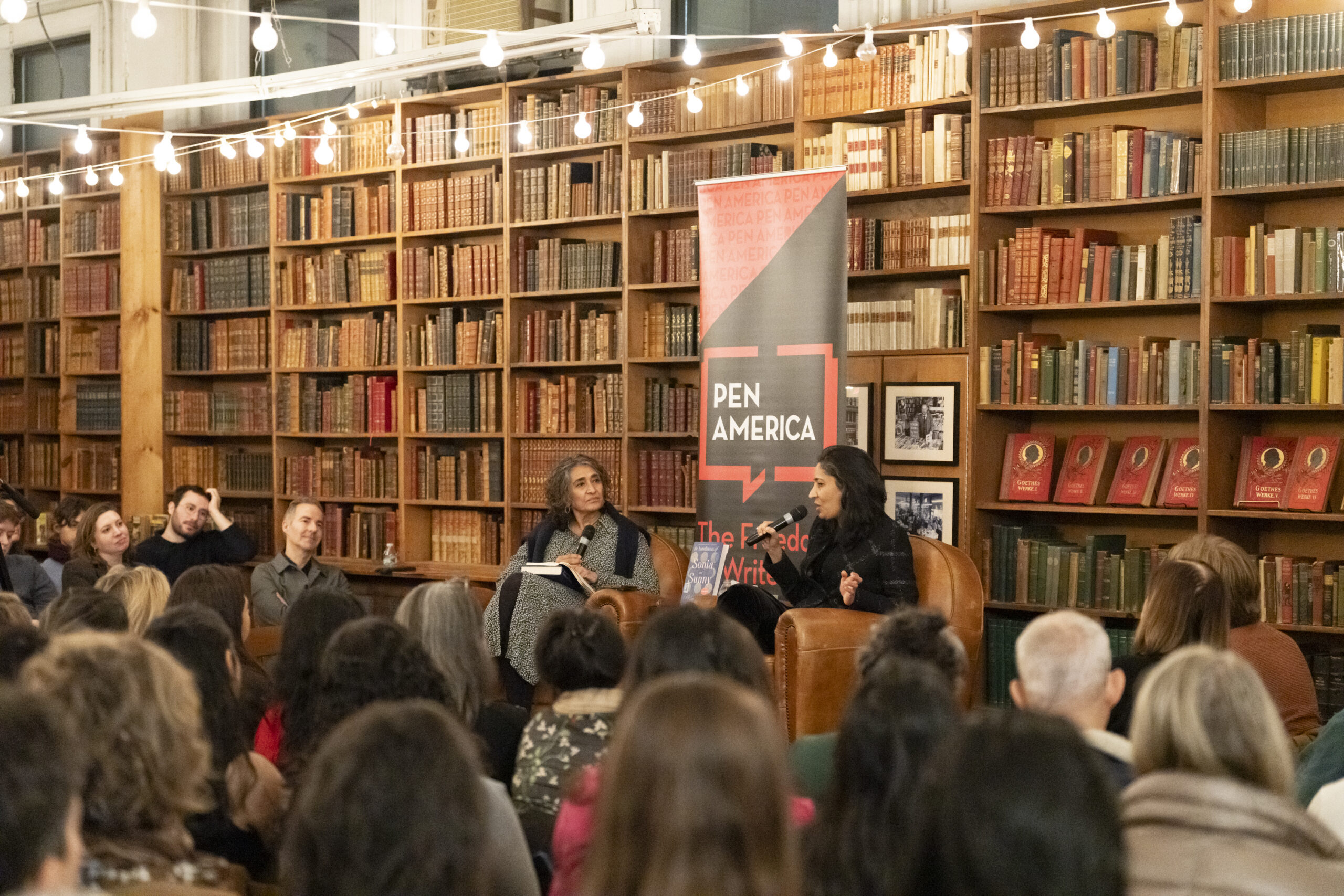
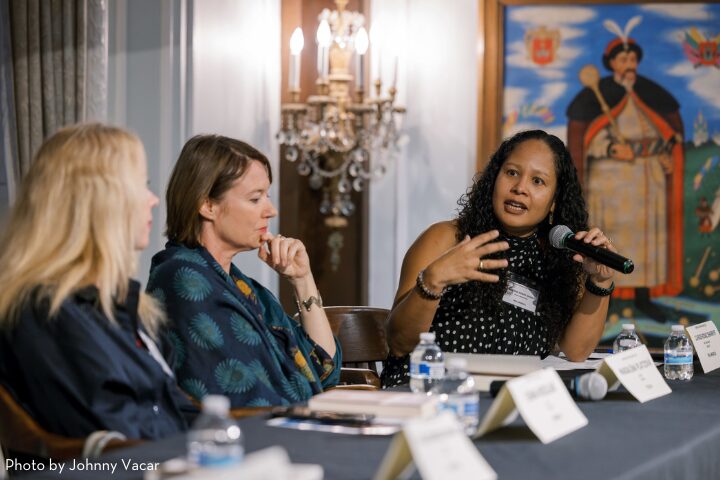
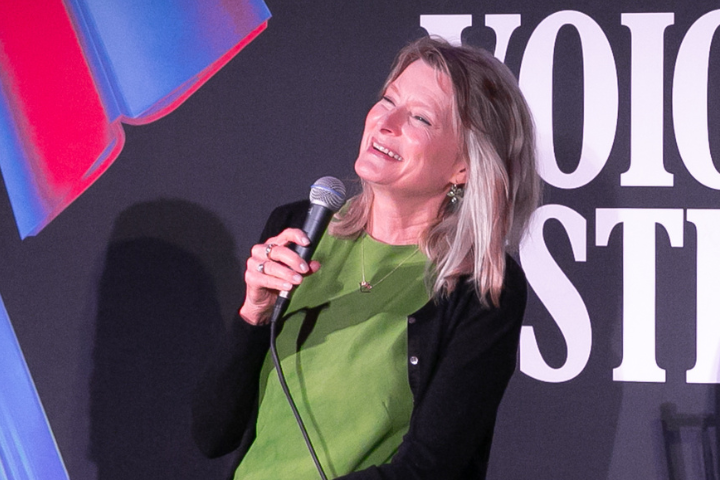
The first workshop in PEN America’s 2026 You Are A Writer series brought together three accomplished writers — moderator John Manuel Arias (Crocodopolis) and speakers Charmaine Craig (My Nemesis) and Judy Batalion (The Last Woman of Warsaw) — who provided guidance to early-career writers on how to conduct research for narrative storytelling. If you missed the session, check out five takeaways below and make sure to register for the upcoming sessions.
1. Consider the variety of forms research can take.
Research often involves digging deep into the archive, but that’s not all it can be. Over the course of Batalion’s career, she’s also conducted plenty of interviews and on-the-ground research. For her nonfiction work The Light of Days, which provides accounts of young, Jewish women who resisted Nazism, she traveled to Będzin — and, upon her arrival, learned that the whole Polish city sat atop a hill.
“No one mentioned that [in books], because that wasn’t an important part of the World War II testimony,” Batalion said. “But when you’re writing descriptively about a place and trying to understand someone’s hiding, or their journey, or their dangerous risk-tasking effort, you need to know that.” She acknowledged that financially or otherwise, traveling to the places you’re writing about isn’t always a possibility, but said her senses aid her greatly when she can put them to use.
2. No matter how much you discover, every last detail shouldn’t make it into your work.
Arias asked if it was worthwhile for writers to insert every detail they learn into their books, and Craig responded with a resounding no. As an author of literary fiction, she’s primarily interested in her character’s emotions and psychology, so she strives to include only the details that would be significant to the character.
“If we don’t do that, we risk primitivizing — stuffing the narrative with trappings, if you will, that seem cool, but really are not dignifying the humanity of the perceiver,” she said. Even if a detail has a “gee whiz” factor for the researcher, it might simply be a fact of everyday life for the character, in which case it would be gratuitous to include in a novel.
Arias shared that a creative writing professor he studied with in college told him that authors should provide details that “make the truth of humanity undeniable.” His grandmother once told him that because of rations on sugar imposed during the Great Depression, people would instead add candy to their milk, which would make it turn all sorts of unusual colors. “That is one of those things that has to make it in, because that makes the humanity of it undeniable,” he said.
3. Beware of research transforming into a procrastination method.
No matter how much you research, there will always be more to learn. “You will probably forget or not know about something very important, and one guy will send you 50 emails a day telling you, ‘On page 7, you didn’t mention this,’” Batalion said. “It’s really hard to accept that, especially when you’d like to be thorough and meticulous.”
But if you never stop researching, you’ll never start writing. Batalion puts a time limit on her research periods, after which she forces herself to start her book — and she knows that if she later discovers she’s missing details about a certain topic, she can always return to her research to fill in the gaps.
Craig said that the limitations she imposes vary with the kind of research she’s conducting. If she’s trying to tell a people’s history that isn’t yet well known, she’ll conduct research until she feels like she can write with authority on the subject, no matter how long that takes. But when it comes to details that bring texture and life to her narrative, she resists the temptation to indulge in too much reading. “I don’t remember if it was [W. G.] Sebald who said, ‘Treat your research as if you’re going to run into the library and it’s on fire, so you just gotta grab what you can and get out,’” she said, but it’s advice she’d pass off to fellow writers.
4. If you’re writing fiction, set your own (reasonable) guidelines on how far to stray from facts.
While writing Miss Burma, a family saga set in Burma, Craig decided that she would cleave to the facts when it came to public historical events. “However, with respect to the internal, the interpersonal… I did feel free to imagine, because what else was I going to do? So I think there can be a dance between fiction and invention,” she said.
Batalion emphasized how difficult it can be to know what you’re allowed to change for the sake of your story. Unlike Craig, she altered the dates and settings of a few events in her debut novel, The Last Woman of Warsaw, though she also added an author’s note at the end explaining that she did so. The treatment of facts depends heavily on the kind of project you’re working on, she said, so there isn’t a single set of rules all writers should follow.
The beauty of novels, in Arias’ perspective, is that while research can fuel projects, authors maintain control over their characters and plots. “There is that space where it’s just like, ‘I’m going to jump into the fiction of it, and if anyone has a problem with it, then too bad, because it’s fiction,’” he said. “And that is very freeing.”
5. Don’t think about your research and story in isolation from one another.
In response to an audience member’s question about how to prevent their book from reading merely like a vehicle to teach people about history, Craig stressed the importance of finding the intersections of the personal and historical dimensions of their story.
“They might, on the surface, be very different,” she said. “Maybe a character’s principally caught up in questions of, ‘Should I leave my husband and escape this life, or should I stay even though I’m being abused?’ and that has nothing to do with the war they’re living in.” But for fiction writers, she said, it’s necessary to think through how the characters’ dilemmas and their historical contexts exert pressure on each other.
Batalion agreed, adding that it’s the inclusion of a character’s story that separates a novel from a history lesson.