Robinne Lee | The PEN Ten Interview
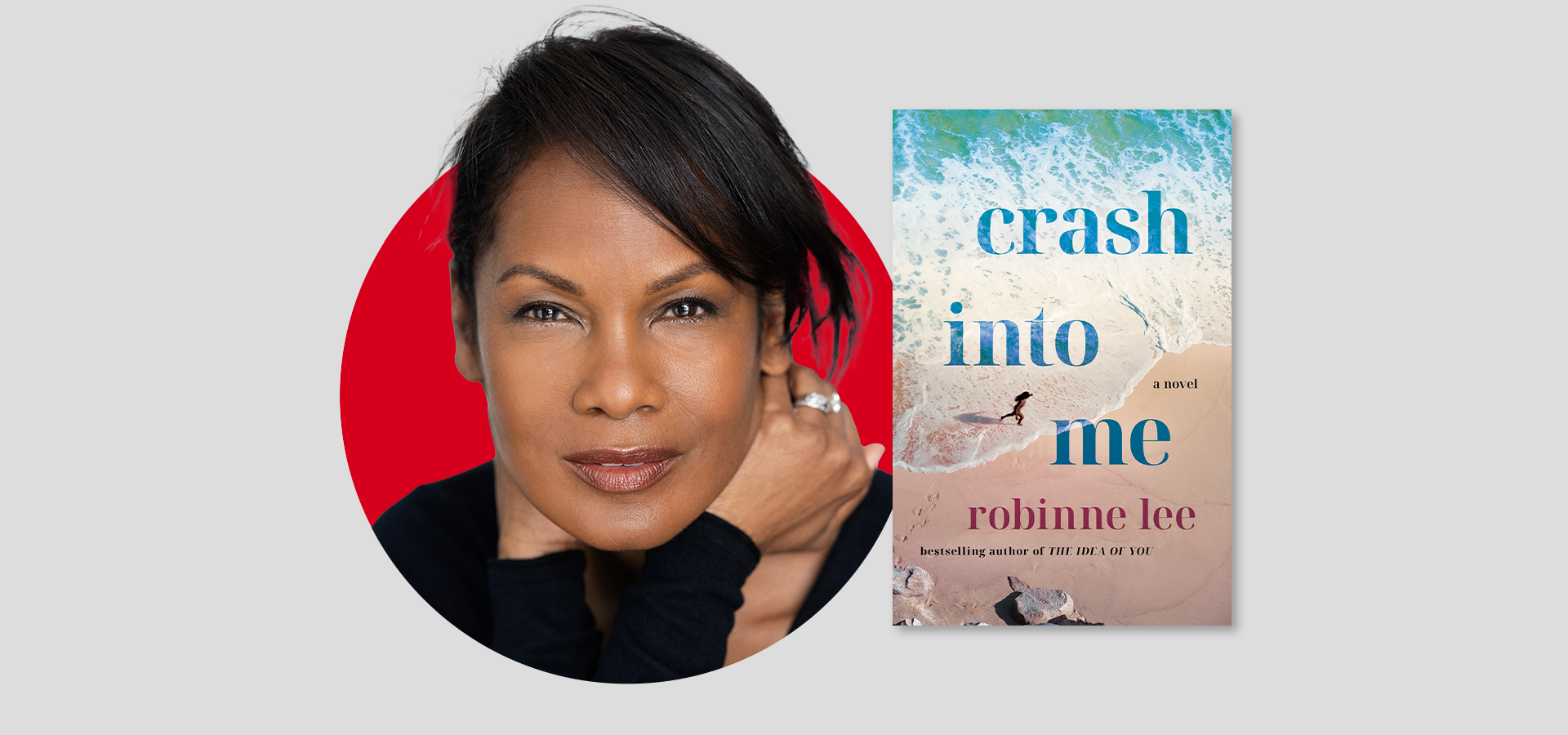
In Robinne Lee’s first novel since her blockbuster debut The Idea of You, Cecilia Chen, an artist, wife, and mother of two gets into an unexpected car crash in Los Angeles. Even more unexpected: A model who she hasn’t seen in two decades is in the other vehicle. The accident upends Cecilia’s life, forcing her to answer complicated questions about herself and her desires in this thrilling exploration of race, beauty, and love.
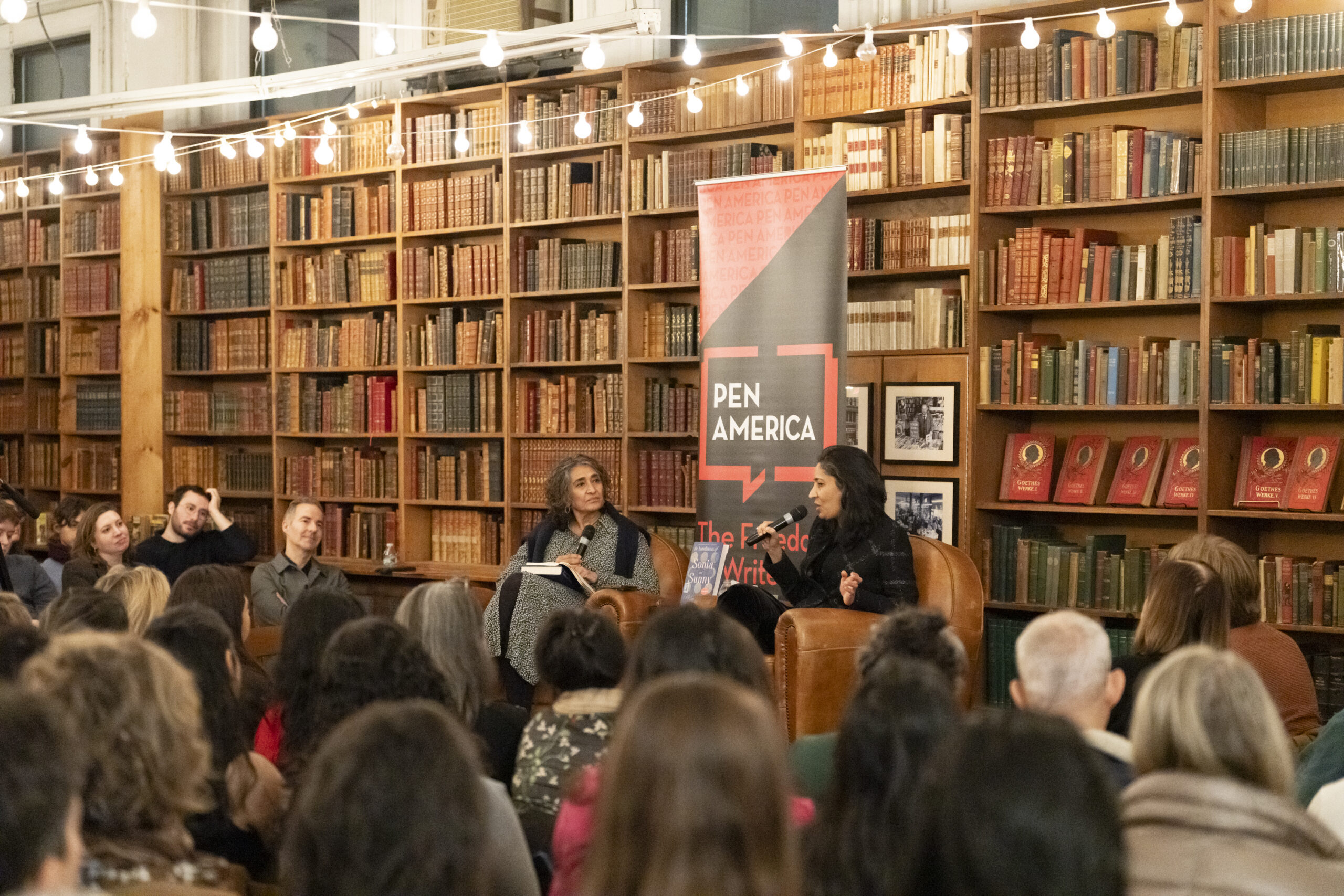
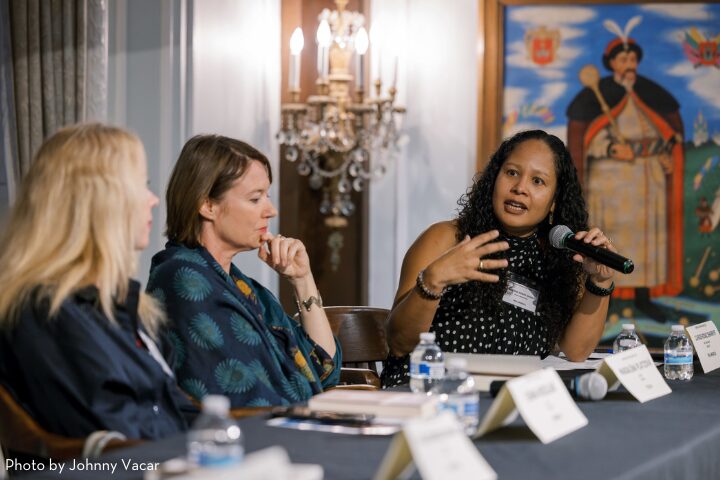
In conversation with Sabrina Adams, senior manager of literary programs, Lee shares that she wrote Crash Into Me because it’s the novel she’s always wanted to read but could never find on shelves. She also discusses how working at a top fashion magazine shaped her self-perception, the real-life inspirations behind her protagonist’s love interest, and why this book proved so much harder to write than her first (Bookshop; Barnes & Noble).
Crash Into Me, which had me completely hooked, contains a mix of genres: There’s mystery, romance, and sharp social commentary. I’d love to know how you came to write this story.
Thank you so much! I dealt with crippling writer’s block following the publication of The Idea of You, and it took a while to figure out what my next book was going to be. In 2019, I decided to revisit a manuscript that I’d written in the early aughts, featuring a twenty-something Cecilia Chen. I adored that character so much, I’d given her a cameo in The Idea of You. And so I came up with the idea of developing a story that crossed over with that universe and timeline and featured Cecilia in the (then) present day.
In 2016, I was in a terrifying car accident with two other women that was very similar to the accident that occurs at the beginning of Crash Into Me. While none of us was physically injured, following the collision, as we were comforting each other and awaiting the tow-trucks, one of the women’s husbands who’d come to the scene mused about how different the sexes were, as he could never imagine three men hugging each other after a car accident. It dawned on me then, that this moment would be a great opening to a book. Lives intersecting randomly and violently, and the relationships that might grow out of such a traumatic event. And so, when I was finally ready to write, I put Cecilia in one of the cars and the story unfolded from there. I tend to gravitate toward books with some sort of social commentary, no matter what the genre, because I read to be entertained and to learn, and if I can get both in one story, I’m happy. And so that’s how Crash came to be.
Cecilia is Jamaican-Chinese, moves from Jamaica to New York, and settles in Paris before her sojourn to Los Angeles. You take time to explore Cecilia’s socioeconomic, ethnic, national, and racial identities in this story, as well as how these identities affect her children and her white, French husband. Why was it important for you to explore how these identities show up in different cultural contexts?
As someone who grew up in the U.S, as a mixed-race “cross-cultural kid,” I am endlessly fascinated with narratives about belonging and otherness; “outsiders” navigating new spaces and communities, wrestling with self-discovery and acceptance, and seeking a sense of home. Exposure to those who differ from us is how we learn empathy and compassion. I’ve always been drawn to stories where characters are grappling with identities that straddle cultures, races and/or ethnicities. And yet, I’ve never encountered one that explored the particular combination of worlds that I have long navigated. As Toni Morrison once said, “If there’s a book that you want to read and it hasn’t been written yet, then you must write it.” So, I did.
As mentioned previously, this book primarily takes place in Los Angeles, specifically within the upper echelon circles that few people, especially people of color, have access to. Not only do you have your own acting career (Deliver Us from Eva, Hitch, and The Fifty Shades series, to name a few!), but in 2024, your previous novel, The Idea of You, was adapted into a movie starring Anne Hathaway. How did your experience of Hollywood shape your telling of this story?
I spent two decades in Hollywood, and much of it among the Westside’s wealthy and elite. I became very well-versed in not just status and privilege, but in celebrity culture. And as someone who is always observing, memorizing, and locking characters and experiences away for recall — either as an actress or a writer — L.A. was a gold mine. There’s a lot about Hollywood to love: the glamor, the vibrancy, the art, the feeling that miracles can happen at any moment. The magic. But there’s also an ugly side. There’s the rejection and competition and jealousy and power games. There’s manipulation, deceit, and betrayal. And for better or worse, I’ve been exposed to both sides of it. Ultimately, I chose to leave. But some of my favorite people in the world are still there, and as long as Hollywood remains the storytelling capital, I suppose I will keep going back.
I am endlessly fascinated with narratives about belonging and otherness; “outsiders” navigating new spaces and communities, wrestling with self-discovery and acceptance, and seeking a sense of home. Exposure to those who differ from us is how we learn empathy and compassion.
In addition to being an active mother, Cecilia is a respected photographer. Her major project throughout this novel is a meditation on the consumption of beauty. With your experience in Hollywood, I’m sure it’s a personal interest for you as well. What do you want readers to take away from the story about beauty and our consumption of it?
Long before I’d arrived in Hollywood, I worked at a top fashion magazine, first as an intern and then an editorial assistant, in both New York and Paris. I spent many days folded over a lightbox, scrutinizing images of models in various stages of dress, editing film. Viewing dozens and dozens of girls my age. Long and slender with flawless bone structure and enviable proportions. Girls who were hired because they’d fit the magazine’s definition of beauty. And discovering those images would be blown up and printed into large color proofs that the art directors would mark with a wax pencil. Making notes like “whiten teeth and eyes,” “remove pimples,” “smooth cellulite,” “trim waist.” And that the corrected proofs would become part of the editorial well that would go to print and end up in mailboxes and on newsstands. And that we, along with all the other top magazines, were selling lies. Those images were so prevalent during my teens and twenties they profoundly affected my self-esteem, resulting in body dysmorphia and disordered eating. So I wanted to say something about that. And about getting older in these businesses, in modeling and acting, and being put out to pasture. Having an implicit “use by” date. In your forties, when it shifts and you are no longer deemed desirable by those who call the shots. I want readers to see that and ponder it. What that says about our culture.
The characters in this story are steeped in the art world, with particular detail paid to photography and fashion. The novel celebrates the many artists who populate these worlds, yet simultaneously reveals the darkness that exists in close proximity to them. What was your experience with the world of these art forms, and why did you choose to depict them in this way?
I chose to place the story in the world of fashion and photography because they were the subjects with which I was most familiar. Photography was my father’s hobby when I was young, so we grew up with lots of his images gracing the walls of our home along with plenty of books and magazines on the subject. In high school, I had a wonderfully inspiring photography teacher who I am still in touch with today. And during that time, when I started consuming fashion magazines, one of my cousins was “discovered” as a model and quickly rose to become one of the most in-demand of that period, and so suddenly I had entrée. She helped land me an internship at a top fashion magazine where I worked throughout my college years, both in New York and during my year abroad in Paris. This was at the height of the supermodel era, and I was able to experience so much of it up close and personal. When I was developing the idea of this book, it was during the #MeToo reckoning. Very little had come out about the fashion world, but I imagined that just by the nature of the business — young, beautiful (mostly unchaperoned) girls working with powerful men — there was likely to be something there. So, I started digging and found quite a bit. And I knew immediately I wanted to base my story there.
Your novel primarily takes place between 2015 and 2016, touching on some key political and international events. Why did you choose to set your narrative in that time period specifically?
The novel starts in February of 2015 because that is the first time we see Cecilia Chen in The Idea of You, and I was working with a crossover storyline. And because I needed a series of events to unfold, I had to spread out the duration of the story over two years. And well, a lot happened in the world in those years. I’ve always liked to set my stories in the actual world as much as possible, because I think it helps to enhance the realism. I want my readers to feel like these are real people existing in a specific time and space and that they might just happen upon them at Whole Foods or Gjelina, if they’re there on the right day. So, I always do my best to keep the greater world real. The war is happening in Aleppo, the terrorist attacks occur in Paris, a clip on a tabloid TV show goes viral, a certain presidential candidate unexpectedly wins a United States election. We remember where we were when these things happened, particularly if we have a relationship to the event. And those moments become our connectors to others.
I’ve always liked to set my stories in the actual world as much as possible, because I think it helps to enhance the realism. I want my readers to feel like these are real people existing in a specific time and space and that they might just happen upon them at Whole Foods.
The romantic entanglement at the core of this story is between Cecilia and a stunning, enigmatic model, Anouk, whom she knew in the past. Who were your influences for Anouk, and how did you find your way into this character and her dynamic with Cecilia?
Anouk was born out of my fascination with models in the ’80s and ’90s. All those hours, folded over the light table editing photos and fantasizing about who these girls were. Girls who were my age, but living what I imagined were glamorous lives, traveling around the world to exotic locations, flying First Class, dating rockstars, going to the best parties, strutting down runways and wearing art. What was it about them that made them so special? Early in my research, I came across a clip of Kate Moss in a convertible in the Hamptons in the ’90s. She was still quite young then, but she had this untouchable quality — this outsized confidence and allure — hair blowing in the wind, flirting with the camera, laughing unabashedly, so comfortable in her skin. She was both soft and feral. Unpredictable, wild. Like the bobcat you mistake for a kitten. I wanted both to be her and consume her in that moment. And I thought, that’s it. That’s the feeling I want from Anouk. And that’s the effect I want her to have on Cecilia.
There are choices Cecilia makes in the book that could lead a reader to deem her unlikeable. Her choices aren’t singular, nor particularly rare, but they go against standard morality. How did you think of the morality of your protagonist, and how do you think about writing unlikeable women?
I didn’t think of Cecilia as unlikeable when I was writing the manuscript. I wanted her to be conflicted, complex. And I wanted Anouk to be even more so. My goal was for there to be lots of gray areas for all the lead characters. There was no black or white. In life most people are not all good or all bad. As much as we might try to be the former. We make mistakes, we make poor choices. We respond to being wronged. And I think the real conflict in a story comes from that. And in this narrative, I wanted to explore how our experiences can shape us. How trauma, betrayal, infidelity affects who we are and who we might become. Hurt people hurt people.
This story, in many ways, feels like a love letter to Paris while putting it in direct contrast with a perpetually sunny, superficial Los Angeles. What do these two cities symbolize for you?
I was a Francophile years before I ever got to Paris. I had a French-Canadian aunt, who introduced me to the language, and I was envious that my cousins could speak it effortlessly. So I studied it in school and learned more about the culture and became besotted. And then I spent my junior year there and it was even better than I expected — the city, the people, the culture, the energy. It was magical. All of it. And I just felt like I belonged there. Paris is at once historic and modern, timeless beauty personified. Paradoxically, I spent my entire youth wanting desperately to live in L.A., because I wanted to be an actress and make movies, and when I finally made the move after law school, I found the experience very isolating. L.A. is the land of beautiful hills and sea and weather and people, but it has its flaws. It’s competitive, conspicuous, exclusive. In Paris, it’s easy to be different than everyone else. In L.A., it’s less so.
I wanted to explore how our experiences can shape us. How trauma, betrayal, infidelity affects who we are and who we might become. Hurt people hurt people.
What, if anything, has changed about your writing process and style between the writing of The Idea of You and Crash Into Me?
Process-wise, I took my time with this one. It didn’t pour out of me in an obsessive spell, like with The Idea of You. I wasn’t writing around the clock. And I had an international move in the middle of it, during which other things had to take priority. I didn’t always stick to the outline, and I didn’t write it in sequential order. This was a much more complicated work with two timelines and lots of moving pieces and so it happened more in fits and starts. I don’t think my style of writing has changed any, although this is a very different book than the last. It’s more complex, layered, darker in tone. There’s more mystery and social commentary, as you pointed out. And in many ways, it’s more personal. And those books, I think, are always the hardest to write.