In the span of a single week, President Trump has escalated his assault on the press with a mix of childish insults, gendered harassment, threats to broadcast licensing at home, threats to sue a foreign news outlet, and a dismissive comment about the murder of a Washington Post columnist.
The tactics differ, but the purpose is unmistakably consistent: intimidate reporters, fuel harassment campaigns, erode public trust in the free and independent press, and do whatever it takes to avoid scrutiny.
Trump has sharpened his years-long pattern in recent days, underscoring escalating threats to press freedom and American democracy – all as the president embraces a foreign autocrat whom U.S. intelligence concluded had approved the killing seven years ago of Post columnist Jamal Khashoggi.
Trump’s attacks are part of a deliberate strategy to use the power of the presidency against those whose job is to question him and his policies, especially women reporters, who disproportionately are targeted.
Aboard Air Force One recently, Trump interrupted Bloomberg White House correspondent Catherine Lucey, pointing at her and snapping “quiet, piggy” as she asked about the Jeffrey Epstein files. Days later, he derided ABC chief White House correspondent Mary Bruce, saying “it’s your attitude … a horrible, insubordinate, and just a terrible question … a terrible person and a terrible reporter.” These misogynistic attacks echo years of remarks Trump has directed at female journalists, from questioning their intelligence to mocking their appearance, including directing insults at them, such as “bimbo,” “third rate reporter,” “two of the dumbest people,” “dummy,” “kooky,” and, infamously, “blood coming out of her wherever.”
The White House doubled down on its ABC News attack the next day, issuing a press release on the taxpayers’ dime to falsely claim the network has a “longstanding commitment to hoaxes, character assassinations, and outright fiction targeting only one side of the political aisle.”
When the world’s most powerful leader singles out a reporter, he understands his insult is not isolated, but a green light for targeted harassment and intimidation. Reporters who are serving the public interest see their inboxes and social media accounts bombarded with harassment and hate, often gender-based and threatening. That is the point.
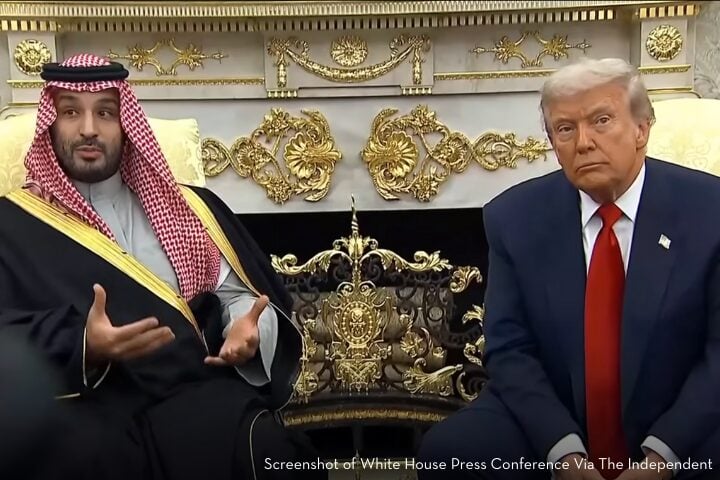
Perhaps the most disturbing assault on democratic norms this week came as Trump dismissed the murder of Khashoggi. U.S. intelligence agencies concluded that Saudi Crown Prince Mohammed bin Salman ordered the killing (Prince Mohammed denies involvement). While welcoming Prince Mohammed during his first U.S. visit since the killing, Trump called Khashoggi “extremely controversial,” and belittled Bruce for even raising questions.
“Whether you like him or didn’t like him, things happen,” Trump said. “But [Prince Mohammed] knew nothing about it. And we can leave it at that.”
When an American president cannot flatly condemn the murder and dismemberment of a U.S.-based journalist, the signal is chilling: As Saudi and U.S. officials touted billions in investments amid marching bands and a military flyover, a reporter’s murder is no big deal.
Trump’s disparaging comments were particularly alarming given that Prince Mohammed – who faces no checks on his power back home – was by contrast showered with White House praise.
But Trump didn’t just go after one individual reporter. He went after an entire company. Trump called for Disney-owned ABC’s broadcast licenses to be “taken away,” even though the FCC licenses local stations, not networks. But even empty threats of regulatory power echo authoritarian playbooks, where leaders wield government levers to deter criticism.
Meanwhile, Trump is exporting his anti-press strategy abroad, threatening to sue the BBC over an editing mistake made more than a year ago that the outlet has acknowledged and apologized for. As with many of his legal threats, the point is not enforcing accuracy but rather blatant intimidation; most of Trump’s threatened and actual lawsuits are baseless and unlikely to prevail in court, but they drain resources, chill reporting, and warn other outlets to think twice before scrutinizing him.
Layer these attacks alongside Trump’s call for late-night host Seth Meyers to be fired for jokes – a clear violation of protected speech that was amplified by FCC Chairman Brendan Carr – and Trump’s objective becomes unmistakable: weaken any individual or institution capable of holding him accountable. The president has worked to discredit and dismantle a free press since taking office, seizing control of the White House press pool, defunding public media, weakening government-funded outlets such as Voice of America, and suing news organizations over coverage he dislikes. This hostility has real-world consequences that PEN America sees up close, as we work with journalists and writers seeking our guidance to deal with an avalanche of digital or physical threats in retaliation for their work.
The press is a guardrail essential to an informed citizenry in a democracy. Its place as the only profession explicitly named and protected in the Constitution establishes its position clearly on that front.
When a president uses his platform to endanger reporters or gush with admiration for a foreign leader who murders a press critic, he is testing how far he can push the boundaries of democratic norms before the public pushes back. That test demands a response. Defending a free press is defending democracy itself, and it’s time to stand up for both.
Tim Richardson is program director for journalism and disinformation and Viktorya Vilk is director for digital safety and free expression for PEN America, the free expression and writers advocacy nonprofit.