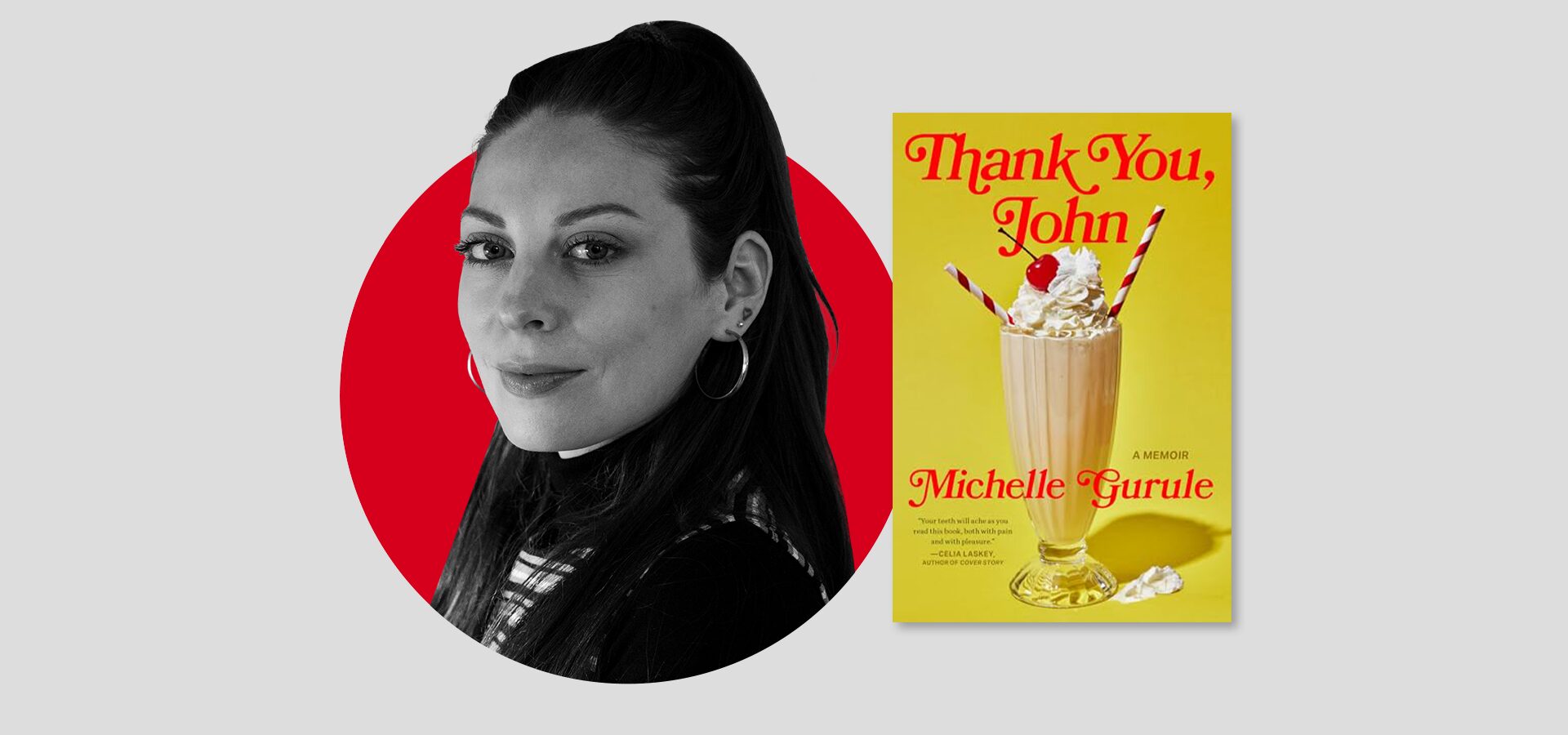
Michelle Gurule | The PEN Ten Interview
Michelle Gurule’s debut memoir, Thank You, John, is a heartfelt, comedic, and intimate reflection on her time as a queer, 24-year-old writer in the making who became a sugar baby to make ends meet. While Gurule navigates the ups and downs of this life, she provides readers with a unique window into the reality of sex work – a complex world full of nuances where everything has a price. (Unnamed Press, 2025)
In conversation with PEN America’s Freedom to Read Program Assistant, Yuliana Tamayo Latorre, Gurule takes a deep dive into sex work, the emotional burden of this role, and the dynamics at play. She also explores the writing process of such a personal story, and her advice for emerging writers. (Bookshop; Barnes & Noble)
Thank You, John is a very personal memoir about an experience you were once ashamed of and afraid to share with the world. What made you want to tell this story in truth, rather than fictionalize it as you had done previously?
I had to trick myself into believing no one would ever read the book while I was writing it. During my sugaring arrangement, I carried a lot of shame. Not so much about sex work itself, but about the secrecy of it, the double life I was leading. When I left the arrangement and started my MFA, I realized I couldn’t fully explain who I was, or where I came from to my new colleagues and friends, without talking about my history as a sex worker. It felt like an opportunity to start fresh.
What surprised me was how supportive and open-minded my colleagues were. Once I had “outed” myself, all I wanted to write about were these experiences. At that point, it didn’t feel right to call it fiction anymore. I didn’t feel like I needed that layer of protection. I could own my story and still survive socially.
Throughout the book, you talk about having to hide multiple aspects of your life, including your sexuality and your role as a sugar baby, to others outside of your family. As a result, you describe feeling alienated from yourself and from your body. How did you reconnect with yourself? What advice do you have for others on a similar journey?
I feel really fortunate to have a family I knew would be open-minded and supportive, and having that space where I could be fully authentic helped me navigate the experience. My old friends and new friends have also been incredibly supportive of my time as a sex worker, and sometimes I look back and wonder if I did myself a disservice by not being open sooner. But the truth is, at the time I just wasn’t capable of that. I was carrying a lot of internalized shame and constantly worried about stigma.
The advice I’d offer is this: when I was preparing to tell my old friends the truth of my sex work, I was working with a therapist who reminded me that I needed to reach a point of self-acceptance first, so that no one else’s opinion could convince me that I was bad for the choices I made. For me, I needed extra time and distance from sex work to get there.
I feel such relief now that I’m no longer hiding this part of my life, or any parts of my life. Secrets take a real toll, and every time I share my past as a sex worker and receive kindness in return, I’m blown away by how healing honesty can be.
In what ways was writing this book therapeutic for you? Conversely, what was the hardest part about this process?
The book became a kind of catalyst for honesty in my life, which felt pretty incredible, but was also the hardest part. I even say in the last chapter that the only way I knew how to share this story was through writing, and that proved true. Writing gave me the courage to explore things I didn’t feel brave enough to say out loud or process in another form. Thank goodness for it! That’s how I feel now, but it was both the best part and hardest part.
One of the gifts of writing is that, while you’re working, you get to experience the story for yourself first. You can be as honest as possible on the page, without the immediate fear of judgment—publishing is something else all together, mind you—but the freedom of writing really helped me make sense of an experience I couldn’t fully understand while I was living it.
For example, when I started the book, I thought of my relationship with the professor character as lighthearted, and didn’t think too much of the power dynamic. But by the time I finished my first draft, I realized I had gained an entirely new perspective on what had transpired. That shift was painful for me on a personal level, and it’s one of the reasons writing can feel so powerful. But I’ll also say that writing is not therapy itself. It can bring a lot to the surface, and for that, I always recommend having an actual therapist nearby to help process everything that comes up in the work!
One of the gifts of writing is that, while you’re working, you get to experience the story for yourself first. You can be as honest as possible on the page, without the immediate fear of judgment.
How did you navigate your memories and decide which moments to include in the book? Were there any anecdotes that didn’t make it?
There’s so much that didn’t make it into the book! Our lives are so full—packed with people, daily routines, side stories, etc.—and while those things might mean a lot to us personally, they don’t always serve the arc of the book. Especially with a debut, you have to be mindful of word count and keep the central story in focus. Earlier drafts of this memoir had way more characters and subplots, but they started to feel more like a journal than a memoir. A memoir has to be shaped with intention, crafted to keep a reader engaged and to make meaning out of memory.
The best advice I got while drafting was from a friend who told me to think of the book like a sculpture. Write absolutely everything without worrying about length, and then carve away until the story emerges. That metaphor really stuck with me. So yes, there are plenty of anecdotes that didn’t make it in, but I’m glad for the process. What’s on the page now is the clearest version of the story I wanted to tell, which is my life inside that arrangement, and what it meant. And hopefully the stories that didn’t fit in this book will show up in future writing.
Throughout the book you touch on the nuances of sex work. For example, you describe being objectified by men and being treated as a commodity while being a queer feminist who felt powerless and unable to change this dynamic. What is something you wish people understood more about sex work and the dynamics at play?
I wish people understood that sex work isn’t just one thing, it’s a whole ecosystem of contradictions and power dynamics that can exist at the exact same time. You can feel objectified and commodified, and you can also feel powerful and resourceful. People often want a neat narrative—either empowerment or victimhood—but the truth is way messier and more interesting than that.
What I try to show in the book is how sex work is woven into larger systems of gender, class, and capitalism. It’s not some separate, seedy world, it’s the same world we all live in. And honestly, a lot of the dynamics sex workers face (being underpaid, objectified, having your boundaries tested) aren’t unique to sex work at all. They’re just more visible there. If anything, I hope readers come away with a little less judgment and a lot more curiosity about the complexity of those dynamics.
Your memoir touches on a wide array of topics, from the abuse of power dynamics mentioned above to aliens. How did you approach discussing difficult topics in a heartfelt, and at times even comedic manner, without taking away the seriousness of the situations and the relevance of your story? What made you want to add humor to these stories?
I think humor is just part of how I process the world. When you’re writing about sex work, power, or trauma, it can feel really heavy, and sometimes the only way to get close to the truth is through a joke, but that’s how I actually experienced these moments anyway. Yes, I was navigating power dynamics and money and secrecy, but I was also noticing the weirdness, the awkwardness, and my dad raised me in a way that I’m often thinking about aliens, ha! Humor kept me connected to myself on the page, and I think I achieved my goal of using humor as a way of keeping lightness without compromising the hard stuff.
What I try to show in the book is how sex work is woven into larger systems of gender, class, and capitalism. It’s not some separate, seedy world, it’s the same world we all live in.
Time and time again, you come back to the idea that John was not only buying sex, but he was trying to buy love. However, you often emphasize how love is something that cannot be bought. In an increasingly materialistic world, what is something you wished people desiring partnership would take away from your experience with John?
I hope people take away that love isn’t a transaction. It’s not something you can negotiate, or pay for to secure. John was trying to buy closeness, but what he really wanted was intimacy and authenticity, and those can’t be purchased. Love shows up when you’re fully yourself and the other person is too. It’s messy, tender, vulnerable, and it requires risk, not a contract.
I know that because I have it now. My wife is the best thing that’s ever happened to me. Truly. I feel this every single day. With my partner, I don’t have to hide my past or apologize for being sensitive or emotional or stubborn or anything. I get to be my whole, complicated self, and vice versa. We work really hard to come towards one another, and I feel very proud of our relationship. It feels cheesy! But it’s just the best to share your life with someone that you experience genuine intimacy with.
Intersectionality plays a key role in your memoir. For example, you often juxtapose your sexuality and sex work. On page 51, you reflect on the phrase “such a waste of a beautiful girl” as a common statement people have used to refer to sex workers but also to lesbians. In what ways did your sexuality impact the way you view sex work? In what ways is the stigma queer people face, similar or different to that of sex workers?
As a queer person, I was already familiar with how quickly people can flatten you into a stereotype or how your identity becomes a thing others project their anxieties onto. That phrase, “what a waste of a beautiful girl,” wasn’t new to me when I heard it around sex work. I’d already heard it in relation to being a lesbian, as if my queerness somehow canceled out my worth because I wasn’t available to men.
I think the stigma is similar with queerness and sex work becuase they unsettle the cultural script about what people are “supposed” to do with their bodies and desires. But with sex work, money enters the picture, which makes people even more uncomfortable. My sexuality helped me see that the shame projected onto both queer people and sex workers has very little to do with us, and everything to do with a cultural fear of people living on their own terms.
Early on in the book, you describe a series of signs that lead you to believe that meeting John and having him as your sugar daddy was your destiny. After closing this chapter of your life, do you still believe that’s true? And more importantly, do you still believe in signs and destiny?
Yes, I do still believe it was destiny! I’m a big believer in signs and I always have vision boards hanging in my house. Meeting John completely shifted the trajectory of my life, and I can’t help but see that as part of a larger pattern.
In fact, in my first draft of this book, I wrote a final scene where I imagined talking to Oprah Winfrey on Super Soul Sunday about this memoir, and in the scene, I write her asking me this exact question: if I still believe meeting John was destiny, and I simply say yes. That scene didn’t make it into the final book, but the funny thing is here I am, years later, being asked the same question in PEN Ten. It’s not Oprah, but it’s just as magical, and still part of the ripple effect from that first butterfly wing’s flap of meeting John a decade ago.
Love shows up when you’re fully yourself and the other person is too. It’s messy, tender, vulnerable, and it requires risk, not a contract.
Who did you write this memoir for and who do you hope finds it?
I wrote this memoir first for myself. For the version of me who grew up without money, without connections, and without any roadmap for how publishing even worked. My dad teases me now for having a master’s degree, but the truth is I still feel like an outsider in the literary and academic worlds I move through. That outsider perspective shaped the book, and I think it’s who I ultimately wrote it for.
I hope it finds anyone who has ever worried they weren’t smart enough, connected enough, wealthy enough, or “influencer” enough to be taken seriously as a writer. If you know you have something valuable to say but fear the industry won’t recognize it, this book is for you. I’m incredibly proud of myself for bringing it into the world, because it truly felt impossible for so long. And I mean this sincerely, if I can do it, anyone can, so long as you care deeply about the work you’re creating.
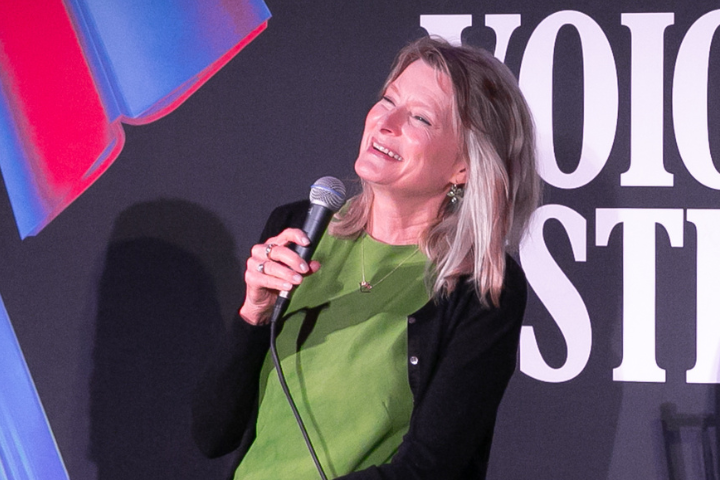
Michelle Gurule (she/her) is a writer and educator based in Albuquerque, New Mexico, and the author of Thank You, John. Michelle earned her M.F.A. in Creative Nonfiction from the University of New Mexico in 2021. Her creative work explores the complexities of sex work, class, power and Michelle’s intersectional identity as a queer, white / Chicana woman.