Dr. Marvin Dunn, a native Floridian, has led crowds of students on tours to sites of anti-Black violence through the Miami Center for Racial Justice over the past few years. Time and time again, they’ve greeted him with the same question: “Why wasn’t I taught that?”
“It’s a sense of ‘We should have known,’” Dunn said. “That’s the most common reaction we get: ‘Why didn’t they teach me that in high school? Why didn’t they teach me that in my classes on campus?’”
With the release of his new textbook, which covers the past 500 years of Black history in Florida, Dunn hopes that students don’t stay left in the dark about racial injustice in the state. The educational resource intends to teach middle and high schoolers about slavery, the Jim Crow era, the Civil Rights Movement, and modern Black history — all while avoiding the ire of state legislators, who could prevent it from reaching students in the first place. “And that’s a tough line to walk,” Dunn said. Of his six books, this was the most difficult to write, he added.
Dunn never considered shying away from difficult topics like enslavement or institutional racism. “But I also try especially hard throughout the book to point to instances in which white people did the right thing, which was to assist Black people, and try to focus on white heroes of Black history,” he explained. “I try to let the kids know that [being] white is not necessarily bad.” His hope is that the book can now make its way into public schools throughout the state’s 67 school districts with little to no resistance.
In recent years, discussions about Black history in classrooms across Florida have grown quiet or disappeared entirely because of censorial legislation. The “Stop W.O.K.E. Act,” passed in 2022, imposed vague, chilling restrictions on how public K-12 schools, colleges, and universities can teach race, among other topics. The restrictions are currently unenforceable in higher education due to a preliminary injunction, but the legislature didn’t stop there. In 2023, the state prohibited public colleges and universities from using any state or federal funding on programs or activities that violate Stop W.O.K.E. or “advocate for diversity, equity, and inclusion.” The following year, it enacted a similar law specifically targeting “identity politics” in teacher preparation programs. And the trend hasn’t been limited to Florida: Mentions of race have been purged from school curricula, as well as public libraries and parks, in states across the nation.
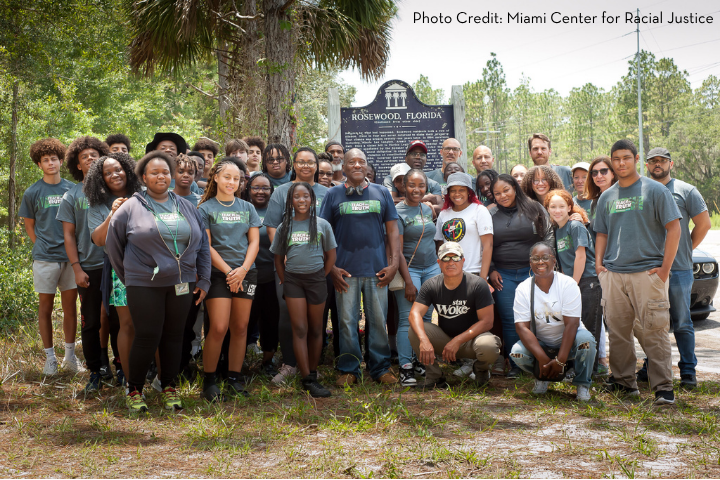
But as educational censorship has ramped up, Dunn, a former professor of psychology at Florida International University, has found new ways to keep Black history alive. In addition to writing books, he takes high schoolers, college students, and the occasional community group on “Teach the Truth” tours through the Miami Center for Racial Justice, which he founded in 2020 following the murder of George Floyd. From its inception, the center’s mission has been to preserve grim chapters of Florida’s Black history. Dunn began leading tours three years later, after Florida schools were forced to back away from teaching about race.
“I was outraged as an intellectual, as a human being, and as an American,” Dunn said. “I taught for 35 years in the state of Florida — never had any kind of clamping down, any kind of looking over my shoulder, any kind of questioning my commitment to my country.”
Equipped with a $1.5 million grant from the Mellon Foundation, the Miami Center for Racial Justice has since led hundreds of university students to sites of anti-Black violence in Florida. Common stops on the tour include Rosewood, an all-Black town that was almost entirely burned down by a mob in 1923; Newberry, the site of a 1916 mass lynching, one of the largest in the state’s history; and Live Oak, where Willie James Howard, a 15-year-old boy, was lynched for writing a letter to a white girl in 1944.
“Even older people, even parents, say the same thing: ‘No one told me that. Never heard about Rosewood, certainly never heard about Willie James Howard,’” Dunn said.
Growing up in the 1940s and ’50s, Dunn received a poor understanding of Black history from the Florida public school system. He learned about a few historical figures, like Booker T. Washington and Mary McLeod Bethune, but he was also taught that enslaved people were “civilized” and “made better” in America. K-12 and higher education improved thereafter, but the state’s education system has undergone rapid regression in recent years, making him anxious about the nation’s future.
“It worries me that if we don’t understand each other’s pain, then we’ll never get over the bad things that happened in history,” he said. “We need to know other people’s stories so that we can appreciate their history, their pain, and they can do the same for us.”
Teach the Truth tours are two days long, and on the first night, students have the chance to reflect on what they saw. They often cry, overwhelmed with emotions that Dunn helps them process.
“We stress in these debriefings that anger is legitimate, but who are you going to be angry at — the white guy sitting next to you? That guilt is legitimate, but it’s not your weight to carry because you’re white,” he said. “We try to have people appreciate the emotions that they are feeling but also to put them in perspective, so that nobody’s blaming anybody for the tragedy that we’re standing over and witnessing.”
Instead, Dunn encourages students to channel their emotions into spreading awareness about racial terror. At each site, he implores students to take photos and videos, send them to friends and family, and post them on Instagram, TikTok, and other platforms. “I really want them to take to social media and share what they learned and where they went, because so, so few people will ever get to walk the ground that they’ve walked,” he said.
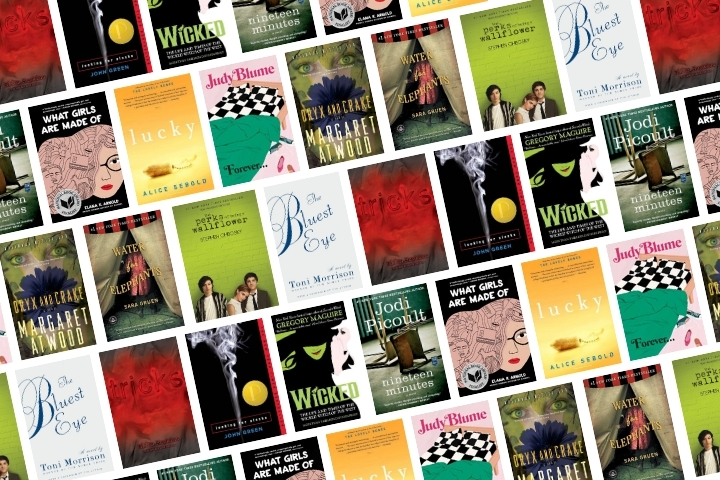
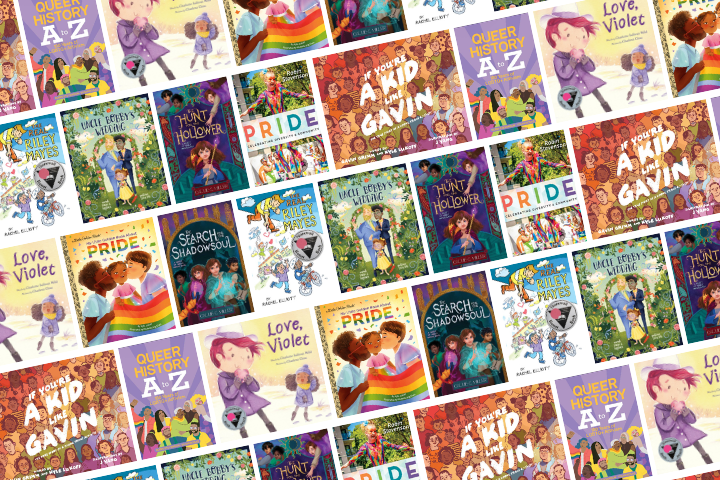
Though Teach the Truth tours are the Miami Center for Racial Justice’s largest programmatic initiative, they aren’t the only way Dunn and his colleagues are preserving history for younger generations. They’re also raising funds to preserve the house of J. W. Wright, the only structure in Rosewood that was not burned down in the 1923 massacre. And they’ve founded a Teach the Truth garden, where community members can pick up plants, vegetables, and banned books like Rio Cortez’s The ABCs of Black History free of charge. According to reports by PEN America, Florida has led the nation in book bans for the past three academic years, with 2,304 instances of bans in 2024–2025 alone.
As Dunn continues distributing banned books to parents and children, he’ll have his fingers crossed that his textbook won’t join the stack of titles. For now, he’s feeling optimistic: He already visited the Florida State Capitol to advocate for his book’s introduction into school districts across the state, and the feedback he received was promising.
“We met with a lot of the Black legislators particularly who seemed interested in helping to have the book be seen and used in the schools,” he said. “So we’ll just have to see how far this gets.”