John J. Lennon | The PEN Ten Interview
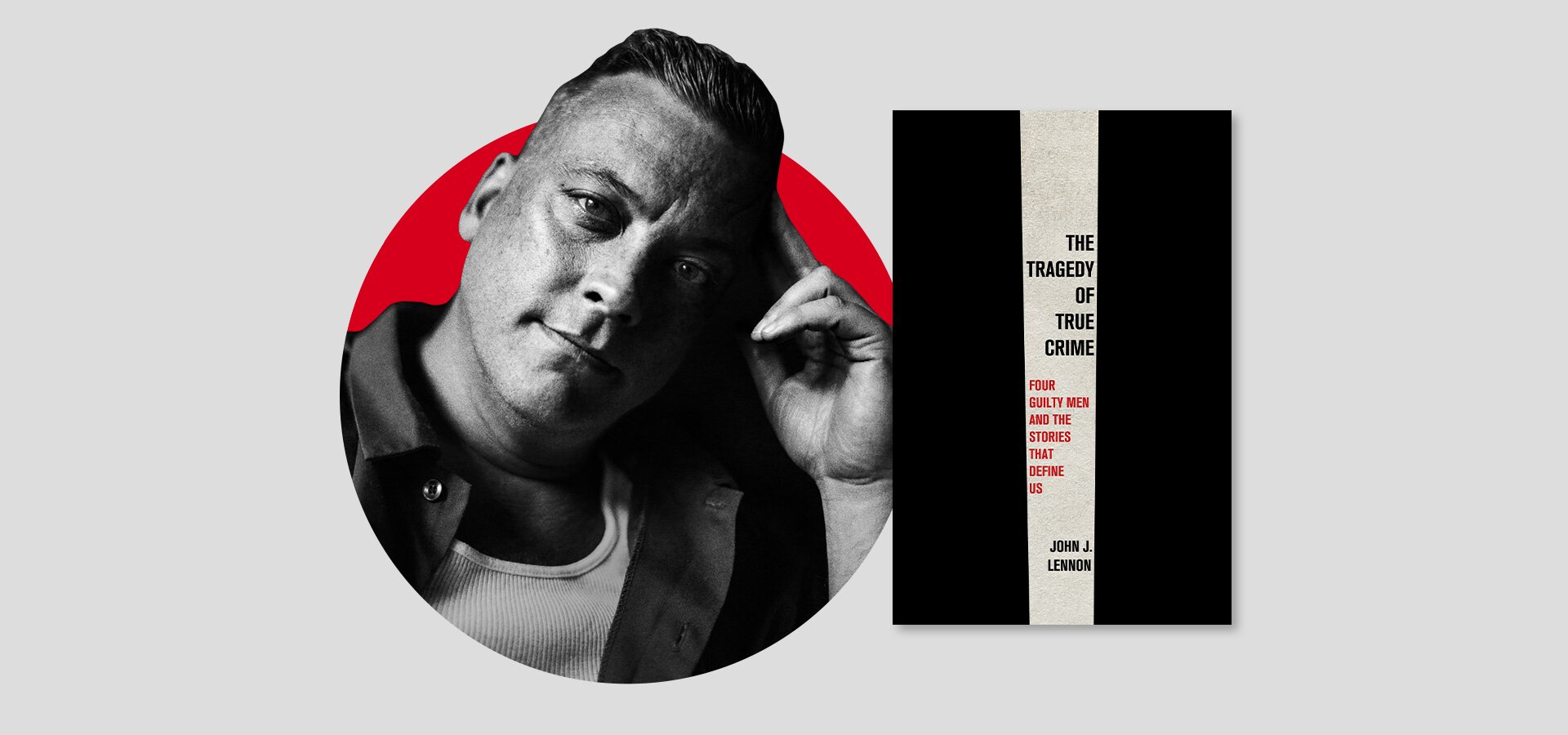
In The Tragedy of True Crime, John J. Lennon weaves together the stories of four men who have committed murder to offer a new perspective on the true crime genre. Informed by his lived experiences and career as a prison journalist, Lennon illuminates the nuance we lose when stories of true crime are one-dimensional. (Celadon Books, 2025)
In conversation with PEN America’s Freedom to Read program coordinator, Madison Markham, Lennon highlights his experience writing a work of first-person journalism while incarcerated and what he hopes readers will take away from the book. (Bookshop; Barnes & Noble)
The Tragedy of True Crime focuses on the stories of four different men who have been or are incarcerated, including yourself. What drew you to focus on these stories in particular?
I first started thinking about the idea of this book after I was featured on a true crime show. I had so many issues with the idea and tone of the episode about me—“Killer Writing”—and I felt that I could tell our stories better. I put a lot of thought into who I would write about, which is an important part of the process because character drives the story. For the prison journalist, potential characters are on display everywhere around you. I found a paradoxical hook about each of these men that drew me to their stories.
I met Michael Shane Hale in Sing Sing in 2017. In 1995, 23-year-old Shane (who goes by his middle name) killed his 63-year-old abusive lover, Stefan Tanner. He is the kindest man I’ve ever met in prison, but because he’s gay, his peers are pretty unkind to him. I soon learned that Shane was the first person the Brooklyn DA sought to execute after New York briefly revived the death penalty in the mid 1990s. How could this kind, selfless person be the first the government wanted to kill?
Around the same time, I met Milton Jones, who had been in prison since 1987. At 17, he killed two Buffalo priests, Father Joseph Bissonette and Monsignor David Herlihy. In 2019, at 50, Milton had transferred to Sing Sing to attend the master’s program, pursuing a degree in theology. He was in the same class as Shane. This was both impressive and ironic, considering Milton’s crime. His life seemed both tragic and triumphant, and I wanted to know more.
I met my third subject, Robert Chambers, after I was transferred out of Sing Sing in 2020, leaving Shane and Milton behind. I realized that there was a tragic part of Rob’s story that no other journalist could access: While true crime creators continued to remind the world of his case—a new docuseries, The Preppy Murder: Death in Central Park, out in 2019, countless articles and podcast episodes about how, in 1986, he strangled Jennifer Levin—Rob had spent his whole life trying forget what he did. It was risky to choose Rob as a character. He is not necessarily as sympathetic as Shane and Milton, and I sold the book in the wake of the #MeToo movement. At the time, there was a hunger to hate a man like Robert Chambers. Maybe there still is. But I wanted to lean into that conflict, painting scenes of his life in prison and challenging the reader to feel empathy for him.
The book weaves together these four stories in a mostly linear fashion, rather than telling each story one by one. Why did you format the book in this way?
The structure of any story—how we tell it, the facts we leave out and the facts we include, the order in which we deliver them—all of this is very intentional in furthering the narrative or message that we want to achieve. True crime stories often start in media res, bringing the audience into the center of the action. Sirens wail, recordings of hysterical 911 recordings play and replay.
I did not want readers to meet my subjects via their crimes, so I thought a lot about structure and how this book would unfold. I mapped this out in the Lighthouse Writers Workshop Book Project, with help from my mentor, the novelist and tech journalist Vauhini Vara. We realized that there was something satisfying when characters occasionally appeared in the others’ chapters. And I’d like to think these men build on each other. We are all serving time in New York prisons; sometimes we’re together, more often, we experience the same prison at different periods in time. The pacing and chronology were difficult to work out: to employ cliffhangers and reveal self-discoveries, and then flash forward from reconstructed scenes in the past to first-person scenes in the present and summarize the meaning of it all.
I was fortunate to have a team of smart colleagues—Vauhini, Celadon editor Ryan Doherty, research assistant Matt Litman, and publicist Megan Posco—who all helped me see these connection points and let me know when something wasn’t working. While reading several drafts of the manuscript, they prompted me to ask myself questions like: How is the plot—and the book’s ideas in general—progressing? Is information being delivered in an order that makes sense? How are my characters’ actions changing them?
In the book you say, “If true innocence reveals a potential injustice, traditional true crime retells stories of violence for pure entertainment.” What do you see the role of this book, or writing like it, which shares the perspectives and experiences of the accused, to be in affecting the ways we view the media genre of “true crime”?
You say the “accused.” I intentionally write about the guilty. I find guilty men more interesting, perhaps because I am one. On the surface, true innocence seems like a more legitimate, justice-minded form of entertainment, but these stories are often unsettling, especially to me. Here’s the set up: When someone claims innocence, he is situating himself as a sympathetic character, the protagonist trying to overcome a corrupt system. Problem is, the whole framing of that story structure is so fragile, because most people who claim innocence are lying. Trust me, I live with these men.
The one time I did try to tell a true innocence story, I realized the man was lying to me when he refused to answer questions from a law school clinic I was hoping would take a second look at his case. When I confronted him, it got ugly. I mean, he was a friend. We didn’t talk for over a year, and things were tense. He did eventually admit to me that he had been lying and came clean.
I see more opportunity in telling truer, fuller stories about the guilty—not the lurid ones that end with the conviction. What the prison journalist has that other writers don’t, especially one like me who’s committed a crime like murder, is this: a space where the interviewer can share his truth and evoke an honest revelation from his subject. I never position myself above my subjects. In fact, I tell them that I’m more culpable than all of them. I can’t predict what the role of my book will be, but I hope it’s a proof of concept that shows that prison journalists can be trusted narrators.
I see more opportunity in telling truer, fuller stories about the guilty—not the lurid ones that end with the conviction.
One thing noticeable in The Tragedy of True Crime is the use of names, most of them real names—from the incarcerated people you meet to the names of attorneys, judges, and individuals on the periphery of stories. What significance is there in naming everyone in telling such difficult stories?
This question reminds me of an essay I recently read in The New Yorker by a Bennington professor, about teaching college classes to lifers in a New York prison. She anonymized all of the prisoners, but the whole piece was about them, their creativity, their drive. I imagine the writer feared that using their names would piss off prison administrators. But these guys have life sentences… I mean, they could use some help, or maybe just a friend.
Working with the editors of major newspapers and magazines over the past decade, I’ve learned to anonymize sparingly. I didn’t need to name some peripheral characters, as you say. But take Frank Sepe, or Midget. We meet him when I land in the same cellblock as Robert Chambers. Midget has been in prison for almost 50 years, since he was 17. Midget and his brother, who hanged himself in prison after they both received 50 to life, killed two guys in a biker gang. What if a powerhouse lawyer reads the book and wants to help Midget? First thing she’ll do is google “Frank Sepe.” I imagine people do this when reading books about real people. If I remove Midget’s real name—well, there goes that potential help.
People in society—meaning, you who are reading this—have to understand that one of the worst parts of prison is being tucked behind these walls, irrelevant. It was important that I use real names. I take pride in making my peers and their stories, even in bits and pieces, known to the world.
In the book, you note the lack of support structures for mediated conversations or restorative justice processes, specifically comparing programs (or lack thereof) in New York and Texas’ prison systems. One thing you do highlight as a part of both systems are the different incorporations of written apologies or statements. What kinds of programs would you like to see better supported in New York?
Since I landed back in Sing Sing in September 2024, I’ve been locked in my cell for 23 hours a day, with one hour of recreation in the cement yard. Currently, there are no programs, though I do hear the situation is better in some other New York prisons. Because of a staff shortage, the National Guard is a constant presence. Correction officers walked off the job in an illegal strike earlier this year, and New York Governor Kathy Hochul fired thousands of them (despite short staffing being one of the strikers’ primary concerns).
Even when programs were up and running, the ones that could make a real difference, like therapy or substantive restorative justice programs, were rare. Most of us don’t understand the language of amends. Many haven’t thought enough about the far-reaching impacts of our crimes. Over the years, I’ve written several prison administrators asking to lead writing workshops for my peers, but most have given some excuse to deny them. But I do respect the new commissioner, Daniel Martuscello III, because last year, he personally approved a writing workshop at Sullivan—the first time and last time I’ve ever gotten a green light—which I taught for a few months until the prison closed and I was shipped back to Sing Sing. Martuscello’s had his hands full this year, so I haven’t asked him to approve a workshop here, but we’ll see.
You also write a lot about your relationship to writing and teaching writing. What power does the written word have for incarcerated people reflecting on their experiences, as opposed to verbal conversation?
Take Dyego Foddrell, who published “Uprooting the Lie” in PEN America. In his first draft, he rattled off a list of prison accomplishments and yearned for his mother, who had died years before, to see that he had changed. But Dyego made no mention of his crime. I told him that we turn to the personal essay when something bothers us and we try to figure it out on the page. He was in prison for killing his girlfriend’s child. Had he ever interrogated himself about what led him to do that? This was not a conversation he’d ever had with anyone in prison. I let him know he was talking to someone who carried the weight of murder, too, and I suggested he read my essay, “The Apology Letter.” He did, and we met again a week later in the common area. As men played chess and watched The Steve Harvey Show, we reverse engineered my essay about apologizing. I explained how it began in the specific, shifted to the general, then ended in the abstract with a self-realization about my identity: I am both the writer and the murderer. Dyego took that framing and began rewriting his essay. I tormented him with 10 drafts of cuts and comments and prompts for revisions. But the version that PEN ultimately published was Dyego’s first real attempt at taking accountability for his crime. At its best, the process of thinking and writing and rewriting helps us self-discover. Talk, especially in the loud and crass and unsafe spaces of prison, is seldom vulnerable and often meaningless.
People in society—meaning, you who are reading this—have to understand that one of the worst parts of prison is being tucked behind these walls, irrelevant. It was important that I use real names. I take pride in making my peers and their stories, even in bits and pieces, known to the world.
Throughout the book and in the author’s note, you talk about the logistics and experience of writing while incarcerated. What was the biggest difference in the process of writing a book while incarcerated from your experience writing articles as a prison journalist?
With the book, I had more room to stretch out on the page, and I didn’t have to worry about beating back my voice. My writing for The Atlantic and the New York Review of Books is more subdued than it is for Esquire or Men’s Health. Now, it was up to me how to render my voice and I tried to strike the right balance with clarity and authenticity.
And then there’s the fact checking process. At a magazine, fact checkers prioritize the protection of the brand first, because if there’s a factual error in something they publish, the magazine or newspaper is liable. By contrast, a book author is the one responsible for ensuring the accuracy of their work. Which is to say, you have a lot more freedom and ownership with a book, but it comes with more responsibility and liability.
On a similar note, what made you feel drawn to the form of a book for telling these stories, rather than in an individual, separate essay format?
Whenever I write a feature, every paragraph—every sentence, really—is furthering the “why” or thesis of the piece. Your subject’s personal story illuminates some universal issue that people care about. But after my experience with Inside Evil, I felt like I had so much to say about this lurid genre. And though I have said some of it in my magazine articles, I felt I needed the time and space to get those thoughts on the page. I wanted to take a big swing and tell the stories of a few men, with my own woven through (which is my style).
After I reported out the stories of these men, I realized there were several overarching themes—religion, mental illness, sexuality, identity—that went beyond true crime. So, this had to be a book. And I had to convince myself, and eventually an editor, that I was the best person to write it.
At the end of the book, you powerfully state that, “The stories we tell about the worst of humanity are a reflection on all of us.” What do you feel might be an antidote to this, the tragedy of true crime?
It seems everyone is telling true crime stories now. Even James Patterson pivoted to the genre with his recent book about the murders in Moscow, Idaho, which is coauthored with former Esquire writer Vicki Ward. But what agency do these storytellers have? I’m not saying that authors must have personal experience to write about a given subject. But why can’t those who are responsible for these terrible acts become trusted narrators themselves? I’m also not advocating that everyone in prison should write a slick story about their crimes (and I frankly don’t think any serious editor would be interested in that kind of thing anyway). But when it comes to those of us who take accountability, we can perhaps offer more insight and nuance to these stories of crime and punishment than anyone else can.
As a journalist, I feel like I’m on more solid ground when I ask questions, rather than prescribe solutions. How did my episode of Inside Evil with Chris Cuomo resonate? To what end does that version of my story exist? How will my version, in The Tragedy of True Crime, resonate? Who gets to tell our stories? That’s for readers and audiences to decide. But they should have more options, new voices with agency who can tell them with sensitivity and insight and honesty.
When it comes to those of us who take accountability, we can perhaps offer more insight and nuance to these stories of crime and punishment than anyone else can.
What do you hope readers of this book—perhaps some of them consumers of true crime media—take away most?
My book cover is primarily black, but there is a sliver of grey in the center. When you open the book, you enter my world. Me, and the men I profile, all live in the grey area, and I suppose that’s what I want readers to take away: the realization that people in prison aren’t all bad (or all good). Perhaps, after following the stories of Shane and Milton and Rob and myself, readers will also be more attuned to notice the black-and-white binaries in their favorite true crime media: good/evil, guilty/innocent, us/them. That grey area is a huge part of the story that traditional true crime creators can’t capture.
John J. Lennon is serving his twenty-fourth year behind bars, currently in Sing Sing Correctional Facility. His writing has appeared in the New York Review of Books, the New York Times Magazine, the New Yorker, the Atlantic, Esquire, and New York magazine. His work has been anthologized in the Best American Magazine Writing, and he’s twice been a finalist for the National Magazine Award, in feature writing and reviews and criticism. His feature essay “The Apology Letter” was part of the Washington Post Magazine’s special issue that won the National Magazine Award. He is eligible for parole in 2029.