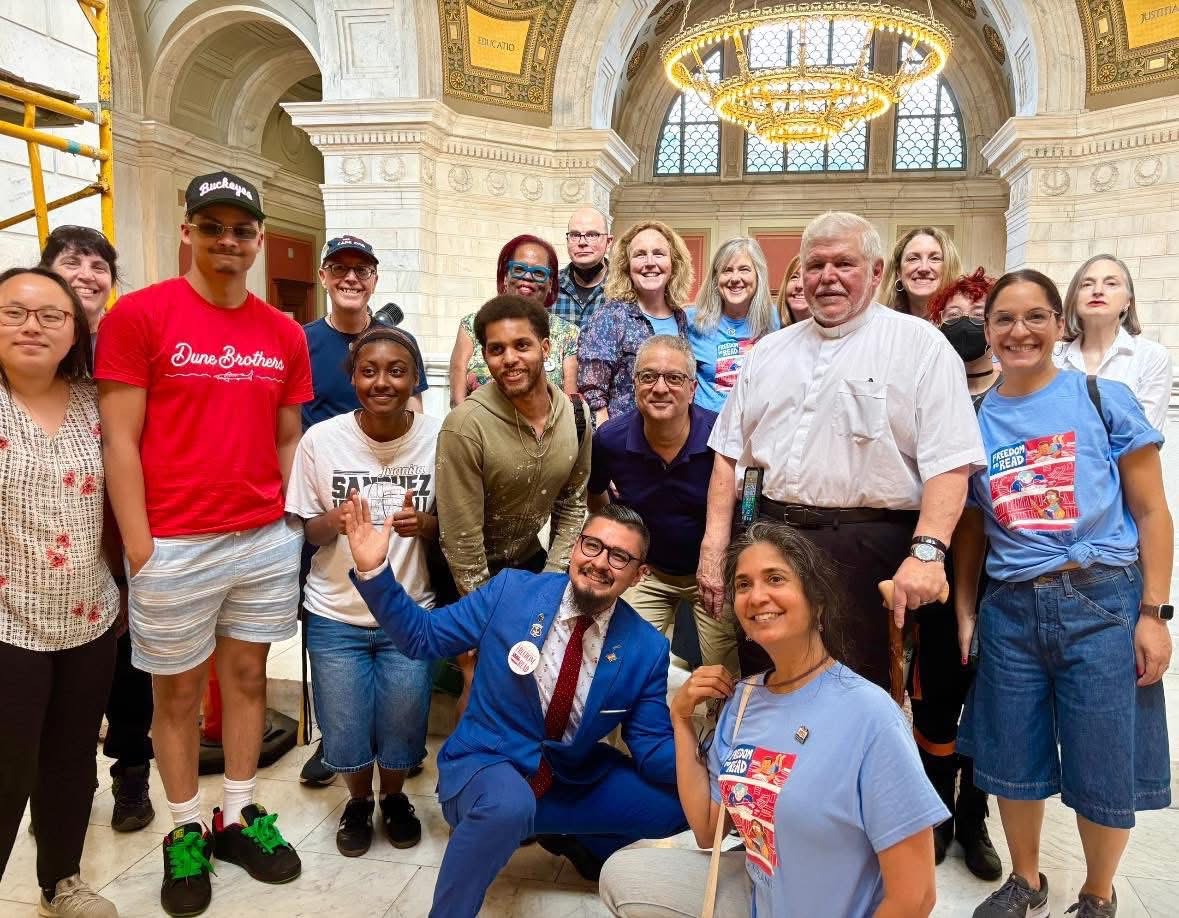
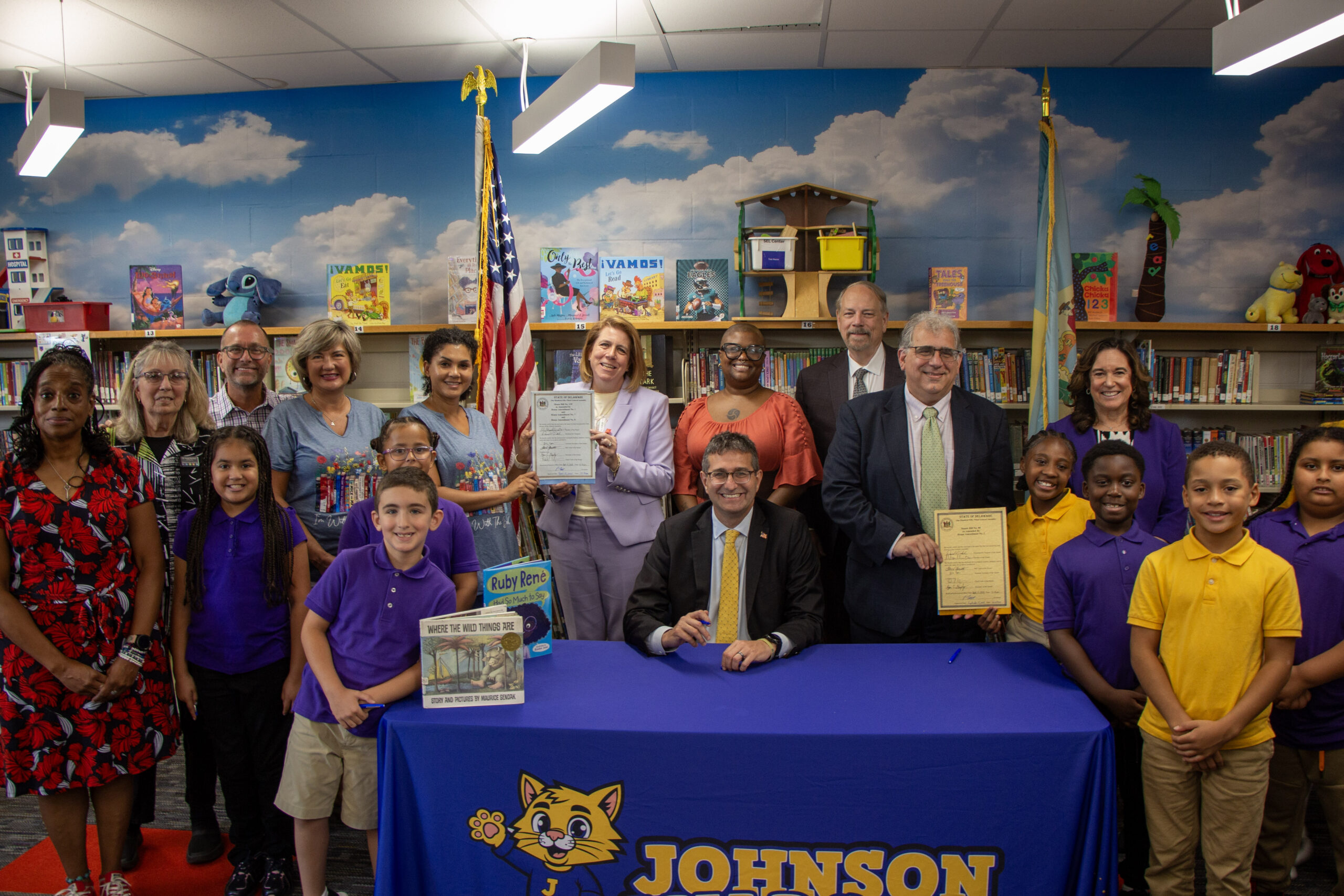
This week, Delaware Gov. Matt Meyer signed the state’s Freedom to Read Act into law, joining a growing number of states that are passing laws to stop book bans and protect the right to read.
Delaware State Rep. Krista Griffith (D), who sponsored the bill, HB 119, said it all started with her chance meeting of PEN America Freedom to Read Program Director Kasey Meehan on a train. Meehan asked Griffith how she liked the book she was reading, Zadie Smith’s White Teeth, and it led to a larger conversation about books.
When Rep. Griffith shared that she was a legislator, Kasey let her know about a recent effort to pass a Freedom to Read Bill in Maryland. “How’s Delaware doing on that?’ I go, ‘You know what? It’s a good question. It’s a good question,’” Griffith said at a press conference celebrating the new law.
When she got home, Griffith reached out to State Librarian Annie Norman and other experts, including educators across the state and Delaware Rep. DeShanna Neal, whose book with her daughter, My Rainbow, was one of the books challenged in the recent Supreme Court case Mahmoud v. Taylor.
Delaware’s new Freedom to Read Act establishes a transparent process for addressing challenges to books in public and school libraries and aims to protect library materials from being removed for partisan, ideological, or religious reasons.
“Book lovers have to stick together. Our freedom to read is under attack across the country,” Meehan said. “I’m honored that a conversation over a mutual love of books turned into something so deeply meaningful for the children of Delaware, and congratulate Rep. Griffith and all of the people who worked hard behind the scenes to get this law passed.”
Delaware joined a growing list of states that have enacted legislation to protect access to library materials, including California, Colorado, Connecticut, Illinois, Maryland, Minnesota, New Jersey, Oregon, Rhode Island, Vermont, and Washington.
“So you know, one train ride, one train ride, boys and girls, can take you to lots of places, and not just physical places, but ideas that you create, new ideas that will help your fellow citizens,” Griffith said.