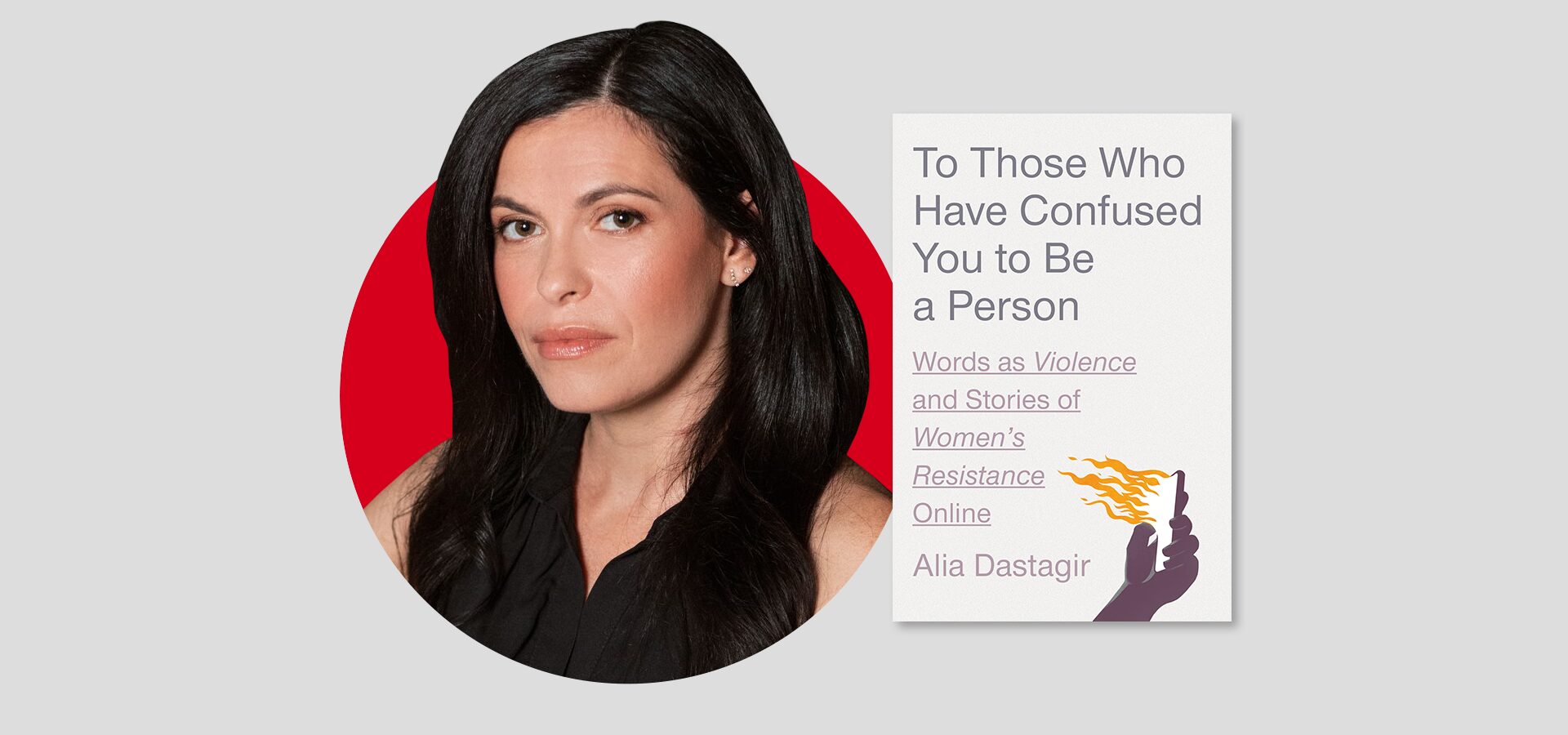
Alia Dastagir | The PEN Ten
Award-winning reporter Alia Dastagir critically analyzes online abuse faced by women in To Those Who Have Confused You To Be A Person (Crown, 2025). When a story for USA Today made her the target of an online mob, Dastagir wanted to better understand the phenomenon of violence online. Her book chronicles the experiences of 13 other women who’ve experienced online abuse, intimately exploring the impact of this violence as well as how women cope. With input from psychologists, sociologists, neuroscientists, technologists, and philosophers, To Those Who Have Confused You To Be A Person is a valuable window into what women endure during online abuse, demonstrating how it intersects with misogyny, disinformation, and white supremacy.
In conversation with Digital Safety and Free Expression program assistant Amanda Wells for this week’s PEN Ten, Dastagir outlines the difference between protecting free speech and protecting individuals experiencing harassment, why we can’t just “log off,” and what makes her feel optimistic about the future of safe online spaces. (Bookshop; Barnes & Noble)
In To Those Who Have Confused You To Be A Person, you write about your own experience as a target of online abuse, hate, and harassment, linked to your work as a reporter with USA Today. At PEN America, we work with a lot of reporters who are lightning rods for online abuse, hate, and harassment, and who self-censor, change their reporting, or leave their careers altogether as a result of online abuse. Can you tell me more about your own experiences with online abuse, how that impacted the trajectory of your personal life, work, and career, and why you decided to write this book?
It’s hard to think about a part of my life that hasn’t been affected by online abuse. My experiences of violence online changed how I felt about myself and my work, how I thought about strangers and my intimate relationships, how I parented my children, how I engaged in community. It created new boundaries around privacy, around my willingness to engage in certain forms of connection that demand exposure. It made me more tentative, more suspicious, sometimes disillusioned. I decided to write the book because I was trying to understand why this was having such a profound effect on my life, even during periods when the harassment was not especially intense. I wanted to be attentive to the way this pain is felt, understood and managed. I think we employ a lot of cognitive tricks to survive difficulty, despair, silencing.
There are so many stories we have to tell ourselves just to be able to tolerate our lives. Maybe you tell yourself the harassment isn’t a big deal, it’s a part of the work. Maybe you tell yourself that the amount of harassment you experience is an indication of your cultural value. I understand these reactions — I’ve had them myself — but I think they can also lead to a sense of accommodation or resignation or inevitability that I think may not serve us in the long run, even if in the short-term it allows us to remain in online spaces.
I decided to write this book because self-censorship is incredibly damaging to an individual’s sense of worth, but also because it narrows the questions we are willing to ask in a society and the stories we are willing to tell. After I was mobbed online for a story I wrote on child sexual abuse, I had moments where I told myself I would never write on the topic again. There are so many women who refuse to be silent even under much greater threats, but I think my own response speaks volumes about the effectiveness of these abuse campaigns. They are pervasive because they are often effective. This book is an effort to document what it means to be a woman online, and to slow down and deepen a conversation around online abuse that I think is incredibly urgent in the current political moment.
One of the most pervasive myths around online abuse is that it’s just online—not in the “real world”—and so targeted individuals can just log off when they’re facing online abuse. Based on what you’ve learned from researching and writing this book, how would you respond to this?
I struggle to understand how anyone can still possibly think this. It feels obtuse. Few people can live now without some relationship to the internet. Our experiences online have economic, social, political, psychological, and physiological impacts. Our experiences online clearly affect our mental health and well-being, for better or worse. Just logging off isn’t a possibility for many people, and I think it’s always dangerous to suggest people leave spaces that they have every right to participate in, and in this case we’re talking about spaces that have become crucial to social and political movements, to connection and assembly, to creativity and self-definition. Telling people to “just log off” shifts the burden of meaningfully addressing the problem from platforms to individuals. Why should we have to log off? Why does the victim bear the responsibility of solving this? Why not address the sources of the toxicity, the abuse, the impunity, the coordinated efforts to silence people and ideas? “Just log off” can sound quite a bit like victim blaming, and “just log off” is also exactly what bad actors want, to force us out of spaces that are incredible sites of power. This is intentional, and we should make every effort to resist it.
Throughout your book, you locate online abuse not just online, but as something that shows up at a grocery store, in a parking lot, or even when you’re trying to read your child a bedtime story. In other words, you point out that online abuse is diffuse, which makes it that much harder to mitigate and cope with as an individual. Why did you choose to frame online abuse in this way?
Sometimes I think the conversations around online abuse can obfuscate that victims are coping with this in the midst of so much other life. That’s why the dissonance feels so acute. These intrusions and violations are present while we are with our children, trying to enjoy time with friends, running errands, resting in the on-call room, working on our stand-up material, arguing with a spouse, caring for a sick parent. I wanted to show that the abuse moves with us through life. Maybe I wanted to remind the reader that that life exists at all.
“Just log off” can sound quite a bit like victim blaming, and “just log off” is also exactly what bad actors want, to force us out of spaces that are incredible sites of power. This is intentional, and we should make every effort to resist it.
You write that “your blocks and mutes may save you emotional hurt, but other women see those words and can be hurt and harmed by them.” Can you say more about how online abuse, even if it targets an individual rather than a group, can cause communal harm?
Even if the abuse is directed at a single woman, other women can see it, feel it, absorb it. One journalist I interviewed who used to retweet her abuse told me she stopped sharing hateful messages online because she didn’t want to cause vicarious trauma for other women. But online abuse also leads to communal harm because the attitudes that drive the abuse are the same attitudes used to justify offline attacks on our dignity, our autonomy, our human rights. Online abuse is part of a greater history and is a contemporary effort to push whole groups of people out of public and civic life. Online violence might look and feel personal, but it’s really about notions of hierarchy, power, and who can and cannot exercise their right to speak.
You began writing this book before some of the AI tools that are most rife for abuse, such as generative AI and deepfake software, really took off. How has the online abuse landscape shifted with the explosion of tools that make spreading disinformation and abuse easier than ever?
I think about this a lot. Frankly, I’ve had moments where I’ve felt self-conscious about the book because it’s hard to remain current with analysis when the technology evolves so quickly. But whenever I feel that, I try to remind myself that this book really isn’t about technology. The tools will continue to evolve, platforms will die and new ones will emerge. This book is about documenting human experiences of harm. There are certain fundamental truths about how this harm shows up in a human body, in a human life, regardless of the technology used to antagonize a victim. AI will certainly make online abuse more pervasive, easier to carry out and in some cases more reputationally and emotionally destructive. And of course image-based abuse is a particular and incredibly severe form of invasion and cruelty. But these issues build upon one another, they compound one another, and all forms of harm can consequentially make us quieter, more cynical, less resolute and connected to ourselves and to other people. These are the truths I wanted to underscore.
In the conclusion, you reference a study by the Pew Research Center that found that attitudes on balancing anti-online abuse measures with free expression are often divided along partisan lines. What do you think underscores this divide, and how do you think these differences will shape the political debates over digital regulation in the next few years?
Part of it might be a misunderstanding of the First Amendment. The First Amendment says that the government cannot infringe upon our right to speak freely, but there is plenty of speech that is not protected. There are already boundaries around speech, and I don’t think it’s antithetical to American values to look at how we might want to rethink certain boundaries in the context of society-altering technologies. Free speech discourse is also convoluted because it has been politically hijacked in absurd and disingenuous ways. You can’t claim to value free speech and then censor information about abortion online. I also think it’s worth noting that while people who identify as liberal may be more keen on anti-online abuse measures, some of the most vulnerable groups online – disability activists, sex workers, queer and trans folks – are deeply concerned that the left is also infringing upon their right to free speech. We’ve already seen examples of this. While some lawmakers are sponsoring legislation and passing laws that are ostensibly designed to protect vulnerable groups from digital harm, many tech policy experts say these laws, some vaguely constructed and others without foresight, will ultimately curtail everyone’s right to free speech, leading to more censorship and to a less open internet. We need bipartisan solutions to address online harms, but we need the right solutions, ones that are sound and precise and that do not ultimately lead to less speech.
Online violence might look and feel personal, but it’s really about notions of hierarchy, power, and who can and cannot exercise their right to speak.
Can you elaborate on the balance between protecting free speech online and protecting the safety of targets of online abuse?
A shared goal for all of us should be to maximize the amount of speech in a society. But allowing online abuse to spread largely without consequence does not lead to the most amount of speech. For some people, the cost of speaking simply becomes too great. Bad actors aren’t just threatening the speaker, they are often threatening the speaker’s families, their loved ones, their children. The threats activate fear and threat responses, which can weather the body over time, and the language and images of these attacks promise to enact forms of violence that many of us have already experienced in our offline lives, or are connected to other fights we are already engaged in. If you want to protect free speech online, you’ll need to have some guardrails in place that don’t drive huge swaths of people off the internet.
Throughout your book, you argue that peer support is critical to the long-term mental health outcomes of individuals experiencing online abuse. How can people support others—friends, colleagues, or even strangers—who have found themselves at the center of an online harassment campaign?
I think you can offer emotional and practical support, perhaps both, depending on what the person wants or needs. I needed many things, though certainly my needs varied depending on the severity of the attack. I needed people who took my pain and fear seriously. Sometimes I needed people who could monitor my accounts. The abusers want you to question your reality, so having people who can remind you of what is true, especially early on in a crisis, can help mitigate the destabilization that occurs during large-scale attacks. It was enormously helpful to have people who reminded me that my work mattered, and that I did, too. Every victim will be different, but knowing there are people in your life who believe you have value can make all the difference.
In the face of rampant and egregious harassment, your book also chronicles many stories of hope, resistance, and change-making being done by women on the digital frontlines. What is one thing that makes you feel optimistic about the fight for safer online spaces?
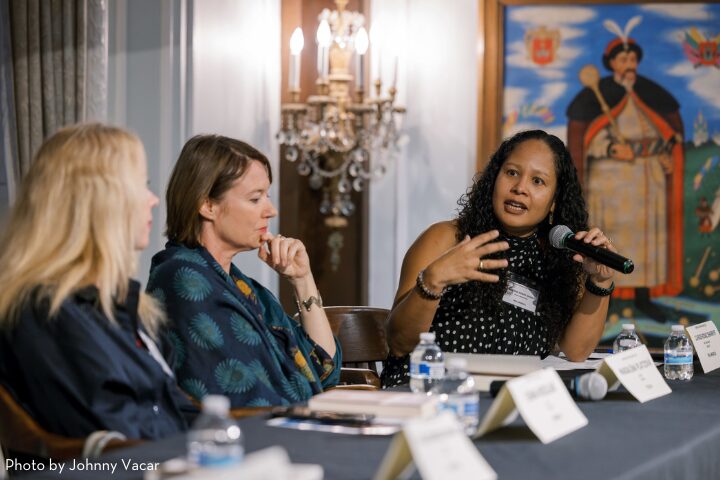
A few days after my book was published, Dr. Safiya Noble, whose work focuses on the harms of racist, sexist algorithms, was testifying in front of the California State Assembly for an informational hearing on technology-facilitated male violence against women and girls. She told me that she planned to tell legislators about my book, so I tuned in to listen, and I’ll admit my initial impulse was fairly self-serving. Dr. Noble was joined by writer Moira Donegan and lawyer Carrie Goldberg. I watched as all three spoke on the issue of online harm with passion, conviction, and a deep command of the issues women and girls face in an oppressive digital landscape. It made me think about all the fights happening that we never hear about, all the work being done to make the world more right that never gets mainstream news coverage. A woman who was threatened online that day likely had no idea that these three experts were just that moment speaking up for her, making their best case for why legislators should take this abuse seriously. Every day, people are working in solidarity to reform harmful systems. That gives me hope.
Right now, it does feel like social media, in particular, is an incredibly dark and unproductive place. . . We can imagine something different. I believe we must.
How can readers who are just learning about online abuse advocate for a more free, equitable, and safe digital world?
There are so many things that need to happen – real consequences for people who behave badly online, legislative action on data privacy and civil rights, enforcement of antitrust laws, better training on online abuse at every level, better education and digital literacy around misinformation, disinformation and malinformation. But I think the first step toward meaningful change requires that we fight this stubborn sense of inevitability, that we resist the idea that to go online means we will experience unreasonable amounts of harm and that we will never have recourse. Millions of choices, large and small, were made by individuals to bring us the internet we know today, with its infrastructure and norms of behavior. Right now, it does feel like social media, in particular, is an incredibly dark and unproductive place. But maybe it’s helpful to remember that the internet is enormous, filled with billions of people accessing connection and cultivating beauty. We, the people, are ultimately the ones with the power, even if it doesn’t always feel that way. We are not just online consumers but creators. Our presence, our intellect, our humor, our creativity is what makes the internet possible. The internet is here because we are here. We can imagine something different. I believe we must.
Alia Dastagir is an award-winning journalist and former reporter for USA Today. Her work focuses on gender and mental health.
Dastagir was one of eight U.S. recipients of the prestigious Rosalynn Carter Fellowships for Mental Health Journalism. She won a first-place National Headliner Award for a series on suicide and was awarded the American Association of Suicidology’s Public Service Journalism Award. Her book on women and online abuse, “To Those Who Have Confused You to Be a Person: Words as Violence and Stories of Women’s Resistance Online,” was published by Crown in 2025.
She has an MFA in creative writing from NYU, where she was an Axinn fellow.