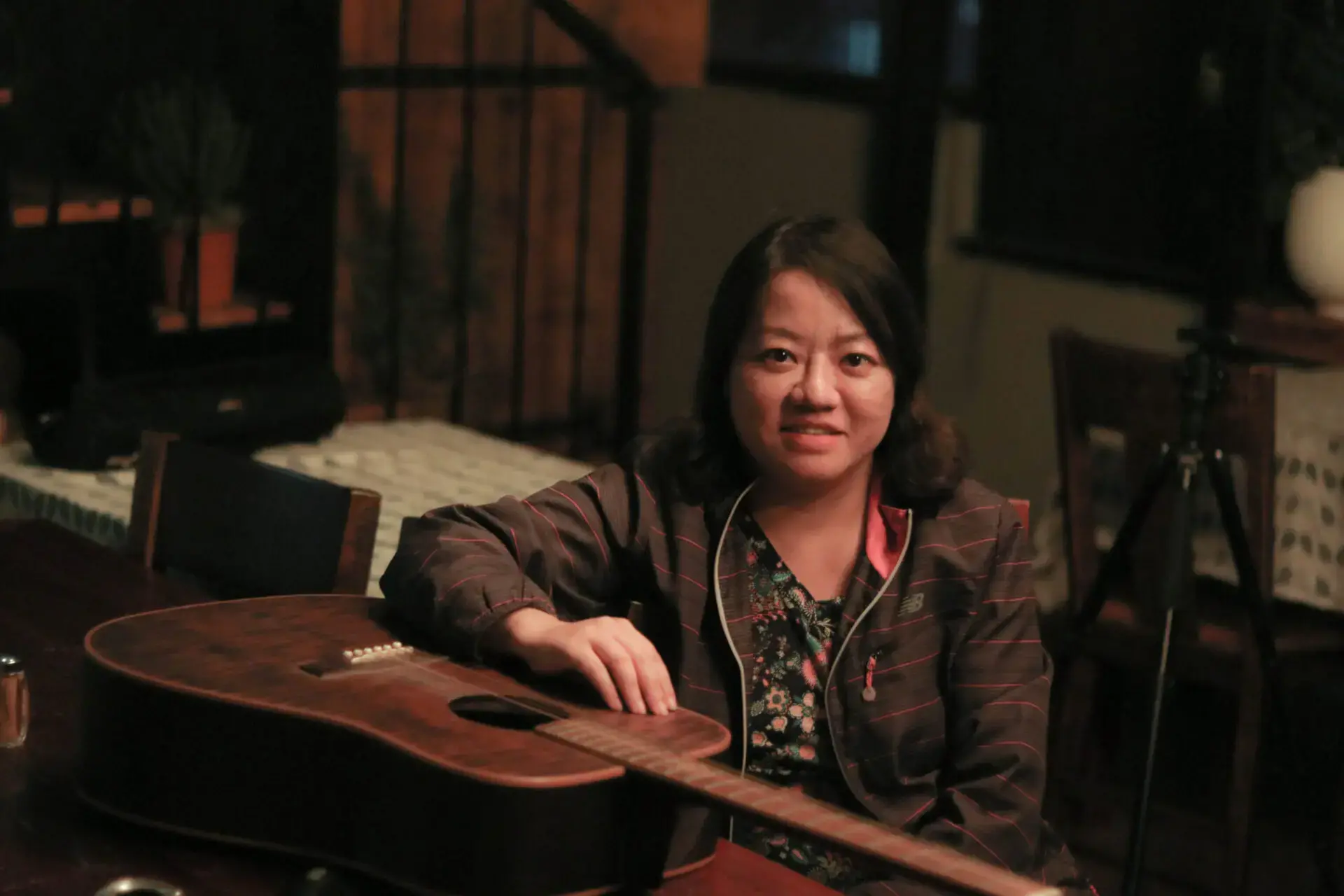
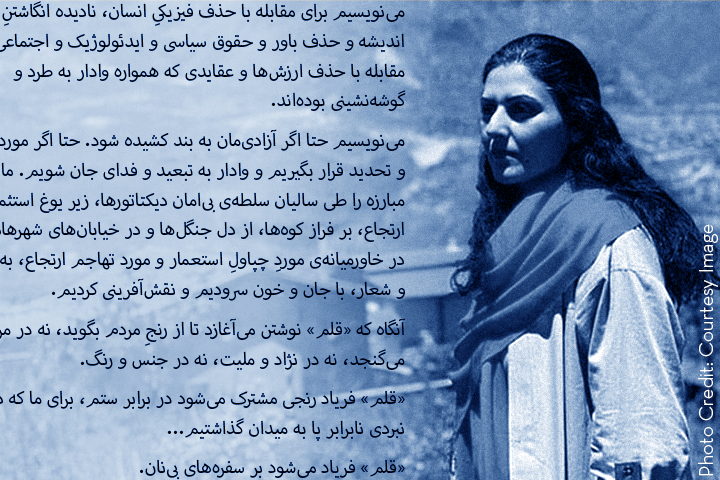
Golrokh Iraee has refused to let jail silence her. She was first arrested more than a decade ago and imprisoned on blasphemy and propaganda charges because of an unpublished short story criticizing the practice of stoning. Throughout that time, and her many arrests since, she has been a stalwart voice from behind the walls of Evin Prison and other facilities, advocating for greater human rights and holding Iranian authorities to account. Iraee regularly writes in support of women’s rights and improved prison conditions, and against war and the rise in executions by the Iranian government. From prison, she takes part in activism campaigns and letter writing with other prominent jailed women human rights defenders and writers, including Narges Mohammadi and Anisha Asadollahi. Iraee has faced punishment by prison authorities for refusing to stay silent; most recently, in May, she and fellow prisoners in the women’s ward were denied their visitation rights and access to phone calls. Her letter below – originally written in Persian this April and shared for the first time as she was named one of the 2026 PEN/Barbey Freedom to Write Awardees – reminds us that even from inside prison, writers can hold up truth to power and call on all of us to work together towards a more just world.
From afar, I greet you who stand together to honor “the freedom to write.” From a world where truths are denied the chance to come to light, and where breaking free from oppression and subjugation is not a simple right but becomes possible only through confrontation with rulers whose interests are sustained by the fear that casts its shadow over speech and action.
Here, writing without fear of the suffering of people who rise against oppression is a crime, and those who, with the pen, lay bare the devastation of pain before the eyes of the world are worn down in silence, deemed guilty, and subjected to trial.
Writing about the suffering of oppressed people – poverty and inequality, repression and systematic killing, which have always been part of our lives – though not without anxiety, is a glimmer of hope for the will to struggle and will stir the surge of anger among a people living in suffocation; and the outcry of their conscious and purposeful rage, as history bears witness, will be the only way to dismantle oppression.
The ruling reactionary forces cannot tolerate freedom of thought and the courage of expression when the pen strikes at the raised gallows, speaks of poverty and inequality, reflects empty tables, and heralds the uprising of the hungry. So they set about breaking the pen—the pen that binds the bitter reality of the present to the bright horizon of tomorrow, and that shatters the silence to which we are driven by the relentless repression of more than a century of the rule of sheikh and shah, through social, political, and class consciousness that liberates the dispossessed and the oppressed masses.
We write to resist the physical elimination of human beings, the dismissal of thought, and the suppression of belief and of political, ideological, and social rights. We write to resist the marginalization of values and convictions that have always been forced into rejection and isolation.
The pen becomes a cry against every suffering and every oppression in every corner of the world; and if it turns otherwise, for expediency, it has abandoned its calling.
We write, even if our freedom is chained. Even if we are threatened and constrained, driven into exile and made to give our lives. We have sung and enacted this struggle through the years of dictators’ relentless rule, under the yoke of exploitation and reaction, over mountains, from the heart of forests, and in the streets of our cities, in a Middle East plundered by colonialism and assailed by reaction, in poetry and slogans, with life and blood.
When the pen begins to write, to speak of the people’s suffering, it is confined by no border, no race or nationality, no sex or color. The pen becomes the cry of shared suffering against oppression, for us who stepped into an unequal struggle… The pen becomes a cry over tables without bread.
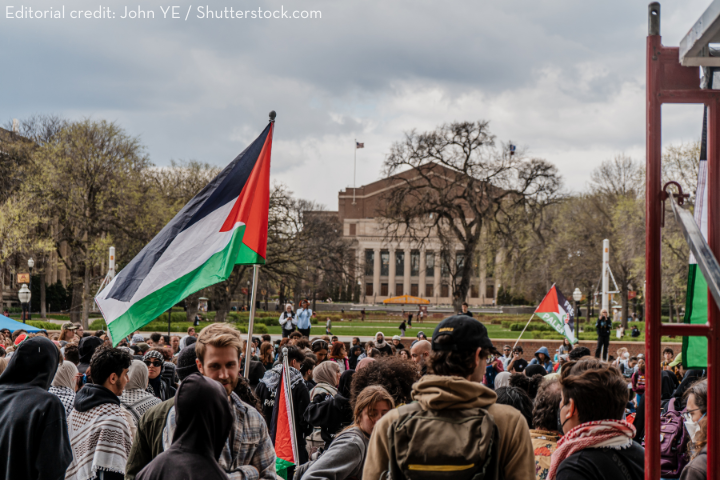
It becomes a cry on the tongues of grieving mothers, as they weep over the bodies of those proud ones on the carts of death, carried towards unmarked graves. It becomes a cry among the children of Palestine, as they bear the rage of occupation in the burden of displacement, and their dreams, with the ashes left from olive trees burned by the executioner’s spite, turn to smoke and vanish into the air.
It becomes a cry in the final, frightened gaze of the girls of Minab, in dust and blood, in dishevelled hair clotted upon their frail necks. It becomes a cry in the search for justice by Mah Monir Molaei-Rad, mother of Kian Pirfalak, as, from within Kian’s childish play, she recalls an endless grief and writes that injustice does not endure and that the oppressor will face the consequences of his deeds. The pen becomes a cry against every suffering and every oppression in every corner of the world; and if it turns otherwise, for expediency, it has abandoned its calling.
And you, my dear ones, whose hearts beat to lay bare the truth, whose concern is to write of reality without restraint, you who honor the pen and the struggle for equality and liberation, your conscious and responsible efforts on behalf of oppressed people fighting for their rights will echo the voices of the voiceless.
We will break free from repression, and we know this will only be possible through joint action. For the establishment of justice and equality, towards the liberation of humankind from the oppression and subjugation by those who rule.
Golrokh Iraee
Ordibehesht 1405 (April 2026)
Women’s Ward, Evin Prison