Bestselling author and journalist Vauhini Vara doesn’t know what the AI industry might look like in five or 10 years — but she doesn’t think that’s such a bad thing.
CEOs of AI companies tend to speak with a lot of conviction about the future. Writers and artists, on the other hand, often have more questions to offer than answers. Uncertainty has always been their domain, but right now, it’s a place we should all be happy to call home, Vara told audience members at PEN America’s recent panel discussion, “Art Under Threat? The Impact of AI on Creative Writing.”
“There’s so much power in saying, ‘I don’t know what the hell is going to happen in five years,’ because we together are going to decide what’s going to happen,” she said. “Our willingness to say that is a position of empowerment. Uncertainty is a generative position that we should feel really comfortable and enthusiastic about.”
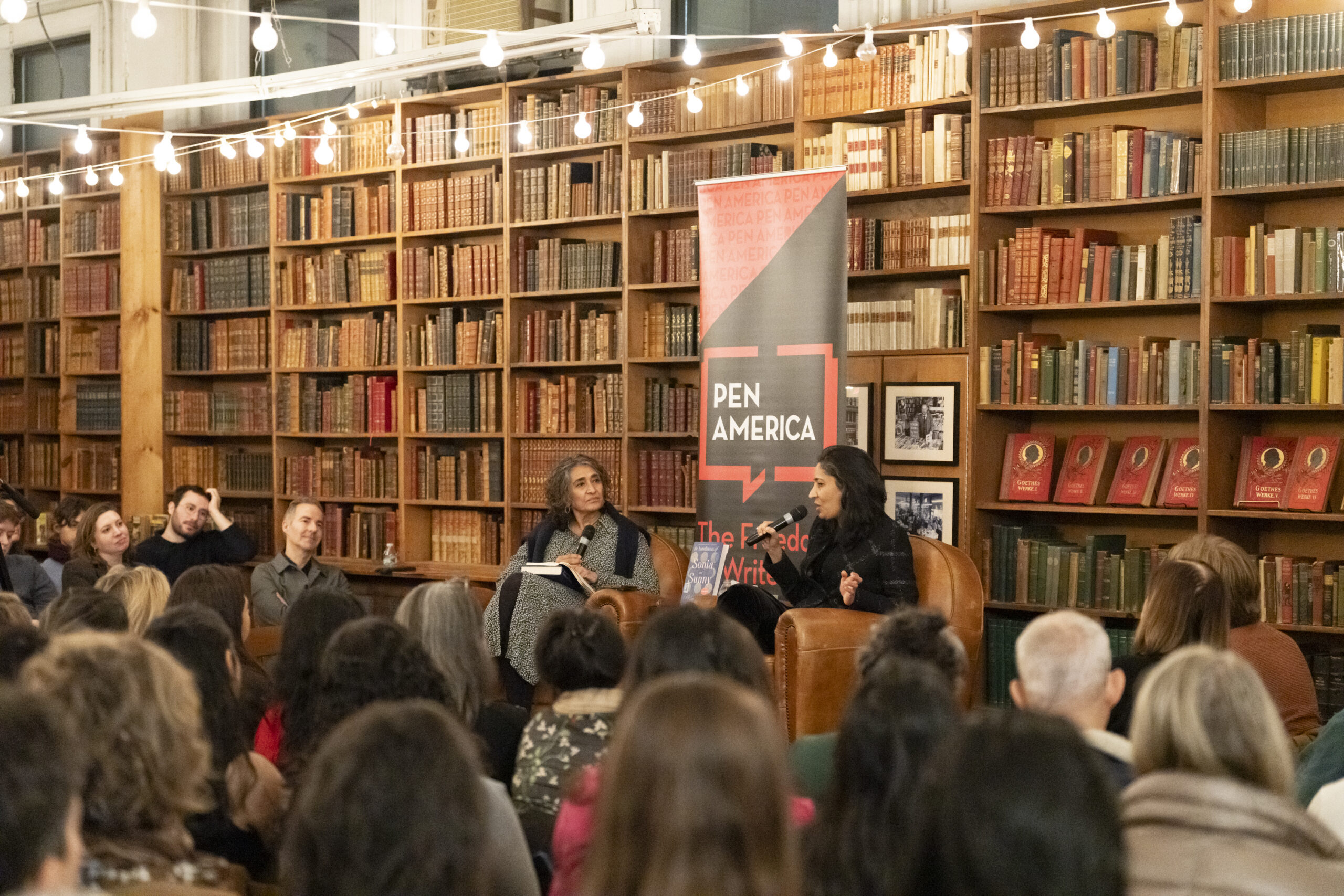
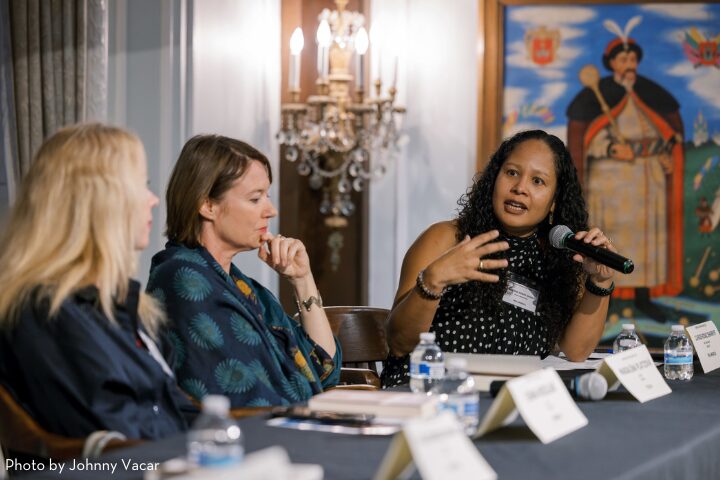
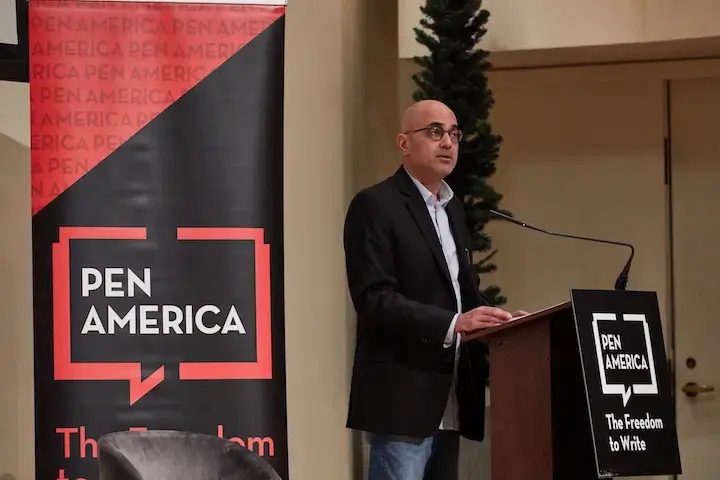
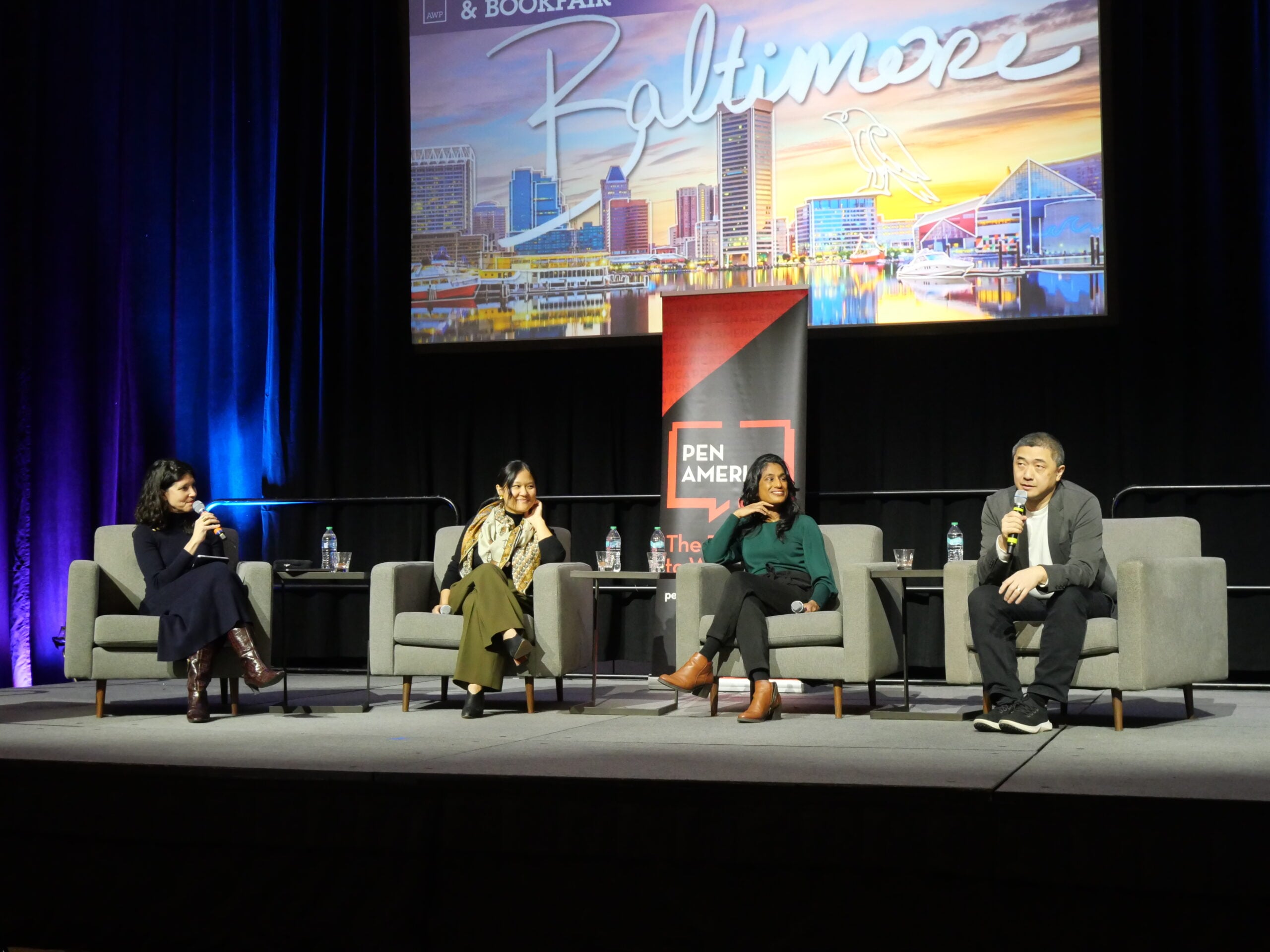
Vara, a technology reporter since 2004, spoke on the panel alongside Karen Hao, the first journalist to profile Open AI, and Ken Liu, an award-winning author of speculative fiction and a former software engineer, at the 2026 Association for Writers & Writing Programs conference in Baltimore. Their sprawling conversation covered the ways that AI can — and can’t — be of use to readers and writers, how they’ve critiqued it in their books, and whether it’s actually at odds with what makes us human. Summer Lopez, Co-CEO of PEN America, moderated the talk.
Kicking off the conversation, Liu stressed the necessity of differentiating between AI as a technology and as an industry. We can criticize OpenAI and Google, he said, while still appreciating how large language models help us reflect upon our collective generation of art.
LLMs provide us with “a vector map of all usages of all linguistic instances,” Liu continued, allowing us to study language in a way that was previously impossible. Imagine, for example, that you asked AI to produce a translation of the moment in the Odyssey where Odysseus and Telemachus kill the enslaved women who have slept with Penelope’s suitors. Because it’s been trained on all past translations, AI would likely not employ the word “rape” in the scene, as the classicist Emily Wilson did in her 2017 rendition. By looking at Homer’s original and the AI text, readers could identify a bias embedded in our historical use of language.
Hao explained why AI would never have made Wilson’s choice: Her translation relied on and furthered social and moral progress, whereas AI can generate text only by looking backward. “Fundamentally, the ability to push the bounds of critiquing society and then making society better is just completely absent in this technology,” she said. “I would strongly recommend that people avoid any uses of AI in which they are trying to achieve something akin to this motivation in art.”
Liu agreed, adding that he teaches his students that the goal of every writer is “to invent a new language to tell the stories only they can tell,” a goal that language models don’t share. “The very thing they’re trying to do is the opposite of what you’re trying to do,” he said.
The unparalleled inventiveness of human expression is on full display in Vara’s latest book, Searches: Selfhood in the Digital Age. She incorporated conversations she had with Chat GPT into Searches, but their dialogue doesn’t continue through the end of book; instead, the final chapter is filled with responses to an anonymous survey that asked intimate questions about participants’ lives. “It’s regular people, who probably don’t identify as writers, using really original, interesting, beautiful language,” she said. “I really wanted to end the book with that as a kind of counter, to show the value of original self-expression, diverse self-expression.”
After evaluating the capacity of LLMs to study and produce literature, the panelists went on to discuss their chief concerns about the world’s most popular commercial models. Hao provided a brief synopsis of her book, Empires of AI: Dreams and Nightmares in Sam Altman’s OpenAI, which draws parallels between historical empires and the AI industry, among them their unabashed attempts to claim resources that aren’t their own and their extraordinary efforts to exert their influence across the globe.
“They sell us this idea that this is a technology that’s one-size-fits-all and everyone, regardless of your context, your history, your culture, your language, should use this model, and it is going to potentially teach you new knowledge and new skills and a new worldview,” she said. “What is more imperial than that?” (AI can be employed in consensual and productive ways, Hao added, like when a media organization in New Zealand used it to help revitalize the language of the Indigenous Maori population, but those cases are few and far between.)
Even the rhetorical strategies that AI companies use are reminiscent of empires past, Vara observed. When Spanish colonialists arrived in Latin America, they claimed that God had granted them authority over Indigenous populations. They were trying to force a future into being simply by declaring it would be the case, which is precisely what technology companies are doing when they assert that AI is destined to reshape our world, she said. “If you hear yourself saying that, know that you’re actually repeating rhetoric that these companies are propagating themselves.”
Lopez later prompted Liu to speak about the relationship between AI and science fiction. He responded by identifying a misconception about technology: that it’s inherently separate from, or perhaps even opposed to, human nature. Technology is actually an expression of our nature, he said, and whether by science fiction or other means, we can interrogate the way we create, use, and talk about AI to deepen our understanding of our collective unconscious.
One particularly poignant conclusion Liu has drawn about our nature comes from the many stories of people falling in love with their chatbot partners. They haven’t revealed themselves to be particularly gullible, and we shouldn’t be ridiculing them, he said. Instead, they’ve demonstrated a universal truth: how profoundly we all wish to be known.
“They are us,” he said. “Our deep yearning to be understood is something that is incredibly human and precious, and something we should value: the way that we think our dreams need to be understood, need to be comprehended, to be shared. … The technology has simply revealed how deep that need really is.”
To close out the conversation, Lopez asked the authors what a panel on AI and creative writing might look like years down the line.
“I hope we will be talking about the incredible movements of resistance that we all engaged in to bring down the empire,” Hao said. “Maybe we won’t have successfully brought down the empire yet, so we’ll be trading tips and tactics, and we’ll be having a potluck after to celebrate the togetherness of being human.”