
María Auxiliadora Álvarez | The PEN Ten Interview
The winner of the The Paz Prize for Poetry in 2024, A Sun Behind Us / Un sol caído avanza by Venezuelan poet María Auxiliadora Álvarez is a tribute to her late father and a celebration of the profound love the pair shared for one another. The poems feature inventive uses of spacing and punctuation, at times seeming almost to enact themselves, while their brevity serves as a reminder of the fragmentary nature of memory. Each spread of the collection displays Spanish text on one side and English on the other, offering readers the opportunity to connect across linguistic and cultural barriers (Akashic Books, 2025).
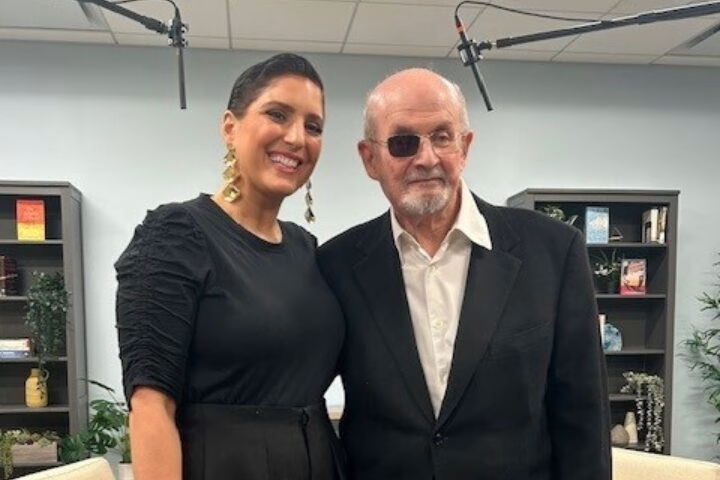
In conversation with World Voices Festival & Literary Programs Manager Sarah Dillard for this week’s PEN Ten, Álvarez gives readers a glimpse into her work. She discusses her use of epigraphs as a counterbalance to her writing, the limitless possibilities for the sun as a symbol, and the many poets, both living and dead, who influenced her collection (Bookshop; Barnes & Noble).
This interview was translated by María Auxiliadora Álvarez.
A Sun Behind Us / Un sol caído avanza is a bilingual collection of poetry where each spread of pages has Spanish on the left and English on the right. Why did you decide to include both languages? What impact does reading both languages side by side have on one’s experience?
This book was translated into English as part of the requirements for the Paz Poetry Prize, sponsored by the National Poetry Series and Miami Dade College, and I believe this translation requirement represents a fitting approach to art as a naturally multilingual and multicultural phenomenon, a catalyst for human experience in its broadest sense. The translation was done by my colleague and friend Linde M. Brocato, but I don’t yet know how it will be received by bilingual readers because it’s only just beginning to circulate. As the quintessence of dialogue, the act of translation relativizes the apparent fixity of identities or languages, and proves that human beings can understand each other better when we transcend the barrier of the linguistic and cultural “mental garments” we wear. As my first book published in both languages, it represents for me a profoundly kind and inclusive experience, as if gathering one world into another.
The quote from Rilke that opens the collection refers to “a sacred springtime that fills the heart with so much light.” How did you draw upon this quote? Did it inspire your process or was it included later due to its summation of the poems you had already been writing?
All my books have included epigraphs, and in principle they are there to evoke similar or counterbalancing atmospheres, as in this case. Rilke reappears often in my thoughts because he is one of my favorite authors, as are Paul Celan and Rumi. In the case of A Sun Behind Us, the epigraph represents the remembrance of a (previous) time of bliss. It entered the manuscript as a necessary counterbalancing mechanism for poems that were emerging harsh, defiant, rough, and dry, as if from a barren (mental) land, scattered in clumps. In fact, one of its first readers told me—and not in a pejorative way—that he understood it as “a hymn to failure,” and perhaps this is true in the face of some predetermined structure. With the inclusion of Rilke’s epigraph, plus some subtle poems from other periods (not published at the time), I attempted to broaden the horizon of the psyche’s panoramic experience, in its primordial vision of the world, to subvert some incidental concepts of failure, which do not necessarily define the different ways of relating to adversity. There is no doubt that, in the ceaseless interplay of the meridians, light and darkness exchange their signs and durations.
The poems in the collection incorporate the senses (hearing, seeing, touching, tasting, smelling) in a way that crosses their affects; smells initiate hearing and seeing initiates physical feelings on the body. If our senses aren’t siloed, how does holding them to their limited definitions affect our processing of the world?
The feeling of not being understood in one’s native language is akin to not being heard, and in this piercing impossibility of communication, perhaps the other senses enter a state of alert, not to say “emergency,” to incorporate other means of expression and reception that can sustain the hinges of thought. Perhaps Rimbaud was referring to this form of synesthesia when he declared, in Letters of the Seer, that “the poet becomes a seer through a long, immense, and reasoned derangement of all the senses.” I think, like Rimbaud (mutatis mutandis), that there are deeper ruptures than those that emerge with—from, between, through, or without—words, but that there are also other potential resources, some synesthetic, resilient and lasting in their own way. In a practical sense, the poems in this book reflect the final years of my three decades of residence in a strictly homogeneous region of the U.S. (culturally and linguistically), including, paradoxically, the university campuses. The daily logistics of work can’t always “sweep” the deeper part of the spirit along with it, and so it abandons what’s important to attend to what’s urgent. I learned many things during that long, silent period of my life, though I still don’t know if they were useful or useless, like how to cross-reference the senses, vandalized by circumstances. I no longer remember if the limited functions of the senses work for or against them in the exercise of understanding the world, but what I have understood for certain is that it’s difficult to extract (to replace) the thinking mechanism of a living being, because they will fight—consciously or unconsciously—to forge other languages of survival.
I attempted to broaden the horizon of the psyche’s panoramic experience, in its primordial vision of the world, to subvert some incidental concepts of failure, which do not necessarily define the different ways of relating to adversity.
One of your poems, “(poem with two inseparable versions),” has one version from 2021 and another from 2024. How linear is the process of having an experience or feeling, conceptualizing a poem, and writing it down?
Even after many years of writing, I can’t say I’ve developed a method applicable to the process of crafting each poem. My poems respond to certain sparks of ignition and then enter their own processes of gestation and birth—until new sparks of ignition appear and new processes unfold. But I couldn’t determine at will the triggers or outbreaks of each poem, its sequences, or its aftermath. I often keep drafts for future revisions, but I never revise them so thoroughly that I could undo them (as if peeling back the layers of an onion), because I believe that the progressions, regressions, or impasses that poems undergo or produce are a response to the impact of their own unfolding. There’s a breath of life there (whether quantifiable or not) that inspires respect in me, even though time itself sometimes specializes in the “art of erasure.” The “poem with two inseparable versions” was, however, a complete surprise to me, because it appeared twice in different forms and with a considerable amount of time in between, as if the poem had been pondering itself and then wished to re-emerge reformulated. The first version, written in the spring of 2021, was born, developed, and completed very quickly as a finished poem, and I kept it as such, without giving it another thought. The second version appeared new, whole, and unexpectedly (in an airport) in the summer of 2024. And at that very moment, I knew that it was neither a continuation of the previous poem, nor “another version,” as the title suggests, to distinguish it from the meaning of “variation,” but rather the same poem ontologically transformed, like a night that has dawned.
A Sun Behind Us / Un sol caído avanza brought to mind the universal connection of all things through energy. The river feeds the tree; the tree provides shade; the person in the shade is comforted. After the loss of your father, how has this universal connection come up in your life?
Spiritual schools throughout history speak of a self and a world (re)united by the same vital energy, as you rightly say. In fact, quantum physics is now intertwined with those other metaphysical principles glimpsed much earlier. My father was a profound thinker (poet, essayist, and novelist) who showed me the relationship between poetry and spirituality. The world was then safe, lofty, strong, and well-supported. Upon his departure, however, all the energetic connections that held life firm—and interconnected—vanished (for me) as if by magic. Thus, I discovered that I had lived until that moment in his wake, like a watermark, and I was compelled to begin a profound process of (re)construction. Perhaps the universe of symbols exacerbates the connections between the tangible and intangible worlds, and perhaps it may be granted to enter, for fleeting and mysterious moments, the realm of premonitions. Shortly before my father’s (rapid) illness and death, I had read some verses by Rilke in the Duino Elegies that shook me to my core. These verses said: “Yes, it is true, the springs needed you, some stars hoped that, even if you had no strength, you would look at them.” Those springs and those stars represented my three young children (I understood this later) who would need me to stand firm, especially as a single mother, even in the most devastating circumstances. I lost many essential things with my father’s passing, but mainly I lost my spiritual teacher and metaphorical interlocutor. I then decided to dedicate myself to poetry permanently, as a way of recovering some vestige of that enormous, absent dialogue, and also to give thanks for (and pass on) the rich legacy. I moved with my children to the United States to pursue my master’s and doctoral degrees and to devote myself to the study and teaching of poetry. Outside the university grounds, I lived for three decades in total silence and solitude, working hard on my inner self: My great challenge was to build my own dwelling, symbolic and real, spiritual and tangible, and interconnected with the spiritual universe.
The sun can be viewed as the universal connecting thread between all things; as a source of energy for all on Earth, the sun can be both welcoming and discomforting, as you mention in your writing. Who or what does the sun reflect in the title of the collection? Is it connected to loving memories or something else?
The title of the book in Spanish differs from the title in English. In Spanish, the title refers to the continuity of the Earth’s orbit around the sun—despite its changing position. However, when translating this title into English, it had to be simplified due to the time constraints of the translation, significantly diminishing the polysemy of the original concept. In both cases, though, cosmic light represents the bright, positive image of the universe, and if we personify it as a symbol, it can also represent a beloved one. A symbol’s capacity to carry or transfer different weights reveals the extent of its power and the reach of its influence. This is why the most potent symbols—like water or fire—are ambivalent. Similarly, in the unfolding of the interpreted universe, the sun can also represent the harshness of the desert heat, the destruction caused by drought, or the loss of life. In the complex relationships between psychic and physical equivalences (the germ of one of the branches of phenomenology), the incorporation of the sun symbol in a positive sense translates in this book the presence of the “vital breath”—or prana in Tantric allegories—the presence of love and paternal protection. The transformation of the symbol into its antithesis also registers the eruption of the negative power of nature, untimely death, or the burning and despair of the desert.
My great challenge was to build my own dwelling, symbolic and real, spiritual and tangible, and interconnected with the spiritual universe.
There are many earthly and natural metaphors throughout the poems, and a bird was one of the recurring symbols. You write, “Now that I’m not a bird anymore…” towards the end of the collection after the bird appeared earlier in several moments. What abilities or traits of birds were important and how do those traits relate to grief, memory, and time?
As a symbol, the bird can represent anything: a person or a moving object. Its image has been present in my writing since my youth, and perhaps its fluidity represented back then the condition of a being who has not yet experienced death (virtual or literal) and does not need the aid of memory to measure time. Thinking about your question, I believe that in this story of life and writing, the bird that loses its symbolic status may be related to the experience of exile, because during physical displacement, struggles (for a new life) take place that transform people’s character or transform those without character. Exile multiplies deaths, in terms of the loss of the past and the future, and the changes that accompany these (and other) losses produce great upheavals. There are fractures of the spirit that never heal, that can take years to heal, or that, even when healed, never disappear. The bird in this book is full of silence, full of night, full of absence, but it is alive—sometimes inside the spirit, sometimes outside. Someone asked me a question in another interview about the rupture of language in my poems, and I replied that “in my poetry everything is broken, except the birds,” because each night dawns differently, and sometimes the joyful birds of memory prevail. The final poems in this book also illustrate the morning that returns after the night of mourning, where (or when) the marks of the ruptures have created games of mirrors that—in any case—reflect the light. And perhaps that whole bird, which still flies or flutters inside or outside of me, is what has allowed me to build a peaceful life and a stable family, to enjoy the pursuits and discoveries of academic research, to write critical essays, and to teach poetry at the university level for many years.
You use punctuation and space between the letters of words to symbolize physical actions which the sentences are depicting. What other tools do you utilize when crafting a piece of writing to convey action and physicality off the page?
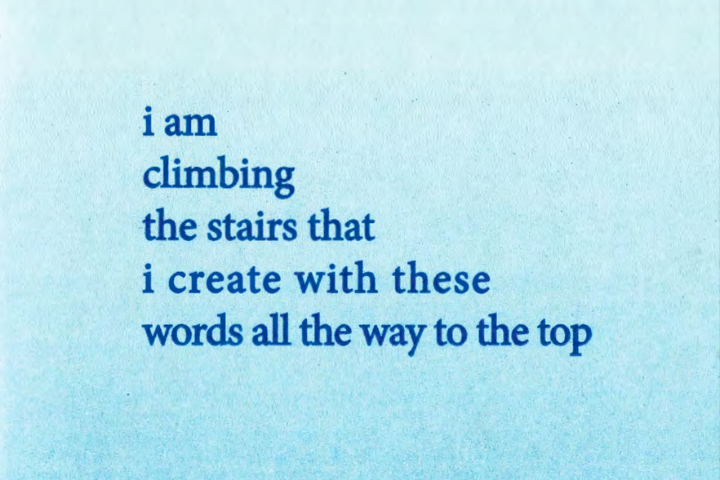
Using a two-sided—though not parallel—model as a simile, these poems (along with other, less graphic poems of mine) possess two semi-dependent expressions: the graphic and the oral. I didn’t plan this dynamic beforehand because I’ve never liked imposing a predetermined will on the writing of a poem, or falling into any form of automatism. I’ve always thought that each poem founds and unfolds a new world—graphic and/or oral. In the poems gathered here, two wills seem to coexist, intervening in the construction of the text in different ways: one that carries the thought forward, and another that bursts onto the surface of the text like an oxygen tank (reaching its limit) to add seemingly random signs, such as: double parentheses to indicate throat slits; incomplete parentheses to illustrate half-open bundles (remnants of run-over bodies); letters shrinking until they disappear due to the ever-increasing blindness of the horizon; apostrophes in a row to recall the insects’ home among the cracks; stuttering syllables like “re- re- re-” to illustrate the action of “reverberating”; words like “scaffold” swinging like a pendulum across the page; words stuck in their own reflection—in the mirror of repetition; or random English words in the Spanish version (like “HISTORY”) to problematize the connotations of “chance” or “error.” Unlike the reader, however, these added meanings cannot be perceived by the listener of the (oral) reading of the text, which is why this second version is thus independent.
“(words are good for very little)” is the title of one of the poems in the collection. As a writer, what do you do when words are not enough? How do you articulate a feeling when you cannot find the language to suit it?
Alongside my writing, I drew and painted for many years, thinking I would dedicate my life to both simultaneously (I graduated in fine arts before graduating in literature), but work and family got in the way. I always had, however, a sense of the inadequacy of words to fully convey thought, and images seemed to me more succinct, malleable, and solid. But the result was that my drawings were overthought, and my poems were full of imagery: I truly expected everything from them. I supposed then that I needed to traverse the breadth and length of life’s journey for the gesture to be freed from purpose. And indeed, that detachment occurred gradually. My mental world ended up branching out in quite concrete ways, but apparently, the graphic astonishment remains obliquely in my writing, just as some obsessions still support my drawings like invisible tripods. I have returned, for example, to drawing with graphite the faces I love at life size: I trace the eyes in daylight, and I work at length on untouchable bones, covered with skin.
I’ve never liked imposing a predetermined will on the writing of a poem, or falling into any form of automatism. I’ve always thought that each poem founds and unfolds a new world—graphic and/or oral.
Who are some poets, besides Rilke, who influenced this collection? What about their writing inspired you?
Throughout every period of my life, I have always been accompanied by many poets, living and dead: I could not have survived without them. Rilke and Celan have been constant pillars. I also frequently read Rumi, Hölderlin, Char, Guillevic, Du Bouchet, Nicoïdski, Vallejo, and Valente, among many others. I feel different kinds of affinity with different poets for different reasons. At this moment, I am thinking of Philippe Jaccottet, Antonio Gamoneda, Olvido García Valdés, Chantal Maillard, Eduardo Mitre, Eduardo Milán, Arnaldo Calveyra, Adélia Prado, Langston Hughes, Sharon Olds, Charles Simic, Mary Olivier, and Louise Glück. But there are many other poets whom I devoutly admire, a list that would be endless. The poems collected in this book summarize eight years of work, and I cannot now pinpoint the specific influences that accompanied me on this particular journey, but I have always known that no poem “sounds” alone, but rather reverberates in conjunction with many other “instruments,” such as the stage of life, places, people, experiences, and circumstances. When I published my first book of poetry (47 years ago), I was asked a similar question that brought to mind then, as it does now, the words of Hermann Hesse in the prologue to Demian: “I cannot call myself a scholar. I have always been and still am a seeker but I no longer search [only] among the stars or in books. I am beginning to hear the lessons which whisper in my blood.”
MARÍA AUXILIADORA ÁLVAREZ was born in Caracas, Venezuela in 1956 and has been a professor emerita at Miami University, Ohio, since 2023. Growing up in different countries due to her father’s diplomatic career, she settled in the United States in 1996, where she received a master’s degree and doctorate in Spanish literature from the University of Illinois at Urbana-Champaign. Her research areas include mystical/contemporary poetry; pre-Columbian/colonial cultures; and women, cultural, and interdisciplinary studies. She has published several critical articles in literary journals, two essay collections, and fourteen volumes of poetry.
En Español
- A Sun Behind Us / Un sol caído avanza es un conjunto de poemas bilingües donde cada página trae el poema en español a la izquierda y el poema en inglés a la derecha. ¿Por qué decidiste incluir ambos idiomas? ¿Qué impacto tiene, en la experiencia del lector, acceder a ambos idiomas simultáneamente?
Este libro fue traducido al inglés como parte de las bases del Premio Paz de Poesía, auspiciado por the National Poetry Series y Miami Dade College, y creo que el requisito de la traducción representa la acertada aproximación al arte como un fenómeno naturalmente multilingüe y multicultural, catalizador de la experiencia humana en su más amplio espectro. La traducción fue realizada por mi colega y amiga Linde M. Brocato, pero aún no sé cómo será su recepción entre lectores bilingües porque apenas está empezando a circular. Como quintaesencia del diálogo, el acto de la traducción relativiza la fijeza de las identidades o las lenguas, y comprueba que los seres humanos podemos comprendernos mejor, unos con otros, cuando saltamos la barrera de los trajes lingüísticos y culturales que usamos. Siendo mi primer libro publicado en ambas lenguas, para mí representa una experiencia profundamente amable e integradora, como si se hiciera un acopio de un mundo en otro.
- El libro abre con una cita de Rilke que se refiere a “una primavera sagrada que llene el corazón de tanta luz.” ¿Cómo te inspiraste con esta cita? ¿Inspiró tu proceso o la incluiste más tarde porque resumía los poemas que ya estabas escribiendo?
Todos mis libros han llevado epígrafes, y en principio están allí por o para evocar atmósferas afines o contrabalanceantes, como en este caso. Rilke reaparece muchas veces en mi pensamiento porque es uno de mis autores de cabecera, al igual que Paul Celan o Rumi. En el caso de A Sun Behind Us / Un sol caído avanza, el epígrafe representa la remembranza de una época (otra) de bienaventuranza. Ingresó entre las raíces del manuscrito como un necesario mecanismo de contrabalance para poemas que iban naciendo duros, desafiantes, ásperos y secos, como surgidos de una tierra (mental) baldía, dispersa en grumos. De hecho, uno de sus primeros lectores me dijo—y no de manera peyorativa—que lo comprendía como “un himno al fracaso,” y tal vez esto sea cierto frente a algún esquema predeterminado. Con la incorporación del epígrafe de Rilke, más algunos sutiles poemas de otras épocas (no publicados entonces) intenté abrir el horizonte de la experiencia panorámica de la psiquis, en su visión primigenia del mundo, para subvertir algunos conceptos incidentales de fracaso, que no definen necesariamente la relación con la adversidad. No hay duda de que, en el juego incesante de los meridianos, la luz y la tiniebla intercambien señas y duración.
- Los poemas de este libro incorporan los sentidos (oído, vista, tacto, gusto, olfato) de una manera que cruza sus efectos; los olores inician la audición y la vista inicia las sensaciones físicas en el cuerpo. Si nuestros sentidos no están aislados, ¿cómo afecta, a nuestra percepción del mundo, el hecho de que se limiten a sus propias definiciones?
La sensación de no ser comprendido en la lengua de origen es igual a la de no ser escuchado, y en esta punzante imposibilidad de comunicación, tal vez los demás sentidos entren en estado de alerta, por no decir de “emergencia,” para incorporar otras vías de emisión y recepción que puedan sostener los goznes del pensamiento. Tal vez Rimbaud se refería a esa forma de sinestesia cuando declaró, en Cartas al Vidente, que “el poeta se hace vidente por un largo, inmenso y razonado desarreglo de todos los sentidos.” Yo pienso, como Rimbaud (mutatis mutandis), que hay quebraduras más profundas que las que emergen con—desde, entre, por o sin—las palabras, pero que también hay otros recursos en potencia, algunos sinestésicos, resilientes y duraderos a su forma y manera. En sentido práctico, los poemas de este libro reflejan los años finales de mis tres décadas de residencia en una región de EE.UU. estrictamente homogénea (cultural y lingüísticamente), incluyendo, paradójicamente, los campos universitarios. La logística cotidiana del trabajo no siempre puede “arrastrar” consigo la parte profunda del espíritu, y entonces abandona lo importante por atender lo urgente. Aprendí muchas cosas durante ese largo y mudo periodo de mi vida, aunque todavía no sé si útiles o inútiles, como cruzar los sentidos entre sí, vandalizados por las circunstancias. Ya no recuerdo si las funciones circunscritas de los sentidos trabajan a su favor o en su contra en el ejercicio de la aprehensión del mundo, pero lo que sí he comprendido a ciencia cierta, es que es difícil extraer (para substituir) el mecanismo pensante de un ser vivo, pues éste luchará—consciente o inconscientemente—por forjar otros lenguajes de sobrevivencia.
- Uno de tus poemas, “(poema con dos versiones inseparables)”, tiene una versión de 2021 y otra de 2024. ¿Qué tan lineal es el proceso de tener una experiencia o un sentimiento, conceptualizar un poema y escribirlo?
Aún después de muchos años de escritura, yo no puedo decir que haya desarrollado un método aplicable al proceso de elaboración de cada poema. Mis poemas responden a ciertas chispas de ignición y luego se internan en sus propios procesos de gestación y nacimiento—hasta que aparecen nuevas chispas de ignición y se dan nuevos procesos. Pero yo no sabría determinar a voluntad los detonantes o brotes de cada poema, sus secuencias o sus secuelas. Muchas veces guardo los bocetos para revisiones futuras, pero en ningún momento los reviso tan a fondo que pueda deshacerlos (como si desmontara las capas de una cebolla), porque creo que las progresiones, regresiones o atolladeros que los poemas padecen o producen, responden al golpe de su propio acontecer. Hay allí un hálito de vida (calificable o no) que me infunde respeto, aunque a veces el tiempo mismo se especialize en el “arte de la tacha.” El “poema con dos versiones inseparables” representó sin embargo, una sorpresa total para mí, porque apareció dos veces de forma diferente y con mucho tiempo intermedio, como si el propio poema se hubiera quedado pensando sobre sí mismo, y quisiera entonces re-emerger re-formulado. La primera versión, escrita en la primavera del 2021, nació, se desarrolló y se completó muy rápidamente como un poema terminado, y así lo guardé, sin pensar más en él. La segunda versión apareció nueva y entera e inesperadamente (en un aeropuerto) en el verano del 2024. Y en el mismo instante supe que no era una continuidad del poema anterior, ni “otra versión” como quedó en el título para diferenciarlo de la acepción de “variación,” sino que se trataba del mismo poema ontológicamente transformado, como una noche amanecida.
- Un sol caído avanza me recordó la conexión universal de todas las cosas a través de la energía, la fuerza vital. El río alimenta al árbol; el árbol da sombra; la persona a la sombra encuentra consuelo. Tras la pérdida de tu padre, ¿cómo se ha mantenido esta conexión universal en tu vida?
Las escuelas espirituales de todos los tiempos hablan de un yo y un mundo (re)unidos por la misma energía vital, como bien dices. De hecho, la física cuántica se entronca ahora con aquellos otros principios metafísicos vislumbrados con mucha mayor antelación. Mi padre fue un pensador profundo (poeta, ensayista, y novelist), que me mostró la relación entre la poesía y la espiritualidad. El mundo estaba entonces seguro, alto, fuerte y bien sostenido. A su partida, sin embargo, todas las conexiones energéticas que sostenían la vida firme—e interrelacionada—desaparecieron (para mí) como por arte de magia. Así descubrí que yo había vivido hasta ese momento en su estela, como una marca en el agua, y fui compelida a iniciar un proceso profundo de (re)construcción. Tal vez el universo de los símbolos exacerbere las conexiones entre el mundo tangible y el mundo intangible, y tal vez le sea dado ingresar, por leves y misteriosos instantes, en el campo de las premoniciones. Poco antes de la (rápida) enfermedad y muerte de mi padre, yo había leído unos versos de Rilke en Las elegías de Duino que me movieron los cimientos. Estos versos decían: “Sí, es verdad, las primaveras te necesitaban, algunas estrellas esperaban que, aunque no tuvieras fuerza, las miraras.” Esas primaveras y esas estrellas representaban a mis tres pequeños hijos (esto lo dilucidé después) que me necesitarían de pie, como madre sola, aún en la más devastadora circunstancia. Perdí muchas cosas esenciales con la partida de mi padre, pero principalmente perdí al maestro espiritual, y al interlocutor metafórico. Entonces decidí dedicarme a la poesía permanentemente, como una forma de recuperar algún vestigio de esa enorme interlocución ausentada, y también de agradecer (y traspasar) la rica herencia. Me mudé con mis hijos a Estados Unidos con el fin de hacer la maestría y el doctorado, y entregarme al estudio y la enseñanza de la poesía. Fuera del recinto universitario, viví tres décadas en total silencio y soledad, trabajando duramente en mi interioridad: Mi gran reto era construir una morada propia, simbólica y real, espiritual y tangible, e interrelacionada con el universo espiritual.
- El sol puede considerarse el hilo conductor universal de todas las cosas; y como fuente de energía para todos en la Tierra, puede ser tanto acogedor como inhóspito, como lo mencionas en tu escrito. ¿A quién o qué refleja el sol en el título del libro? ¿Está relacionado con recuerdos entrañables o con algo más?
El título del libro en español es distinto al título del libro en inglés. En español, el título quiere referirse a la continuidad de la órbita que recorre la tierra frente el sol—a desmedro del cambio de posición. Pero al llevar este título al inglés, hubo que simplificarlo por las prisas relativas a la traducción, adelgazando con mucho la polisemia del concepto original. En ambos casos, sin embargo, la luz cósmica representa la imagen diurna y positiva del universo, y si la humanizamos como símbolo, puede también representar al ser amado. La capacidad de un símbolo para transportar o transferir pesos de distintas cargas revela el alcance de su fuerza, y la extensión de su campo de influencia. Es por esta razón que los símbolos más potentes—como el agua o el fuego—son ambivalentes. De igual manera, en el decorrer del universo interpretado, el sol puede también representar la inclemencia del calor en el desierto, la destrucción causada por la sequía, o la pérdida de la vida. En las complejas relaciones entre las equivalencias psíquicas y físicas (germen de una de las ramas de la fenomenología), la incorporación del símbolo del sol en sentido positivo traduce en este libro la presencia del “soplo vital”—o prana en las alegorías tántricas—el aliento del amor y la protección paternal. La transformación del símbolo en su antítesis registra también la irrupción del poder negativo de la naturaleza, la muerte intempestiva, o el ardor y la desesperación del desierto.
- Hay muchas metáforas terrenales y naturales a lo largo de los poemas, y el pájaro es uno de los símbolos recurrentes. “Ahora que ya no soy un pájaro…” escribes entre los poemas finales, aunque el pájaro ya había aparecido antes en varios momentos. ¿Qué habilidades o rasgos de los pájaros encuentras importantes, y cómo se relacionan esos rasgos con el duelo, la memoria y el tiempo?
En tanto que símbolo, el pájaro puede representar cualquier cosa: persona u objeto móvil. Su figura ha estado presente en mi escritura desde mi juventud, y quizá su ductilidad representaba en ese entonces la condición del ser que aún no conoce la muerte (virtual o literal), y no necesita del auxilio de la memoria para medir el tiempo. Pensando en tu pregunta, creo que en esta historia de vida y escritura, el pájaro que pierde su condición de símbolo puede estar relacionado con la experiencia del exilio, porque durante los desplazamientos físicos involuntarios se baten duelos de lucha (por una vida no escogida) que transforman el carácter de las personas o transforman a las personas sin carácter. El exilio multiplica las muertes, con respecto a la pérdida del pasado y del futuro, y los cambios que acompañan estas (y otras) pérdidas producen grandes descalabros. Hay quebraduras del espíritu que nunca sanan, que pueden tardar años en sanar, o que ya sanadas jamás desaparecen. El pájaro de este libro está lleno de silencio, lleno de noche, lleno de ausencia, pero está vivo—a veces adentro del espíritu, a veces afuera. Alguien me hizo una pregunta relativa al quiebre del lenguaje en mis poemas, y le respondí que “en mi poesía todo está quebrado, menos los pájaros,” pues cada noche que amanece, amanece diferente, y a veces prevalecen los alegres pájaros de la memoria. Los poemas finales de este libro ilustran también la mañana retornada tras la noche del luto, donde (o cuando) las marcas de las roturas han construido juegos de espejos que—de todas maneras—reflejan la luz. Y tal vez ese pájaro entero que aún vuela o aletea adentro o afuera, sea el que me ha permitido construir una vida pacífica y una familia estable, disfrutar de las búsquedas y los hallazgos de la investigación académica, escribir ensayos críticos y dar clases de poesía a nivel universitario durante muchos años.
- Utilizas la puntuación y el espacio entre las letras de las palabras para simbolizar acciones físicas representadas por las oraciones. ¿Qué otras herramientas utilizas al escribir para transmitir, desde la página, acciones tangibles?
Utilizando un modelo bifronte—aunque no paralelo—como símil, estos poemas (a la par de otros míos menos graficados) poseen dos expresiones semi-dependientes: la gráfica y la oral. No planeé esta dinámica con antelación porque nunca me ha gustado imponer una voluntad predeterminada a la escritura del poema, o caer en alguna forma de automatismo. Siempre he pensado que cada poema funda y despliega un mundo nuevo—gráfico y/u oral. En los poemas aquí reunidos, parecieran coexistir dos voluntades interviendo en la construcción del texto de forma diferente: una que lleva el pensamiento adelante, y otra que irrumpe en la superficie del texto como un tanque de oxígeno (llegado a su límite) para agregar signos en apariencia aleatorios, como por ejemplo: paréntesis dobles para indicar degolladuras en el cuello; paréntesis incompletos para ilustrar bultos semiabiertos (remanentes de cuerpos atropellados); letras empequeñeciendo hasta desaparecer por la ceguera in crecendo del horizonte; apóstrofes en fila para rememorar el hogar de los insectos entre las grietas; sílabas tartamudeadas como “re- re- re-” para ilustrar la acción de “reverberar”; palabras como “cadalso” oscilando en forma de péndulo sobre la página; palabras estancadas en su propio reflejo—en el espejo de la repetición; o palabras al azar en inglés en la versión en español (como “HISTORY”), para problematizar las connotaciones de la “casualidad” o del “error.” A diferencia de quien lee, sin embargo, estos significados agregados no pueden ser percibidos por quien escucha la lectura (oral) del texto, razon por la cual esta segunda versión resulta entonces independiente.
- “(las palabras sirven de muy poco)” es el título de uno de los poemas de este libro. Como escritora, ¿qué haces cuando las palabras no bastan? ¿Cómo expresas un sentimiento cuando no encuentras el lenguaje adecuado que pueda transmitirlo?
A la par de la escritura, dibujé y pinté durante muchos años, pensando que dedicaría mi vida a ambas actividades simultáneamente (me gradué en bellas artes antes de graduarme en literatura), pero el trabajo y la familia se interpusieron entre mis planes. Siempre tuve, sin embargo, la sensación de la incompetencia de las palabras para transmitir cabalmente el pensamiento, y las imágenes me parecían más sucintas, dúctiles y sólidas. Pero el resultado era que mis dibujos estaban demasiado pensados, y mis poemas estaban llenos de imágenes: yo verdaderamente esperaba todo de ellas. Suponía entonces que me faltaba atravesar el ancho y largo decorrer de la vida para que el gesto se liberara del propósito. Y de hecho, ese desprendimiento se fue dando paulatinamente. Mi mundo mental terminó por bifurcarse de maneras bastante concretas, pero aparentemente el estupor gráfico se mantiene de soslayo en mi escritura, como también algunas obsesiones todavía sostienen mis dibujos como trípodes invisibles. He retornado, por ejemplo, a dibujar con grafito los rostros que amo a tamaño natural: trazo los ojos bajo la luz del día, y trabajo largamente sobre huesos intocables, recubiertos de piel.
- ¿Qué poetas, además de Rilke, influyeron en la escritura de estos poemas? ¿Qué aspectos de su escritura te inspiraron?
En cada época de mi vida me han acompañado siempre muchos poetas, vivos y muertos: no habría podido sobrevivir sin ellos. Rilke y Celan han sido pilares permanentes. También leo con frecuencia a Rumi, Hölderlin, Char, Guillevic, Du Bouchet, Nicoïdski, Vallejo y Valente, entre muchos otros. Siento distintos tipos de afinidad con distintos poetas por distintos motivos. En este momento pienso en Philippe Jaccottet, Antonio Gamoneda, Olvido García Valdés, Chantal Maillard, Eduardo Mitre, Eduardo Milán, Arnaldo Calveyra, Adélia Prado, Langston Hugues, Sharon Olds, Charles Simic, Mary Olivier y Louise Glück. Pero hay muchos otros poetas que admiro devotamente, cuya lista sería interminable. Los poemas reunidos en este libro resumen el trabajo de ocho años, y no puedo distinguir ahora las influencias puntuales que me acompañaron en este trayecto específico, pero siempre he sabido que ningún poema “suena” solo, sino que reverbera en conjunto con muchos otros “instrumentos,” como la etapa de la vida, los lugares, las personas, las experiencias, las circunstancias. Cuando publiqué mi primer libro de poesía (hace 47 años), me hicieron una pregunta similar que me trajo a la mente en ese entonces, igual que ahora, las palabras de Hermann Hesse, en el prólogo de Demian: “No soy un erudito. Siempre he sido y sigo siendo un buscador, pero ya no busco [todo] entre las estrellas o los libros, sino en las vivencias que mi sangre murmura en mí.”