
Case Background
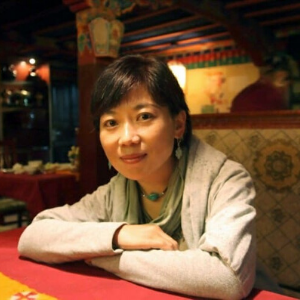
Woeser studied Chinese literature at the Southwest Nationalities College in Chengdu, Sichuan Province, and began her professional career as a reporter for the Ganzi Daily (Tibetan: Kardze Daily) newspaper in the Tibetan province of Kham, (present-day Sichuan Province). In March 1990, she became editor of the Lhasa-based Chinese-language literary journal Tibetan Literature. This was the start of her political awakening. She began writing poetry, and read translations of foreign books smuggled into Tibet critical of the Chinese government. Woeser’s first book, a collection of poems entitled Xizang Zai Shang (Tibet Above), was published in 1999. She soon became a highly acclaimed and prolific writer in Chinese. Through her education, journalistic training and literary expertise, Woeser became a member of Tibet’s “Chinese Writers’ Group,” a small literary elite of Tibetans writing in the Chinese language.
Woeser’s troubles began with her second book Xizang Biji (Notes on Tibet), a collection of short stories and prose published in Guangzhou in January 2003. The book was a best-seller in China, and was banned in September of that year for revealing opinions “harmful to the unification and solidarity of our nation.” In June 2004 she was dismissed from her position at the Tibet Autonomous Region Literature Association, and left Lhasa for Beijing in order to “follow her conscience as a writer.” She continues to write from a small Beijing apartment where she lives with her husband, writer Wang Lixiong, posting poetry and essays on Tibetan culture and the political situation on the Internet and publishing her books in Taiwan. In mainland China her books are banned, her two blogs have been shut down, she is unemployed and her movements are sometimes restricted. Yet she has become widely known as one of China’s most respected writers on Tibet.
In April 2010, Woeser was one of the three women honored with the 2010 Courage in Journalism Award from the International Women’s Media Foundation. The following year, in December 2011, Woeser was awarded the Prince Claus Prize from the cultural advocacy organization Prince Claus Fund, who praised Woeser’s writings for offering “a unique perspective on the complexity of the current situation in Tibet.” Authorities visited her home to prevent her from visiting the Dutch embassy to receive the award.
In May 2013, Woeser was awarded the International Women of Courage Award by the U.S. State Department. Though unable to attend the ceremony due to house arrest, Woeser said she was honored to receive the award and is dedicating it to the over 100 Tibetans who have self-immolated in protest of Chinese occupation.
In April 2020, Tsering Woeser released her latest book, Forbidden Memory: Tibet during the Cultural Revolution, which uses 300 previously unseen photographs taken by her father to show the upheaval caused in Tibet by the Cultural Revolution in the years after Red Guards arrived in 1966. Digital platforms, however, continue to obstruct Woeser’s online commentary for “vague reasons.”
Case Updates
February 2026: Ocean, as much as Rain: Stories, Lyrical Prose, and Poems from Tibet, an English-language translation of Tsering Woeser’s work by Fiona Sze-Lorrain and Dechen Pemba, is published by Duke University Press.
March 2025: Tsering Woeser publishes an opinion piece in Radio Free Asia, warning that Tibetan voices will be silenced if Radio Free Asia and Voice of America is shut down.
September 2020: Tsering Woeser’s Facebook and Instagram are deactivated for four days, in what is seen by Tibetan rights activists as yet another attempt to silence the outspoken activist.
July 9, 2014: Tsering Woeser and her husband are placed under house arrest for several days immediately following their return from a trip. State security officers arrived at Woeser’s home the night before to initiate the home detention, and did not give a reason for her house arrest. However, while Woeser was traveling she had received a phone call from the U.S. Embassy inviting her to a July 9 dinner, an offer which she accepted over the phone. At the time, U.S. Secretary of State John Kerry, who has given Woeser public praise before for her courageous writing and activism for Tibetan human rights, was visiting China. Beijing had previously thwarted relations between Woeser and U.S. officials when, in 2013, the U.S. State Department awarded Woeser the International Women of Courage Award, and Beijing forbade her from traveling to the U.S. to receive it. It is presumed that Woeser’s house arrest was an effort to prevent her from accepting her dinner invitation and meeting with U.S. officials.
May 28, 2010: Woeser reported on both her Twitter page and her blog that her two Skype IDs had been hacked. In a curious coincidence, Woeser notes that it was exactly two years to the day since she wrote an open letter to the company Skype. The letter addressed Woeser’s concern over a similar attack in 2008 on her previous Skype ID and contained a statement about the relative insecurity of some of the program’s features.
In Their Words
Woeser said that since ethnic violence erupted in Tibet in March 2008, “the blog has been swallowing up my time and energy. Yet Tibetans are taking such great risks that I cannot permit myself to stop blogging.”
- Ocean, as Much as Rain: Stories, Lyrical Prose, and Poems from Tibet
- A Killing Trip
- The Fear in Lhasa as Felt in Beijing
- On the Subject of Silence and Speaking Out About Tibet
- Voices from Tibet: Selected Essays and Reportage
- Tibet on Fire: Self-Immolations Against Chinese Rule
- Forbidden Memory: Tibet during the Cultural Revolution
- Tibetans’ voices will be silenced if RFA, VOA are shut down