
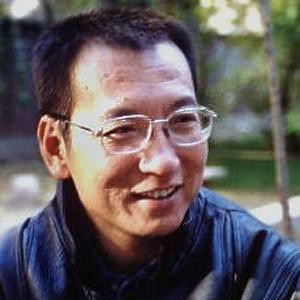
PEN America Advocacy
July 13, 2023: To mark six years since Liu Xiaobo died in custody, PEN America, the Independent Chinese PEN Center, and Human Rights in China, host a vigil honoring the life and work of Liu Xiaobo, featuring performances and readings from fellow writers and activists.
September 2018: In a letter expressing concern at Google’s possible expansion to China, PEN America raises Liu Xiaobo’s case as an example of the country’s repressive environment for free expression.
December 15, 2017: PEN America publishes exiled writer Liao Yiwu’s reflection on Liu Xiaobo and Liu Xia.
July 13, 2017: Following Liu Xiaobo’s death, PEN America criticizes the Chinese government, calling for the release of his wife, Liu Xia; holds a candlelight vigil to honor his legacy; and publishes a tribute to Liu Xiaobo’s life, celebrating his courage and commitment.
July 2017: In response to a statement by medical experts confirming it is safe for Liu Xiaobo to travel abroad following the Chinese government’s transfer of Liu to a nearby hospital on medical parole, PEN America reiterates calls for the Chinese government to allow Lu Xiaobo to seek treatment abroad.
December 12, 2016: PEN America members join a letter from the PEN International community—including other centers, writers, readers, activists, and publishers—to Chinese President Xi Jinping condemning the authorities’ deepening crackdown on free expression and calling for the release of writers, including Liu Xiaobo.
December 2016: To mark Human Rights Day—and six years since Liu Xiaobo’s arrest—PEN International urges the Chinese government to release all writers, journalists, and publishers, including Liu Xiaobo; and PEN America highlights video and audio from a rally held after his sentencing in December 2009.
September 2015: Ahead of Chinese President Xi Jinping’s visit to the United States, journalists, writers, and advocates affiliated with PEN America write a letter expressing concern about imprisoned writers, including Liu Xiaobo and his wife, Liu Xia.
April 2014: In the lead up to PEN America’s annual literary gala in May, PEN America highlights and reiterates their commitment to Liu Xiaobo’s case, including through a literary protest at which Liu Xiaobo’s work is read alongside other persecuted writers and artists.
March 2014: Drawing on the work of Ai Weiwei, PEN America launches the #WithFlowers campaign to raise awareness of repression in China, including the imprisonment of Liu Xiaobo.
December 2013: To mark the fifth year of Liu Xiaobo’s detention, PEN International, Front Line Defenders, and Storyful host an online forum dedicated to Liu Xiaobo, and the state of the human rights movement in China.
December 2013: PEN America urges supporters to write solidarity messages to Liu Xiaobo and Liu Xia.
December 2, 2013: Ahead of Vice President Biden’s visit to China, Human Rights Watch, Amnesty International USA, and PEN America issue a public letter urging him to pressure his Chinese counterparts to release Liu Xiaobo and Liu Xia.
May 2013: As part of PEN International’s launch of its new report, Creativity and Constraint in Today’s China—which highlights Liu Xiaobo’s case as emblematic of the increased crackdown on writers in China since the 2008 Olympics—alongside an open letter in support of creative freedom in China by literary and cultural figures, PEN America urges members to share the report and to show solidarity with imprisoned writers by changing social media icons and wallpapers to an image of Liu Xiaobo.
December 7, 2012: In response to Chinese writer Mo Yan being awarded the Nobel Prize in Literature, PEN America calls out China’s systematic censorship, including the banning of any mention of Charter 08, a document Liu Xiaobo helped draft and Lilu Xiaobo’s continued imprisonment..
June 2012: At a photography exhibit honoring Liu Xia’s work, organizers, among them the Independent Chinese PEN Center (ICPC, use an empty chair to honor Liu Xiaobo’s case.
April 20, 2012: PEN America participates in a worldwide reading organized by the International Literature Festival Berlin (ilb) to honor Liu Xiaobo, joining nearly 150 individuals, organizations, bookstores, and other PEN centers.
December 6, 2011: Marian Botsford Fraser, Chair of the Writers in Prison Committee of PEN International, testifies at the Congressional Executive Commission on China Hearing on “One Year After the Nobel Peace Prize Award to Liu Xiaobo: Conditions for Political Prisoners and Prospects for Political Reform,” highlighting Liu Xia’s continued house arrest. PEN America highlights the anniversary of the Prize.
August 2011: Citing the UN Working Group on Arbitrary Detention, which had recently ruled that Liu Xiaobo and Liu Xia were being illegally detained, PEN America urges the Chinese authorities to free them.
November 9, 2010: Professor Kwame Anthony Appiah, President of PEN America (then PEN America Center) testifies at the Congressional Executive Commission on China Hearing on “Nobel Peace Prize Laureate Liu Xiaobo and the Future of Political Reform in China,” urging the Commission, the administration, and Members of Congress to continue pressing for the release of Liu Xiaobo and other writers and for China to ratify the International Covenant on Civil and Political Rights.
February 2010: Professor Kwame Anthony Appiah, President of PEN America (then PEN America Center) nominates Liu Xiaobo for the Nobel Peace Prize, continuing his call throughout 2010.
December 31, 2009: Writers protest the imprisonment of writer Liu Xiaobo in a rally on the steps of the New York Public Library and deliver a letter on behalf of PEN America members to the Permanent Mission of the People’s Republic of China urging then-Chinese president Hu Jintao to intervene.
December 2009: PEN America denounces the formal indictment of Liu Xiaobo and renews calls for his release.
June 2009: PEN America sends a letter to the Chinese authorities, protesting the continued detention of Liu Xiaobo at an undisclosed location, as well as the continued surveillance of his wife Liu Xia, ICPC Vice President Jiang Qisheng, and constitutional scholar Zhang Zuhua.
April 2009: PEN American Center awards Liu Xiaobo with the 2009 PEN/Barbara Goldsmith Freedom to Write Award.
December 9, 2008: PEN America condemns the detention of Liu Xiaobo as part of a broader crackdown targeting writers and activists who had been organizing activities marking Human Rights Day, including the release of Charter 08.
December 2004: PEN America condemns the detention of Liu Xiaobo alongside fellow co-founder of the Independent Chinese PEN Center, Yu Jie, and political theorist, Zhang Zuhua.
Case Background
Liu Xiaobo was a renowned literary critic, writer, and political activist. He served as president of the Independent Chinese PEN Center (ICPC) from 2003 to 2007 and then served as an honorary president. He was a professor at Beijing Normal University and was a visiting scholar at several universities outside of China, including the University of Oslo, the University of Hawaii, and Columbia University in New York City. Liu Xiaobo was the winner of the 2009 PEN/Barbara Goldsmith Freedom to Write Award and the 2010 Nobel Peace Prize.
Case Updates
July 2018: Following eight years of extralegal house arrest, Chinese authorities allow Liu Xiaobo’s wife, Liu Xia, to leave China and seek refuge in Germany.
July 13, 2017: Liu Xiaobo dies in Liaoning on July 13 at the age of 61.
June 2017: On June 23, Liu Xiaobo is released on medical parole to a hospital in Shenyang, Liaoning province, following a diagnosis of late-stage liver cancer, a transfer confirmed by Liaoning Prison Bureau Administration three days later. Authorities place restrictions on access to him but permit both his wife, Liu Xia, and his family to visit him. Shang Baojun, one of Liu’s lawyers, notes the severity of the cancer, saying, “If it was an early stage of cancer, then that would be easier to treat. But at this late stage, the treatment seems much more difficult.”
November 2013: Liu Xia files a second appeal for Liu Xiaobo’s retrial. Liu Xiaobo is represented by prominent human rights lawyer Mo Shaoping, who states that the retrial is about “a citizen’s right to freedom of speech and expression.”
October 8, 2010: Liu Xiaobo is awarded the Nobel Peace Prize. Unable to attend the Nobel ceremony in Oslo, he is poignantly represented by an empty chair. When told of the announcement, he wept and told his wife, Liu Xia, that it is dedicated to the martyrs of Tiananmen. Following the award announcement, Liu Xia was placed under house arrest.
February 2010: The Beijing High Court rejects Liu Xiaobo’s appeal.
December 25, 2009: Liu Xiaobo is sentenced to 11 years in prison and two years’ deprivation of political rights.
December 23, 2009: Liu Xiaobo is tried by the Beijing No. 1 Intermediate People’s Court, and pleads not guilty to the charge of “inciting subversion of state power” for co-authoring Charter 08. The trial lasts less than three hours, and the defense is not permitted to present evidence.
2009: Liu Xiaobo is allowed access to his lawyers from the date of his formal arrest, June 23, 2009, until May 24, 2010. He was denied this access while detained at the No. 1 Detention Center of Beijing City.
December 2008: Before the formal release of Charter 08—a declaration calling for political reform, greater human rights, and an end to one-party rule in China—police arrive at the Beijing homes of Liu Xiaobo and fellow activist Zhang Zuhua. At 11 p.m. that night, they take both men away and search their homes, confiscating computers and other materials. Liu’s arrest occurs during a period of several sensitive anniversaries, including the 100-year anniversary of the promulgation of China’s first constitution, the 60-year anniversary of the adoption of the Universal Declaration of Human Rights, and the 30-year anniversary of Beijing’s “Democracy Wall” movement. While Zhang Zuhua is released the following morning, Liu Xiaobo remains in detention. He is held incommunicado until December 31, when he is finally permitted a visit from his wife. He is denied access to a lawyer and writing materials while detained at the No. 1 Detention Center of Beijing City.
After Liu Xiaobo’s arrest, nearly all of the 300 original signatories of Charter 08 are interrogated in a push to gather evidence against him and crack down on free expression in China.
August 2008: In the lead-up to the Beijing Olympics and in the culmination of a campaign led by PEN America, PEN Canada, and the Independent Chinese PEN Center, members of the PEN movement gathered in New York, Toronto, and Stockholm to read banned and censored work by writers in China. In his role as board member of the Independent Chinese PEN Center, Liu Xiaobo issued the following quote: “On the eve of the Beijing Olympics, the promise that China made seven years ago to improve human rights is unfulfilled. There are still controls on speech, still frequent imprisonments of writers for their writings, and still the fear that every bush and tree is an enemy.”
2004: Liu Xiaobo’s phone lines and internet connection are cut after the release of his essay criticizing the use of “subversion” charges to silence journalists and activists, and he is subsequently the target of regular police surveillance and harassment. On December 13, 2004, he is briefly detained alongside fellow co-founder of the Independent Chinese PEN Center, Yu Jie, and political theorist, Zhang Zuhua.
1989: Liu Xiaobo leaves his teaching post at Columbia University and returns to Beijing to play a crucial role in spreading the pro-democracy movement, staging a hunger strike in Tiananmen Square in support of the students and leading calls for a truly broad-based, sustainable democratic movement. He is instrumental in preventing further bloodshed in the Square by calling for nonviolence on the part of the students. He spends two years in prison for his role and another three years of “reeducation through labor” in 1996 for publicly questioning the role of the single-party system and calling for dialogue between the Chinese government and the Dalai Lama of Tibet.
In Their Words
In order to exercise the right to freedom of speech conferred by the Constitution, one should fulfill the social responsibility of a Chinese citizen. There is nothing criminal in anything I have done. [But] if charges are brought against me because of this, I have no complaints.
Liu Xiaobo, “I Have No Enemies: My Final Statement”