
PEN America’s Advocacy
December 2022: In a lengthy and strongly-argued ruling, the UN finds in favor of PEN America’s submission to the UNWGAD, finding that Iran’s detention of the 4 writers was unjust and violated their human rights and international law, and ordering that Ganji and Khandan Mahabadi be immediately released.
September 19, 2022: PEN America joins several PEN centers in publishing a joint letter calling attention to Ganji’s situation and urging his release.
January 24, 2022: PEN America and the Raoul Wallenberg Centre for Human Rights submit a complaint with the UN Working Group on Arbitrary Detention (UNWGAD) seeking a ruling finding the unjust detention of IWA leaders Baktash Abtin, Reza Khandan Mahabadi, Keyvan Bajan, and Arash Ganji to be in violation of Iranian domestic and international law and asking for their immediate release and compensation.
October 19, 2021: PEN America releases a statement condemning Arash Ganji’s summons to serve his 11-year prison sentence, calling it a “wildly disproportionate sentence” based on an unjust judicial judgement.
January 1, 2021: PEN America condemns the unjust sentence levied against Arash Ganji and other members of the Iranian Writers’ Association, denouncing the Iranian state’s pattern of abuse and disregard for the rule of law.
January 3, 2020: PEN America releases a statement in the wake of Ganji’s arrest. In the statement, PEN calls on the Iranian government to immediately release Ganji and provide him with all necessary medical treatment in the meantime.
Case Background
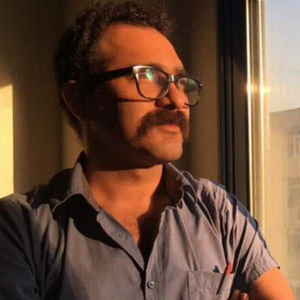
Arash Ganji was arrested by Ministry of Intelligence agents on December 22, 2019, after they raided his apartment and confiscated his belongings, including his laptop, books, and notes. According to the IWA, Arash Ganji was arrested for his 2017 Farsi translation of the book A Small Key Can Open A Big Door: The Rojava Revolution, a collection of articles by different authors about Kurds in the Syrian civil war. The book centered on U.S. and coalition-backed Syrian Kurdish militias who successfully defended the Syrian town of Kobani from an offensive launched by ISIS fighters in 2014. Ganji’s other translation credits include Sunset of the Gods on the New World Order and The Struggle Over the Way of Thinking in the Working Class Movement.
After his 2019 arrest, Ganji was detained at Evin Prison in solitary confinement, where he was subjected to interrogation and denied visitation from either his family or legal representation. After nearly a month in detention, Ganji was released on January 19, 2020 on a bail of 450 million tomans or $107,000 USD. However, at his first court hearing in June 2020, a judge increased his bail to 3 billion tomans, forcing him to return to Evin Prison for six days until he was able to pay. On December 28, 2020, Branch 28 of the Revolutionary Court of Iran sentenced Ganji to 11 years in prison—five years for “conspiracy to act against national security,” five years for “membership and cooperation with an anti-regime group,” and one year for “propaganda against the regime.” The sentence was later upheld by the appeals court in Tehran on February 27, 2021. On October 16, 2021, Iranian authorities formally summoned Ganji to serve his 11-year sentence. As is common practice in Iran, the court ruled that he must serve the maximum sentence of the three charges, amounting to five years in prison. On October 28, 2021, Ganji reported to Evin prison to begin his sentence.
Ganji suffers from a heart condition that requires medical care, which his family feared would continue to be denied as COVID-19 ravaged Iranian prisons. In a statement published by the IWA, the organization announced: “Arash Ganji has a heart condition and the pressure brought on by interrogations (known the world over for violations of human and legal rights) has threatened his life. The body that has arrested him and the government that has shown that it only knows how to beat up, imprison and kill to counter the freedom of expression will be responsible for any hurt that comes to him.”
The Iranian government launched similar attacks against other members of the IWA, which Ganji denounced in a statement to PEN Sydney in June 2021 as “attack[s on freedom of expression] from reactionary states, the servants of imperialism.” His colleagues, IWA board members Baktash Abtin, Reza Khandan Mahahabi, and Keyvan Bajan, were transferred to Evin Prison on September 26, 2020 to begin serving a collective 15-and-a-half years on spurious national security and propaganda charges.
Case Updates
February 11, 2023: Ganji is released from prison as part of the mass pardoning of political prisoners in Iran.
January 8, 2023: A year after Baktash Abtin’s death, Reza Khandan Mahabadi, Ganji and other prisoners hold a ceremony in his honor in Gohardasht Prison prison, observing a minute of silence.
September 3, 2022: Ganji is transferred out of solitary confinement to the general ward in Gohar Dasht Prison.
August 31, 2022: Ganji is transferred without notice from Evin Prison to Gohar Dasht Prison where he is kept in solitary confinement. He was not permitted to bring his possessions with him. Other prisoners in Evin organized a sit-in protest in response.
August 31, 2022: Reports are made that Ganji has been transferred from Evin Prison to Rajaeeshahr Prison in Karaj. Prison officials also reportedly accused Ganji of making a recording criticizing prison conditions.
October 16, 2021: Arash Ganji is summoned to serve his sentence, resulting in five years served in prison.
February 27, 2021: Ganji’s sentence is upheld on appeal, though he will only be subject to serving the longest of the sentences, five years. His lawyer details that the indictment is unfounded since Ganji is accused of “collusion against national security,” which by definition requires more than one individual.
December 28, 2020: Ganji is sentenced to 11 years in prison– he was sentenced to 5 years for “conspiracy to act against national security,” 1 year for “propaganda against the regime,” and another 5 years for “membership and cooperation with an anti-regime group.”
December 2, 2020: Ganji’s trial on national security charges takes place.
June 14, 2020: After a hearing at Branch 28 of the Revolutionary Court, Judge Mohammad Moghisseh increased the bail to three billion tomans ($712,000 USD), forcing Ganji to go back into Evin Prison for another six days until he is able to pay.
January 19, 2020: Ganji is released on a 450 million tomans bail.
December 22, 2019: Ganji’s home is raided and he is detained.
Free Expression in Iran
Iran is among the world’s most restrictive countries for freedom of expression. While the human rights situation in Iran has been dire for decades, the state of freedom of expression and respect for fundamental rights in the country has deteriorated even further in recent years. Iran holds the fourth-highest number of writers and intellectuals in prison globally, according to PEN America’s 2020 Freedom to Write Index. Dozens of journalists are currently imprisoned on politically-motivated charges in Iran alongside scores of other writers, bloggers, artists, human rights defenders, and other political prisoners. Despite promises of expanded freedoms, Hassan Rouhani’s presidency was marked by intensified repression and arbitrary political restrictions—preventing Iranians from having a voice in how they are governed. And in August, Ebrahim Raisi became the country’s new president, after a June election in which all opposition candidates had been disqualified. Raisi is notorious for his past role in human rights abuses, having been accused of involvement in mass killings of political prisoners in the 1980s. Iran remains notorious for a judicial system completely lacking in transparency, which is guilty of numerous arbitrary arrests and one of the world’s highest rates of capital punishment. Hundreds of political prisoners are languishing behind bars during the COVID-19 pandemic as authorities withhold critical care and medical attention, putting their lives in great danger and sometimes leading to death. The Iranian government has also been engaged in the targeting and transnational kidnapping of dissidents, writers, and journalists outside the country, and the harassment of family members inside the country.