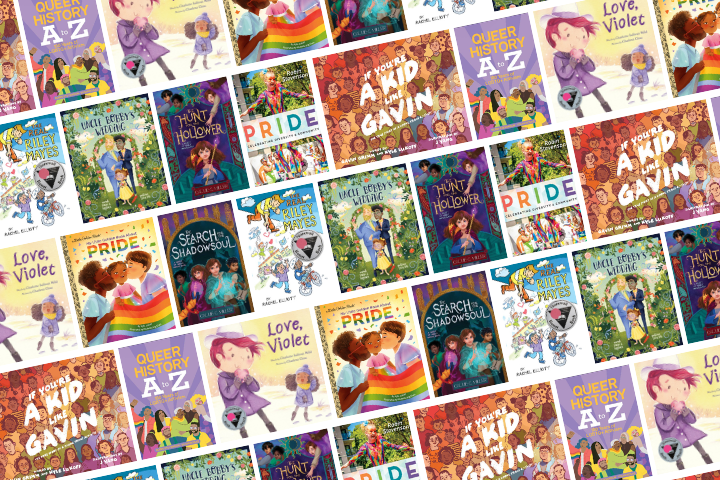
When author Rachel Elliott was a kid, she loved approaching her hometown librarian with questions. The librarian would often find books with answers for her in the kids’ section, but sometimes she’d walk Elliott over to the adult section and recommend that she check out books far beyond her reading level.
“I felt so independent and free carrying them home,” Elliot said. “Because of my hometown librarian, I still go into libraries with this feeling that I’m free to read whatever I want, be whoever I want to be. They have often been my oasis in tricky or troubled years of my life.”
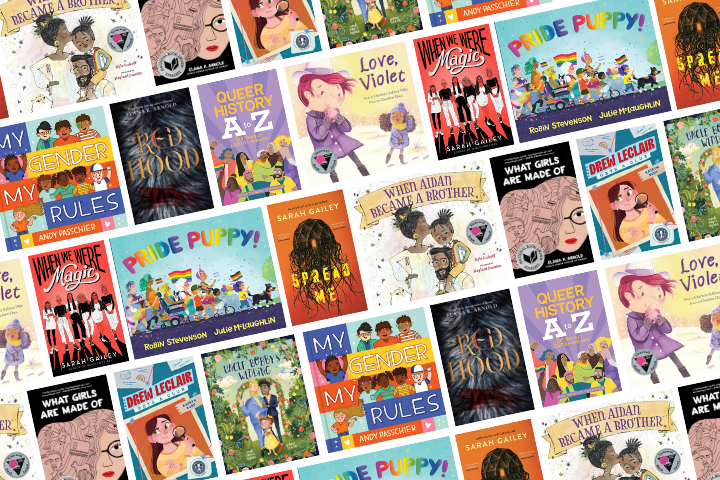
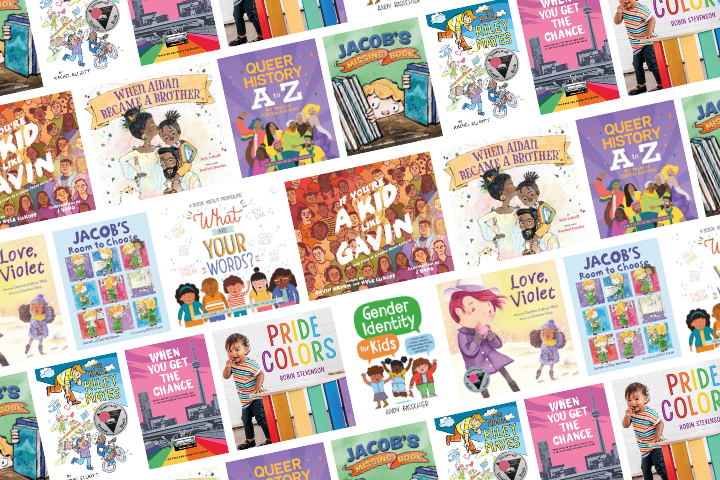
As a published author, Elliot hopes her books will satisfy young readers who, like her younger self, head to libraries when they’re hungry to learn more. Specifically, she wants her debut graphic novel, The Real Riley Mayes, to reach kids in rural areas who have questions about queerness. The book has been featured many times in Pride Month reading groups and displays — but it’s also been repeatedly challenged in public libraries, which invariably leaves Elliot feeling crushed.
I’ve heard from adults about how much it would have meant to them if my books had been in the library when they were young and there was almost no LGBTQ content in picture books.
Recently, as part of its legal work challenging bans, PEN America asked authors how much hinges on whether public libraries carry their books. Many gave us the same answer: everything. “If my books aren’t in public libraries, they may as well not be published at all,” said Kyle Lukoff, the author of five banned picture and middle-grade books.
Librarians ensure that books actually reach the children who want and need them, Lukoff explained, whether by providing personalized recommendations or creating displays that catch children’s attention.
Callie C. Miller, author of The Hunt for the Hollower and The Search for the Shadowsoul, said that in addition to taking recommendations from librarians, young readers can browse and discover stories completely on their own in libraries, which they often can’t elsewhere.
Miller herself has found countless stories in libraries that have broadened her horizons. “I’m from a very conservative upbringing, which in my experience rejected new ideas or labeled them as scary or wrong, and having access to new ideas has been crucial in helping me become a better citizen of the world, have empathy for others, and realize that there is no single right way to live,” she said.
Charlotte Sullivan Wild emphasized that libraries typically boast far larger and more diverse collections than bookstores, which tend to shelve bestsellers like Very Hungry Caterpillar and new releases that are generating buzz.
“That leaves out so many life-changing books that might be the exact story or information a child needs to understand their life,” said Sullivan Wild, author of the banned picture book Love, Violet. “Libraries offer a wider range of topics and perspectives than any bookstore can.”
Many of the authors also highlighted another unique benefit of library books: they’re free. As a result, they allow greater audiences access to books, “from young children whose families’ budgets might not stretch to hardcover picture books to teens who don’t have the money to buy YA novels,” said Robin Stevenson, who’s authored more than 30 books.
Author Sarah Brannen said that there’s no better way for her to reach readers. And though she hopes all of her stories are widely read, she’s especially eager to have kids from LGBTQ+ families find her stories with LGBTQ+ characters on library shelves.
“I’ve heard from adults about how much it would have meant to them if my books had been in the library when they were young and there was almost no LGBTQ content in picture books,” she said. “And I’ve seen small children rush over to Uncle Bobby’s Wedding with excitement and grab it to take home to show their two moms or two dads.”
“Having my books in libraries is essential for my career,” Brannen concluded. “It’s the most direct way I have to reach children. It’s crucial.”