PEN America works tirelessly to defend free expression, support persecuted writers, and promote literary culture. Here are some of the latest ways PEN America is speaking out.
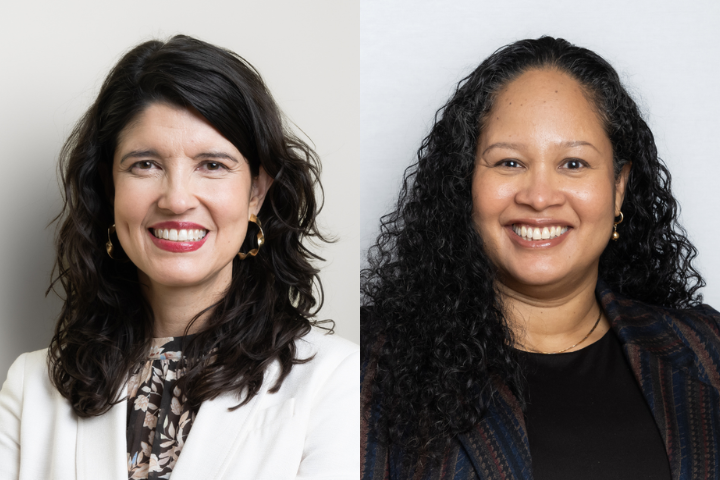
- PEN America Co-CEOs Summer Lopez and Clarisse Rosaz Shariyf shared a statement to our community about our recent piece, “A Silent Moratorium.” Read the letter. See the latest in The New York Times.
- PEN America said that the Trump administration’s decision to change a visa rule regarding foreign journalists, students, and exchange visitors in the United States poses grave threats to free expression, press freedom, and international academic exchange. Read the statement.
- In an op-ed for The Tennessean, author Lemony Snicket slams book bans, emphasizing the harm they cause young people. “Attempts to curtail the liberty to write something on a scrap of paper and the freedom to read mountains of books are bound to fail, and those who try are invariably considered scoundrels,” he states. Read more, and join the author and local advocates in Murfreesboro, Tennessee at a Freedom to Read celebration on July 18.
- PEN International, the Independent Chinese PEN Center, and PEN America raised alarm that nine years after writer Liu Xiaobo died in custody, risks for writers persist in China. “In fact, since then the government’s crackdown on writers has only intensified. This lack of concern and remorse for the Chinese government and their doubling down on the appalling treatment of writers means that global solidarity is the only thing that can help to make life safer for writers in China,” said Erika Nguyen, senior manager for the PEN/Barbey Freedom to Write Center. Read the full statement.
- PEN America and Michigan ACLU expressed concern over a Michigan district library’s board of trustees decision to bypass the library’s review process and relocate more than 100 children’s and young adult books to the adult section. Kasey Meehan, Freedom to Read program director, called it “extremely troubling.” Read more.
- PEN America called on a Texas district’s board of education to return Allegedly to shelves it banned the book against the recommendations of the district’s own committee, composed of parents and educators. “This district continues to put the opinions of a small vocal minority in their community ahead of the needs of their students,” said Yuliana Tamayo Latorre, Freedom to Read program assistant. Read more.
- Meehan spoke to The Washington Post about a Michigan school district that placed restrictions on what messages or images teachers can use on their classroom walls when they return this fall. “We’re seeing overly prescribed input from boards or states or, increasingly, federal agencies and legislators, around what can and cannot be represented, read, included on a bookshelf, hung on a wall,” she said. Read the story.
- A WUSF story about a Florida school district questioning whether it needs traditional high school libraries quoted William Johnson, Florida director. “This is a bigger conversation that goes beyond any single book,” he said. “It’s a conversation about the future of reading, intellectual freedom and what school libraries should look like in Florida.” Take a look.
- Amy Reid, Freedom to Learn program director, told The Kansas City Star that Kansas’ budget bill is “proof of the dangerous normalization of educational censorship, even in a state with a Democratic governor.” State lawmakers passed a provision attached to the bill that prohibits universities from requiring students to enroll in a “DEI-CRT” course. Learn more.
- Legal director Mara Gassmann spoke to Publishers Weekly about author Sarah Wynn-Williams’ move to sue Meta, alleging that it unlawfully kept her from discussing the abuses she witnessed while working there. Read the story.
- For many authors, comedy can be a source of light in the darkness. At the 2026 World Voices Festival panel, “Laughing Through It: Dark Humor and the Novel,” authors Katie Yee and Benedict Nguyễn explored how they use humor and satire to tackle painful topics. Check it out.