As the leaders of PEN America, we know that much of our work about free expression will provoke strong feelings, often from every direction. That’s the price of doing this work honestly, and it’s one we’ve always been proud to pay.
When we came into these roles in February, we said we would lead this organization in a principled defense of free expression. We also acknowledged that “there are many within our community who feel silenced based on their faith, identity, or culture. We must ensure PEN America can speak for all those who feel silenced, and continue to be a home for all writers.”
We meant what we said. Last week we published a piece documenting the stories of Israeli and Jewish writers who have experienced isolation and exclusion from literary life over the last several years. When we hear from writers in our community whose voices are being silenced, and who feel unable to write freely and without fear, we won’t let fear of controversy stop us from telling their stories. We reject any attempt to discredit those experiences or call into question why it might be reasonable to care about them. This piece does not argue that cultural boycotts are discriminatory conduct rather than protected speech, and we reject any effort to read it that way.
We are proud to have published this piece, and we are proud that it sits within a broader body of work to defend and uplift the stories of writers across a range of perspectives, identities, and backgrounds.
None of that means, though, that we can or should shrug off misrepresentations of our work, or of PEN America more broadly. We want to set the record straight regarding a few areas of our work and talk about what this organization does.
Start with the question of boycotts. PEN America first published its position opposing cultural and academic boycotts on its website in 2007. We’ve also ardently opposed and advocated against unconstitutional legislative and statutory efforts to suppress the right to engage in boycotts. This is not contradictory. We believe part of our unique role is to protect the legal right to free speech vigorously, while also considering what it takes to build a broader culture of free expression. Part of building that broader culture is recognizing that even protected speech can sometimes infringe on the free expression of others. In those cases, we seek solutions that don’t silence, but that protect and enable free expression for all.
When government attempts to restrict the right to boycott, we speak out. When Texas and Arkansas passed laws requiring government contractors to sign pledges disavowing any boycott of Israel before they could get paid, we spoke out against both. When a federal appeals court upheld one of those laws in 2022, we said plainly that the ruling “drastically undermines constitutionally protected freedoms.” When a doctor lost a contract with a public university in 2023 for refusing to sign such a pledge, we took up his case, too. We’ve criticized the U.S. and Israeli governments alike when they’ve detained, barred entry, or deported people over boycott advocacy or criticism of Israel’s government: a Palestinian-American novelist turned away from a literary festival, a founder of the BDS movement denied entry to the U.S., two sitting members of Congress barred from Israel, an Israeli scholar detained at a U.S. airport seemingly over his own writing.
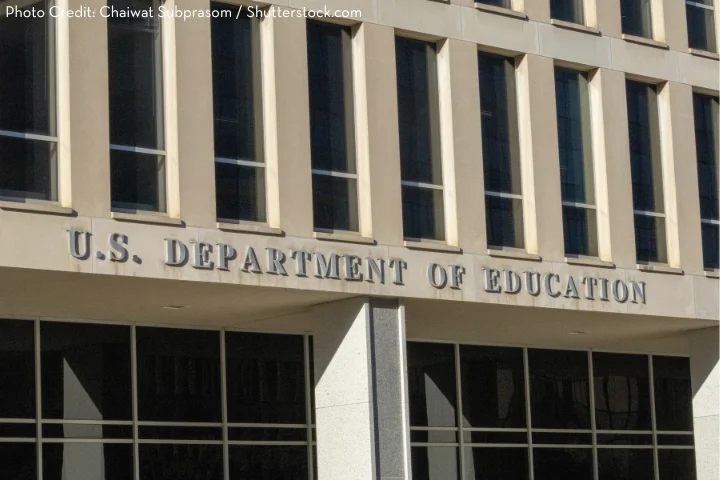
We’ve also spent a decade defending all voices on campuses, including students and faculty organizing for Palestinian rights or facing discipline for their speech critical of Israel. We oppose bills that use vague “promotion of terrorism” language as cover to chill pro-Palestinian speech, such as recently passed in Florida. Since 2017, we’ve repeatedly warned that codifying the International Holocaust Remembrance Association (IHRA) definition of antisemitism (or similar definitions) in state and federal law “risks enabling the chilling and punishment of a wide array of protected speech,” because it opens the door to treating speech critical of Israel as a form of antisemitism and discrimination. Leading up to the second Trump administration, we laid out the potential for abuse of the IHRA definition, including through enforcement of Title VI in the Office of Civil Rights of the Department of Education, and the ways in which the administration might use it to threaten and punish international students and scholars for pro-Palestinian speech. In our annual report on higher education published earlier this year, we emphasized the “dangerous tendency to conflate anti-Israel expression with anti-Jewish bias” and especially how this codification raised heightened concerns in the context of the actions of the Trump administration.
Since October 2023, we’ve put out dozens of statements specifically addressing the suppression of pro-Palestinian speech in this country. Since early 2025, we have been part of eight amicus briefs in important First Amendment cases against the Trump administration to protect the rights of faculty and students expressing pro-Palestinian speech, including Mahmoud Khalil and Rümeysa Öztürk.
We’ve also seen concerns expressed that this piece occurred in the absence of work for or with Palestinian writers. That too is wrong. In the past two years, PEN America directed half a million dollars in direct emergency support to Palestinian writers and artists in Gaza and in exile, including helping families relocate to safety–a level of relief we have not provided in response to any other conflict in our history. We published a report on the Israeli military’s destruction of cultural life and heritage in Gaza, built on interviews with Palestinian writers, artists, and cultural workers. We’ve translated and published the work of Palestinian writers in Gaza and elevated the voices of Palestinian writers calling for the preservation of their culture. We have said plainly, and continue to believe, that what has happened in Gaza is a genocide. We’ve called for independent investigations into the killing of journalists in Gaza, for an end to attacks on Al Jazeera, and, this past year, for an arms embargo in response to the use of starvation as a weapon of war. For two years running, our own Freedom to Write Index has named Israel among the world’s leading jailers of writers.
We don’t say any of this to end the criticism or discourage open and respectful debate. There is no question that this organization’s work over the past decade, on one of the most contested conflicts of our time, has not been perfect. We did not shy away from saying as much a year ago. We’ve faced pressures and criticisms from every direction, and we intend to keep taking constructive criticism seriously rather than running from it. Our door is always open to engage with any members of our community who wish to be in conversation with us. As leaders of an organization dedicated to dialogue and open discourse, we are committed to hearing critique and debate, and to always driving this organization to be better. We will also hold firm to this organization’s mission and purpose, and to our commitment to a principled defense of free expression.
There is urgent work to be done in service of that mission, and we remain committed to carrying it forward.
Summer Lopez and Clarisse Rosaz Shariyf
PEN America Co-CEOs