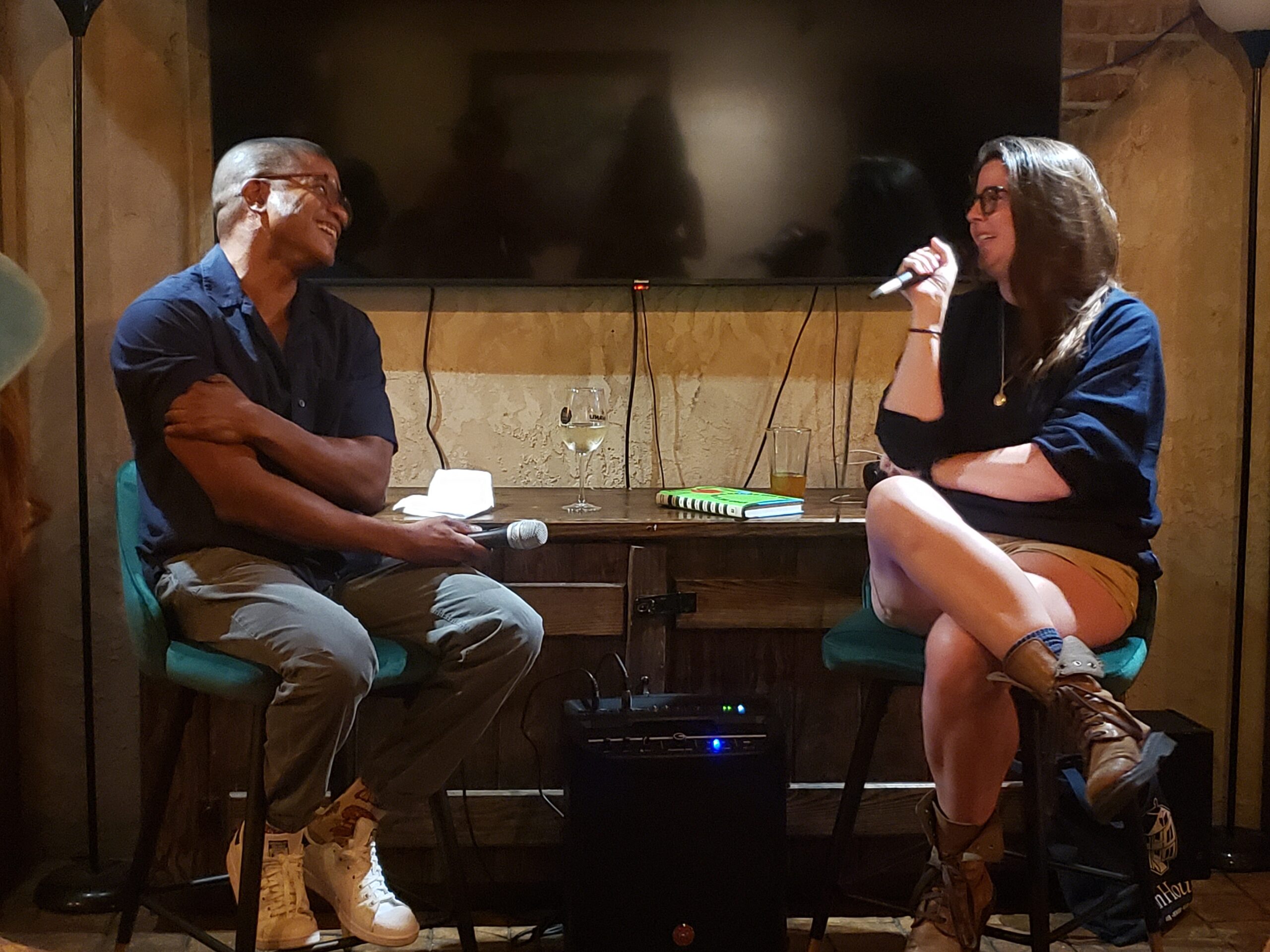
Author Kristen Arnett is one of many LGBTQ+ residents who has a complicated relationship with her home state, a topic she touches on in her latest novel, Stop Me If You’ve Heard This One, which follows a lesbian professional clown living in Central Florida.
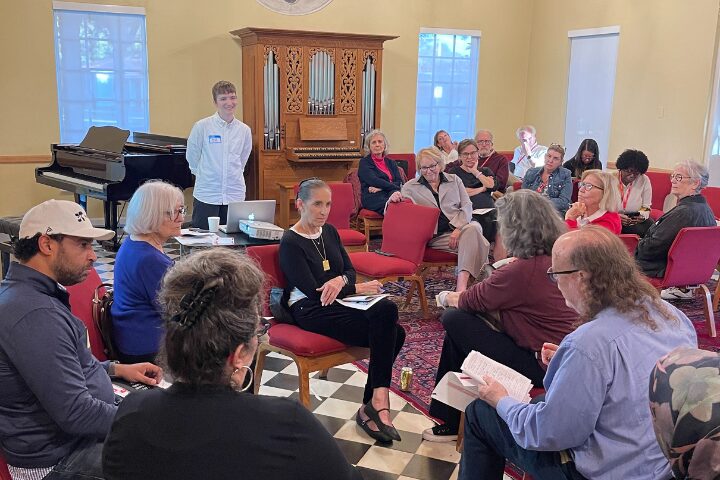
“I love Florida very much,” she told a room of readers and writers gathered at Fern & Fable Books in Ormond Beach on June 14. “But I wouldn’t be a good place-writer if I didn’t acknowledge that it’s hard to live here sometimes. The realistic thing about loving something is having open eyes. It’s understanding that there are problems, and asking how we can work on them.”
Literature plays a unique and important role in that process, she noted.
Arnett was the featured speaker at the first of three public literary events PEN America Florida hosted to celebrate Pride Month, gatherings designed to create space for joy, reflection, and solidarity at a time when many are feeling isolated or under attack. The events, “Reading With Pride with Kristen Arnett,” “Finding Your Voice with Jonathan Capehart” on June 16, and “An Evening with Alejandro Heredia” on June 18, were made possible through partnerships with the Stonewall National Museum, Archives and Library, as well as Books & Books and Fern & Fable Books, two independent bookstores committed to free expression.
“We are, on a daily basis, deluged with trauma about things that are happening, not just in Florida but in our country,” Arnett said, reflecting on the exhaustion and alienation many Floridians experience, especially those who are BIPOC, LGBTQ+, or immigrants. She addressed the fear and frustration caused by recent state policies, including the ongoing book banning crisis that continues to remove stories about marginalized communities from school shelves.
But she also reminded us of the power that stories still hold—the way they can create connection, foster understanding, and push back against erasure.
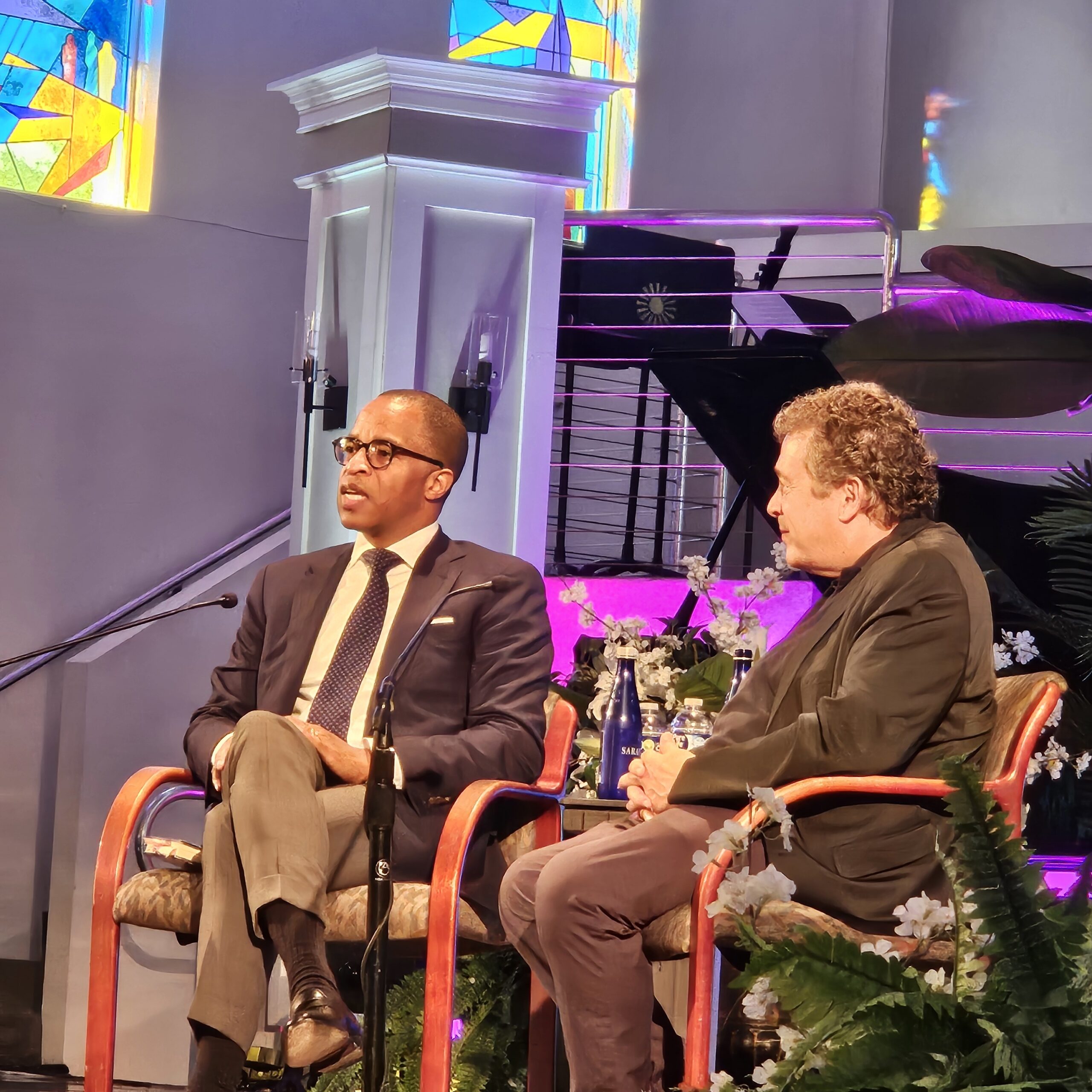
Jonathan Capehart, journalist and MSNBC host, joined us June 16 at the Stonewall Museum in Fort Lauderdale to talk about his memoir, Yet Here I Am.
The book traces his life from childhood in New Jersey and rural North Carolina to his emergence as a nationally recognized voice in journalism. Capehart spoke about race, identity, and the comfort he found in understanding the cyclical nature of American history.
“I was reading about Frederick Douglass,” he said, “and I realized I was reading it as a free, out, gay Black man, living in Washington, D.C., married to my husband. When I thought about the distance between that moment in history and the life I’m living now, I felt some comfort. We’ve been through worse as a country. We’ll get through this too.”
Our Pride series concluded on June 18 with Alejandro Heredia, whose novel Loca follows two best friends—a gay man and a straight woman—as they immigrate from the Dominican Republic to New York City in 1999. Heredia read from the book and spoke about the power of crafting characters who are messy and complicated.
One audience member shared that her daughter, who is queer, recently moved to Los Angeles from Miami, and said she worried about her safety and well-being in the current political climate.
“Match her strength with love and care,” Heredia responded, a reminder that even when we don’t have the answers, we can still offer support.
These are the kinds of moments that literature makes possible. Not just because of what’s on the page, but because of what happens when we come together around it. Especially now, in a time that encourages isolation and fear, coming together to hear and honor each other’s stories feels more necessary than ever.