The recent denial of a visa to Imran Ahmed, a lawful permanent U.S. resident and CEO of the Center for Countering Digital Hate, marks a terrifying expansion of an assault on freedom of expression and research into online falsehoods. Ahmed is one of five people – the only one in the United States – whom the administration accused of working to censor speech or unfairly target tech companies.
The immigration playbook used against Ahmed has been increasingly deployed against others who dare to dissent, including Salvadoran journalist Mario Guevara and British commentator Sami Hamdi. Detaining or deporting someone who challenges the government’s narrative is a hallmark of authoritarian regimes.
By using immigration status as punishment for work that mitigates digital harms, the administration is moving deeper into state-sponsored retaliation over speech and activities it simply doesn’t like. On Dec.19, an internal State Department memo, obtained by Reuters, directs U.S. consular officers to deny visas to applicants “responsible for, or complicit in, censorship or attempted censorship of protected expression in the United States.” Officers are directed to review the resumes and LinkedIn profiles of applicants for work history in “misinformation, disinformation, content moderation, fact-checking, compliance and online safety, among others.”
While all immigration applicants seemingly will be subject to this policy, the directive calls out H-1B visa recipients for particular scrutiny. This pathway allows U.S. employers to hire highly skilled foreign workers and is frequently used by tech companies.
Restrictions on H1-B visas for trust and safety professionals will not only undermine their vital work to prevent the distribution of child sexual abuse material, fraud, and online exploitation, but also weaken online free expression – the very thing the administration claims to seek to protect. Trust and safety professionals and anti-disinformation experts like Ahmed identify, track, and counter online abuse and false narratives that accompany coordinated harassment campaigns to intimidate online communities or are designed to mislead the public.
When work to stop disinformation and protect digital safety is not staffed adequately, platforms have slower incident response times while online abuse and disinformation proliferate. If online abuse and disinformation go unchecked because trust and safety teams are understaffed, then writers, journalists, and public figures–particularly those with marginalized identities–may be pushed to self-censor, quit platforms, or leave online spaces entirely due to abuse.
Because of this, the administration’s attempts to undermine trust and safety work will not only corrode user safety and enjoyment, but also threaten free, fair, and equitable online discourse.
These actions come amidst a broad attempt by the administration to use visa and immigration directives to target individuals that criticize or counter the administration. PEN America previously spoke out about an August policy to vet the social media accounts of refugees and immigrants for “anti-American speech.” In another effort to entangle visa status with fact-based reporting, the Department of Homeland Security has proposed restrictive rules on foreign journalists and students that would foster fear and encourage self-censorship. The measures, including heightened surveillance of online activity, threaten to chill critical reporting and undermine international academic exchange.
This escalation against disinformation research and online safety is part of a campaign that began on President Trump’s first day in office, when he issued an executive order dictating the terms of allowable expression and threatening retaliation against dissent in ways that could chill speech. As PEN America warned in January 2025, the order was never about restoring free speech, but about giving disinformation free rein – a prediction borne out over the past year as online falsehoods have flourished. In one example, the White House unveiled a website to amplify falsehoods and distortions about the Jan. 6 insurrection at the Capitol on the fifth anniversary of the attack.
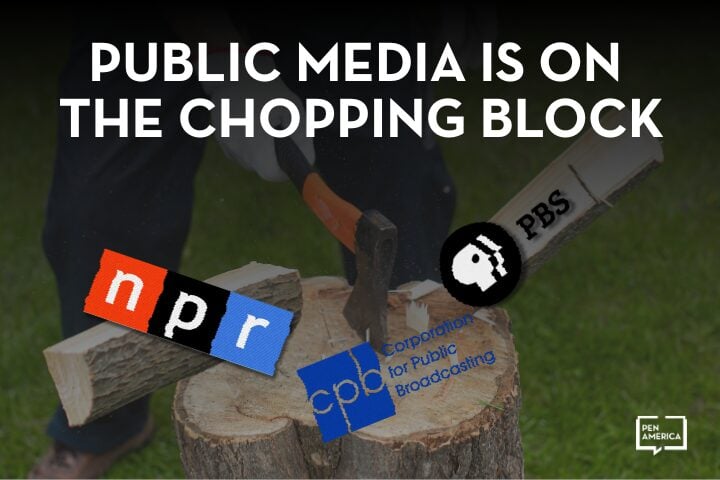
Ahmed’s case, coupled with the recent restrictions on H1-B visas to trust and safety workers, is an escalation of the government’s attacks against credible information. This wide-ranging crackdown on facts includes the gutting of government-funded news outlets such as Voice of America, stripping public media of federal funding, Trump’s lawsuits against news outlets for reporting he dislikes, name-calling that typically targets female reporters, booting the Pentagon press corps from the building, and excluding The Associated Press from coverage of certain events.
By framing anti-disinformation research and trust and safety work as “censorship,” the administration is seeking to create an information vacuum in which the only voices permitted are those that echo its talking points, while those who dissent are threatened or intimidated.
On Christmas Day, a judge blocked the administration from detaining Ahmed, which he called “the best Christmas present ever,” adding, “we will not be silenced.”
PEN America stands in solidarity with Imran Ahmed and the other anti-disinformation advocates and trust and safety professionals who have been targeted by the administration. We call for an immediate end to the use of immigration status as a weapon of censorship.