Gal Beckerman | The PEN Ten
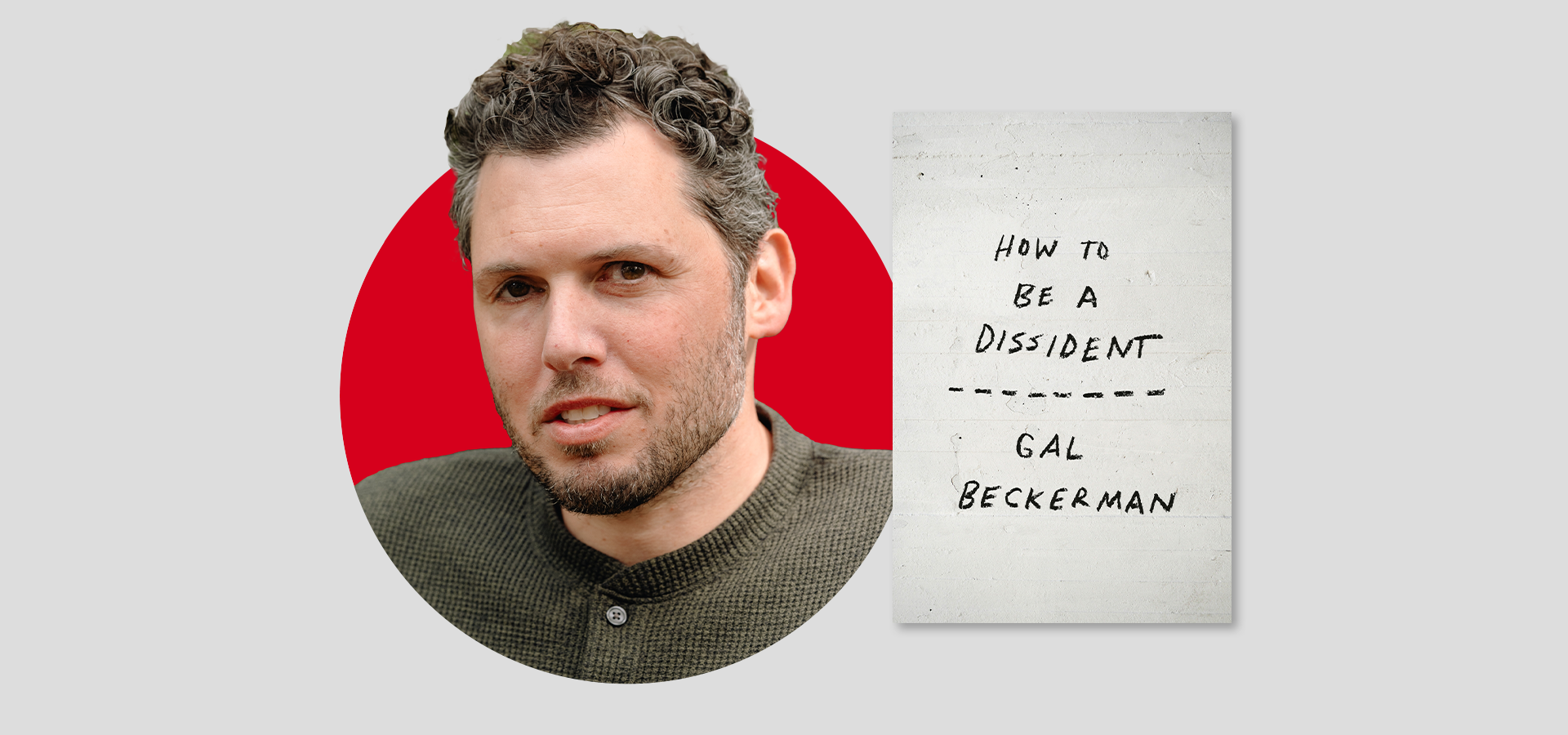
As authoritarianism rises across the globe, it’s not always easy to know what to do or where to turn for guidance. Gal Beckerman’s How to Be a Dissident (Crown Publishing Group, 2026) aims to fix that. Drawing on history and philosophy, his book teaches readers to fight back by adopting 10 qualities. Among them: Be funny. Be reckless. Be immortal.
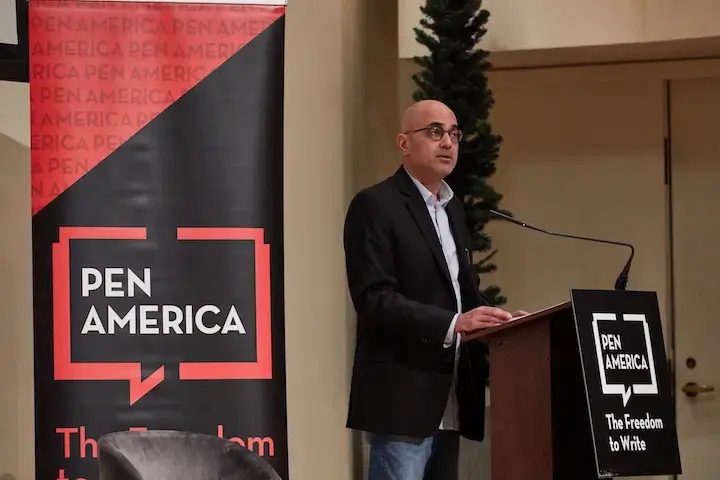
In this PEN Ten interview, Beckerman talks with Sabrina Adams, senior manager of literary programs, about his urgent and illuminating read. They discuss both the existential sense of aloneness and social unity necessary for dissidence, the usefulness of pessimism, and his favorite dissident role models (Bookshop, Barnes & Noble).
How to Be a Dissident reads as a how-to guide that encourages and directs the dissident in all of us. How did you decide to write it? How does it sit within your larger body of writing?
This book emerged out of a feeling of shock in the first months of the current Trump administration when one powerful institution after another seemed to fold in the face of unprecedented exercises of executive power. I wondered if Americans had lost a certain kind of moral instinct to say no when they felt some fundamental principle of theirs was being violated. It seemed to me that we needed to understand what it takes to be the kind of person who does resist, and understand this at the individual level. My earlier books looked at social movements, at how groups and large constituencies formed, but I realized what I needed for myself at that moment was an examination of what happens in one person’s head, in their gut, that allows them to push back.
We’re at a moment domestically and globally where resistance and dissent are discussed in light of rising authoritarianism. What audience did you intend this book for? Did you think of it as a guide?
I thought of it as a guide in the loosest terms — the title is meant to have some irony to it since no dissident actually follows a set of instructions to become a dissident. But I did think it would be helpful to identify what makes such a person tick in order to isolate a set of qualities that all of us can then emulate. The dissidence I’m thinking about is against repression, which often takes a political form, but it’s not just that. It’s about pushing back against any force that threatens to dehumanize and flatten us and take away some essential aspect of our humanness, and this includes a new technology like AI as well.
What was your methodology in deciding on the ten behaviors you outline in the book? Did you decide on ten initially? Did any not make the cut that you’d like to highlight now?
I don’t know how scientific it was. I started reading lots of dissident memoirs and speaking to present-day dissidents, and I realized that I kept encountering certain universal qualities that were as true in Ancient Greece as in Tehran today. They told me something about the attitude of the dissident, what the dissident actually does, and the role that the dissident plays in human society. And why ten? That’s where I landed, but also everyone loves a round number.
I wondered if Americans had lost a certain kind of moral instinct to say no when they felt some fundamental principle of theirs was being violated. It seemed to me that we needed to understand what it takes to be the kind of person who does resist, and understand this at the individual level.
Much of the book interrogates the personal and group dynamics of various resistance movements, where people often depended on each other, both personally and in service of their goals. Why then did the book begin with the chapter “Be Alone”?
That was a deliberate choice, because even when dissidents find each other and grow beyond their own individual resistance (and I cover this later in the book), I think the process always starts with an existential sense of aloneness that comes when you break with conformity, when you find you can’t go along with everyone else or that in spite of your drive to self-preservation, you can’t live with yourself if you don’t respond or act differently. I think this is hard. It induces a kind of vertigo. And it’s important to reckon with that feeling before we can talk about all the ways the dissident then behaves out of this aloneness.
In the chapter “Be Loyal,” you talk about how social community radically changes outcomes of dissident actions, referencing the Freedom Summer of 1964, where those who stuck out the summer had twice as many close movement friends as those who dropped out, and the 1989 protests that brought down the Berlin Wall, where there was a sharp increase in participation if someone had even one dissident friend. As we hear more and more about social isolation among young people, along with urgent calls for community action to fight tyranny in the United States and abroad, what do you see as the path forward for these movements so dependent on positive social interaction?
I agree that social isolation is a scourge. One of Hannah Arendt’s biggest insights about totalitarianism is that it endeavors to alienate us from one another as part of its path to totalizing power. What gives me hope though are the signs that there is a genuine hunger for gathering and for community, despite our phone addictions. If you think about Minneapolis and the networks that were established to support terrified immigrants or to monitor the activities of ICE, it was all very much in the physical world, not performative or in the spotlight, and demanded the kind of coordination that can only be done by people working together.
In the chapter on recklessness, you reference St. Augustine, who says, “It is not the punishment but the cause that makes a martyr.” In a time when so much seems to require our focus at all times, how do you believe we should prioritize the political causes at hand?
Part of the dissident’s strength comes from understanding that attention is a precious commodity, and that you exercise your human agency by being deliberate in what you pay attention to. This is something I think we all need to re-learn at a moment when it becomes harder and harder to avoid having our attention hijacked every second.
What gives me hope though are the signs that there is a genuine hunger for gathering and for community, despite our phone addictions.
You make a case for pessimism that really resonated with me. Can you explain your case for pessimism in a world that already seems so dark?
Pessimism is the belief that things are probably going to get worse (which makes it different than fatalism, which is the notion that things will most definitely get worse). In that “probably” is the possibility for change, but also urgency since if we don’t act the trend line is not good. If you think of the opposite attitude, optimism, the belief that things will probably get better, that seems like a recipe for passivity. Consider climate change. The optimist might assume that somebody, some smart scientist, will figure out a solution and stave off the worst impacts. The pessimist assumes that if we don’t do anything the temperature will keep rising. Who is more likely to act?
I think writing this book is an act of dissent. What other dissident acts are you doing that you’d like to share?
I certainly don’t see myself as a dissident. In fact the book came from the opposite impulse; not because I myself have something to teach others, but because I felt I had something to learn. My desire to learn how to behave and think in a moment of such pressure came from my own sense of uncertainty about whether I had it in me to resist. So the book should really be read and understood in that spirit, as one man’s grappling with how to orient his moral compass, which might help others do so as well.
You dedicate a chapter to humor as dissidence, referencing the artist Ai Weiwei, among others. Who are your other favorite humorous dissidents?
There are some comedians I’d definitely put in this category, like Lenny Bruce or Andy Kaufman or Sasha Baron Cohen (or the original of such performance artists, Diogenes, who I write about in the book at length). These are people who through the laughter they provoked managed to invert the taken-for-granted elements of our world, making them easier to challenge and possibly dismantle. Humor is so powerful in this way. And if you think it doesn’t matter, just consider who Trump has targeted in the media: comedians like Jimmy Kimmel and Stephen Colbert.
My desire to learn how to behave and think in a moment of such pressure came from my own sense of uncertainty about whether I had it in me to resist.
Your book reminds me of another guide, On Tyranny by Timothy Snyder. While different, both of your books offer roadmaps to resistance. Are there any other texts in addition to yours that you think readers should engage with when deciding to engage in dissent?
There are some incredible memoirs that I would point to; they are what helped me think through these questions and their real world consequences. I have in mind books like Nadezhda Mandelstam’s Hope Against Hope, or Alexei Navelny’s posthumous memoir, Patriot, but also Sepideh Gholian’s account of her time in Iranian prisons, The Evin Prison Bakers’ Club, or Wangari Maathai’s recollections about her dissidence, which involved planting trees all over Kenya. These stories reveal the mental work it took for dissidents to exercise their moral agency, and they give us some good role models to follow.