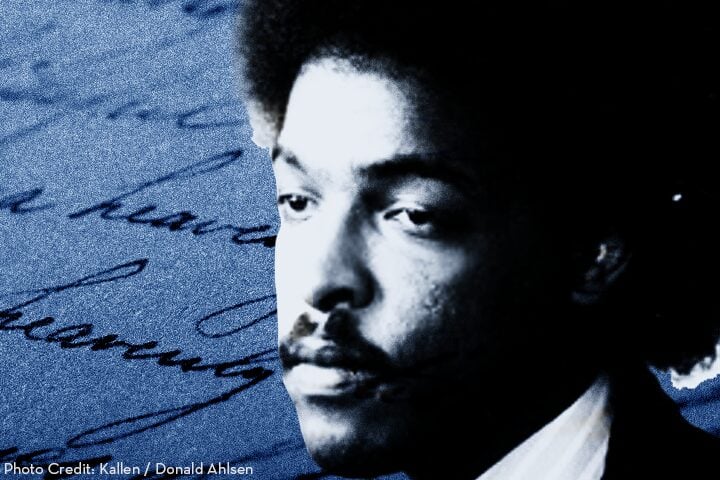
Poet Mohamed Tadjadit has been described as the “poet of the Hirak,” giving a voice to Algeria’s pro-democracy movement that began in 2019. Tadjadit performed his slam poetry at protests. His words were critical of the government’s leadership. Authorities arrested him repeatedly as his chants in the streets and on social media grew louder.
“The mountains cursed you, And the generations conspired against you.
On the betrayed land, We offered you the ropes of hope,
Yet you turned into beasts upon us, With reasons that cannot be excused.
Carry our questions to the ancestors, Tell them of Algeria’s condition.
A homeland oppressed, dishonored.
The ignorant took power, They placed justice under money’s weight,
And made freedom forbidden.”
Mohamed Tadjadit
Poet imprisoned at least six times in Algeria since 2019
Translated from Arabic to English. Courtesy of Index on Censorship.
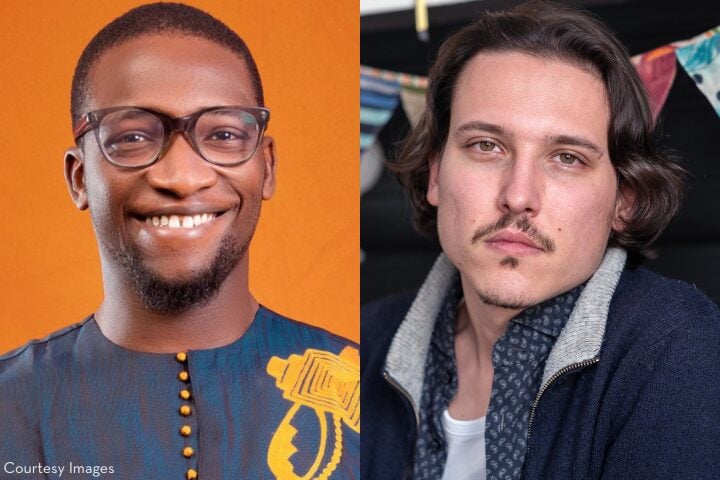
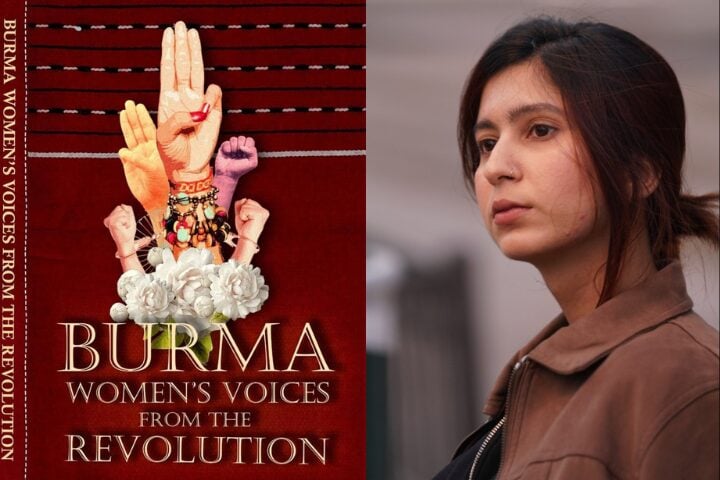
To mark the Day of the Imprisoned Writer, PEN International is highlighting several cases of writers and journalists at risk for their expression: poet Mohamed Tadjadit, who is imprisoned in Algeria; journalist Rory Branker, who is detained in Venezuela; Uyghur literary critic Yalqun Rozi, who is imprisoned in the Xinjiang Uyghur Autonomous Region in China; and journalist Mzia Amaglobeli, who is imprisoned in Georgia.
Since 1981, the PEN network has mobilized writers and the public around the Day of the Imprisoned Writer by sharing writers’ stories and words to highlight the injustice of their imprisonment and ensure they are not forgotten. We draw inspiration from the creativity of poets at risk like Tadjadit and how they use poetry to express independent thought.
Poetry as Creative Resistance
At least 375 writers were jailed around the world last year in connection with their speech, according to PEN America’s latest Freedom to Write Index—67 of them poets. Many writers like Tadjadit use poetry as a way to creatively voice their opinions, feelings, and hopes for the future, especially while living under censorship and repressive governments. These governments often target poets to suppress the power of their words.
In Myanmar, poets led protests with poetry readings to support civil resistance following the military’s February 2021 coup; several were arrested and detained for months after taking part. In Russia, a small group of poets gathered in Moscow’s Mayakovsky Square to recite poetry in protest of Russia’s invasion of Ukraine in 2022; they were swiftly detained for speaking out. In Iran, poets who posted and recited poetry on social media were arrested by authorities looking to silence support for the Woman, Life, Freedom movement.
Authoritarian leaders target poets because their words—filled with lyricism, story, and feeling—can expose the cracks of oppression in daily life. The jailing of a poet, or any writer, for their words is an attack on the universal right to freedom of expression and an affront to our humanity.
Poets in Jail for Their Speech Today
Since his first arrest in 2019, Mohamed Tadjadit has been repeatedly imprisoned—every year, for months at a time. Now, Tadjadit has been sentenced to five years in prison stemming from baseless terrorism charges related to his poetry and activism. He is one of many poets jailed because of their words.
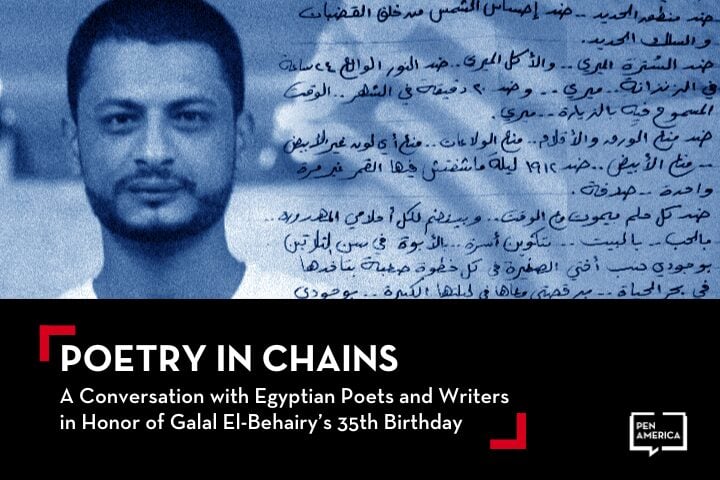
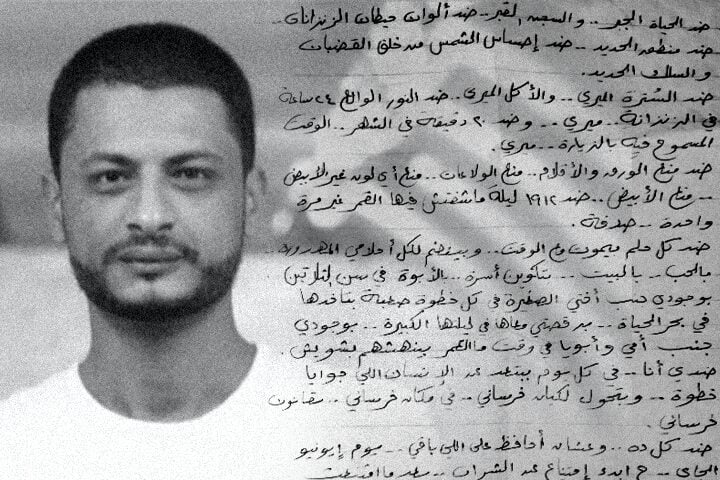
Poet and 2025 PEN/Barbey Freedom to Write Award honoree Galal El-Behairy has been detained by the Egyptian government since 2018 for his poems and song lyrics that satirized the military, but the roots of his work lie in the 2011 Egyptian Revolution. He started writing poetry in high school, and, during his time as a university student, he performed readings as a form of creative protest. He is still in detention today, now facing new charges in what appears to be another attempt by the Egyptian government to keep him in jail.
“I write for my country,
which no longer resembles itself –
except in the horizontal drawing of its name
and its position on the map.
…
I do not recognize this strange monster
where poems are prosecuted,
and poets are imprisoned.”
Galal El-Behairy
Poet and lyricist detained in Egypt since 2018
From El-Behairy’s 2023 letter from jail, translated from Arabic to English by PEN America staff.
Uyghur poet Gulnisa Imin was detained in 2018 on the 345th night of her self-published poetry project in which she shared one poem a night for 1,001 nights. She is now serving over 17 years in prison in China’s Xinjiang Uyghur Autonomous Region, where authorities consistently jail Uyghur writers and poets for their independent expression of Uyghur culture.
“They don’t want to shed their tears
They just want to lift their heads
They just want to gaze at the sunless sky.
Their troubles, their yearning
Their nightmares and sleepless nights
They want to talk about it with someone on the outside.”
Gulnisa Imin
Poet and scholar imprisoned in China’s Xinjiang Uyghur Autonomous Region since 2018
From “The Tenth Night: The Sunless Sky”, translated from Uyghur to English by Aziz Isa Elkun. Published in Uyghur Poems by Everyman’s Library.
One of the longest-jailed writers in the world is Amanuel Asrat, a poet and journalist who was detained by the Eritrean government in a September 2001 crackdown by President Isaias Afwerki, when he shut down all private news outlets in the country and ordered the arrest without trial of those who wrote critically of his leadership. To this day, at least 12 writers and journalists are still detained in the country; most of them have been held without trial since 2001.
“Something growled
Something boomed
Invading the calm
It echoed.
… Stuck
Where two brothers pass each other by
Where two brothers meet
Where two brothers join
In the piazza of life and death
In the gulf between calamity and culture
In the valley of anxiety and peace
Something boomed.”
Amanuel Asrat
Poet and journalist detained in Eritrea since 2001
From “The Scourge of War,” translated from Tigrinya by Tedros Abraham in collaboration with David Shook. Courtesy of PEN Eritrea.
Solidarity Matters in the Darkest Moments
Unwavering solidarity with poets and writers jailed for their work is essential to defend the freedom to write. And that solidarity can make a real difference.
For 15 years, poet Tal Al-Mallouhi was jailed by the Syrian government, arrested in 2009 for her poetry and essays about freedom of expression, human rights of Palestinians, and other social issues. Al-Mallouhi’s family pressed for her release, alongside the PEN International network and human rights advocates speaking out about the injustice of her imprisonment. Al-Mallouhi should never have been arrested or imprisoned, but, in 2024, she walked free from Syria’s Sednaya prison after the fall of Assad’s rule. She remains committed to defending human rights and continuing to write.
The collective voice of writers and human rights defenders ensured that the world did not forget about Al-Mallouhi’s imprisonment or her words. No matter how uncertain the future, speaking up about these injustices matters. We must not let those who censor and silence free expression bury the truth.
How You Can Take Action
We at PEN America join other PEN centers around the world in calling for the urgent protection of writers and journalists behind bars. During PEN International’s campaign, running until December 10, here are some ways you can make sure imprisoned writers’ voices are not silenced:
- Visit PEN International to write messages, send appeals, and sign petitions for Mohamed Tadjadit, Rory Branker, Mzia Amaglobeli, and Yalqun Rozi
- Share poetry by Galal El-Behairy, Mohamed Tadjadit, Amanuel Asrat, and Gulnisa Imin (download and print or share online)
- Visit English PEN to write messages to Galal El-Behairy, Amanuel Asrat, and more writers
- Follow PEN International and PEN America to share the stories of writers imprisoned for their free expression