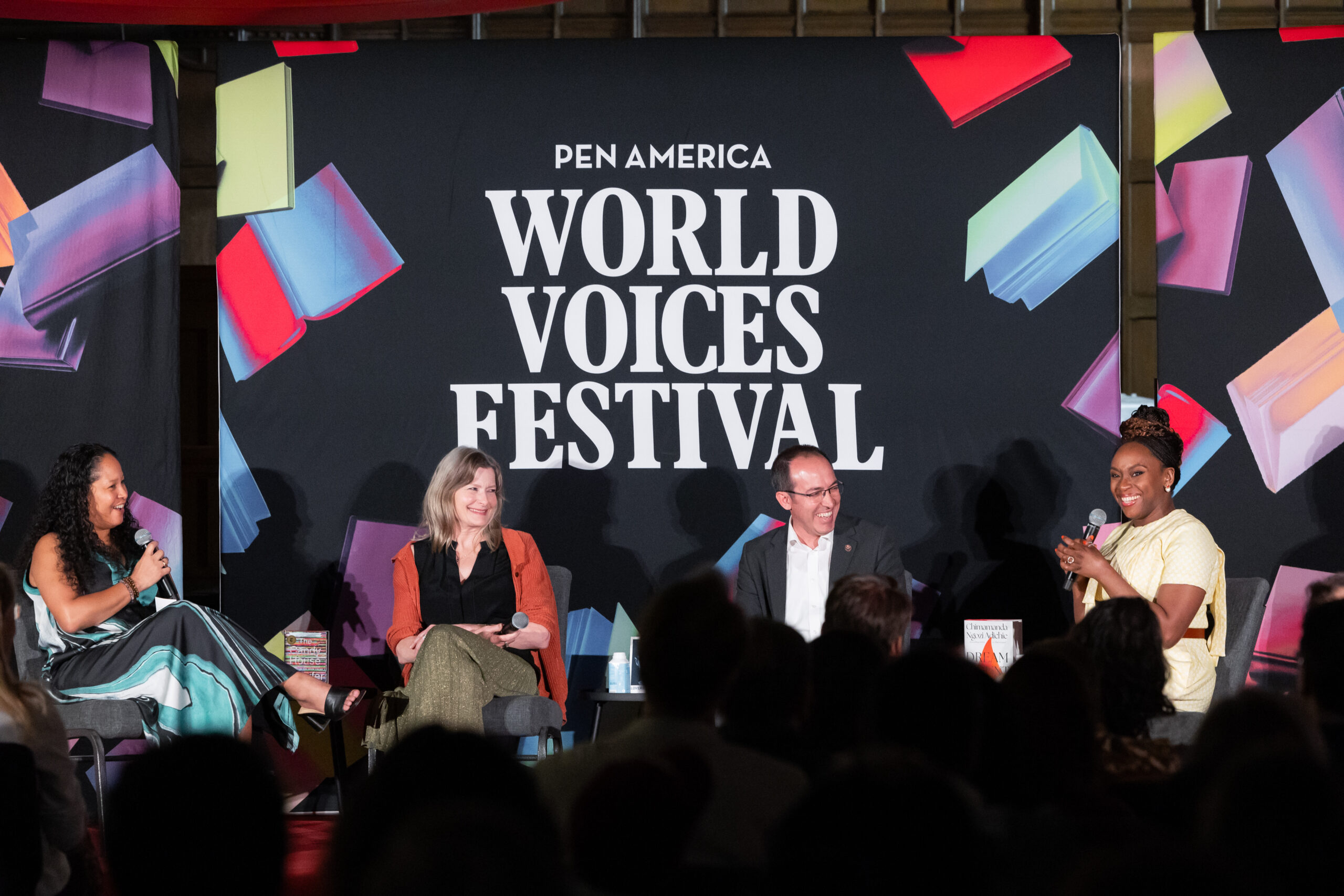

Escalating attacks on immigrants exercising their freedom of expression have stoked anxiety and driven an increase in self-censorship among vulnerable writers nationwide. But the New York City International Book Fair, or Feria Internacional del Libro NYC (FILNYC), served as a powerful testament to what happens when migrant and international voices refuse to accept silence as their only option.
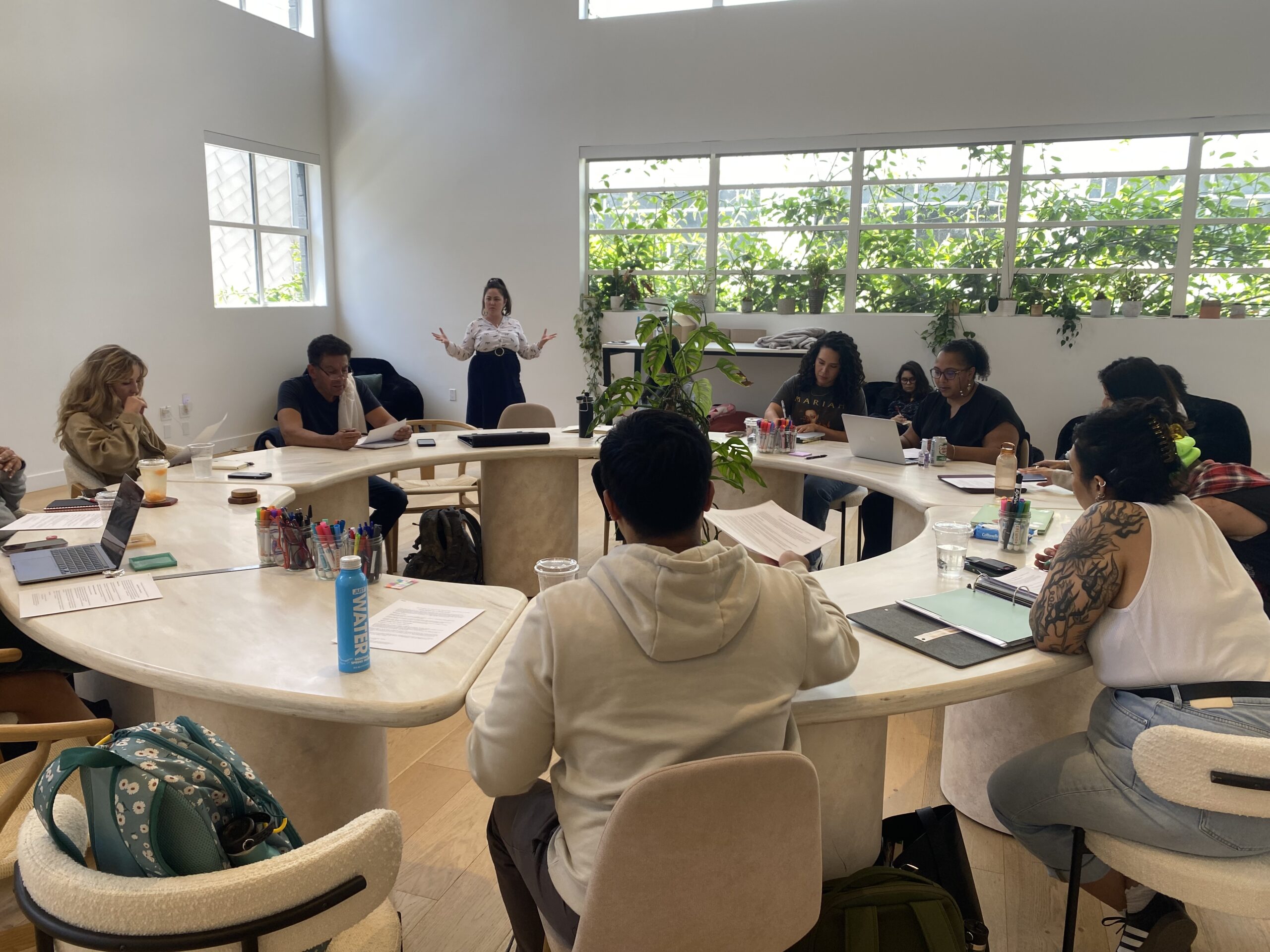
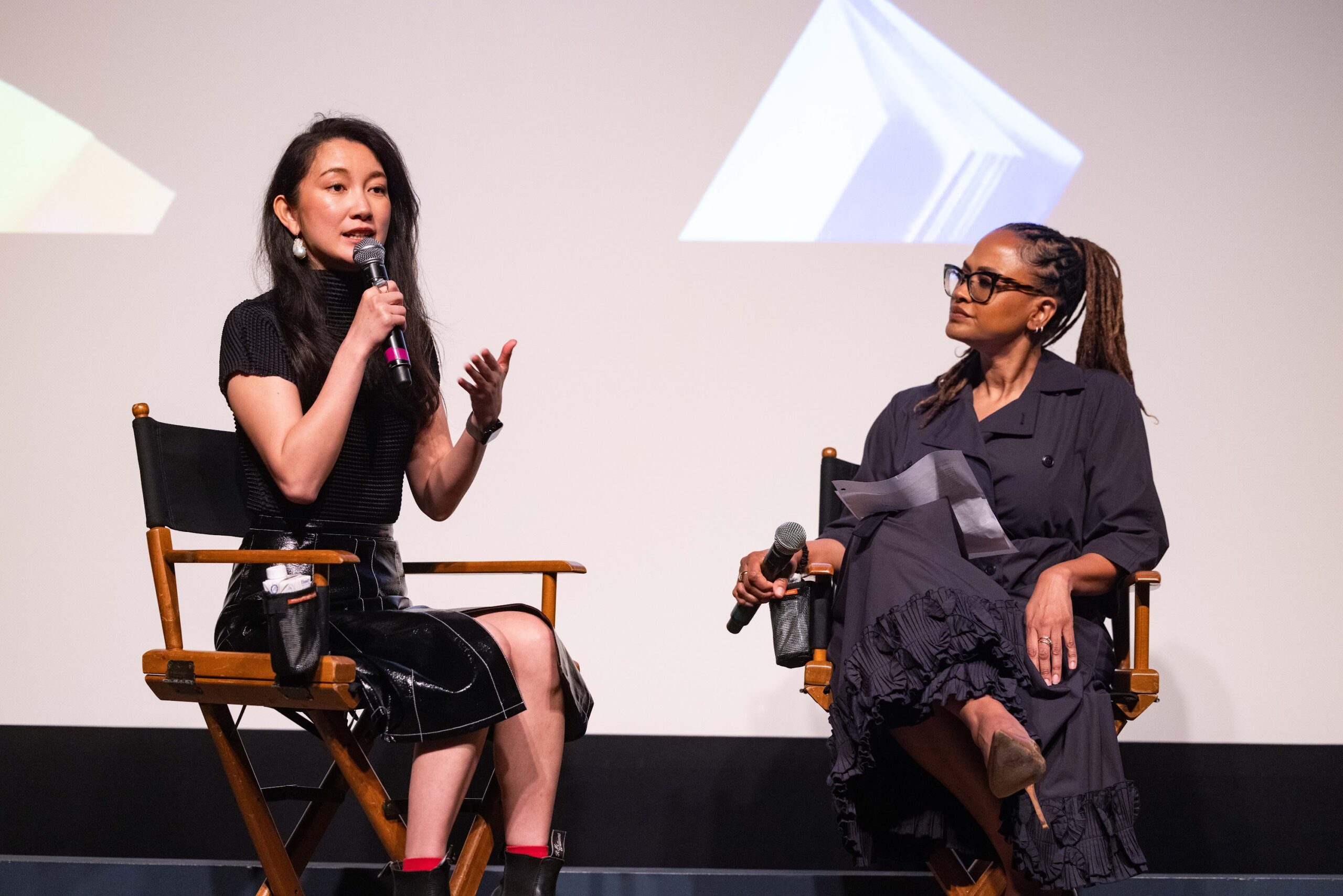
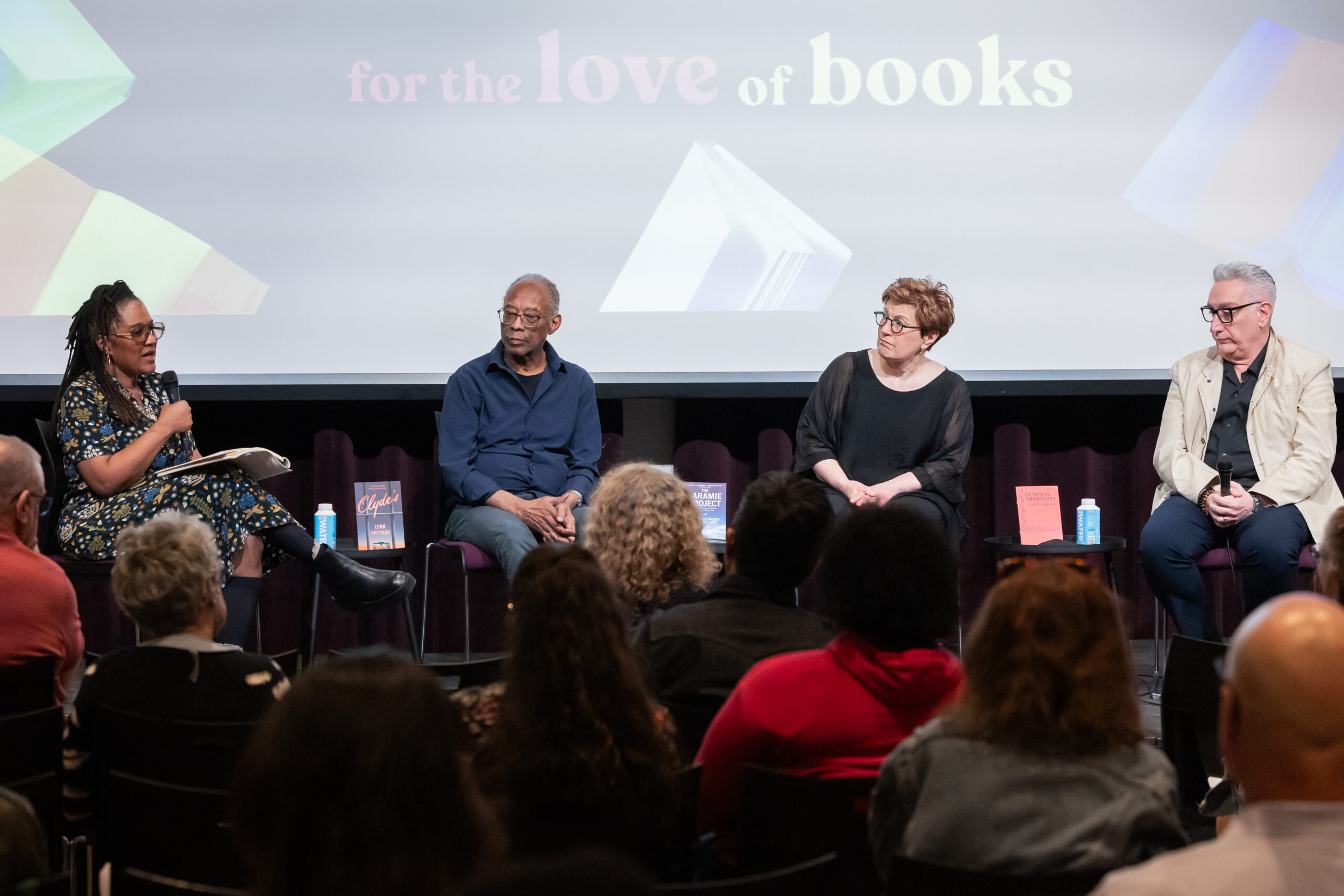
The festival featured writers and journalists primarily from across the Spanish-speaking world, including PEN America’s own DREAMing Out Loud students, who shared their writing and discussed the necessity of uplifting stories by and about immigrants.
“Here, I have one place to breathe, to write whatever I want without judgment,” said Je’Jae Mizrahi, one of the program’s participants. “PEN America is giving us a path to say, ‘We fucking matter.’”
Founded by the award-winning Mexican novelist Álvaro Enrigue in 2016, DREAMing Out Loud aims to counter anti-immigration sentiment and raise the voices of migrant writers in the United States. The first iteration of the program boasted just one cohort of writers, but it has since expanded considerably, with 40 students split across five groups participating this year. Writers are invited to develop fiction, poetry, nonfiction, and plays over the course of eight sessions, and they also each receive a modest stipend for their participation. Many of this year’s voices are featured in the new anthology DREAMing Out Loud: An Anthology of Migrant Writers Vol. 7.
DREAMing Out Loud runs from February through March, so the sessions began amid a crackdown on immigrant voices. A sense of doom loomed over them at first, said writer and artist Charlie Vázquez, who has worked as one of the program’s instructors since 2018. But Vázquez urged his students to realize that the fraught political environment only heightened the need for them to put pen to paper.
“I told them, ‘You are all here. You’re able to speak for people who don’t have this platform or who don’t have the writing skills or the language proficiency, so you’re telling your personal story, but you’re speaking for countless other people.’ And I think that’s something that resonated with all of them,” he said.
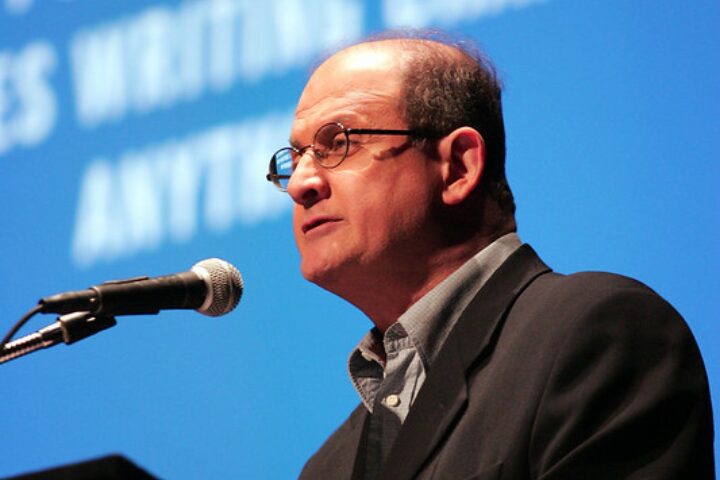
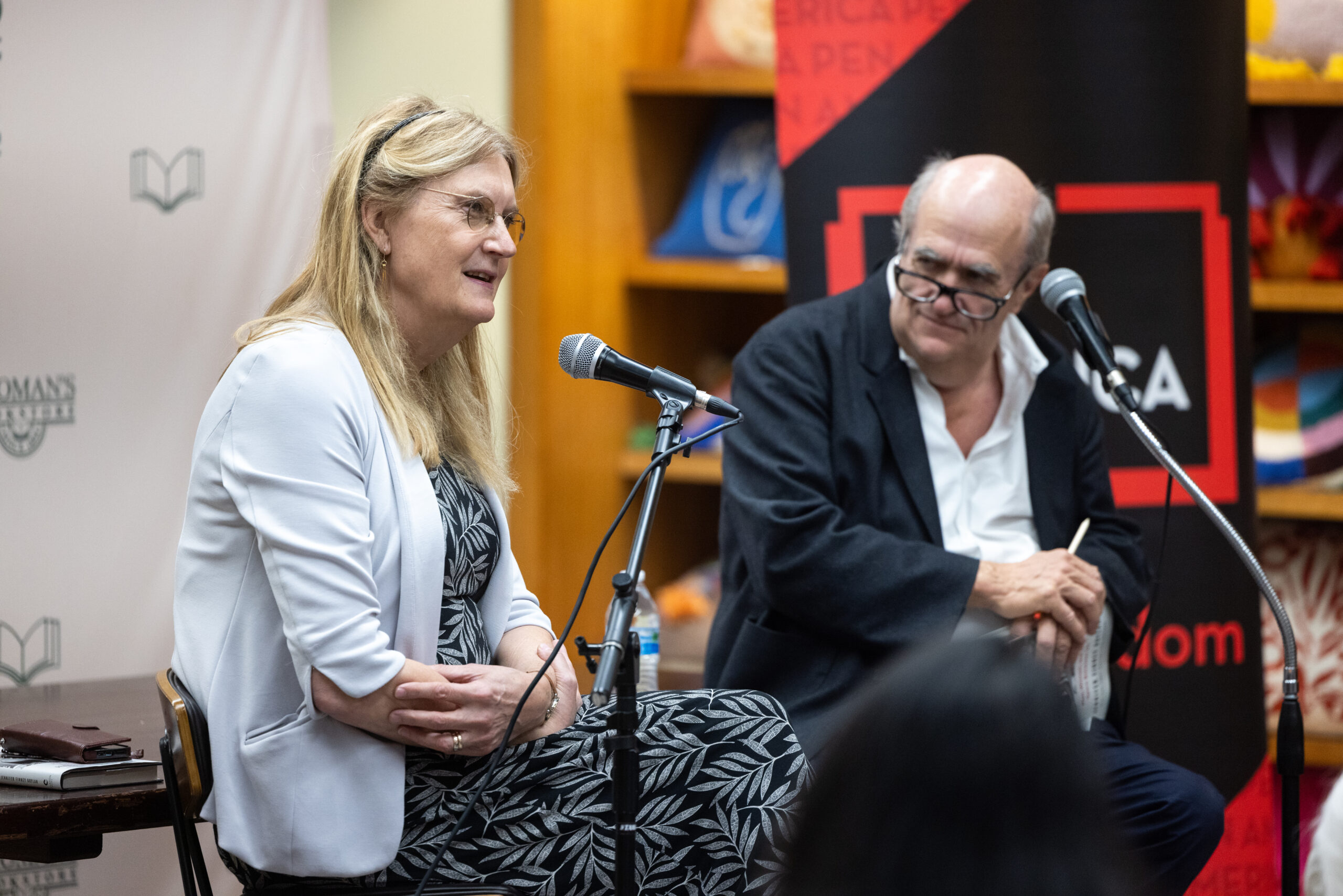
Three DREAMing Out Loud students joined Vázquez at the Gerald W. Lynch Theater on October 24 to present their writing and reflect on how they developed their craft and a sense of community over the course of the program.
The event kicked off with Mizrahi sharing a few scenes from their play, in which Cleo, a Jewish transgender woman, is kicked out of their home during Passover. Like Cleo, Mizrahi was forced to leave their home at a young age because of their identity.
“Over 40% of runaway and homeless and at-risk youth that we know are queer and trans,” Mizrahi said. “I use dark comedy, in a way, to cope with my trauma and to be able to tell these stories and imagine, ‘What does it look like for the most marginalized person in that home to be able to have their power regained?’”
Estrella Juarez then read aloud her picture book, which slowly reveals how her life in the United States fell short of her expectations for it. She described the process of writing and illustrating the book as illuminating and therapeutic, as it prompted her to reflect more deeply on her day-to-day life than she had previously.
Juarez later added that she benefited from the support provided by her teacher, Claudia Rueda, and the other members of her cohort. “It was a really, really healthy environment,” she said. “The students helped me to open my eyes and see other perspectives — and see that we have many similarities as well.”
Che Guerrero closed out the readings by sharing an excerpt of his memoir, which grapples with the question of what it means to be a “good” immigrant. The book begins with Guerrero caring for a man during the pandemic who won’t stop complaining about immigrants stealing jobs and providing nothing in return. “I’m here like, ‘I’m dying from COVID, taking care of a racist. Tell me I don’t do nothing for this country,’” he said.
Guerrero began writing the memoir as honestly as he could, but as the program progressed, he began to cut back on more and more details out of fear for his safety. Prior to the October 24 reading, however, he decided to reinsert all of the specifics.
“With everything going on, people are asking, ‘Which rights do immigrants have or don’t have?’ And I’m like, ‘You know which one we have? Freedom of speech, baby,’” he said. “I’ll write until the wheels fall off.”
It’s a “painful and scary” time to be queer and from an immigrant background, Mizrahi said. “The more I’m figuring out who I am, it feels like there’s 5,000 more missiles telling me to go back into hiding and shame.”
But for two months, DREAMing Out Loud afforded them the opportunity to explore their identity in writing without fear of repercussion. “We don’t always get afforded these platforms, so thank you to PEN America,” they said.
Applications for the 2026 cycle of DREAMing Out Loud will open on November 10, 2025 and close on December 10, 2025.