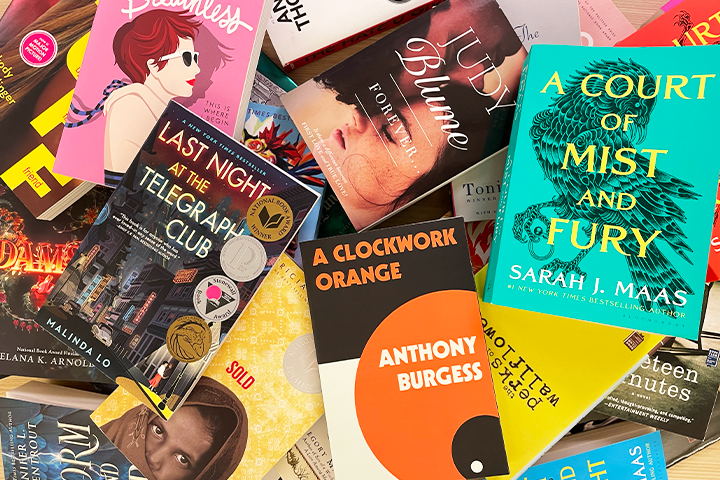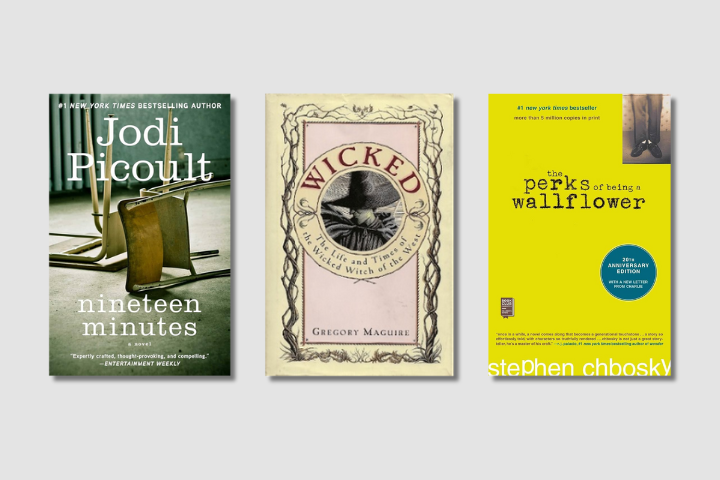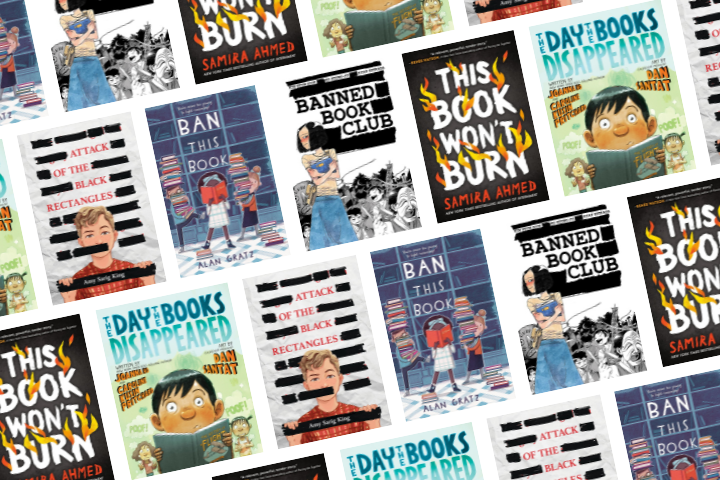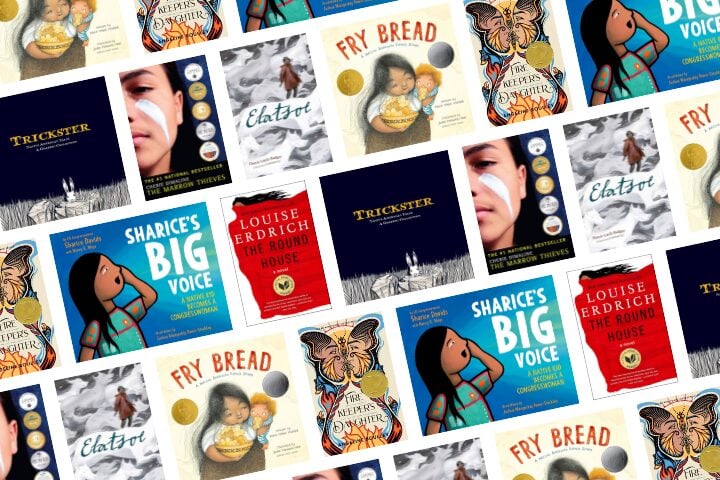
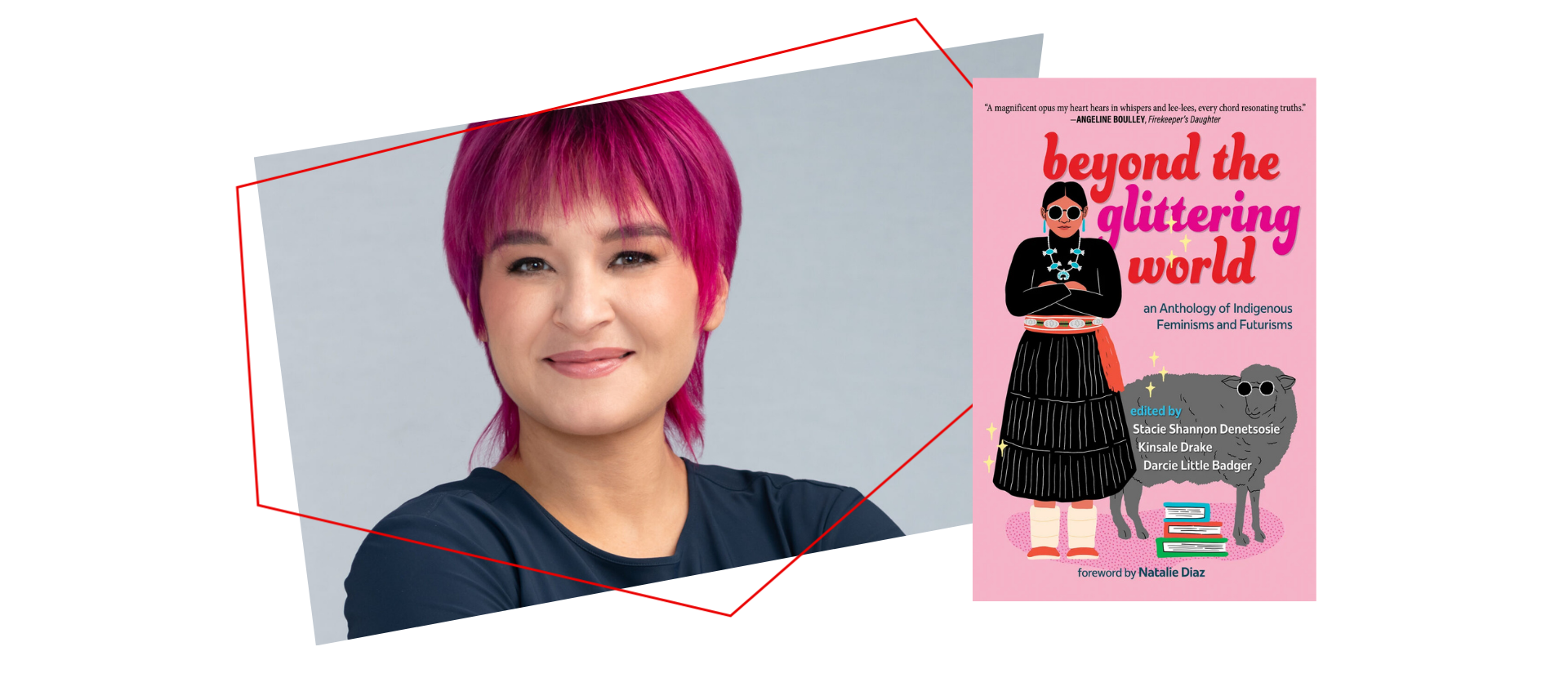
Darcie Little Badger is no stranger to censorship. The Nebula Award- and Newbery Honor-winning author’s debut novel, Elatsoe, has been banned despite receiving five starred reviews and being listed as one of Time Magazine’s 100 Best Fantasy Books of All Time.
But when a Utah university gave the Lipan Apache author a list of words she couldn’t say, she was stunned. The list included words like diversity, equity, and inclusion; anti-racism; bias; critical race theory; implicit bias; oppression; and intersectionality.
Weber State University in Utah had invited Little Badger to discuss her newest work, Beyond the Glittering World: An Anthology of Indigenous Feminisms and Futurisms, with co-editors Stacie Shannon Denetsosie and Kinsale Drake. The book illuminates the work of 22 emerging and established Indigenous writers.
But the list of words the university said were prohibited to comply with Utah’s HB 261 would have made it nearly impossible to talk about the book. She declined to participate and shared her experience on social media. Not long after, the university walked back its restrictions on speakers.
PEN America spoke with Little Badger to discuss what happened at Weber State and the role of Indigenous stories at this moment.
What were your first thoughts when you received a list of prohibited words from the university?
My first reaction was disbelief. I’d heard about HB 261, and although I’m not a lawyer or politician, I didn’t think it applied to the speech of invited speakers like me. Particularly since my talk wasn’t mandatory, and I didn’t represent the university. The list of “prohibited words and concepts” was incredibly broad and included concepts like “bias,” “intersectionality” and “oppression.” Beyond the Glittering World, as an anthology of Indigenous futurisms and feminisms, contemplates the intersection of gender and Indigeneity. So the whole anthology might fall under the general concept of “intersectionality.”
Furthermore, I often mention how diverse the voices in our book are – the authors are from a wide variety of Indigenous nations, challenging the misconception that Indigenous people are a monolith — and the first word on the list was ‘diversity.’ One poem by Heid E. Erdrich is even called A Statement on Diversity and Inclusion. We couldn’t say the title. There’s a story about a person in the future telling the story of their history of oppression. “Oppression” is one of the words that’s banned.
Given these concerns, I sent a confused email questioning why a list of prohibited words was part of the speaker information request. This led to a phone call with the university representative. The representative was very sympathetic; they really wanted us to go and speak, and advised me there were ways to work around this.
But the list of prohibited terms and concepts was so broad that there was no way we could talk about what we had written without touching upon these concepts. And personally, I will not censor myself. That’s not who I am as a storyteller and editor.
That’s when I decided to back out and share the list online. I felt bad, because clearly they wanted us to be there to talk to the students. But knowing our work, how would we be able to proceed with this?
It’s not the first time you’ve encountered some form of censorship. How does this experience fit with your larger experience?
I was aware that there is this effort to silence voices literally just for existing and for having stories who might be different, who might be Native American, who might be LGBTQ.
I’ve had issues with my books being challenged and banned. When I look at the motivation for these challenges, they don’t have specifics. I imagine they just look at the description on the back. I do think that what they’re doing is trying to silence voices that might make them uncomfortable, might be challenging them over power.
Tell me a little about what you would have said to students about Beyond the Glittering World and the work of an Indigenous storymaker right now?
I’d tell them about my favorite part of Indigenous Futurism: the acknowledgement–the celebration–of the connections through past, present, and future. The ways our ancestors affect us, while we affect future generations. In order to respect the events and people over time, we must sit with both the good and the bad. That includes things that make us uncomfortable. Injustices that persist. Individuals who oppressed or were oppressed.
I’d talk about the power of story, the way our stories convey knowledge, including histories that are rarely taught in school. I’d say: the Lipan Apache lived throughout Texas and Northern Mexico, but my high school history teacher in Texarkana didn’t even know our name. Fortunately, my elders taught me, and because of them, I live my culture and can share our stories with others.
Erasure is an insidious tool of colonization; but the louder we are, the harder it is to erase our voices. We did not all die in the 1800s. We are here, today, and our stories persevere.
Weber State has been at the center of two controversies related to this law after it earlier canceled a conference on censorship. Now the university says it’s reviewing how it interprets the law. Do you feel like you made a difference?
Weber State, at least, they say they’re looking into the way they handled this. And for the time being, they’ve removed that list from the speaker information request. I guess I couldn’t believe that one person was able to cause enough of a wave to make this change.
I’ve got a sense that there is a lot of fear: ‘Am I going to lose my job? Are people watching me?’
There’s definitely people who are working in academia who are just scared.
I have a lot of empathy for people who are working in academia right now in Utah who are trying to find ways to survive under these conditions and can serve students. I’m not employed in Utah, and I don’t have to worry about legislative retribution. I think I had that privilege to speak out without fear of major repercussions.
Can you tell us about the reaction of students (of all ages) to your work? What have they liked about it or learned from it?
The response has been really positive. I’ve had students tell me that Elatsoe or A Snake Falls to Earth is their favorite book; I’ve seen amazing fan art; I’ve been thanked for uplifting ace and native characters. All this is why I publish. The biggest reward, though, is when a student reads my stories and thinks, “I want to write my own book.” There’s many promising young writers in this world, and I want their voices to be uplifted and celebrated, not restricted.
How do you think the work of Indigenous authors supports their readers? Or conversely, why have they become a target for banners?
When it comes to Indigenous people–in my case, the Lipan Apache specifically–erasure is part of colonialism. There were violent attempts to destroy the Lipan through military campaigns. At one point, the U.S. congress even made us “illegal” on our homeland of Texas. But these efforts ultimately failed. So what next? They’ll try to erase our culture (to be clear, stories are a big component of culture).
Our 21st century existence and fight for sovereignty are incongruous with the false narrative that Lipan Apache and other Native peoples are strictly from the past. I think that Native stories have become a big target for banners because they contradict that erasure. History–including the history that’s being made today, as we speak–is complex and sometimes painful. But attempts to ban our voices won’t make us disappear. We’ll just speak louder, fight harder.
What are you working on next? What’s creatively on your horizon?
My young adult novel, Children of Owl, is coming fall 2026; it’s the story of a Lipan teenager who defies Big Owl, harbinger of misfortune. The year 2026 also brings a scary middle grade novel, The Sinking House, an oceanic monster story. Finally, I’m five issues deep in an original comic series (not yet announced) and starting an adult novel about stage magic, tricksters, and an unpaid debt.