Censors are Coming For The Students
Since 2020, PEN America has recorded, analyzed, and advocated against more than 500 bills, executive orders, and system-wide regulations meant to censor educational speech. Overwhelmingly, the targets of this campaign against higher education have been faculty members, limiting what they can teach and research.
Last month, that changed. On April 9, the Texas Tech University System released new rules that went straight after students.
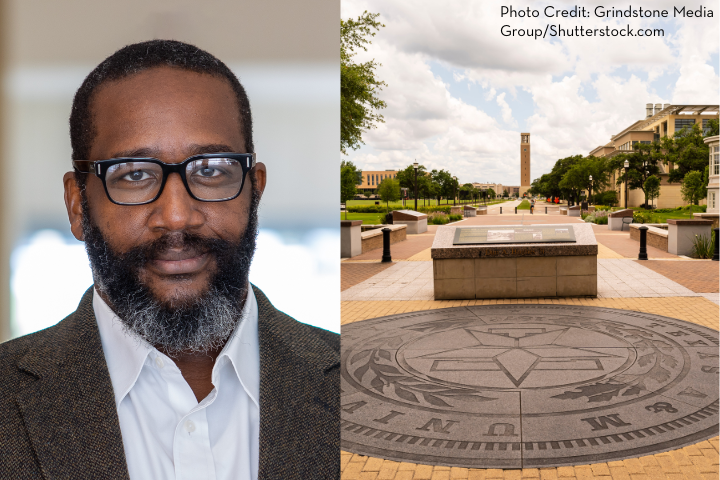
In a memo about “course content guidelines,” Chancellor Brandon Creighton announced that going forward, many of the students enrolled at one of the Texas Tech System’s five universities (about 64,000 students in total) will be prohibited from conducting any research or writing that centers on “sexual orientation or gender identity.”
It’s a measure so extreme that it beggars belief. How have we gotten to the point where anyone considers the censoring of student research acceptable?
One of President Trump’s first actions after returning to office in 2025 was to issue Executive Order 14168, “Defending Women from Gender Ideology Extremism and Restoring Biological Truth to the Federal Government.” This executive order states that it is “the policy of the United States to recognize two sexes, male and female” and that this policy “shall govern all Executive interpretation of and application of Federal law and administration policy.”
Ten days later, Texas Governor Greg Abbott issued an executive order of his own with a similar message: henceforth, “[a]ll Texas agencies must ensure that agency rules, internal policies, employment practices, and other actions comply with the law and the biological reality that there are only two sexes—male and female.”
It is these two executive orders, and the efforts of university leaders in Texas to implement them, that are now leading to censorship of what students can write and research.
First, Texas Tech plans to shut down every academic program that “centers on” sexual orientation or gender identity, including all undergraduate majors, minors, certificates, and graduate degrees. Existing students get to finish their degrees, but new students are blocked from entry. Faculty are also prohibited from including any reference to sexual orientation or gender identity in their lectures or reading assignments. There are a few exceptions for upper-level courses and electives, but they are narrowly drawn. Already, faculty at the institution are reporting high levels of censorship in their classes.
Sadly, this sort of thing is no longer shocking. As awful as it is, faculty censorship is par for the course in Texas.
But the Texas Tech memo does more, stipulating that going forward, “no degree-culminating student research within the TTU System will be permitted to center on [sexual orientation or gender identity] topics.” This rule applies to all incoming students in the Texas Tech system regardless of degree type, program, or department. Does a psychology student want to write her dissertation on the mental health crisis among LGBT kids? Not allowed. What about an undergraduate honors thesis on Title IX and gender discrimination in sports? Forbidden.
A Growing Trend?
This is bad, and there is every reason to think it will soon spread beyond Texas. One week after the Texas Tech memo, City Journal, the in-house journal of the influential Manhattan Institute, published a piece by MI Fellow Colin Wright that took the memo’s logic one step further.
Under a 2023 law, it is illegal in Florida for faculty members to “advocate for” DEI or to use university resources to “promote or engage in political or social activism.” So why is it, Wright wonders, that students at Florida universities and colleges are permitted to write their undergraduate honors theses on Queer Theory or to criticize Gov. Ron DeSantis?
“The work required to shepherd student theses,” he says, “entails faculty time and labor, institutional oversight, and curriculum funded by and developed under the authority of the university.” In other words, merely by supervising these student projects, faculty are themselves guilty of promoting the viewpoints those projects express. And that, Wright concludes, “appears to flout Florida law’s intent to prevent state and federal funds from being used to ‘promote or engage in political or social activism.’”
It’s a bizarre logic, one that conflates the beliefs or arguments of students with those of the university that supports them. But it is a logic that may already be gaining ground.
At Pensacola State College last month, administrators blocked the English and Communications Department from publishing a collection of student essays written for a course this semester. The reason? Three of the essays included LGBTQ+ characters or themes. According to college administrators, publishing those stories would violate a state law that bars the use of public funds to promote “diversity, equity, and inclusion.” The college gave the students an ultimatum: remove the LGBTQ+ content or the collection would be pulled.
To their credit, the students refused and are now looking to publish their essays elsewhere.
Crossing a Dangerous Line
This isn’t the first time in recent years that lawmakers have moved to censor student speech. At least 35 states have recognized the IHRA definition of antisemitism, a definition that can be used by universities to prohibit criticism of Israel, including by students. And in some cases, laws restricting expression can be so broadly written that anyone, student and non-student alike, can be ensnared in them.
But these new moves in Texas and Florida are uniquely dangerous. If university leaders and state governments succeed in barring these topics from student inquiry, what other ideas will they prohibit next? Further, if they start directing universities to conflate a professor’s support for a student with the promotion of that student’s viewpoint, a dangerous line will have been crossed.
For instance, one could imagine lawmakers trying to restrict the sorts of letters of recommendation that professors may write, e.g. “Faculty may not facilitate a student’s application to a Gender Studies Program.” Or they might prohibit a university’s career center from placing students in disfavored jobs – for example, as a counselor for LGBTQ+ youth or working for an NGO that supports AIDS prevention education overseas. Or they might even block faculty from nominating promising students for awards or scholarships from organizations that the state dislikes – a move that is only a step beyond efforts already underway to eliminate scholarships that might include any racial or gender preferences.
Still sound far-fetched? Up until a month ago, the new policies at Texas Tech and Pensacola State would have appeared far-fetched as well. But when it comes to the assault on higher education, reality seems to waste no time in catching up with the worst case scenario.