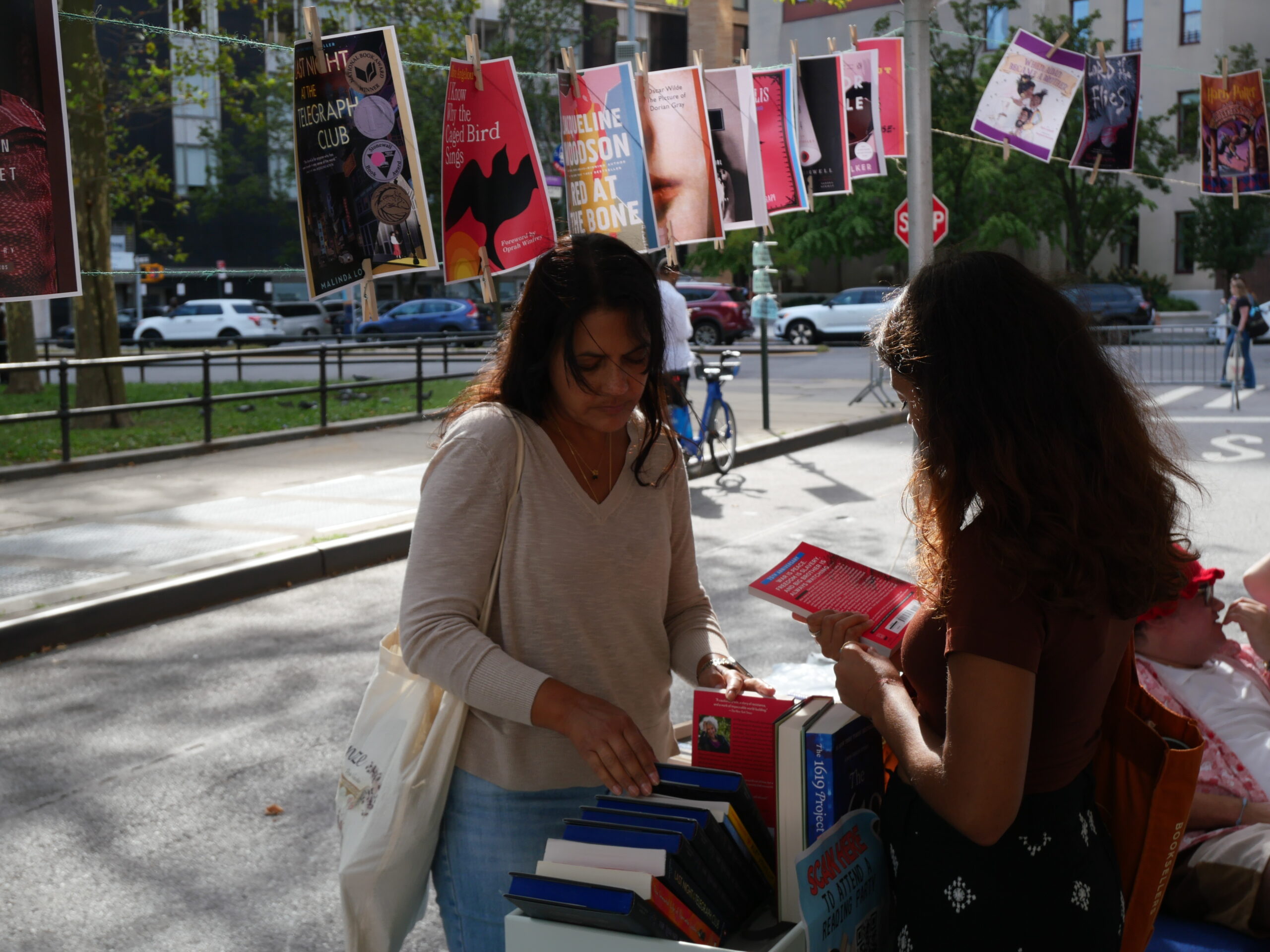
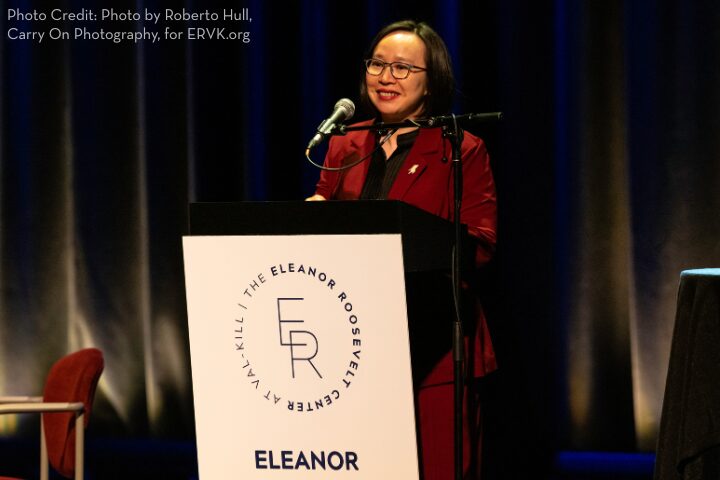
Author Malinda Lo has been an outspoken advocate against rising book bans in U.S. public schools for years now, and as she accepted the Eleanor Roosevelt Center’s Bravery in Literature Award on Saturday evening, Oct. 11, she explained why.
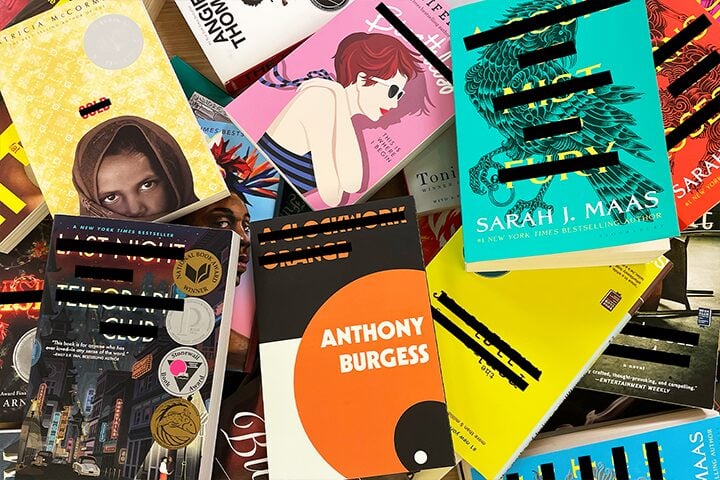
“The reason that this issue has always been important to me is because I am an immigrant,” said Lo, whose New York Times bestselling novel Last Night at the Telegraph Club has been banned statewide in South Carolina. “I came to this country with my parents from China when I was a child and as you know, China does not allow freedom of expression. So I grew up knowing we came here so that we could speak freely. The First Amendment has always been significant to me. So seeing these book bans snowball over the last few years has been extremely alarming. I feel that this fight is existential. If we don’t have our First Amendment rights, we cannot call ourselves a democracy. I believe we all deserve the freedom to share our thoughts and to make the art we are moved to make.”
Lo, whose young adult novel about a lesbian romance is set during the Red Scare of the 1950s, was among the honorees recognized for courageously speaking out against censorship and defending the right to have their stories heard.
With book bans in public schools rising to levels unseen in Americans’ lifetimes (PEN America has documented 23,000 cases since 2021), the ceremony was co-presented by the Eleanor Roosevelt Center and PEN America, the writers and free expression advocacy group. More than 500 people attended at the Bardavon Opera House in Poughkeepsie.
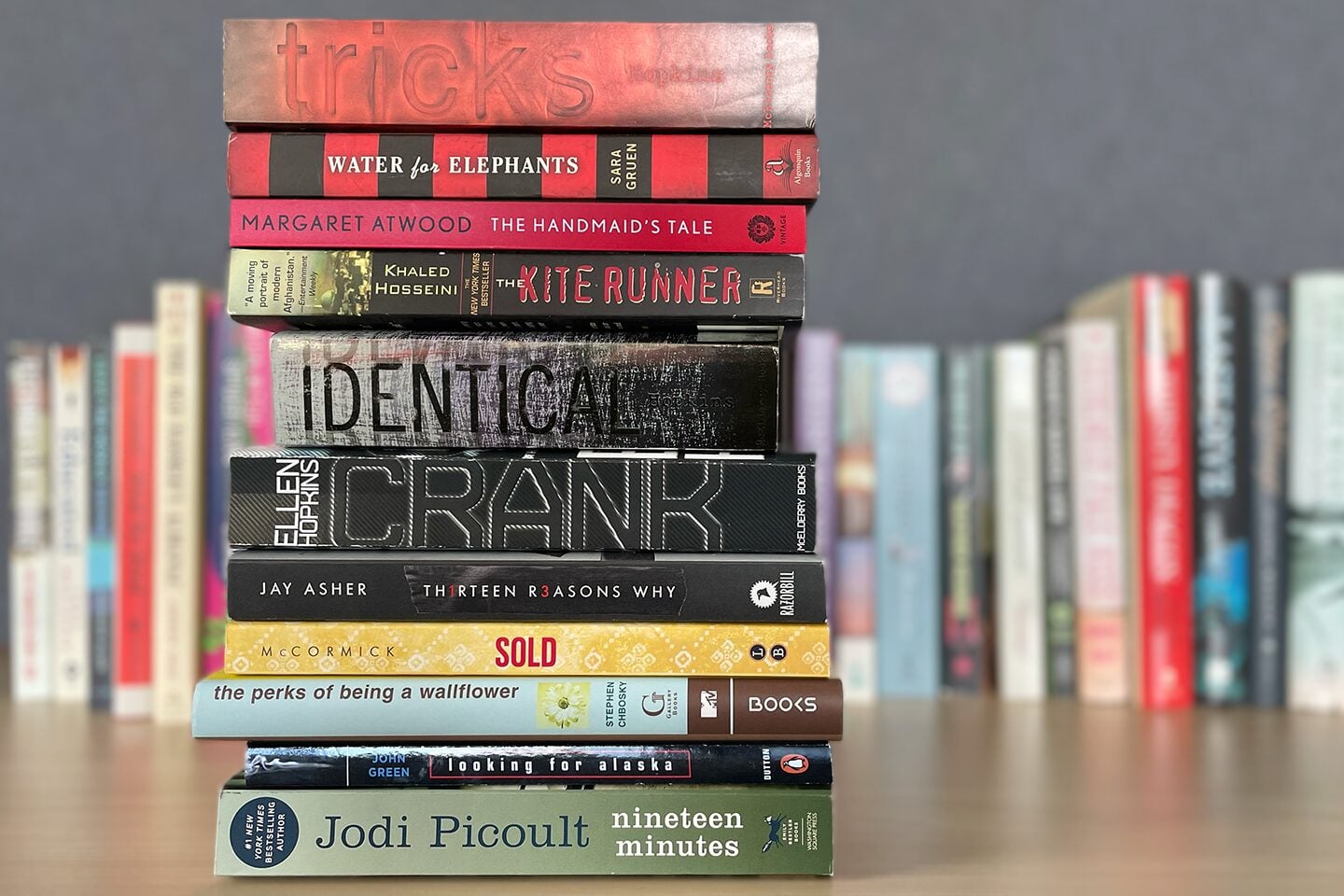
Margaret Atwood (The Handmaid’s Tale) received the Eleanor Roosevelt Lifetime Achievement Award. The other honorees were Juno Dawson, author of This Book Is Gay; Justin Richardson and Peter Parnell, authors of And Tango Makes Three; John Green, author of Looking for Alaska, and Matthew A. Cherry and Vashti Harrison, author and illustrator of Hair Love. Becky Calzada, a Texas librarian and freedom to read advocate, received the Eleanor Roosevelt Literary Freedom Award.
Author Jennifer Finney Boylan, PEN America’s president and the ceremony’s keynote speaker, opened her remarks saying: “Can you see me? OK. Good, good. I know some people are having a hard time seeing me since I became invisible back in January. You know, after Donald Trump issued his executive order that declared that transgender women like me don’t exist.”
Noting that three of her 18 books have been banned, she added: “I don’t disappear just because you cover your eyes and pretend I don’t exist. There are still transgender people in our country, and we are real. There are still people of color in our country. And they are real. There really is a history of slavery and racism in our country. And it is real. There are still immigrants in this country and all of us are real.”
Eleanor Roosevelt, who spoke against censorship over her lifetime and once persuaded her husband to lift a postal ban on the 1944 bestseller Strange Fruit, offered inspiration to many speakers at the ceremony. In her long running “My Day” column she wrote in 1959: “I don’t think any book should be banned by a censor. We should try to educate the public so that it will not buy books that have no literary value. I think an educated public is quite capable of doing its own censoring.”
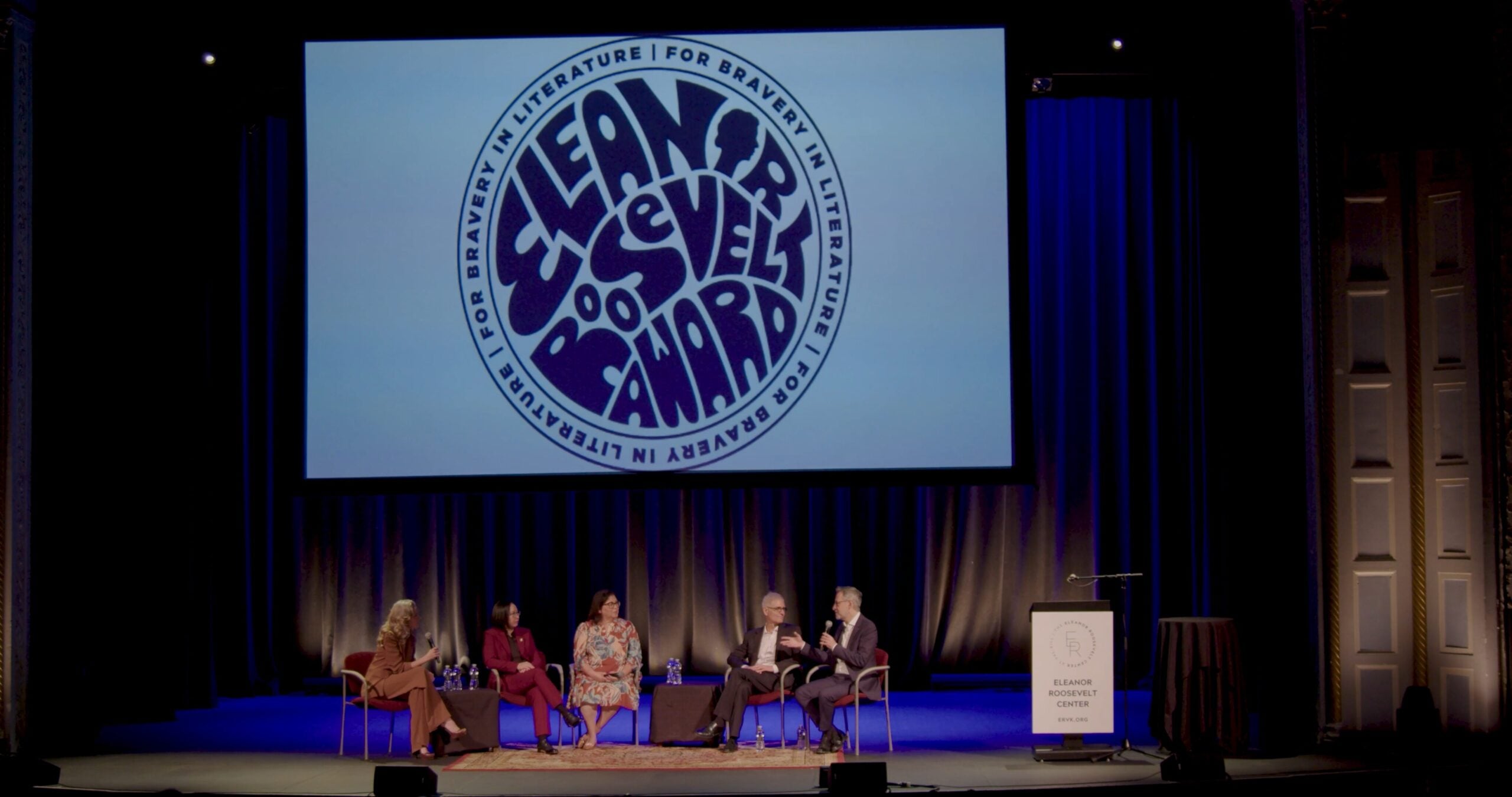
Hilarie Burton Morgan, the actor, bestselling author, and host for the evening, said: “Tonight, we are going to be a future that Eleanor can be proud of. The echoes of her advocacy, her feminism, her strength still ring throughout this valley. And so tonight we are going to amplify those echoes. We’re going to lend our own loud and colorful voices to pay tribute to the rule breakers, to the troublemakers, to the system shakers.”
Calzada said: “I am so deeply honored to receive the Eleanor Roosevelt Literary Freedom Award among these incredibly talented authors here today. I am a first generation high school and college graduate. And libraries played a huge role in my life as a Hispanic child. Growing up in South Texas, to be recognized in the name of an incredible activist and former first lady, someone who championed human rights and the power of words does not escape me today.”
The worrisome political situation in the United States— with censorship on the rise— was a common thread among speakers throughout the evening.
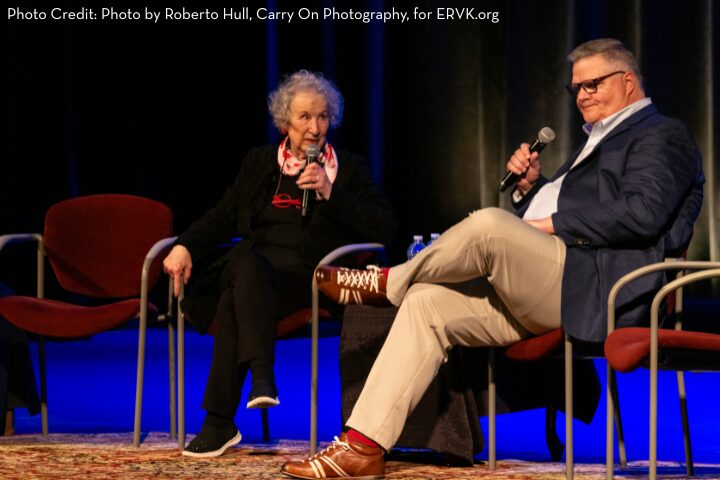
Atwood offered a hopeful note: “As long as there are rooms like this in the United States of America, with a lot going on in them, you are not living in a fascist dictatorship. Because if you were, none of us would be here. We’d be there six feet under or in some form of Alcatraz. And you’re not. You’re right here. So thank you for being here and cheering me up.”
She also gave her understanding of what motivates those who want to ban books: “Book banning happens when people are feeling angry and they feel somebody has to be blamed for something. And it’s also usually a power grab on behalf of a certain group of people who want to demonstrate their dominance by squashing other people underfoot.”
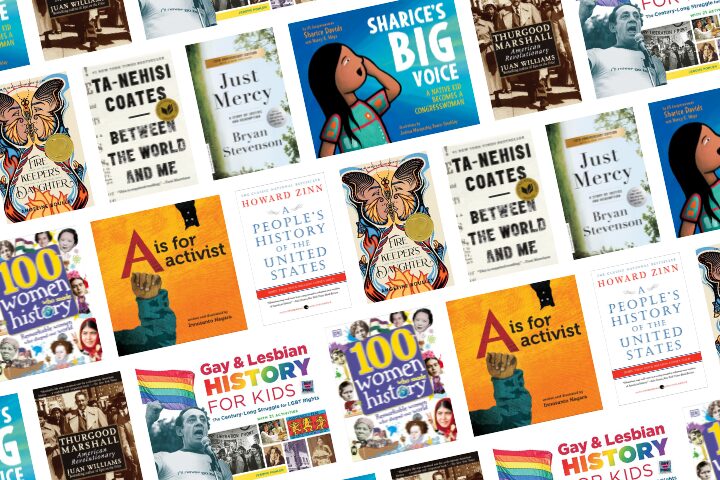
Book bans since 2021 have largely targeted topics on LGBTQ+ identities, race and racism and titles that include even references to sexuality. Peter Parnell, author of And Tango Makes Three, a children’s book based on the real life story of two male penguins at the Central Park Zoo, who built a nest, hatched a discarded egg, and raised a chick named Tango together, said: ”We felt that Tango’s story had to be told. It was true and moving, and a way of teaching children that queer families exist and that their love can be beautiful too.”
Speaking about the courage the award recognizes, he added: “Here’s what looks brave to us today— a librarian who risks her job by arguing that the work of a Nobel Prize-winning author is not pornography and should not be banned, all the while knowing she will be called horrible things by her neighbors in the supermarket.”
Among the speakers were the great grandson and great granddaughter of Eleanor and Franklin Roosevelt, Rabbi Joshua Boettiger and Anna Eleanor Fierst, who is board chair of the Eleanor Roosevelt Center.
Boettiger said: “When we try to ban a book, it’s as if we’re saying that story can’t exist. Well, it does. How do we know that it exists? Because it is clearly here and embodied in the person telling it. It’s a story from a specific source, a specific life, a specific imagination.”
Fierst concluded her remarks by quoting from her great grandmother’s last book: “’One thing we must all do we must cherish and honor the word free, or it will cease to apply to us. And that would be an inconceivable situation.’”