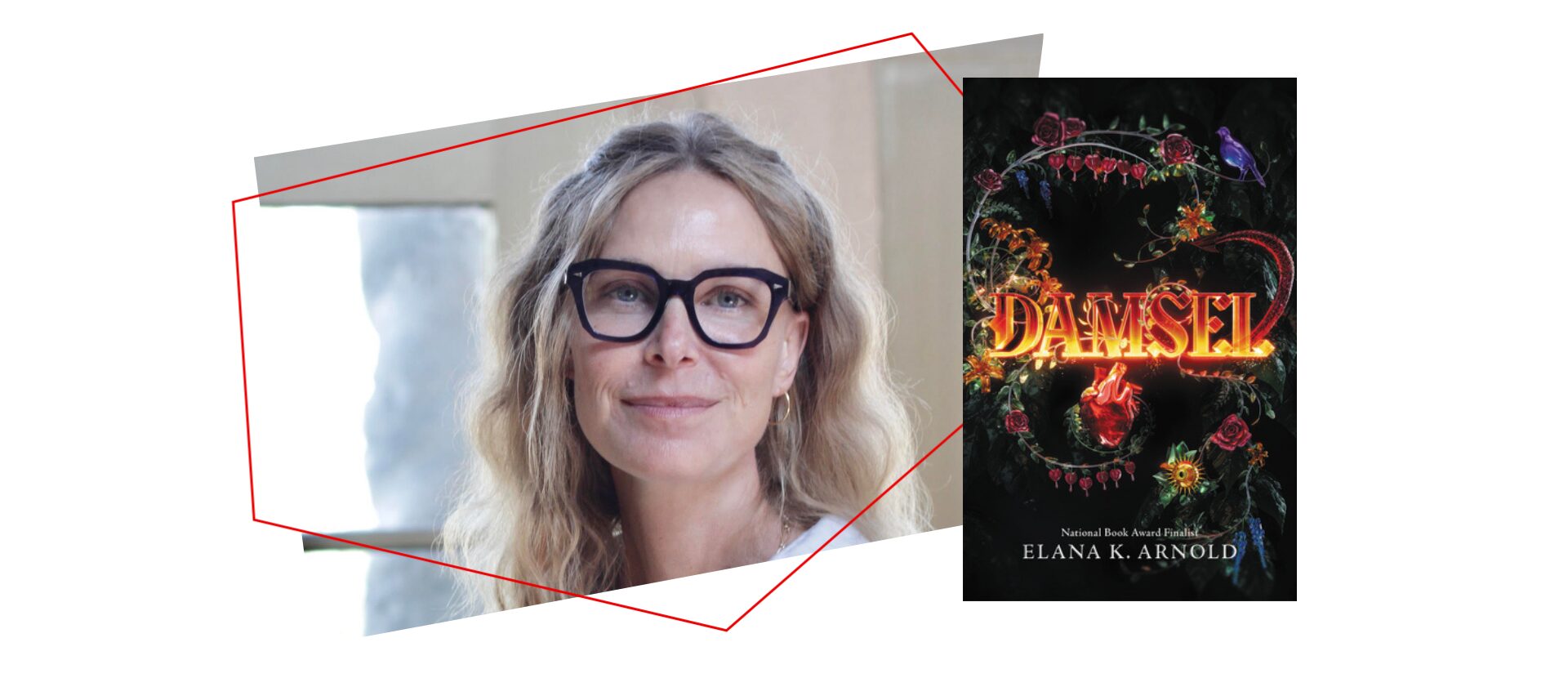
Elana K. Arnold has yet to write a young adult book that hasn’t been banned. Her six YA novels, ranging from a coming-of-age story inspired by Oedipus Rex to historical fiction set during Holocaust-era Romania, have racked up more than 200 bans since 2021, according to PEN America’s banned books indexes. At this point, book banners are going after her middle-grade fiction, too — not because of its content but merely because they consider Arnold “a problematic author,” she said.
She’s also a critically acclaimed one: Damsel secured the Printz Honor and What Girls Are Made Of was a National Book Award finalist. (Both were also among the most banned books of 2025.)
Arnold’s young adult novels have become an especially common target for bans because of their depictions of sexual pleasure, sexual violence, and menstruation. In this interview, Arnold, the sixth most banned author of the 2024–2025 school year, explains how and why she incorporates sexual content into her stories. She also describes the crucial ways young readers could benefit from reading her books — if only adults would stop barring them from doing so.
Read the first two installments of the series, in which Andrew Karre, Executive Editor at Penguin Random House’s Dutton Books for Young Readers, and bestselling author Malinda Lo share their perspectives on writing and editing sexual content in young adult fiction.
If it’s part of the human experience, it should be explored in fiction.
Arnold made clear that she doesn’t attempt to bestow lessons, whether they’re about sex or anything else, onto her readers. In fact, during the majority of her writing process, she barely thinks about her readers.
“It’s none of my business who reads my book. It’s none of my business what people think about my book,” Arnold said. “My business is to put on my blinders and to write the best story that I can about the thing that interests me.”
Arnold follows her gut as she writes, and if her gut tells her sexual pain or pleasure is part of a character’s journey, she listens. When drafting Red Hood, for example, Arnold knew her female protagonist, Bisou, would slay a wolf, leaving her feeling clear-headed and powerful. She sensed that Bisou, eager to relish that sense of empowerment, might then have sex with her boyfriend. “That works thematically — this female power can take these different forms — so it makes sense for that scene to be there,” Arnold said. “And if there’s a place for a strongly positive scene, then I’m excited to give my character that opportunity.”
Arnold doesn’t see any reason to deny her characters sexual experiences. “It’s part of the human experience, or at least some humans’ experiences, so it deserves space on the page.”
Descriptions of sexual pleasure can elicit strong feelings from readers — and that’s not a bad thing.
If Arnold writes a scene where a character chomps down on a delicious apple, she wants her readers to feel hungry. If she writes about an enemy plotting a ruthless attack, she strives to instill some fear in them. And if she writes a scene in which her characters experience sexual pleasure, she thinks her readers should enjoy it too.
“My job as a writer is to use specific, concrete details to make whatever it is that I am having my character experience experiencable for myself and my reader,” she said. “When I’m describing a scene of sexual intimacy that is true and beautiful and sensual, I want my readers to be feeling those things.”
Though many authors writing for all ages opt for “fade-to-black” scenes, in which sex is implied but not narrated, Arnold enjoys the challenge of finding new, creative ways to describe moments of intimacy. Critics call the sexual content in her novels “gratuitous,” but Arnold finds that judgment unfair.
“You wouldn’t say that about a beautiful description of a field,” she said. “It’s very puritanical and reductive.”
Books allow young readers to learn about (and practice) consent.
Many of the people who want to deprive students of access to Arnold’s books are likely trying to protect them, she said, but they’re doing so in vain. Shielding young adults from resources about topics such as sexual violence doesn’t guarantee their safety — in fact, it renders them more vulnerable to harm.
“My own ignorance caused me to be a victim in situations many, many, many times,” Arnold said. “Protecting my ignorance didn’t help protect my innocence.”
Books don’t just familiarize readers with difficult concepts, Arnold added; they also serve as a safe place for young adults to exercise agency. If a teenager feels distressed by the content in one of her books, they can always choose to put it down and walk away. “Look at that: That is a young person who now knows what an uncomfortable situation feels like and who feels like they have ownership over their body to remove themselves from it,” she said.
And for readers who have experienced sexual violence, Arnold’s books are often an especially valuable resource. Countless young, female fans have sent her emails thanking her for allowing them to recognize and process the sexually violent experiences they’ve had. “I didn’t ever anticipate the intimacies that I get from people, but I think it’s in response to the vulnerability and intimacies my books give,” she said.
“I didn’t write my books for those people,” she added, “but I’m so thrilled they found them.”