World AIDS Day is on December 1st, and since the government is not going to recognize the day this year, let me offer you a literary-based recognition of my own.
Some books don’t turn the AIDS crisis into a polished remembrance. They write from inside it. They come from cramped apartments, late-night phone calls, hookups that start as escape, hospital corridors no one was prepared to navigate, dance floors where pleasure insisted on happening. They resist the tidy version offered in representational history. They do so not only through subject matter, but through form: inventive, acutely observant, structurally daring. These are not just “essential” books about the virus. They are some of the best books, period.
Punks, by John Keene
John Keene’s poetry collection Punks turns lyric precision into record-keeping, where desire and loss become a document.
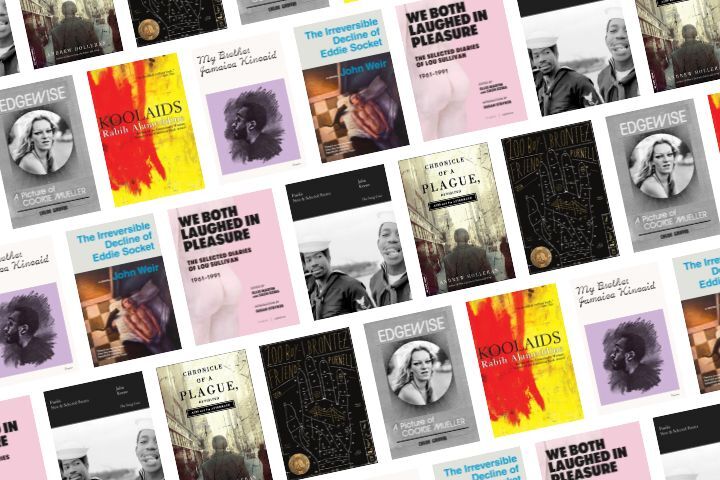
The Irreversible Decline of Eddie Socket, by John Weir
John Weir’sThe Irreversible Decline of Eddie Socket folds illness into a New York City world of friends and lovers through comedy that feels like a survival tactic, prose edged with humorous irony-laced sadness.
Your Nostalgia Is Killing Me, by John Weir
Your Nostalgia Is Killing Me, also by Weir, stitches linked stories into a fractured chronicle where memory refuses to behave like plot.
Chronicle of a Plague, Revisited, Andrew Holleran
Andrew Holleran’s Chronicle of a Plague, Revisited blends reportage and lyrical essays, turning cruising and gay personal snapshots into one unsettling narrative arc.
My Brother, by Jamaica Kincaid
In My Brother, Jamaica Kincaid writes with a style as exact as a scalpel, cutting sentimentality out of the frame.
The Married Man, Edmund White
Edmund White’s book The Married Man stretches desire across borders, using confession and interiority to expose intimacy under pressure.
100 Boyfriends, Brontez Purnell
Brontez Purnell’s 100 Boyfriends is punk in its framing as well as its content, fragmented, funny, obscene, and refusing a single thread or a morality-laced lesson.
Edgewise: A Picture of Cookie Mueller, edited by Chloé Griffin
Edgewise: A Picture of Cookie Mueller, edited by Chloé Griffin, assembles biography as collage, letting gossip, photographs, and friendship do the narrating.
Thing, edited by Robert Ford
Thing, a zine edited by Robert Ford, recently collected into a compendium, treats nightlife as an archive in which performance and art-making structure history with greater honesty than institutions ever did.
Koolaids, by Rabih Alameddine
Rabih Alameddine’s novel Koolaids moves between Beirut and San Francisco in sharp cuts. Its humor, anger, and shifts in place work together to create a fractured structure that feels true to the milieus it depicts.
We Both Laughed in Pleasure, Lou Sullivan
Lou Sullivan’s We Both Laughed in Pleasure is a stunning diary that shows how the minutiae of daily life can capture not only one person’s desire, ambition, confusion, and joy but also a snapshot of a queer culture working itself out.