Sarah Wang | The PEN Ten Interview
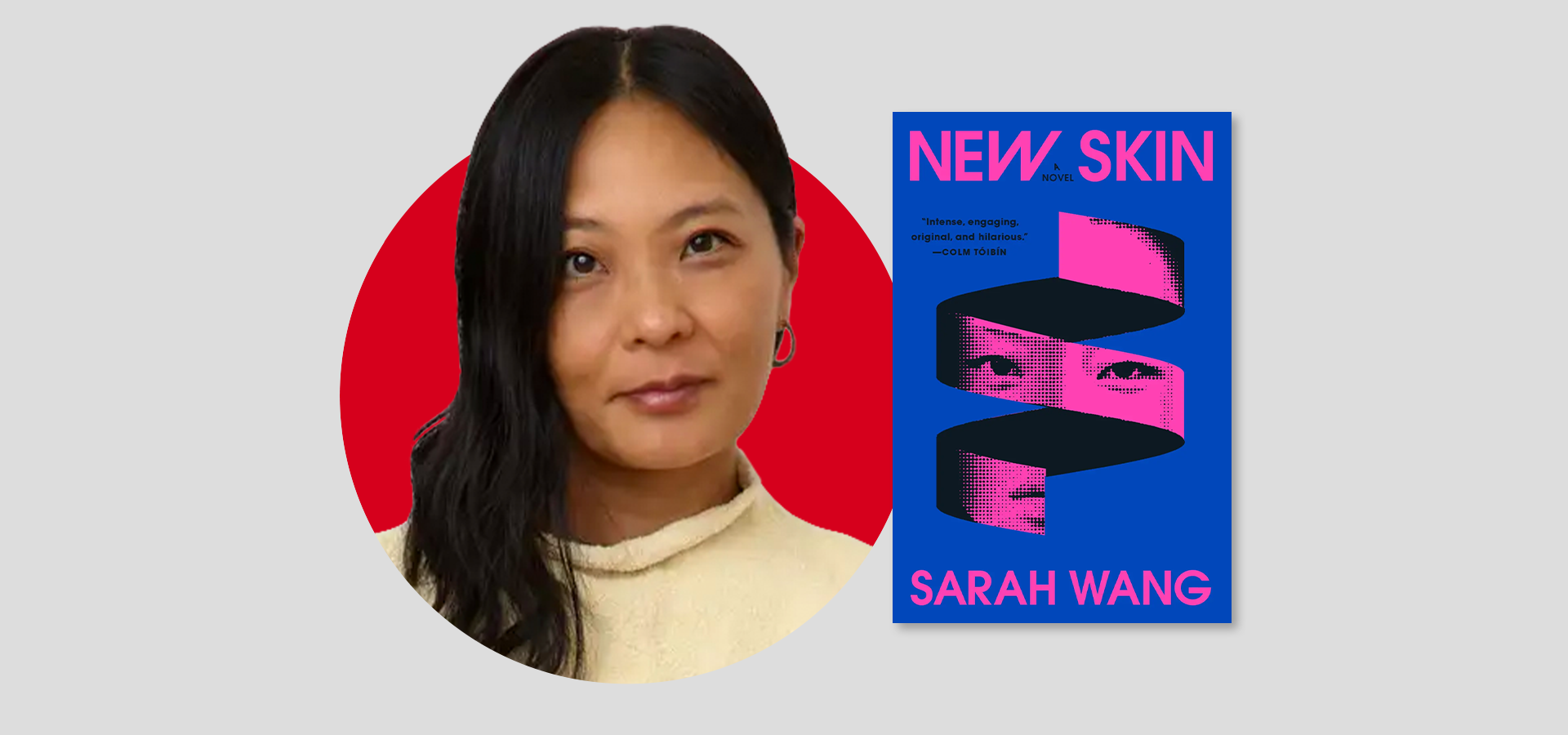
In Sarah Wang’s debut, New Skin (Little, Brown, 2026), Linli reunites with her mother, Fanny, following a three-year estrangement when she hears about Fanny’s latest botched plastic surgery procedure. The book follows the mother-daughter duo as they grapple with its aftermath: first, the medical and financial difficulties, and, later, Fanny lands a spot on a reality TV show where botched contestants compete in weekly challenges for reconstructive surgery. The incisive, hilarious novel explores the perilous nature of the American dream and unrealistic beauty standards.
In conversation with Malcolm Tariq, director for the Prison and Justice Writing Program, Wang discusses the immigrant body as a site of protest and desire, crafting female characters whose desires aren’t determined by gendered systems of power, and the advice she’d offer to a younger version of herself (Bookshop; Barnes & Noble).
Thank you for taking time to speak with me about your debut novel, New Skin. This is such a unique story that contains many twists and turns. What inspired you to write this novel?
I put everything that keeps me up at night in this novel. A novel is special in this way. The novel form is so capacious, it can hold everything: hope, longing, terror, rage, love, activism, politics, jokes, poetry, friendship, absurdity, theory, hunger. At the heart of New Skin is a story about an intense bond between a daughter and her mother who are immigrants in a country where they are permanently displaced. Part of the novel is a transmission of my own struggles in life and my family’s history. Another part of the novel is a letter to home, whether that is Los Angeles, where I grew up, or somewhere across the world—China, Taiwan—or somewhere where, as an adult, you can never return to but will always long to inhabit again.
You write about a whole world of underground cosmetic surgeries and procedures in Los Angeles, which is also your hometown. Were you conscious about presenting the city in a certain light? What was your impetus, if any, in writing about the city for your first published novel?
New Skin is about home: what it means to leave home, to return, to spend your life in pursuit of belonging and purpose. These are all iterations of home. Los Angeles is where I spent most of my life. I dream about it. It haunts me.
The L.A. I grew up in isn’t really depicted in stories. It’s full of strangeness. The city of Azusa, for example, is a backronym. It was conceived as a city that would have everything from A-Z in the U.S.A. in it. It’s also derived from the native Tongva azukska, which means “skunk.” There are a ton of skunks in L.A.!
The palimpsest of the city’s history and my own history is what both compels and repels me. Home is also full of heartache and loss. It’s hard to write about where you’ve been hurt and feel an originary displacement. But it can also be the place where you have the most to say. I know Los Angeles and live in it wherever I go as much as I do my own body. It is the urtext of my life.
Were you familiar with the world of plastic surgery and botched results? What kind of research went into the making of this story?
I knew nothing about plastic surgery, and in fact what this kind of bodily modification has become in the past few years is vastly different than what it was when I began writing this novel. A lot of my thinking about the body, however, longs supersedes the plastic surgery in this story. Because the novel largely deals with the immigrant body, my characters’ obsessions with modifying their bodies via cosmetic procedures has everything to do with forms of speech, protest, and desire. Fanny—the protagonist Linli’s mother—is botched and addicted to altering her face. It doesn’t mean what you might think it means, though. Her face is a record of everything that has been done to her and everything she has done to herself as a result of being a colonized body. It’s also a form of mutation and mimicry gone awry, like the t-shirts you see in Chinatown that have mistranslated language on them. She finds purpose and even joy in botching herself. Most of my thinking about and through what plastic surgery means in the context of the immigrants in New Skin has everything to do with postcolonial theory—the subaltern—and psychoanalysis. It’s also wild and fun!
Because the novel largely deals with the immigrant body, my characters’ obsessions with modifying their bodies via cosmetic procedures has everything to do with forms of speech, protest, and desire.
It’s interesting to me how reality television illustrates or is a catalyst for transformations in Fanny and Linli’s individual and collective lives. What are your thoughts on reality television in American culture? How has it affected the literary landscape?
What if life on the margins was brought into the center, into the spotlight, onto reality TV? That’s what I’m mainly interested in via the reality TV subplot in New Skin. On America’s Beauty Extreme, the reality show that Fanny gets on, the botched contestants compete in weekly therapy challenges to see who can make the most progress in their journey of healing. It’s ridiculous, of course, but there’s a dichotomy I’m playing with here. There are stories playing out weekly on the screen for viewers to consume and there are stories behind the scenes of what’s really happening. Fanny tells her story on the show, which is absolutely shocking not only to audiences but also her daughter Linli. Some readers of New Skin believe Fanny’s stories to be true. But you have to remember that she’s on a competition reality show where she’s trying to win. In the end, America’s Beauty Extreme is about the same thing that the novel is about: subversion. Writing about what many consider debased—reality TV—in literary fiction, writing about the undocumented, the impoverished, the ugly, I’m giving these subjects a platform that democratizes what’s valid and worthy in culture and society.
I was introduced to your work during your tenure with PEN America’s Writing for Justice Fellowship. From Linli’s work with women who have experienced incarceration to the mention of Japanese internment, you explicitly point to incarceration as an act of violence or power-wielding method of control. Why was it important for you to make these connections to the practice of justice and incarceration in the United States for a story like this?
This is foundationally a story about the lives of immigrants, of the undocumented and their children, who are the future of America. State violence, structures that enforce power, the debt economy—these are all forces that govern our lives. Bringing them to the forefront, to circumscribe their invisible borders, is something I’m concerned with in this novel and in all my writing, actually. I have always turned my eye toward stories about class and people who are subject to state violence because they are undocumented, poor, or vulnerable members of society. Immigrant detention and deportation have been in the headlines this past year, lest we forget that this is part of daily life in America. Incarceration is as integral to this country’s history as it is to its economics. It’s our history and our present.
While there are some memorable books that feature mother-daughter dynamics, your story is interesting to me because of how bound the two characters are, even with the time and distance that separates them. Why did you seek to explore this kind of a relationship between a mother and a daughter?
I know a lot of people who grew up in single-parent households, whose bond with their parent is unlike any other relationship in their lives. Sometimes these relationships can be fraught or overdetermined. Sometimes they are central to people’s lives in a way that supersedes all else. I would love to live in a world where other ways of relating and relationships are valued and prioritized. Especially feminist stories that reject narratives only allowing women to be an object of desire, sexualized, or whose greatest goals in life are to get married and land a husband. Call it heteropessimism. The women characters in New Skin have other concerns: community, friendship, alliance, family. What they want often has nothing to do with patriarchal values. When we eradicate these gendered systems of power from a narrative, what does that look like? How can we think beyond the history of gendered oppression by which we have been subjugated? Centering stories about women and their relation to each other, both in conflict and community, is the work that I am dedicated to doing in my writing.
Writing about what many consider debased—reality TV—in literary fiction, writing about the undocumented, the impoverished, the ugly, I’m giving these subjects a platform that democratizes what’s valid and worthy in culture and society.
The characters in this book do not—or cannot—subscribe to the American nuclear family structure, and instead build community by other means. For the immigrant communities you write about here, so much of community building revolves around matters of labor and debt. Given the current debates and policies surrounding immigration in the United States, did anything feel off-limits to you in writing about these vulnerable communities in Los Angeles?
I didn’t want to write about women whose lives revolved around having children, dating and falling in love, getting rich, and the kind of immigrant upward mobility narratives that ascribe to the irreproachable power of meritocracy. The characters in New Skin have to rely on themselves and their communities rather than false narratives of what success is supposed to look like in a capitalist country. It was imperative that they all have agency and power, even if it is the power to destruct and self-immolate. They want the opportunities to transform themselves, to remake their lives. They want safety, love, acceptance, community, to be anything they want to be. But they have much more difficult lives than people who are documented, who have money and the kind of safety that financial capital can assure. I wanted to speak to that difficult landscape.
What was the most challenging part about writing this novel and how did you overcome it?
I had to teach myself how to write plot. I just had to do it over and over again, begin anew, and revise for many years to understand how to do it. I’d never really valued it before, or at least I thought I hadn’t. I overcame my aversion to plot by what at times felt like brute force. But now I like it. It’s fun to read for plot and I see it like a machine, all the parts working together. To have a job as a writer where I am intellectually challenged and get to flex my best skills is a wonderful privilege.
I admire the attention you devote to all of your sentences and how you generate suspense. All of your choices feel deliberate, which makes me wonder about your relationship to craft. Is there anything you experimented with while working on this novel? Or, alternatively, is there anything you learned as a writer while completing the manuscript?
I love writing sentences where I can construct a little world within the span of a line. I love playing with language, taking it to the edge of sense and beyond. In New Skin, I wrote ESL and gibberish dialogue for the first time. I had never ventured into writing other kinds of language before this novel. But I’ve been around ESL my whole life. People in my family speak ESL. I used to teach ESL students. I hear it all around me in my everyday life. I went to different places with language in working with aberrations of language in this book. Some characters speak gibberish. There is also another language, the language of mistranslated and erroneous texts on t-shirts and clothing made in China. You can read this as poetry, as mimicry, as transmissions from another universe. This novel has to be understood like poetry is, in the same way that what you read is intuited abstractly, as feeling, or how image can represent complex thought.
The characters in New Skin have to rely on themselves and their communities rather than false narratives of what success is supposed to look like in a capitalist country. It was imperative that they all have agency and power, even if it is the power to destruct and self-immolate.
When did you begin to express an interest in art and writing? Having been published widely and debuting your first novel this year, what would you tell that version of Sarah Wang?
As a child, I was addicted to reading. It felt compulsive at times. I would read the shampoo bottle and cereal box. I would wander through the library stacks and pick up random books to check out. I checked out the maximum number of books each week at the library and curled up in a papasan chair with a box of seaweed, my cat, and the stack of books on the floor beside me. As I finished reading each one, I would place it on the other side until all the books had migrated and then I would go back to the library.
I didn’t start writing until grad school. I wrote one story in undergrad at UCLA in a workshop where the instructor assigned his own book. I went to art school for my MFA, which was intellectually rigorous, believe it or not. I read a lot of theory and experimental and feminist texts. It was a great foundation for me because I thrived in that academic landscape. I didn’t know how to write yet or what to write but I wrote a lot.
I would tell that me to go deep, go home, go to all the places that hurt in your writing. That’s what matters the most. Everything else is a waste of time.