Hafeez Lakhani | The PEN Ten Interview
What parts of our lives can we control? Which have already been decided for us? And when we at last recognize the difference, how do we go about accepting it?
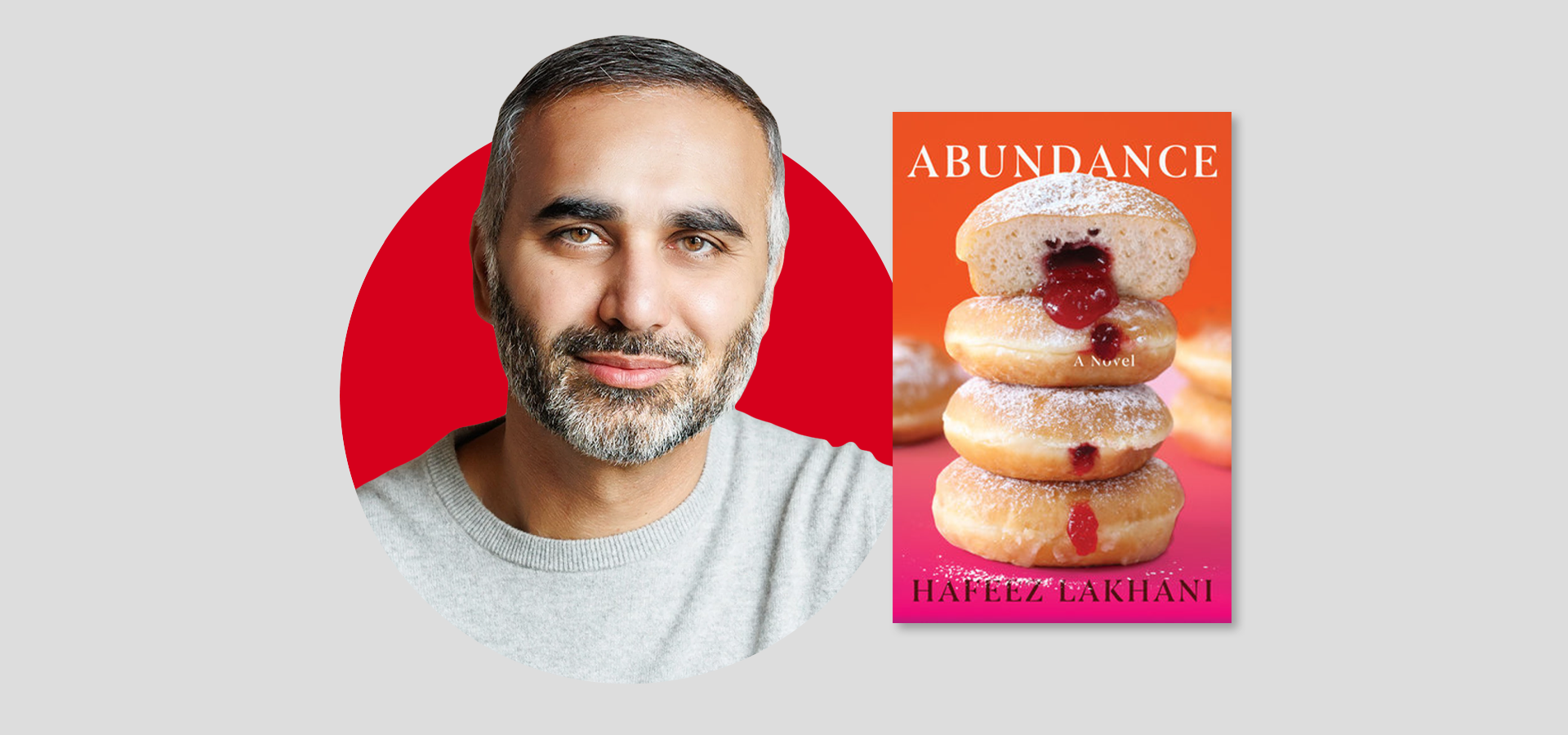
Hafeez Lakhani’s debut novel Abundance (Counterpoint Press, 2026) raises these questions and more when Sakeena, who immigrated to the United States from India 30 years ago, learns that she has under a year left to live unless she consents to an organ transplant. A believer in naseeb, the Muslim notion of destiny, Sakeena wants to live out her fate, but her refusal of medical treatment incenses her husband, who embarks on a quest to reunite their children with the hopes of convincing Sakeena otherwise.
In this week’s PEN Ten interview, conducted by Sabrina Adams, senior manager for literary programs, Lakhani describes the true story that gave rise to Abundance, the novel’s multifaceted depictions of Islam, and the impermanence of home (Bookshop; Barnes & Noble).
What led you to write this story?
I wanted to write an American Muslim children of immigrants story, which began with three short stories hovering around the Bharwani family. My hope was for the project to become a novel but I didn’t yet see how to unify the narratives. Then my mother was diagnosed with a life-threatening liver disease, curable only by a transplant. Interestingly, she—being a lifelong believer in the Muslim notion of naseeb, or destiny—defiantly refused a transplant at first, preferring instead to live out life as it was intended for her. She was ultimately convinced to take the transplant, which allowed her to live nine years longer. When I later returned to those short stories, it struck me that a family health emergency, requiring the three grown children to come home, would become the central engine to Abundance.
You didn’t use quotation marks in Abundance, which I really liked! Why did you make that choice?
Fluidity, which is also why I don’t italicize the Hindi, Gujarati and Arabic phrases throughout. This latter decision refutes the otherness that italics create. I firmly see Abundance as an American novel, one that celebrates its multicultural phrases (and foods!) as a crucial part of the American identity, a mosaic made up of robust, unique pieces.
You can’t get far in this book without getting hungry. Home-cooked meals are described lovingly throughout, and the characters often connect through food. Can you tell me why it was so important to write about food the way you did?
I’m a child of immigrants and showing love through food is one of my favorite ways to feel close to my heritage. From the freshly fried kernels of Chicken 65 Sakeena prepares for Adnan’s return from juvenile detention, to witnessing the doodwalla—the milk vender at a storied Rawalpindi food cart—carefully season his thick milk over hot coals, to Ramzan preparing masala chai in a small pot for Sakeena, letting it rise but not spill three times for strength, I have a lot of fun in Abundance celebrating identity through food.
I firmly see Abundance as an American novel, one that celebrates its multicultural phrases (and foods!) as a crucial part of the American identity, a mosaic made up of robust, unique pieces.
It’s clear from the early pages of the book that Sakeena is the spiritual heart of this family, and that she adores the work of loving her husband, children, and grandchildren. However, we see this only through the perspectives of the people around her. Why did you make the choice not to include Sakeena’s perspective as well?
Sakeena is experiencing encephalopathy, or medical fogginess, as a result of her liver not filtering toxins as it should. Rather than write from an “unreliable” point of view, I chose to illuminate the interconnectedness of the family through their interactions with Sakeena, both in the present and in the past. We also see Sakeena’s spunk throughout the novel in dialogue, like when she tells her doctor that he can have a transplant if he wants one.
Sakeena’s illness is from a liver disease that largely occurs in alcoholics. Sakeena does not drink. Why did you choose to make that her illness?
Cirrhosis of the liver can occur, more rarely, in cases of Hepatitis or autoimmune disorder, which is what caused my own mother’s liver failure. The choice of this illness for Sakeena illuminates how the five members of the Bharwani family process “bad luck”—going to extreme measures to try to change it or finding a way to accept it. In the novel, Sakeena says, “Naseeb meh likela hai, tho kya karsakthe?” If it is written in our destiny, then what can we do?
Brands like Dunkin’, Jordan, and McDonald’s all play big roles in shaping these characters’ lives. Can you talk about this book’s relationship to brands as a means of cultural identity?
The recognizability of brands—the car your parents drive, what clothes you wear and where you bought them—played a major role in my own middle class upbringing, which I explore in my essay “If We Show That We Like, They Make More Mainga,” published in The Southern Review. In Abundance, these brands—the pressure imposed by the dominance of McDonald’s on the Bharwanis’ Dunkin’; the void in Adnan from a young age for not being able to afford the Jordans he feels he needs to fit in—reveal some of the myriad pressures placed on this New American family trying to establish a toehold in this country.
My key intention in painting a drastically changed Rawalpindi is the slippery concept of home. With time always passing—and change constant—you can never go home.
When Sakeena and Adnan return to Rawalpindi, we see how much it’s changed since their last visit, with some sadness. What do you want readers to take away from the changing Rawalpindi and the way that many people back home embrace these changes?
As Adnan reflects in Abundance, he doesn’t begrudge any developing society for seeking change, whether air-conditioned shopping malls or cars in place of scooters and motorbikes. My key intention in painting a drastically changed Rawalpindi is the slippery concept of home. With time always passing—and change constant—you can never go home.
What instinct guided how you portrayed Islam in this story?
I feel it’s a fool’s move to try to write any pan-Muslim novel. The universality is in the specific, so I set out for each member of the Bharwani family to access their Muslim identity in a hyper-personal way, from Fareen attending prayers as a way to seek balance while doubting the career path she’s chosen; to Kawal as a young adult finding incredible closeness to her childhood Muslim friends, even as she drinks at Miami night clubs with them—feeling Muslim more by identity than by religious observance—to Adnan finding incredible peace in “the common energy and affection in the heat of mutual breath” in a ceremony on behalf of an ailing Sakeena.
Ramzan hopes that names like his will one day have a place of prominence in the United States. Can you explain the importance of having one’s name and culture reflected in the culture around them?
Ramzan’s hopes in Abundance, alongside the recurring family blessing, “Kamani ma barkat ape,” or “May you find abundance in earning,” allow him a chance to wish for what his and Sakeena’s sacrifices may one day yield—not only a place of belonging in this country, but pride in something they have created. Importantly, his aspirations for graduating from struggle—what some call the American Dream—enormously influence his children, who, without anyone asking them to, want to honor their parents’ sacrifices, and in Adnan’s case, suffer grave mistakes amidst their pursuit of abundance.
How much of our lives do we control and how much is destined for us? In other words, once we realize something is out of our control, be it a health condition or a heartbreak, can we learn to accept with grace?
Every day, families like the Bharwani’s face difficult decisions when caring for aging family members. We see the benefits and consequences of these decisions in the book, but what do you think of the role family should play in cajoling or overriding the wishes of their family, even if it’s seemingly for their own good?
My hope is that Abundance offers perspective rather than answers. As Ramzan reflects: “[Sakeena] taught him that there are two types of people in this world: those who are able to accept, and those who are not.” Therein lies the central question of the novel—how much of our lives do we control and how much is destined for us? In other words, once we realize something is out of our control, be it a health condition or a heartbreak, can we learn to accept with grace?