Daunted by the publishing world and how to navigate it? You’ve come to the right blog post.
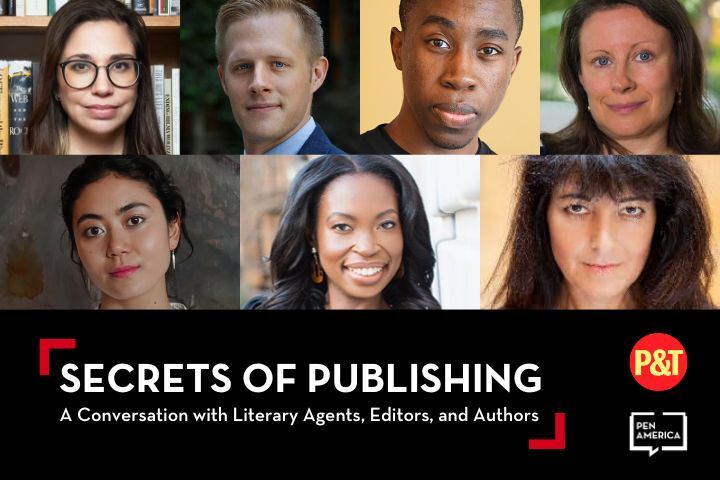
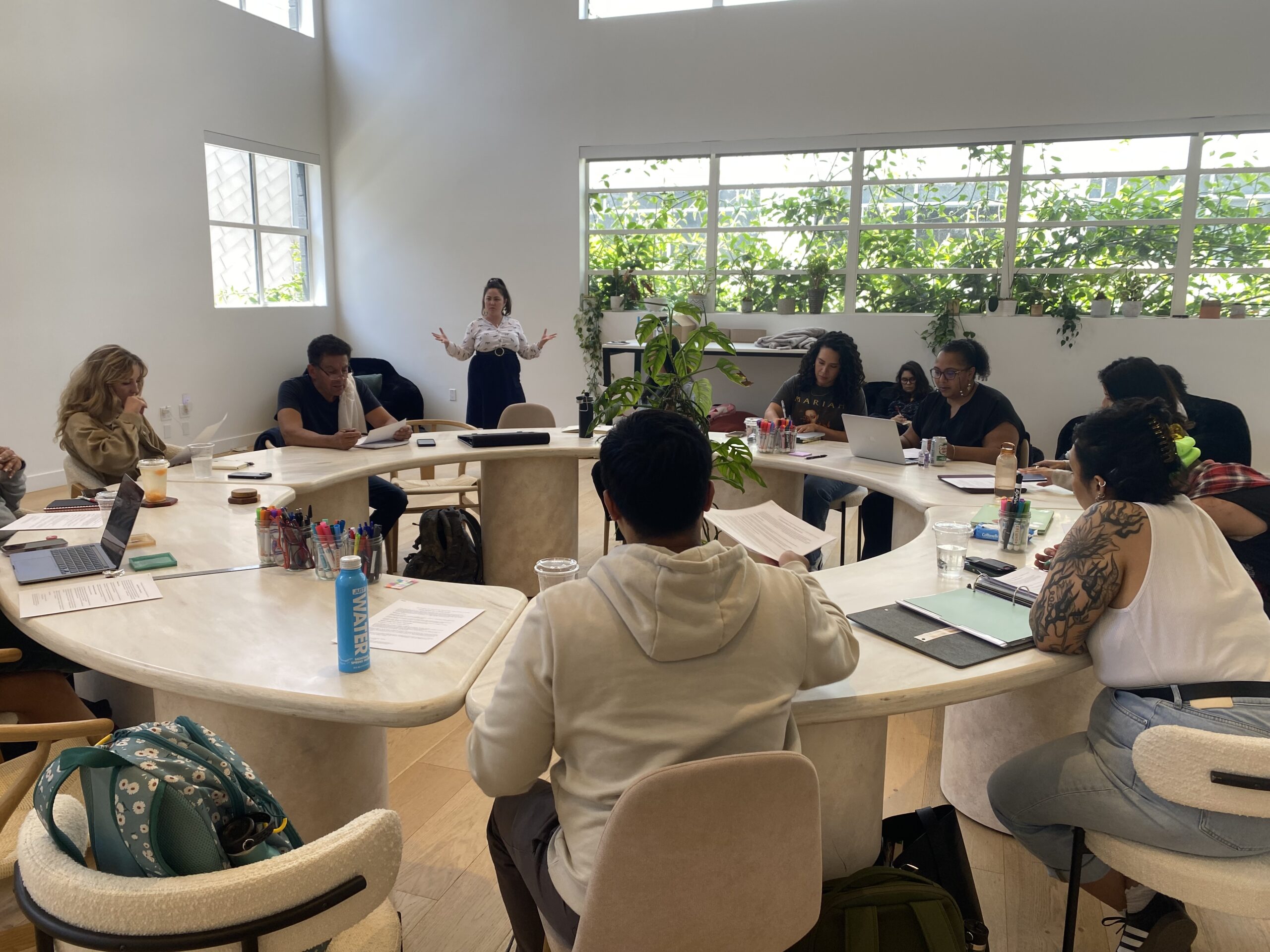
To unravel insider secrets on how to be published with the Big Five, PEN America hosted a panel discussion where award-winning author Susan Shapiro spoke with six industry experts. Audience members heard helpful tidbits from Johanna V. Castillo, a literary agent at Writers House, Eamon Dolan, an author and editor at Simon & Schuster, Deborah Garrison, a poet and editor at Penguin Random House, Clarence A. Haynes, an author and freelance editor, Emi Ikkanda, an author and editor at Penguin Random House, and Kevin Nguyen, an author and editor at The Verge.
If you couldn’t make the event, hosted at the family-owned independent bookstore P&T Knitwear, here are five takeaways:
Consider starting small.
To kick off the conversation, Shapiro shared one of the lines she frequently tells her students looking to publish books in any genre: “Three pages can change your life.” “Say somebody has an idea, even for a book, I always think it’s a million times easier to write a great three pages and publish that than 300,” she said.
Back when Garrison worked at The New Yorker, the pieces she pulled from the slush pile — written by authors whom “nobody had ever heard of” — would become projects that would be nominated for prizes like National Book Award, she said.
Ikkanda shared that during the 2016 presidential election, she read a New York Times opinion piece by Karla Cornejo Villavicencio that urged readers to think about their undocumented neighbors. “We had coffee the next week, and we just had a great time thinking about how she wanted to talk about these issues, and it became a proposal within a month,” Ikkanda said.
The book, The Undocumented Americans, was later named a National Book Award Finalist as well as a best book of the year by The Los Angeles Times, The New York Times Book Review, and NPR. “So it’s definitely worthwhile to put your clips out there,” Ikkanda said.
Nguyen said that whether writers just want to write magazine features or eventually hope to publish book-length works, they should ensure they have one clip that showcases their writing at its best. Even when he’s sent five clips, Nguyen typically reads just the first, he admitted.
“The instructive thing is you actually don’t need a big spread of work,” he said. “I just need to see your best thing, because when I’m your editor, I’m just imagining the ceiling of the piece. I’m not really imagining the floor.”
But don’t forget that a book isn’t just an article (or series of them).
It’s not a bad idea to contact an agent with a book idea after you’ve written an article about the topic, especially if it gained lots of traction, Castillo said, but she also emphasized the need to outline the broader vision behind the book.
“Many times — and I’ve been on both sides of the industry — as an editor, you can get a great article and then think, ‘Oh, this is just good enough for an article,’” she said. “In my experience, the more material you give an editor for a submission and the more perfected the proposal, you have more chances than sending the article alone.”
Later, Ikkanda, who has worked with plenty of journalists on their first books, identified a common mistake they make during the writing process: Treating the book merely as a collection of articles. “A lot of what we would do is work on structuring the order of chapters so that it doesn’t feel like a mishmash of articles,” she said. “It really needs to feel like it has a direction and builds an argument through its structure.”
Find feedback you trust.
Before a writer sends their book off to an agent, they should get another pair of eyes on it — and not their mother’s or their roommate’s, Shapiro said. She suggested writers consider hiring ghost editors who can ensure their work is ready to go.
Haynes, who works as a ghost editor, acknowledged how expensive they can be, but he added that editors will frequently offer to provide writers with feedback based on their budget. “I’m a very thorough, comprehensive, on-the-page type editor, and then, for instance, if someone has a budget they’re dealing with, I might be like, ‘Why don’t I rethink and then give some general feedback or pinpoint some really, really core things to remember in terms of your revisions?’”
If you can’t find or afford a ghost editor, you should still pass your writing off to readers who will be honest with you, Garrison said. “The compliments are great. You know you’re good at it. You know it’s what you love. But the compliments don’t help you,” she said. “Be really open to critical feedback and go on that journey, because it’s really worth it.”
Think twice about self-publishing.
Self-publishing is growing more popular, but the panelists urged attendees to try to find a traditional publisher first.
Garrison pointed to 50 Shades of Grey as a self-published success story: The author, E.L. James, signed with Penguin Random House only after the book became a national sensation. “But to be 50 Shades of Grey is to be one in a billion,” Garrison said.
Shapiro said that there are times when she’ll encourage writers to self-publish but that they’re few and far between — for example, if an author “combines seven genres, like it’s poetry and fairy tales about what happened to me in therapy and nostalgia from when I was a kid, and [they say,] ‘This is exactly the way I’m going to publish it, and I’m not going to take any criticism.’” But if you have a strong novel you’re willing to edit, there’s no sense in acting like you’ve been rejected before you’ve even tried to find an agent, Shapiro added.
Don’t stress too much about your social media following.
“If you have it, it’s a plus, obviously,” Castillo said. “But what is important for fiction is that the novel has to be great.”
Dolan said that the same is true for nonfiction, especially high-concept nonfiction. “If you’re giving us a premise in one sentence that really takes 80,000 words to properly explore, and you’re the only person who can properly explore it, then I don’t care how many followers you have,” he said.
Haynes added that authors should keep in mind that all followers aren’t made equal. Authors with a few thousand followers sometimes sell more books than those with hundreds of thousands of followers just because their base is a book-oriented community, he said.
Still looking for more advice? Check out tips and tricks from our discussion panel on publishing in the fall.