Academic freedom is under attack in Texas, with courses at universities being audited, censored, and canceled. Public universities have been going the extra mile in response to a state law, SB 37, that took effect in September, overcomplying and taking censorship into their own hands.
The bill mandates regular review of general education courses and creates a governor-appointed “ombudsman” to monitor the entire state system. Importantly, SB 37 also consolidates authority over academics within each institution’s governing board, circumventing traditions of shared governance, and effectively excluding faculty from key decision making about courses, curriculum, and degree requirements.
In just the past few months, over half of the state’s public university systems have announced new policies or guidance made without faculty input that restrict what can be taught to students, and all of the state’s public university systems have begun sweeping course audits. Despite the justifications proffered by some university officials, these new policies often go above and beyond what is required by SB 37, as well as other federal laws or executive orders from the Trump administration, with which the universities have claimed they must comply. Overall, they are a clear effort to extend political and ideological control into the heart of the academy. The combined results have been a disaster for college students’ freedom to learn at the state’s public higher education institutions. We’ve compiled this survey of these developments, organized by Texas system, based on public reporting.
Texas A&M: Censoring Plato and Women’s Studies
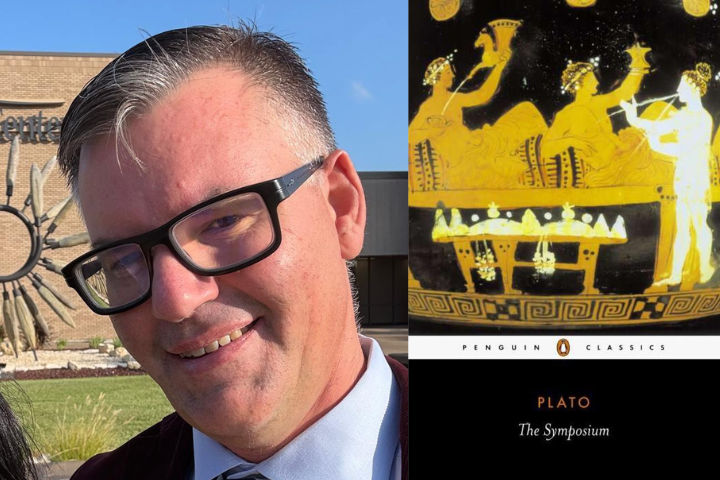
Texas A&M emerged early on as the “epicenter” of higher education censorship in Texas. In late 2025, the Texas A&M Board of Regents revised policies and effectively prohibited discussions of race, gender and gender identity, and sexual orientation, in almost all courses. The policy states that “no system academic course will advocate race or gender ideology, or topics related to sexual orientation or gender identity,” leaving only narrow exceptions for non-core curriculum and graduate courses “in some disciplines,” which still must get written approval by the respective campus’ president. This policy has caused widespread havoc across the Texas A&M system. A philosophy professor who was told he couldn’t teach excerpts from Plato’s Symposium made national news; an ethics class was abruptly canceled after a confusing and frustrating back and forth between the professor and administrators; and course audits threatened roughly 200 other Texas A&M courses. Earlier this year, the university announced that it would be shuttering its women’s and gender studies program, a move that has since been replicated at other institutions.
Texas Tech: An Even More Aggressive Approach
Texas Tech is now steering an even more aggressive path, shuttering programs and launching policies that censor course content and, what’s worse, student research. In December 2025, Chancellor Brandon Creighton, who as a state legislator last year was the primary sponsor of SB 37, issued a memorandum instituting formal review processes for instructional materials by administrators and the system’s board of regents. In the memo, Creighton made clear that it was just a “first step” in implementing the board’s “statutory responsibility” under SB 37, which upended the long-established principle of faculty control over the curriculum. While the memorandum asserts that its goal is to ensure “compliance” with state and federal law, this is misleading. For example, it falsely claims that state and federal law require the university to teach that there are only two sexes. In April, Chancellor Creighton issued a second memorandum expanding the scope of censorship to cover graduate student research. Not only does the university intend to close all programs “centered on” sexual orientation and gender identity, it explicitly prohibits “degree culminating student research” from “centering on” sexual orientation and gender identity, too. This is the first censorial policy explicitly targeting student work that we have seen since PEN America began our legislative tracking of higher education censorship bills in 2021. It is an unprecedented move to dictate and impose restrictions on the topics that students can study and research.
University of Texas: Silencing Classroom Discussion
Not to be outdone, in February the Board of Regents of the University of Texas, the state’s flagship system, passed a policy that effectively muzzles discussions of “controversial topics” in its classrooms – whatever that means. The policy states that faculty are to exclude “unrelated controversial or contested matters” in their syllabi and that, if faculty need to address controversial subjects in a classroom, they must “ensure a broad and balanced approach” and must not “coerce, indoctrinate, harass, or belittle students.” In the abstract, these goals seem uncontroversial, even laudable; but this policy provides no clarity on what these terms mean, nor does it say who will decide whether instruction is “balanced” enough. In the current climate of intense and politicized scrutiny, a professor’s ability to utilize their subject matter expertise in the classroom is sure to be chilled by the mere threat that administrators, board members, or even politicians might perceive their instruction as unbalanced. The Board of Regents passed this policy unanimously and without discussion, despite many objections from faculty who argued the policy’s vagueness would encourage self-censorship and have a detrimental effect on students’ freedom to learn. The same month, the university announced the consolidation of its ethnic and gender studies programs into one department after reported political pressure. Once again, we are witnessing faculty expertise being cast aside in order to impose unpopular and censorial policies.
University of Houston: ‘Teach, Not Indoctrinate’
University of Houston, meanwhile, has also forged ahead on its own path to overcompliance with SB 37. As a result of a course audit that took place last fall, with no faculty input, the university abruptly and mid-semester canceled a previously required graduate course in the Masters of Social Work program, “Confronting Oppression and Injustice.” Then, in November, administrators took the unusual step of circulating a checklist for faculty to do a “self review” of their courses and asking faculty to certify that they “teach” not “indoctrinate,” although administrators later claimed that the checklist was not an official university document. University officials insisted instead that the self-review was meant to be “proactive,” but some faculty and other experts describe it as an example of eager overcompliance that has sent a chill across the institution.
Texas State University: Mandating Neutrality in Courses
Following their own round of course audits that began last fall, Texas State issued guidance to faculty, academic departments, and colleges to ensure that courses reflected “value neutral instruction and curriculum.” The guidance specifically instructs faculty to avoid language that refers to “advocacy” in course titles, including the words “liberation,” “centering,” and “interrogating,” among others. This kind of guidance is a direct threat to faculty’s academic freedom, and will inevitably chill classroom content as professors agonize over whether instruction in their class is “value neutral” enough. A member of the Texas State Employees Union has stressed that these audits, and the lack of clarity surrounding them, are a result of the “erosion” of shared governance that has become commonplace since the passage of SB 37.
Texas Women’s University: Double Course Audits
Texas Women’s University is undergoing two different course audits – only one is required by SB 37, which mandates a review of general education courses. The other audit reviews all courses in the system to ensure they comply with “applicable federal and state laws and institutional priorities” – the final phrase suggesting the system’s eagerness to overcomply. The university has reportedly been reviewing courses to ensure that curriculum reflects “balanced and neutral academic training,” vague phrasing that is likely to lead to a narrowing of topics and discussions in academic classrooms, as we have seen at other universities, like University of Texas.
University of North Texas: Expedited Compliance
University of North Texas has made headlines for closing degree programs, including an LGBTQ studies minor, in recent months, reportedly as part of a budgeting plan. The system launched its course audit in the fall too, after Chancellor Michael Williams ordered an “expedited review” of courses and syllabi in September, which included the review of more than 9,000 syllabi at its Denton campus. The stated aim is to ensure compliance with “all current applicable state and federal laws, executive orders, and court orders.” Once again, the implications of such a directive have left more questions than answers when it comes to what topics or readings faculty might be barred from introducing to students.
Sweeping Consequences
This academic year, there have been concerning reports of egregious acts of censorship and violations of academic freedom at universities across the state, from professor terminations, to jawboning, and even the censorship of an award winning artist. But the course reviews, curriculum control, and chilling guidance that we are seeing mushroom across Texas public university systems as a result of SB 37 are indicative of a particular eagerness that system leaders seem to have to comply, and overcomply, with state law. Often this is done with a blatant disregard for faculty expertise, and has sweeping consequences for students across fields of study.
Careless intrusion of political ideology into curriculum does not bode well for the quality of academic instruction in the state, or for its ability to retain leading scholars in many fields. We are watching as Texas universities become better known for their censorial restrictions on teaching, research, and learning, than for their education or knowledge production. What’s worse, Texas is providing a roadmap for other legislators and bureaucrats who want to put blinders on college and university students nationwide, and make censorship their own prerogative, too.