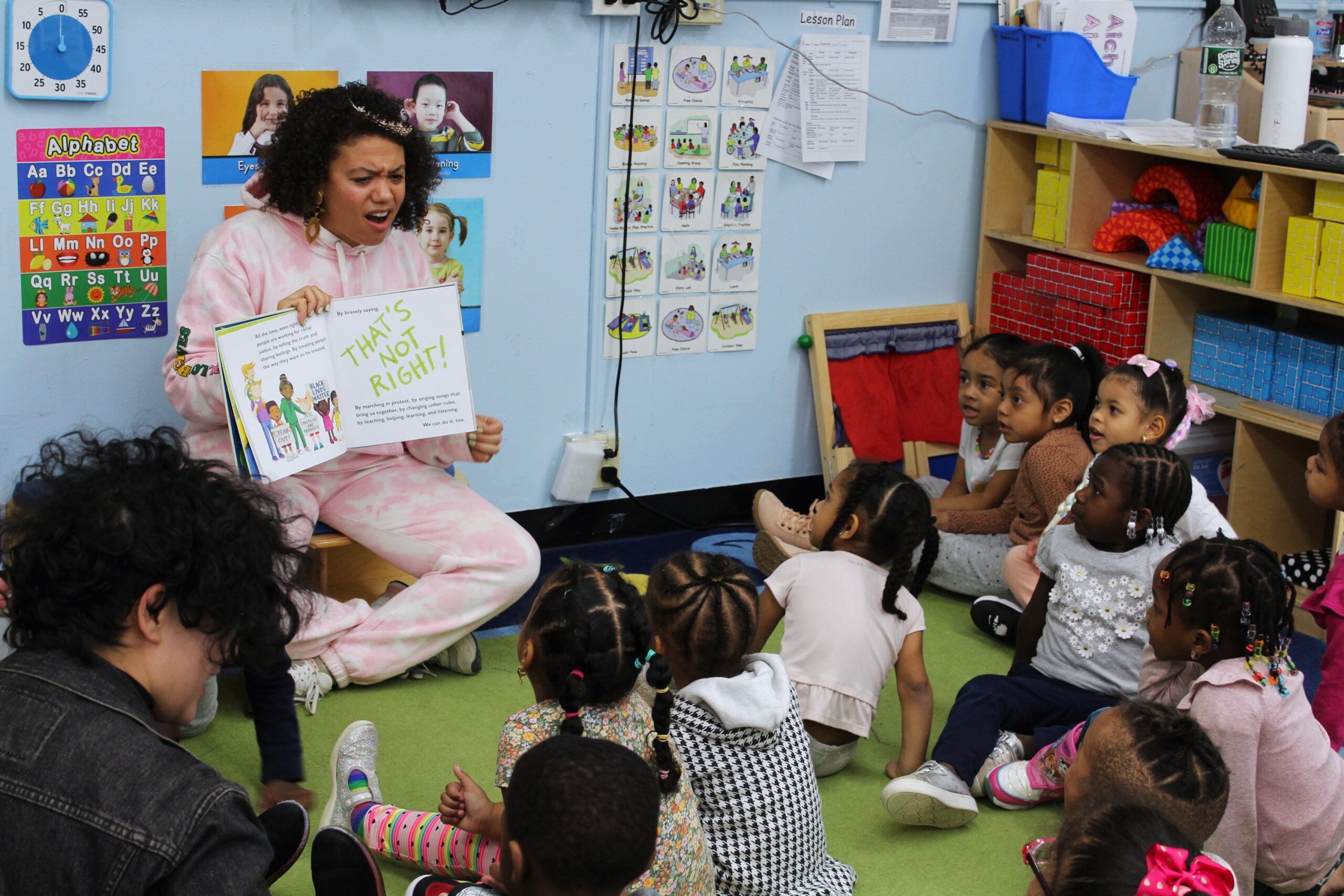
When author and teacher Dr. Megan Pamela Ruth Madison moved out of the United States, she thought she was leaving censorship behind for good. But the book banning she endured in her home country served only as an orientation for her teaching job in Uruguay, which within a week brought her face to face with angry American far-right parents and school administrators unequipped to handle them.
In 2019, Madison published Our Skin, the first in what would become a popular children’s book series, First Conversations. The books use simple language to introduce young children to complicated topics like gender, race, consent, love, and grief. The series grew popular among schools and families across the country, especially as the Black Lives Matter movement took off. Madison and her co-author Jessica Ralli eventually sold more than 280,000 copies of their books.
Some communities treated Madison “like a rockstar,” she said, but she also had to fight off fierce backlash and book bans from the jump. She showed up to local school board meetings in New York City, where the books were challenged, and advocated for them, with some success. Following the completion of the series, however, she struggled to find work as a critical race scholar or DEI practitioner.
Six months ago, Madison decided to pack up and move to Uruguay, a country with a strong democracy and progressive LGBTQ+ policies. Not long after her arrival, Madison attended a fair for expats, where she met the principal of a private school that enrolled a large number of American students. A few months later, she learned that the school had an open fourth grade teaching position.
During the hiring process, the principal expressed interest in having Madison incorporate her books into her curriculum. Her support came as a welcome surprise, and Madison took the job. “To be in a new country and have people pretty quickly be like, ‘No, we love your ideas. We love your books. We want you in our school,’ meant so much to me,” she said.
On the first day of school, Madison read her students one of her First Conversation books: Being You, which familiarizes students with the concept of gender. “I was a little nervous coming from the states, because I’m like, ‘Sometimes this book is controversial,’ but in this context, everybody was like, ‘Green light, Megan. Go for it,’” she said. Madison typically introduces herself with her name and pronouns, and Being You would ensure that her students actually understood what pronouns were.
Other than a few snickers at the words “penis” and “vagina,” the kids demonstrated maturity throughout Madison’s read aloud. And during their free time that afternoon, one of them went to the library area to pick up Juntos, the book in the series dedicated to love, for independent reading. “That made me so happy,” Madison said. “I was like, ‘Okay, something about the read aloud went well enough that at least one of the kids is curious about the book.’”
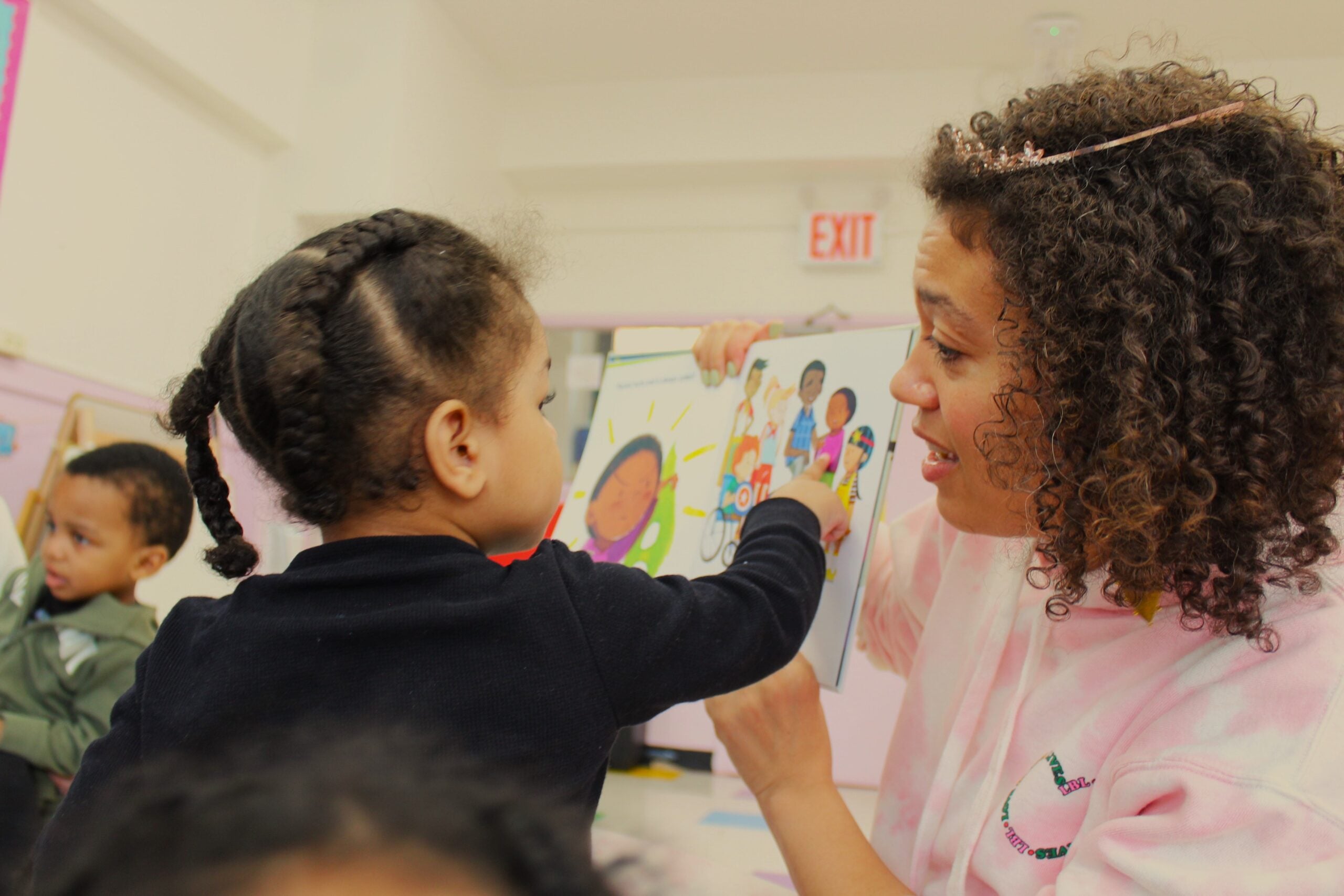
After that day, however, the student didn’t return to school. Madison received a warm email from the child’s parents explaining that they were dealing with a family emergency, but soon the principal informed her of the truth: The family, together with a few others, had gone behind Madison’s back and demanded she be fired.
The news stunned Madison, but the principal assured her that she could assuage their concerns and build relationships with them over a merienda, or afternoon tea time. Madison thanked her for the suggestion, scheduled the merienda, and began preparing notes for the meeting.
But before Madison had a chance to speak with the parents, the principal returned, this time with less reassurance. She explained that the situation had escalated quickly: The parents had gone to the school’s board to complain. The board members, many of whom had children in Madison’s class, had her back, but the parents took the issue to the U.S. Embassy, which provides funding for the school, a move that terrified the board. Recounting the story, the principal cried in front of Madison. The principal identified publicly as a lesbian, and even though just a few families were teaming up against the school, their relentless determination to punish a teacher who promoted LGBTQ+ acceptance took her aback.
The principal explained that the board members, alarmed not only by the potential loss of funding but also by the possibility that the Trump administration might catch wind of the story, began negotiating with the parents. They now wanted Madison to take down her Black Lives Matter posters and stay quiet on social media. She complied. “It was so intense and scary, and, honestly, I fled the United States because I couldn’t find work,” she said. “I really wanted a job, and not every battle is worth fighting.”
But then came the request to remove all books related to gender and sexuality from her classroom’s library — and Madison knew if she complied again, she wouldn’t be able to reconcile her decision with her work as a teacher. During the first week of school, she had started to teach her students how to write persuasive essays, encouraging them to consider what they believed and to articulate those beliefs with conviction.
“That was my job: to help these kids find their voice and put their ideas out into the world,” Madison said. “Meanwhile, I was taking my ideas and removing them and signaling that they aren’t welcome. That felt impossible. I was like, ‘I don’t know how to both silence myself and convince these kids that their voices matter.’”
Madison took Juntos home on Friday, and she turned the dilemma over in her mind over the weekend. By Sunday night, she decided that she couldn’t follow through on the board’s orders to take it and the other books down. “If they insist that the books are removed, they’re going to have to send somebody else into my classroom,” she recalled thinking. “I won’t fight them, but somebody else is going to be the one who has to come take the books off the shelf and explain to the kids what’s going on.”
On Monday morning, Madison returned to her classroom with Juntos in her backpack. She added it back to her library, but no more than a few minutes later, the head of the school entered her classroom to tell her she had been put on administrative leave. At an offsite meeting a few days later, the head of school fired Madison, providing her with only brief reasons for her dismissal.
Madison believed that the school’s administrators, especially its principal, wanted to support her — but “I learned that good intentions aren’t enough,” she said. The administrators didn’t have any policies in place they could use to hold their ground against the parents, so they were scrambling at every turn. “I think they underestimated how intense the far-right pushback is right now,” she said.
“They genuinely thought, ‘Oh, we’re just taking the posters down for a couple of days. Oh, we’re just moving the books until things quiet down. Then, of course, we’ll go back to business as usual,’” Madison continued. “That was naive.”
The school has a small but growing LGBTQ+ population, but after Madison’s dismissal, a few of the families decided to enroll their children elsewhere. Madison said she’s worried for the queer and transgender students who are still part of its community, but she also knows there’s little, if anything, she could have done. Still, she tried to prevent a recurrence: During her exit interview, she urged the head of school to create anti-censorship policies, directing them to resources on the National Coalition Against Censorship’s website. “This is going to come up again, even if I’m nowhere near the school,” she explained.
Despite all of the disappointment, the experience hasn’t deterred Madison from pursuing a career as a teacher. She remains on the job hunt in Uruguay. “I wrote these books for kids and teachers, and I want to be able to teach using my books,” she said. “I’m proud of them, and I want to be able to use them to open up critical conversations with children and families and communities. That’s still my dream.”