How defending Ukrainian Culture is an act of resistance for PEN Ukraine
In the early hours of July 4, as Americans marked their independence with fireworks, Ukrainians – three and a half years into defending theirs – saw a very different kind of explosion over Kyiv when Russia launched roughly 550 drones and 11 missiles at the capital, injuring more than 20 people and damaging homes and industrial sites across the capital.
Blasts caused windows to shatter at PEN Ukraine’s third-floor warehouse, spraying glass across many of the 11,000 books stored for its “Unbreakable Ukrainian Libraries” book distribution program. No one was hurt, but clean-up was significant, and, more critically, the building’s only elevator was permanently destroyed. Nonetheless, the following day, PEN Ukraine Executive Director Maksym Sytnikov announced on X, “Our goal is to resume delivering books that libraries are waiting for as soon as possible.” This, despite, or rather because of, the war.
Lessons Learned from Ukraine’s Executed Renaissance
Governments regularly employ culture in wartime to instill patriotism. In the current conflict in Ukraine, it goes further: Culture is itself part of what is being fought over, even as it is mobilized to advance unity. Since Russia’s first invasion in 2014 – and especially following the full-scale invasion on February 24, 2022 – language and literature have been integral to the country’s war effort: shaping identity, preserving memory, fostering dialogue, and building the pride and cohesion often credited with underpinning Ukraine’s remarkable resilience in a conflict that many believed would not last more than a few days, a month at most.
This great force of Ukrainian culture and identity is relatively new. For generations, under Russian tsars and later in the Soviet Union, where policies of Russification were imposed to assert political control, it had little opportunity to flourish.
There was one brief but important exception. Shortly after the establishment of the Soviet Union in the early 1920s, Vladimir Lenin’s government introduced policies promoting local languages and traditions, believing that independent cultures and identities could strengthen the union of the 15 Soviet republics. In Ukraine, this led to a flourishing of Ukrainian-language literature, poetry, and art, centered largely in Kharkiv, then the capital of Soviet Ukraine. That window of cultural freedom slammed shut with Stalin’s consolidated power in the early 1930s. Ukrainian was banished from schools as Russian became the official language. Local traditions were pushed aside as the Soviet regime asserted full authority over all aspects of public life.
Members of Ukraine’s cultural renaissance, who would later become known as the “Executed Renaissance,” were imprisoned, executed, or sent to the Gulag. Erased from public memory for nearly a century, today they are widely recognized as heroes, serving as a reminder of what might happen if Russia wins the war.
Ukrainian cultural figures killed since the start of the full-scale invasion are regularly described as a “New Executed Renaissance,” including by the poet, novelist, and PEN Ukraine member Victoria Amelina, who wrote, “My worst fear is coming true: I’m inside a new Executed Renaissance.” She would later count among them after dying from injuries sustained in a Russian missile strike.
Free Speech, National Identity, and Resistance: The Work of PEN Ukraine
It is this history of culture first weaponized, then erased, that gives PEN Ukraine’s work its particular urgency today. Yet when the organization was founded in April 1989 by writers, intellectuals, and dissidents, national identity and culture were not yet prominent issues. Instead, the focus was on safeguarding new freedoms that were emerging with the dissolution of the Soviet Union, including independent publishing, cultural autonomy, and free speech. Over time, PEN Ukraine would begin supporting the development of independent literary institutions in Ukraine, serving as a platform for debates about language and culture, reinstating banned or persecuted writers, and helping Ukrainian writers connect with the international PEN network.
Once Russia launched its full-scale invasion on February 24, 2022, PEN Ukraine immediately reoriented its work to meet the country’s changing needs. This included informing international audiences about Russia’s war against Ukraine while carefully documenting crimes committed against Ukrainian media and culture. Preserving the memory of journalists and cultural figures who were killed and collecting the stories of Ukrainians who survived occupation or siege in their cities. In addition, PEN Ukraine dedicated itself to promoting the development of contemporary Ukrainian literature, restoring cultural life across the country, and supporting destroyed or damaged libraries, which serve as vital cultural hubs in their communities.
Cultural destruction is central to Russia’s strategy in this war, serving the dual purpose of undermining morale and reinforcing Putin’s claim that Ukraine does not possess a distinct cultural identity. Beyond targeting churches, museums, and theaters, some 700 Ukrainian libraries have been severely damaged or destroyed since the full-scale invasion, with hundreds more harmed since 2014. In places where libraries remained standing, soldiers reportedly removed or destroyed all books by Ukrainian authors.
Book Deliveries Recommence
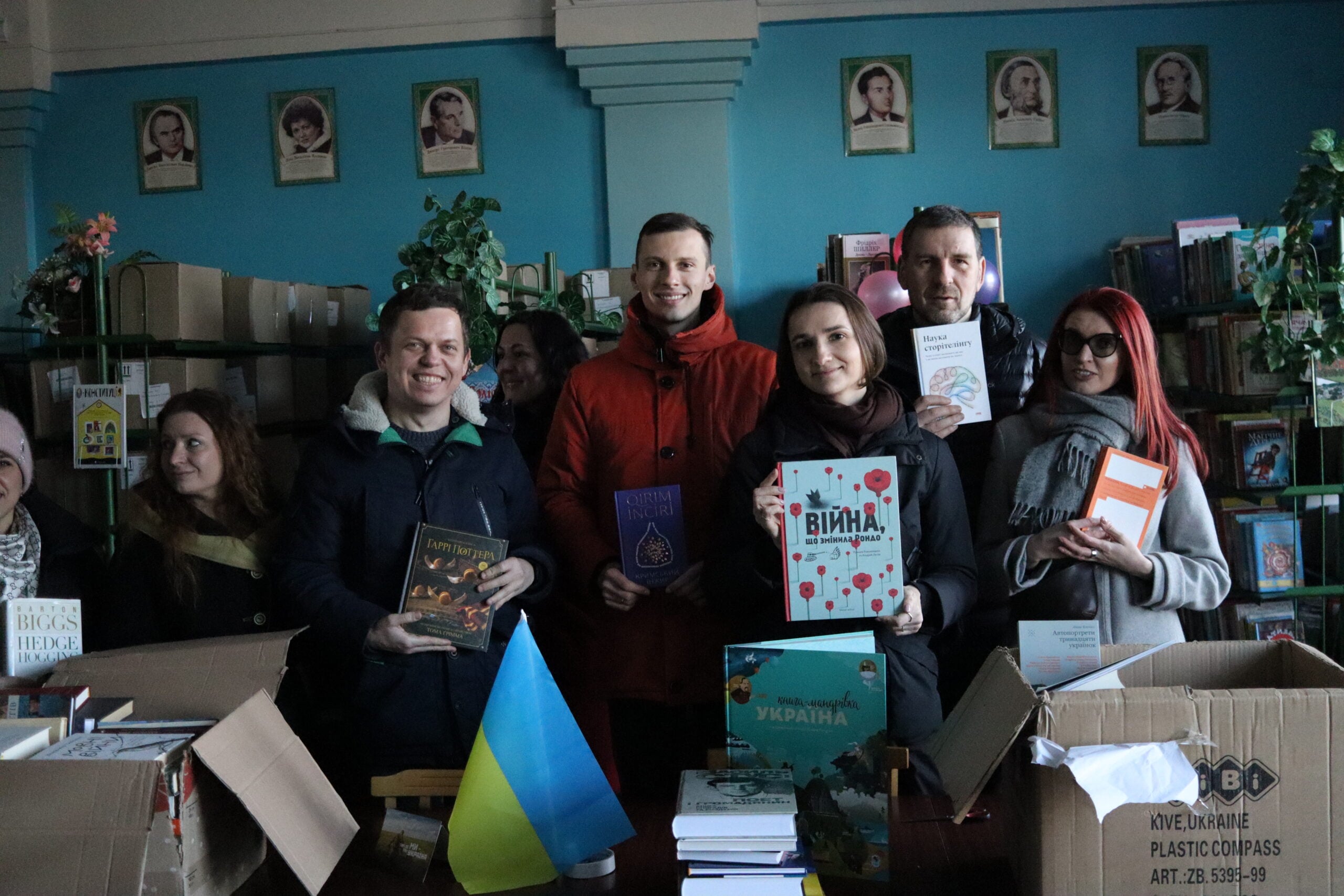
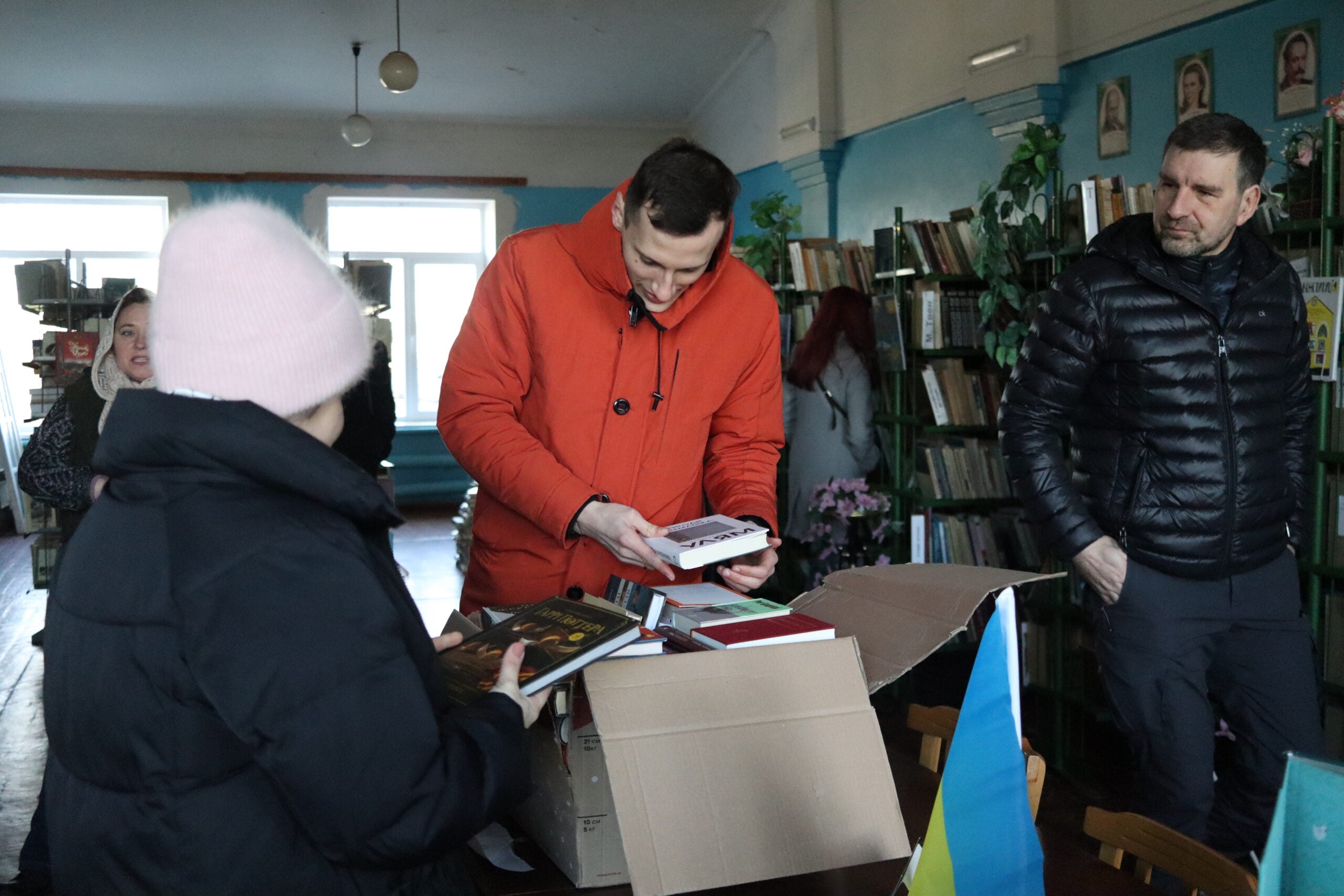
It took almost two months after the July damage to its warehouse for PEN Ukraine to resume its literary volunteering trips to Ukrainians on the front lines and in previously occupied territories. The monthly trips, made in a nine-person van carrying up to 1,000 books, typically last three to four days. On each outing, at least one prominent Ukrainian writer or foreign author is invited to bear witness and to help tell the world what Russia is doing to the country.
With heavily damaged roads, nightly curfews, and constant drone threats, travel is unpredictable and often dangerous. Following Victoria Amelina’s death in July 2023, PEN Ukraine instituted mandatory security training for all staff.
The books, mostly donated from abroad, are in Ukrainian or English. “We often bring books to the front lines,” said Sytnikov, the PEN Ukraine executive director who often doubles as chauffeur on the monthly trips. “Soldiers request battlefield history or emergency medicine, but they also really like classic Ukrainian poetry.” In towns further from the fighting, Timothy Snyder and J.K. Rowling remain favorites.
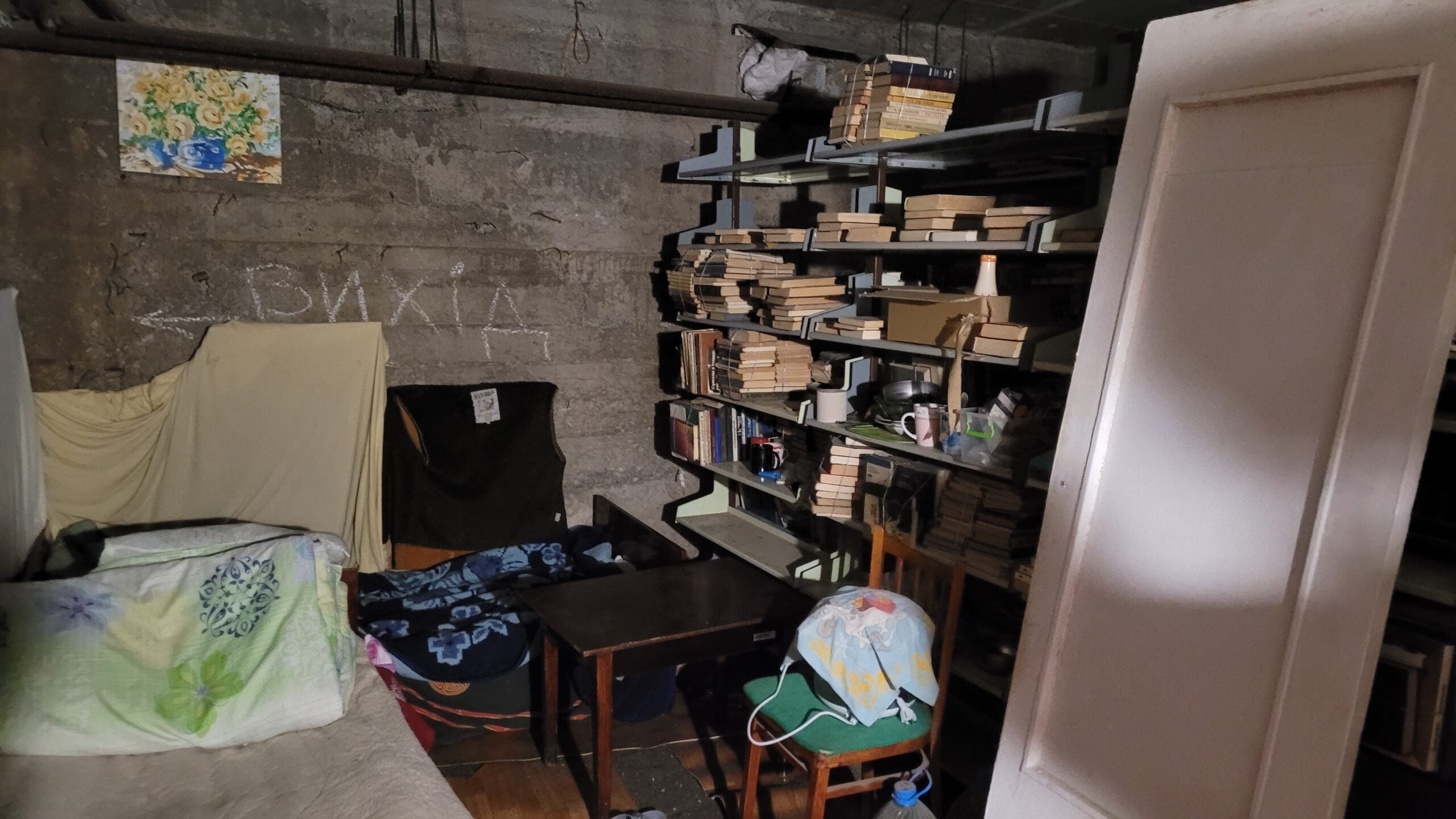
Sytnikov says his “cargo is more than just books; they are instruments of resilience, unity, and cultural continuity. Each book that reaches a Ukrainian library during the war is priceless.” He points to Nikopol, a small town in the shadow of the Zaporizhzhia nuclear power plant, stating that “this is a place of constant Russian terror, but there is a library in the city center with a large basement. People who live nearby sleep there. They come after work, take a book, and go downstairs to sleep or read during shelling. In the morning, they return the book and go home.”
As in Kyiv, where PEN Ukraine holds regular cultural gatherings, discussions organized during the literary trips often serve as lifelines, creating space for conversation and prompting people to share traumatic experiences, often a first step in healing.
Language as Identity: Ukrainian Is Not Russian
Ukrainian officially became the state language in October 1989, a month before the fall of the Berlin Wall, and two years before Ukraine became a fully sovereign nation. However, as a result of decades of cultural indoctrination, during which Ukrainians had been taught that their language and literature were inferior to Russia’s, it took several years before Russian culture ceased to dominate public life.
In his essay “On the Historical Unity of Russians and Ukrainians,” published in the summer before the full-scale invasion and widely considered by experts as a call to arms, Vladimir Putin argued that Ukraine is not a real country but rather an integral part of Russia. This narrative relies on Russia’s selective reinterpretation of the region’s history. Scholars of Eastern Europe have demonstrated that, despite centuries of entanglement, Ukraine is a sovereign and independent nation.
Putin has also claimed that the Ukrainian language is merely a dialect of Russian. This is also false. Although Ukrainian and Russian share roughly 55–62 percent of their vocabulary and both use the Cyrillic alphabet, each has distinct phonetics, grammar, and even certain letters. This is why the spelling of proper names, including the capitals, carries such political weight: “Kyiv” reflects the Ukrainian transliteration, while “Kiev” is the Russian.
According to Ukraine’s 2001 census, nearly 30 percent of the population identified Russian as their native language. By 2024, sociologists found that the figure had dropped to only six percent. Volodymyr Zelenskyy, who would first soar to fame on a primarily Russian-language Ukrainian TV show, worked with a tutor to strengthen his Ukrainian during his presidential campaign and is said to still occasionally make minor grammatical or phonetic errors.
Having grown up under Soviet rule or in a media environment dominated by Russian pop culture, native Ukrainian speakers also tended to speak Russian. The reverse is far less often the case.
As residents of traditionally Russian-speaking regions flee west to escape the fighting, many are learning Ukrainian. Among them is Olena Stiazhkina, one of the country’s leading novelists. Originally from Donetsk, Stiazhkina left when Russian-backed separatists took control in 2014.
“All of my relatives were Russian speakers – my mother, father, and grandmothers,” she said during a 2024 visit to PEN America. “We are at war. Every day, Kyiv is bombed, and no one wants to speak the language of the enemy, so we’ve all learned Ukrainian. My grandmothers have become so good at it that they even argue using Ukrainian swear words.”
Literature… has a unique ability to explain even the most subtle of concept.
Kateryna Kalytyko
Sytnikov does not claim to know how or when the war will end. What he does know, he says, is that PEN Ukraine will have a lot of work to do once the fighting is over. “Ukraine will face huge problems of understanding between citizens, between people who left, people who fought, people who were harmed, and people who managed to continue their lives. The cultural sphere will be essential for bridging and understanding these differences. The power of literature is so great that, in many ways, it can be our advocate. It can have a much greater impact than any political statement.”
“As long as the writer is being read, he is still alive,” Victoria Amelina wrote in the preface to the occupation diary of children’s author Volodymyr Vakulenko, who was tortured and killed by Russian soldiers in the early days of the war.
To deepen global understanding of Ukraine and to help keep its authors alive in the act of reading, PEN Ukraine, in partnership with Craft and Chytomo, urges readers to purchase Ukrainian books in translation. “For decades, Ukrainian voices were stifled, their narratives submerged beneath a dominant state-prescribed Russian discourse. Amidst the ongoing war, these works offer a profound understanding of Ukraine’s rich culture and distinct history. By engaging with Ukrainian books, readers worldwide not only enrich their literary repertoire, but also stand in solidarity with Ukraine’s struggle for its existence. Each translated piece is a thread in the fabric of global literature, weaving Ukraine’s rightful place into the tapestry of world narratives.”