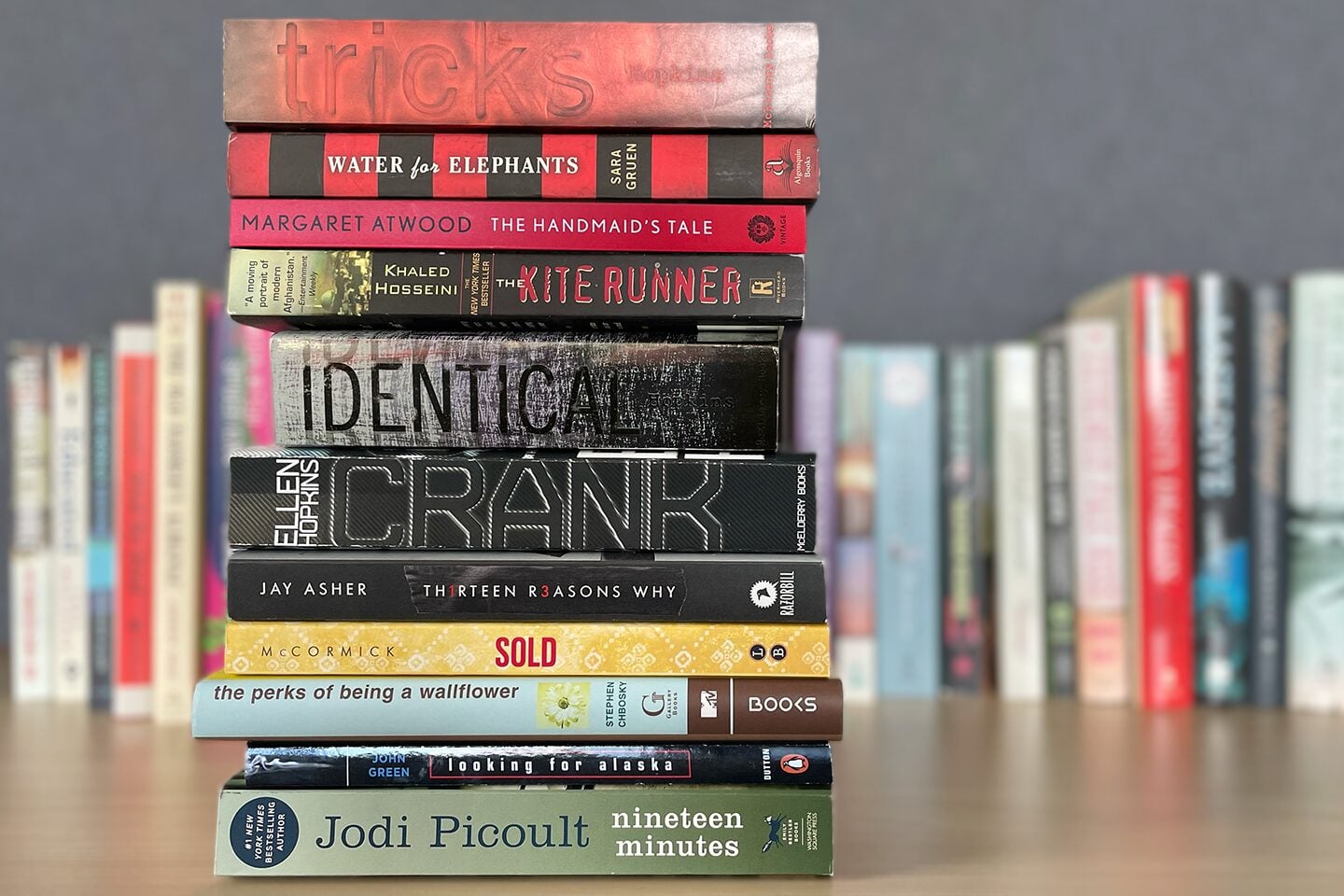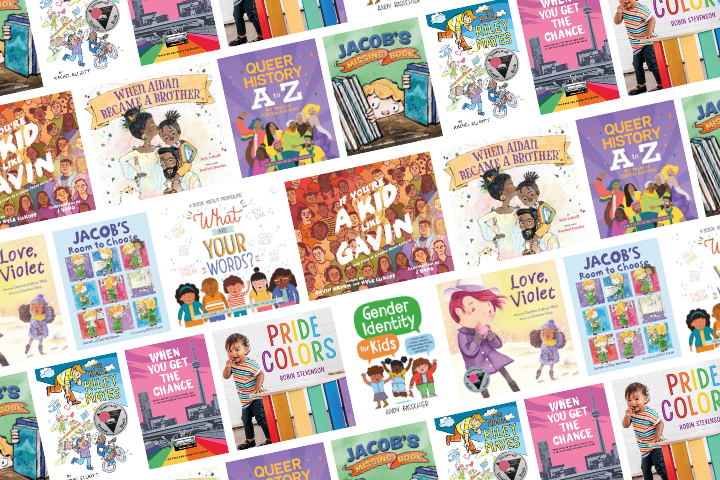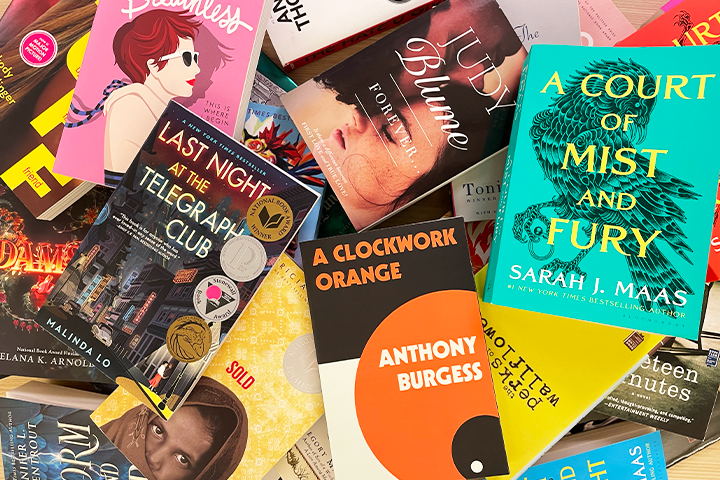
For the past few years, author Charlotte Sullivan Wild has been working on a picture book about an LGBTQ+ family who learns to cope with one member’s deployment to the military. The story is inspired by Sullivan Wild’s own life, and she’s certain it could help families like hers. But finding a publisher has proven more difficult than she anticipated, and even if the book were published, Sullivan Wild is no longer convinced it would reach her target audience. Last summer, the Department of Defense Education Activity, which runs schools for military families, removed nearly 600 titles from their schools. Sullivan Wild’s title would fit right in among the banned works, which cover LGBTQ+ topics as well as race and politics.
Recently, Sullivan Wild and her agent made the difficult decision to pause submissions on the book. But as she workshops other stories, bans remain top of mind. She tries her hardest to tune out hateful comments and focus on her job — “to write as honestly and respectfully as I can for young people” — but it isn’t easy. “I find myself worrying over every word, wondering how it might be twisted to justify defaming my work and my LGBTQIA+ existence,” she said.
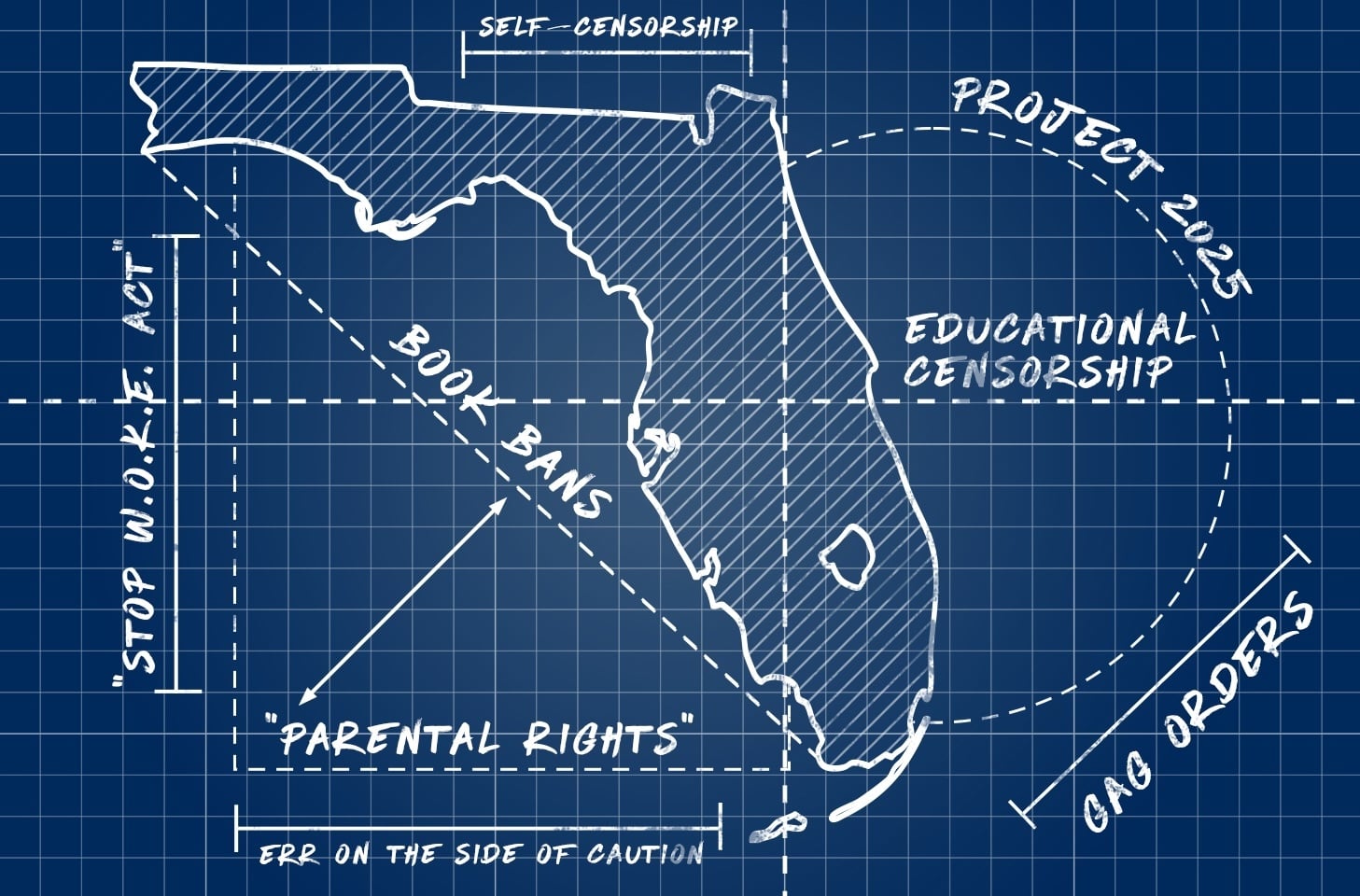
As part of its legal work challenging bans, PEN America recently spoke to authors about the impact book bans have on their creative processes. While many said they refuse to self-censor — it would constitute “a kind of death,” remarked author Kyle Lukoff — bans are still impeding their writing processes by stifling their creativity and causing them to doubt choices they otherwise wouldn’t. One author, overwhelmed by the censorship they’ve faced, felt as though they had no choice but to stop writing children’s books altogether.
Sarah Gailey, author of the banned book When We Were Magic, said every author and publishing professional she knows takes book banning into account in their work. “Fear of prosecution and retribution against ourselves, and against the librarians and booksellers who champion our work, is a constant presence as we discuss how to create the literature we feel the world needs right now,” she said.
For Sarah Brannen, it’s become impossible to brainstorm new projects without bracing for backlash.
“I can’t help thinking, ‘Is this book going to be banned? Are people going to send me hate mail for it?’” said Brannen, author of Uncle Bobby’s Wedding, which was banned in Florida. “Although that might not stop me from proceeding with a book, it kills creativity to think about that. … You have to think about who the characters are, what their lives are like, what they want, and what they need, and you can’t be stopping to think, ‘Is somebody in some other state going to burn my book?’”
“You can’t — I can’t — function like that,” she added.
Robin Stevenson, the author of more than 30 books, experiences a new level of self-consciousness, or “a kind of second-guessing,” about her creative process that she didn’t before she was censored. “There are so many decision points between an idea and a finished manuscript, and questions related to my experiences of book bans come up repeatedly throughout the process,” she said.
Still, Stevenson emphasized that she tries her hardest to write the stories she wants to, as she can’t stand the thought of granting book banners control over the content of her work.
Elana K. Arnold, the sixth-most banned author of the 2024–25 school year, likewise tries her best to avoid self-censorship, though she’s not convinced she’s succeeding in doing so. “I’m sure the banning has shifted things about my writing that I’m not consciously aware of,” she said.
But for other authors, bans have simply become unbearable. Katryn Bury, author of the Drew Leclair mysteries, recently quit writing children’s books for good. “Something honestly broke inside me,” she said. “It’s really depressing.”
And Andy Passchier, a nonbinary author and illustrator of books about identity for kids, said that the political climate in the United States made them too anxious to write the literature they think young people need — so they recently decided to move to France.
“Even though it’s been difficult at times, I was hugely privileged in being able to pack up and leave,” Passchier said. “My hope is that by taking this step, I’ll be able to still write and do important work from further away.”