(COLLEGE STATION, Texas) – Years ago, when Mexican-American author Sandra Cisneros was invited to the conservative community that is home to Texas A&M to discuss her novel The House on Mango Street, she was apprehensive.
“I came frightened,” she said, “And I think that fear blocked me from really thinking and seeing clearly.” Instead of a hostile environment, Cisneros found connection with people she hadn’t expected – a white man who told her, with tears in his eyes, that as the first born in his family, he couldn’t go to college because he had to work; a young woman who struggled to study after her mother died.
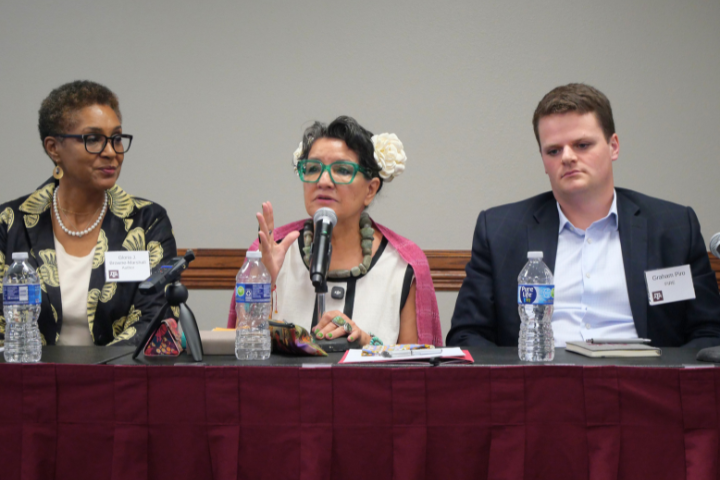
At a time when “seeds of fear” are being sown across the nation, Cisneros said “we need to push that aside and come from our open heart to hear each other.” She brought that spirit to College Station again on Tuesday as part of a delegation of writers led by PEN America to defend free expression amid rising censorship on Texas campuses. “I hope that we all come with our hearts broken open so that we can hear each other and be respectful,” she said.
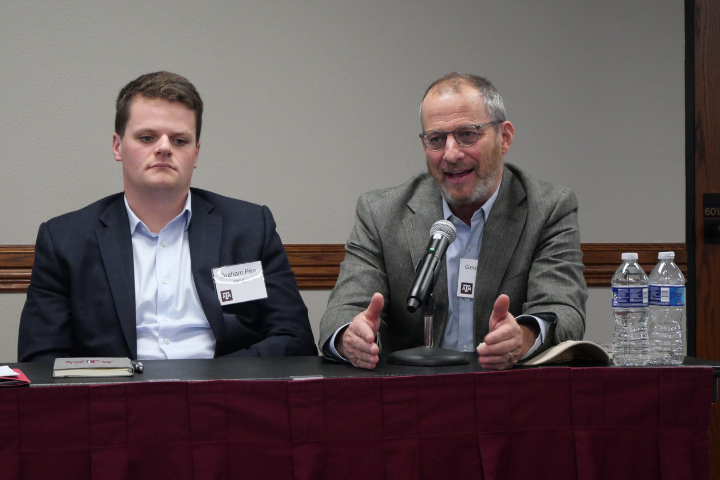
The delegation, comprising Cisneros and authors Jennifer Finney Boylan, George Packer, and Gloria J. Browne-Marshall, are meeting with faculty, students, and administrators across two days, handing out copies of Plato’s Symposium, and organizing a reading of banned books at the Barnes & Noble College Station. At a public panel on campus moderated by PEN America’s Jonathan Friedman, the authors in the delegation, along with Graham Piro of the Foundation for Individual Rights and Expression (FIRE), spoke about standing up for expression and academic freedom.
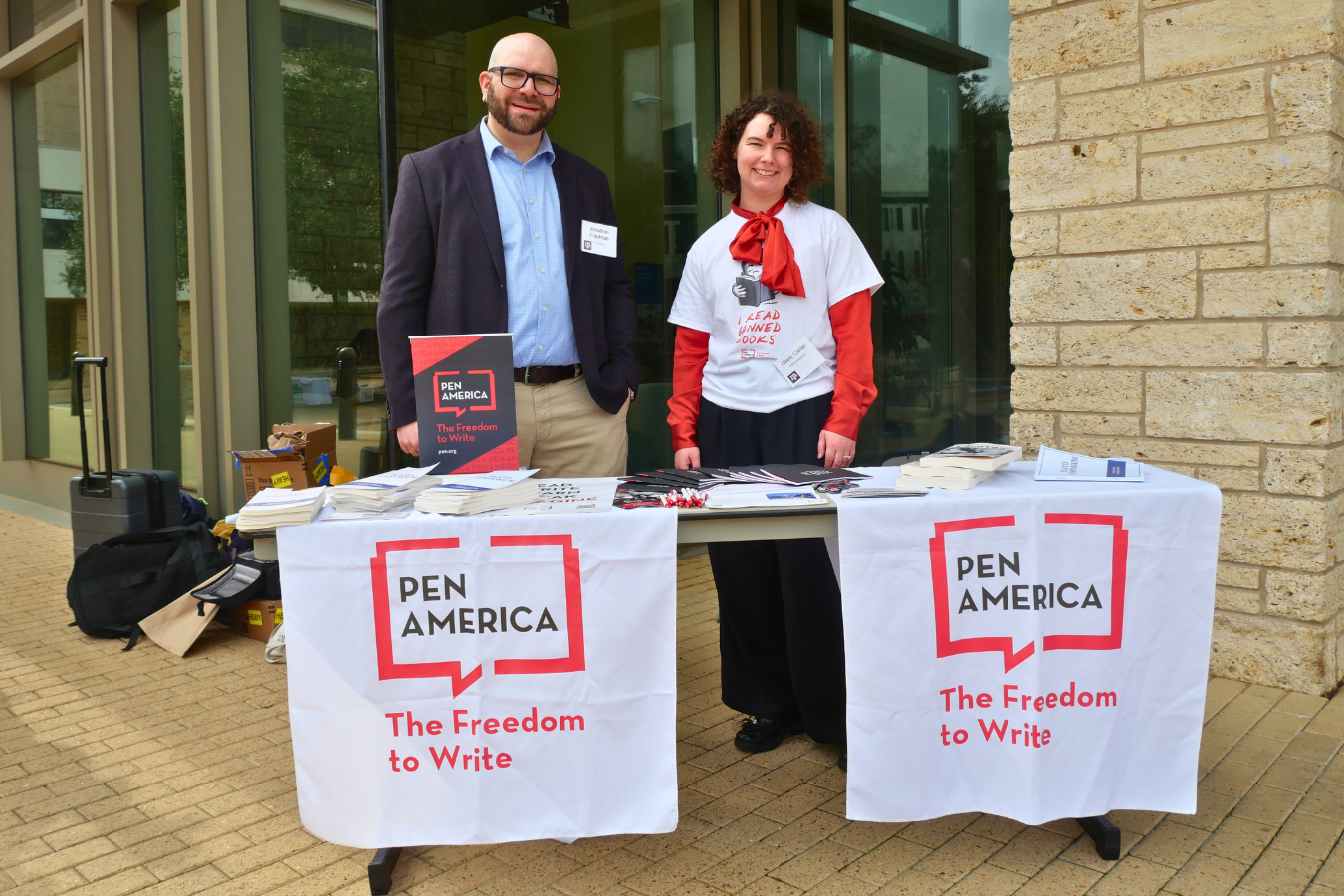
Texas A&M has faced high-profile incidents of censorship including banning readings from Plato in a philosophy class and the announced plan to shutter the university’s Women’s & Gender Studies program. In response, PEN America and 36 partner organizations sent a joint letter to the Texas A&M System’s Board of Regents urging them to rescind the policy revisions that have led to widespread censorship of course content. PEN America has also encouraged students to send a similar letter to the Board of Regents.
On the panel, Finney Boylan said encountering ideas that challenge us is essential in higher education. “If you spend four years anywhere and you are the same person that you were at the end of the four years that you were when you entered that institution, your education has failed,” she said. “If you encounter an idea that you don’t agree with, good for you. … Free people read books.”
The panel portrayed Texas A&M as a case study in a broader national conflict over who controls the classroom and the bookshelf. “Your campus has become a lab for censorship, a kind of national laboratory of censorship. You shouldn’t want that for your own school,” Packer said.
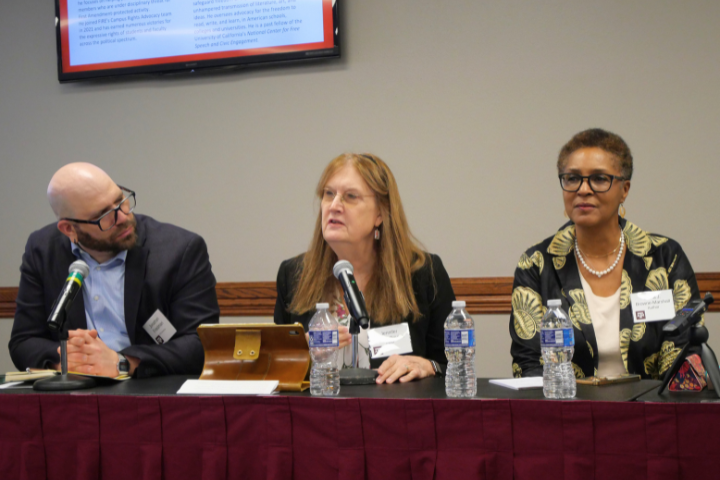
Friedman said when he began following challenges in schools and university campuses five years ago, there were some challenges from those who felt censored, silenced, or unwelcome. But the environment now is different, driven by government‑backed efforts to restrict teaching on race, gender, and sexuality—including Texas laws targeting The 1619 Project—and by the “trickle‑down” fear these laws create in classrooms.
Browne-Marshall challenged the censorship of books about the country’s history of slavery and racism. She encouraged students to ask: “Since knowledge is power, why don’t you want me to know? Why don’t you want us to read this book? Why don’t you want this book taught in our class?”
Piro of FIRE cited survey data showing that about one‑third of faculty now self‑censor in their teaching or public speech. Packer underlined the harm in that statistic: “Self-censorship can be more potent than the government kind, because the policeman is in your own head, and it’s hard to get the cop out of your head when it’s you.”
Underlining that the events at the university are part of the larger landscape of censorship, the crowd gave a standing ovation to an audience member: librarian Suzette Baker, who lost her job in Llano and is featured in the documentary The Librarians.
“If you’re wondering what’s going to happen to the professors, it’s what happened to the librarians,” Friedman said.
The panelists urged students and professors to resist through open debate, organizing, and continuing to read and teach contested books. And, as writers, they urged students to pick up their pens.
“The most subversive thing you can do is to write poetry, because poetry is the path to the truth you didn’t know you knew,” Cisneros said. “It is truth-telling, and that is why politicians don’t write poetry.”
Join PEN America and more than 30 partner organizations by sending a letter to the Board of Regents.