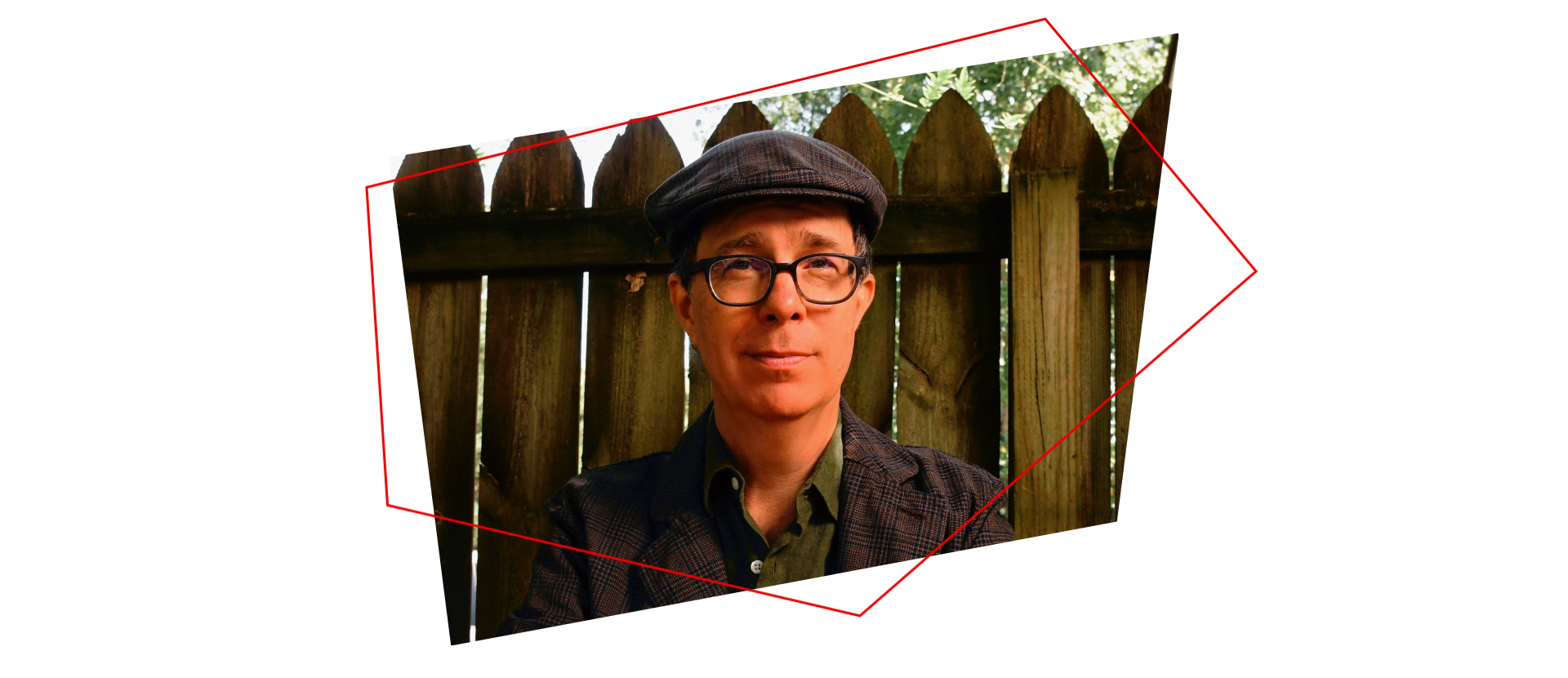
When Ben Folds stepped into the role of artistic advisor to the National Symphony Orchestra at the Kennedy Center, it wasn’t political. Folds saw the Center as a bipartisan space “for anyone who is American to see or be seen in some way in the arts.”
Over eight years, the Emmy-nominated, multi-platinum-selling singer-songwriter curated a unique concert series called “Declassified,” pairing contemporary artists from all music genres with the National Symphony in a new kind of live music experience. The sold-out shows drew thousands of new symphony concertgoers who had never before stepped foot in the Center.
But even before it was renamed the Trump-Kennedy Center last week, the writing was on the wall. In February, the famed center for the performing arts’ previously bipartisan board removed many of its members and elected Trump as chairman. That same day, Folds stepped down along with Renée Fleming and Shonda Rhimes.
“I, as an artist, had to leave. I couldn’t put my stamp of approval on it,” Folds told PEN America. “There has never been a breach like that into our arts, where the executive branch, with the president, overthrew the board, installed himself into the arts. That’s not happened in the USA, and the reason that’s a problem is because it’s no longer a safe space for everyone of every political persuasion, gender, and race. It now represents a very hyper-partisan thing.”
Folds has created an enormous body of genre-bending music that includes pop albums with Ben Folds Five, multiple solo albums, a holiday record, a live album with the National Symphony Orchestra recorded just before the Trump takeover of the Kennedy Center, and numerous collaborative albums. He is also the bestselling author of A Dream About Lightning Bugs, a memoir and meditation on creativity. An outspoken advocate for arts funding and free expression, he has promoted fundraising for PEN America at his concerts.
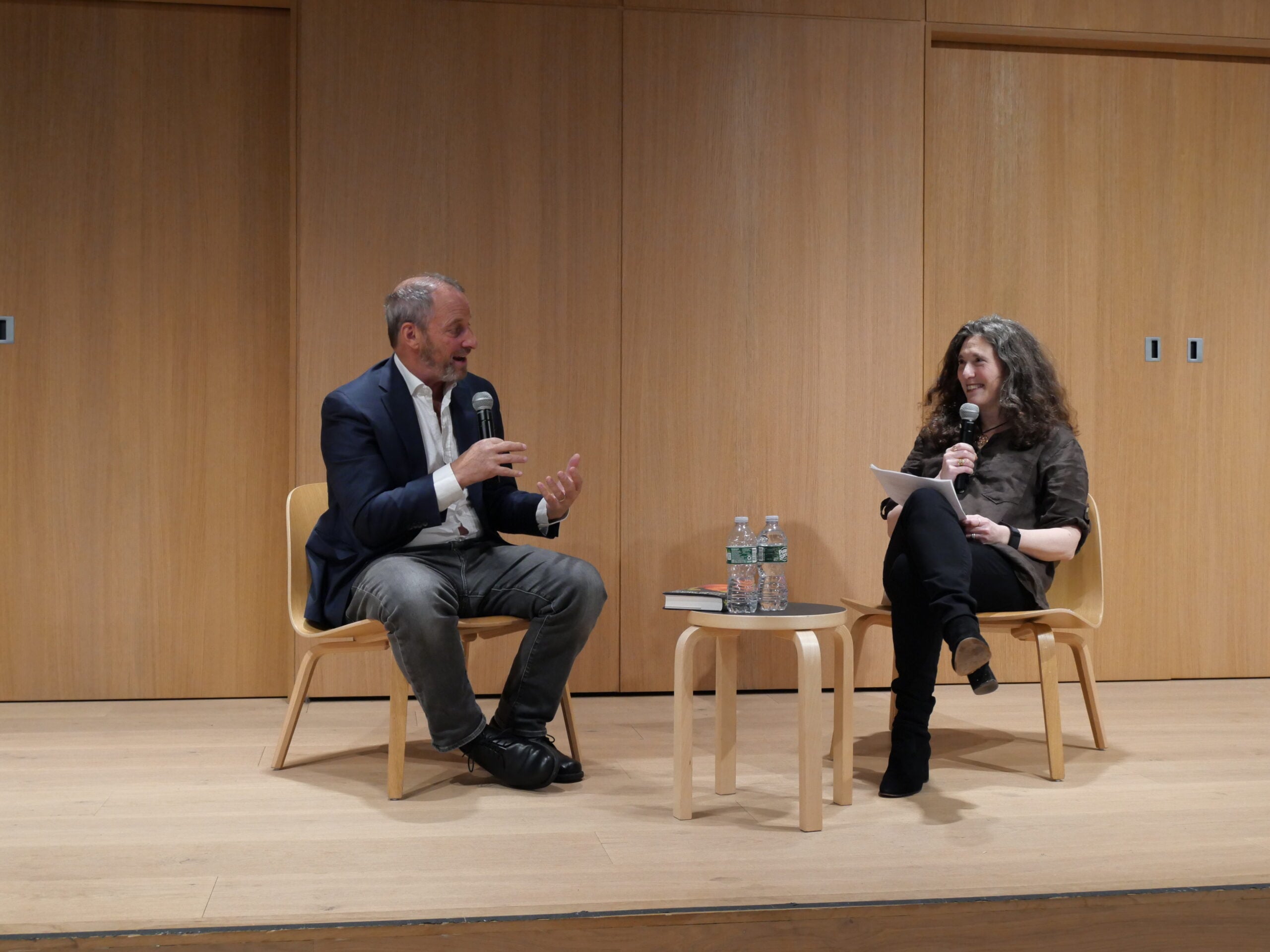
In conversation with PEN America, Folds talked about his decision to step down from the Kennedy Center, art as activism, and why he doesn’t believe in writer’s block. The interview has been lightly edited for clarity.
Tell me about stepping down from the Kennedy Center. What went into that decision?
My manager and I were actually lifting a sofa at the moment, as I was moving into a new place, and there were a lot of moving guys around. But I had managed to put up a poster I have, which is one of my favorite pieces, of Slava Rostropovich. Rostropovich was the conductor of the National Symphony Orchestra, and he was kind of a sidekick to Dmitri Shostakovich. Shostakovich is a 20th century Soviet composer, and everything he wrote, at least post a certain point of his career, became political. If you think of music and of art as activism, he didn’t really mean it to be, I believe, but it caught the eye of Joseph Stalin. And if he put something in that displeased the Kremlin, that displeased Stalin specifically, then he worried for the life of his family, his friends, himself. So he hid things in his music, but it was all being scrutinized all the time. So that’s true lack of freedom of expression.
I thought of Rostropovich, who was the director of the NSO in a place where he most certainly felt like he could be artistically free, and free of the state being involved in the arts. He was at the Kennedy Center, a beacon in the world. To him, to be in a country where you could do that and not fear for your life was amazing, and it was unthinkable that it would become that way at all in the USA. Remember the tweet “I hate Taylor Swift?” Think of Shostakovich as the Taylor Swift of the Soviet Union, because he was extremely popular. Stalin first started intimidating him by showing up at his concerts with a couple of generals in tow laughing at him from an opera box. Okay, he’s free to laugh at him. He’s free to tweet “I hate Shostakovich,” but over time, that became normalized to the point where Shostakovich could be threatened.
And so when we were moving sofas, and I was looking up at that poster, and we were making a quick decision, I thought about that artistic safety that Rostropovich had enjoyed, and him being in position there, and I thought of what he would do, if he had been alive to see this. And certainly it would have to be to resign and not to be a part of it.
I thought about that artistic safety that Rostropovich had enjoyed … and I thought of what he would do, if he had been alive to see this. And certainly it would have to be to resign and not to be a part of it.
Have you seen that kind of normalization of censorship happening at the Kennedy Center, or in general in the arts? What’s it like to be an artist touring right now? Has the climate shifted?
It’s had a different effect on everyone, I’m sure, but for me, it makes me aware that there could be consequences to stating your opinion, and it feels as though there is possibly a window of time left while we still can. And I tell my audiences that I’m not proud to have been part of the “shut up and sing” generation, which was the Dixie Chicks. They were told to shut up and sing, and I’ve been told to shut up and sing many, many times. I’m not proud that our generation succumbed to that a bit. That didn’t come through government pressure. It came through cultural, political pressure that if you were speaking out, people were like, “no, no, we own you. We’re paying your bills. We’re paying to see your shows. You are not allowed to state your opinion. Plus, who are you? Some elitist artist out there who doesn’t know anything but notes and drugs, probably, so just stick to your lane.”
That had a chilling effect on freedom of expression for people in my occupation who felt like we would lose part of our audience. And it perpetuated the idea that every kind of person in society doesn’t have something to add to it. I have a perspective. I’ve been in every single tertiary, secondary market, village, town and city, metropolitan area in the U.S. repeatedly, every single year, over and over again, for 30 years. … And so as a musician, I have something to add, but I felt like I should shut up.
I tell my audiences that I’m not proud to have been part of the ‘shut up and sing’ generation.
Now I feel like I should speak out while I can, because now “shut up and sing” has joined forces with the government. Now the federal government and all three branches of government can come down on you, plus they have now got armies and legions of their co-opted right wing podcast audience who would be happy to rough you up if you don’t say the thing that they like. So, yeah, I think it’s had an effect. But I think in the real world, we still live in a country where you are protected to freely speak, you just need to be a little more careful about it, and I think you need to do it while it still exists.
Thank you for the advocacy that you’re doing and supporting PEN America. I think art as activism has never been more important.
I completely agree. I never understood art as activism, or just the act of it being activism. I didn’t understand that until recently. If you are, you know, a big green person, be the biggest, most creative, expressive, big green person that you can. If you’re political, be more political. If you’re apolitical, be more that. This is the time for people to express with impunity, I think.
PEN America has been there kind of quietly but largely looming for a long time. And now I really appreciate the existence of PEN America more and more. I’m so thankful, and I imagine that PEN America as a group never imagined the domestic side so much of the mission, because I’d always known PEN America to do things for writers and in different countries where there was no freedom of expression. Now I feel you’re girding for something imminent at home and so I want to support it, and more power to you and everyone.
Your memoir was such an inspiration for so many creative people. How did you find the experience of writing a book different from writing songs?
In a way, they’re really, really similar. I started off just writing about my life, and then pretty quickly, when I’m working on a song, it’s the same thing. Sometimes I just go, now, there’s more to this. I have to have something to say, besides just recounting a story. … And I started thinking about lightning bugs. … Something flashes in front of (creative people) like just a quick spark, and no one else really sees the same thing. And so your job is to see the lightning bug that you saw, go catch it and share the light with other people. And anything that glowed for me about growing up, I went ahead and brought it in. And another thing from writing songs, I found is it has to be honest. And writing a memoir is, I can’t think of anything that would incentivize someone to be dishonest more than writing their own story.
The lightning bug analogy is a beautiful one. What do you personally do if you’re not seeing the bugs? Do you have those moments where it’s not coming?
You know, there are lots of things hidden in the metaphor. If it’s broad daylight, and there are a lot of lightning bugs, and you’re looking for the one that’s lighting up, you can’t see it for the rest of things. And I think sometimes it’s there, but there’s just distraction, the light in your eyes distracting you. You see reflections off of buildings and trees and grass and clouds and all this stuff, and it’s harder to see that. So you have to find your time. You know, the sun goes down, there’s less noise.
And I also think when it comes to what people call writer’s block, I really don’t believe in it. I believe it’s just mostly that we all judge our ideas, and your subconscious shouts up to the conscious and says, “Guess what’s coming down the pike? It’s awful. I mean, it’s so terrible. It’s the worst thing you’ll ever write. Can’t wait to send that shit your way.” And then the conscious gets in and goes “That’s gone. Delete, delete,” and it’s out of there, because you don’t want to be shamed. You don’t want the shame of making something bad because you’ve edited it and smothered it in its crib before it could even be born. So I believe that what has to happen is you have to write your bad ideas, and you write through them, and you find nothing bad happened to you, but you find something on the other side of it. So your job is only to report what you’re seeing. Just keep reporting. What do you see?
I believe that what has to happen is you have to write your bad ideas, and you write through them, and you find nothing bad happened to you, but you find something on the other side of it. So your job is only to report what you’re seeing. Just keep reporting. What do you see?
We’re all going to see different things. When you see someone else make a thing and they’ve made it by noticing clouds, then you think, oh, I need to go around noticing clouds. Wow, I wish these lightning bugs weren’t in the way. We all see and so someone becomes an architect because they see shapes, and someone else becomes, you know, a hairdresser. Someone else becomes a short story teller. And sometimes there’s not even a genre for the thing that you want to create.
You’re often called a Gen X artist, and you’ve carried people through all of these different milestones in life – marriage and divorce and parenthood. I used to sing “Gracie” to my son when he was a baby, and I could not finish the song without crying. But I wonder, what’s next? Is it midlife crisis songs?
With musical artists, like an athlete, we do our midlife crisis way younger, because the end of the career is feeling imminent somewhere in the mid to upper 30s. No tennis player is going to play at that point, definitely no basketball player and no pop star. So you go, Oh, man, it’s all over. So you have your little freak out when you’re 30 instead. I’ve been doing things a long time. Whatever is unique becomes more unique until you just look back on this long trail and you realize there’s no one there. No one does what I do. And I’m lucky to make it that far, but what am I supposed to do next, go make a hit song? I don’t know. I just kind of keep cruising, and I keep doing what I did when I was a kid, which was follow my interest. So God knows what it is. I mean, I’m interested in a lot of stuff, so we’ll see.
I know there’s probably an argument for someone feeling miserable and they have to create out of necessity, but I find myself that unless I feel good, I don’t feel that creative.
You’re also still touring. Do you keep your creative practice going while you’re moving around on tour? Do you have any rituals or anything that that you stick to, no matter what?
I kind of change the rituals up. You know, I think the first thing is health. And if I think that that’s good for your creativity in general. I know there’s probably an argument for someone feeling miserable and they have to create out of necessity, but I find myself that unless I feel good, I don’t feel that creative. So my rituals out on tour now are all kind of health based, exercise things, and it’s creating a discipline, which means that I’m kind of, you know, maybe I don’t know about 20,000 words into something that resembles a musical script, a musical book. I thought about writing another book because I got better at writing a book. I wrote one. But I don’t really want to be like, the creativity guy. Maybe I should go out and make things rather than tell people how to do it.
Ben Folds has toured for three decades performing first as frontman for Ben Folds Five, and in recent years as both a solo artist and with some of the world’s greatest orchestras. Folds is a New York Times bestselling author, composes for film and TV, is currently working on prospective theatrical projects, and launched a music education charitable initiative in his home state of North Carolina. A long-time active member of Americans For The Arts and the Arts Action Fund PAC, he is an outspoken advocate for arts funding and free expression, promoting fundraising for PEN America at his concerts.