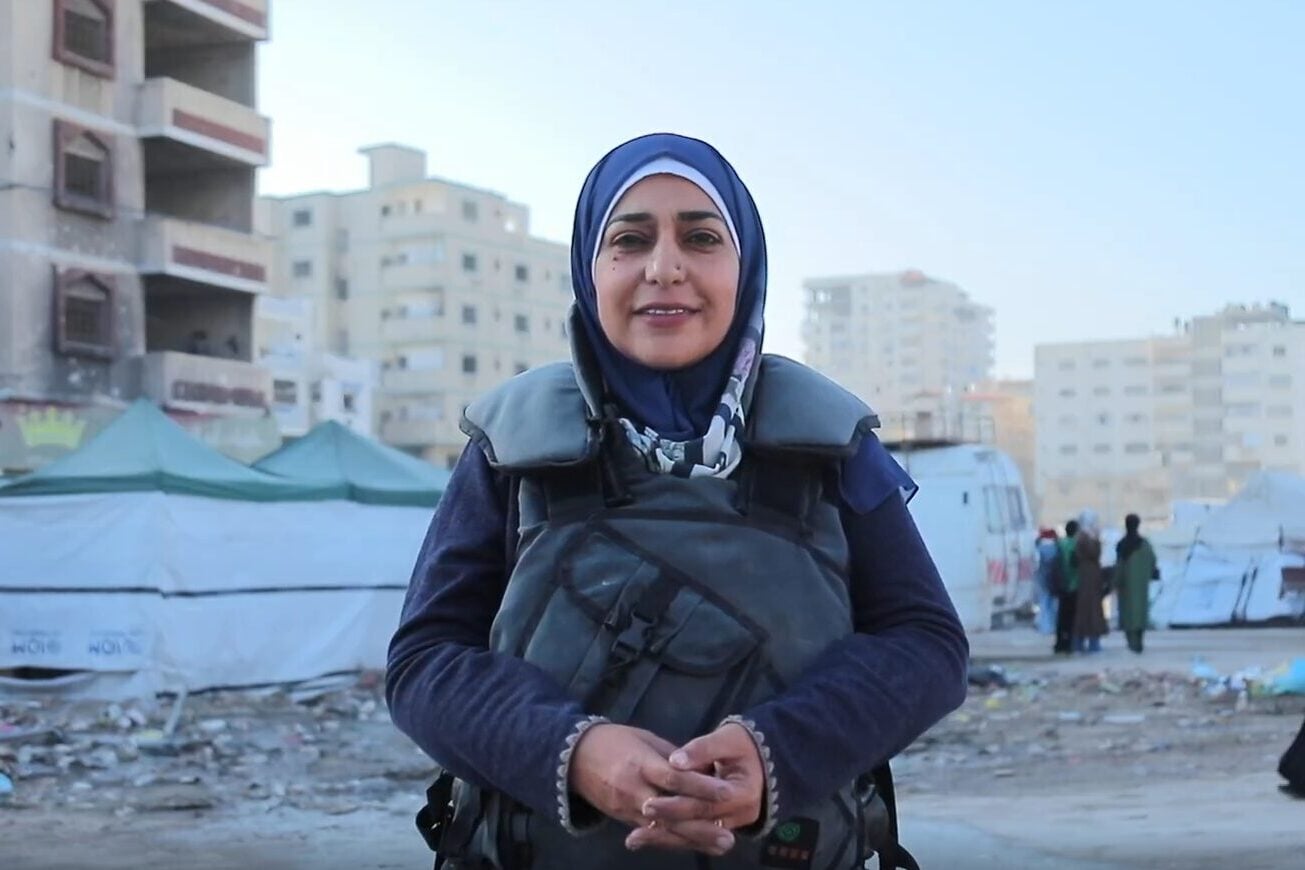
I begin with my own experience documenting the war, reporting, investigating, and telling stories about women of Gaza.
While working with the Women’s Affairs Center, I recorded nearly 100 cases of women who endured profound hardship. I captured their daily struggles, the unseen faces, and the quiet moments that almost never make it into international coverage. This kind of local documentation is crucial for understanding the human, social, and political layers of the crisis. It amplifies women’s voices, protects their stories from being erased, and creates essential records for future accountability and justice. Several of my articles have already been included in reports published by human rights organizations.
When women share their stories with me—in their own words, images, and lived experiences—it changes my approach to reporting. Their voices bring much-needed human depth into the global narrative about the war’s impact on ordinary lives. We share these stories with the world so people can fully understand their suffering in the tents, under the bombardment, and amid the realities of genocide.
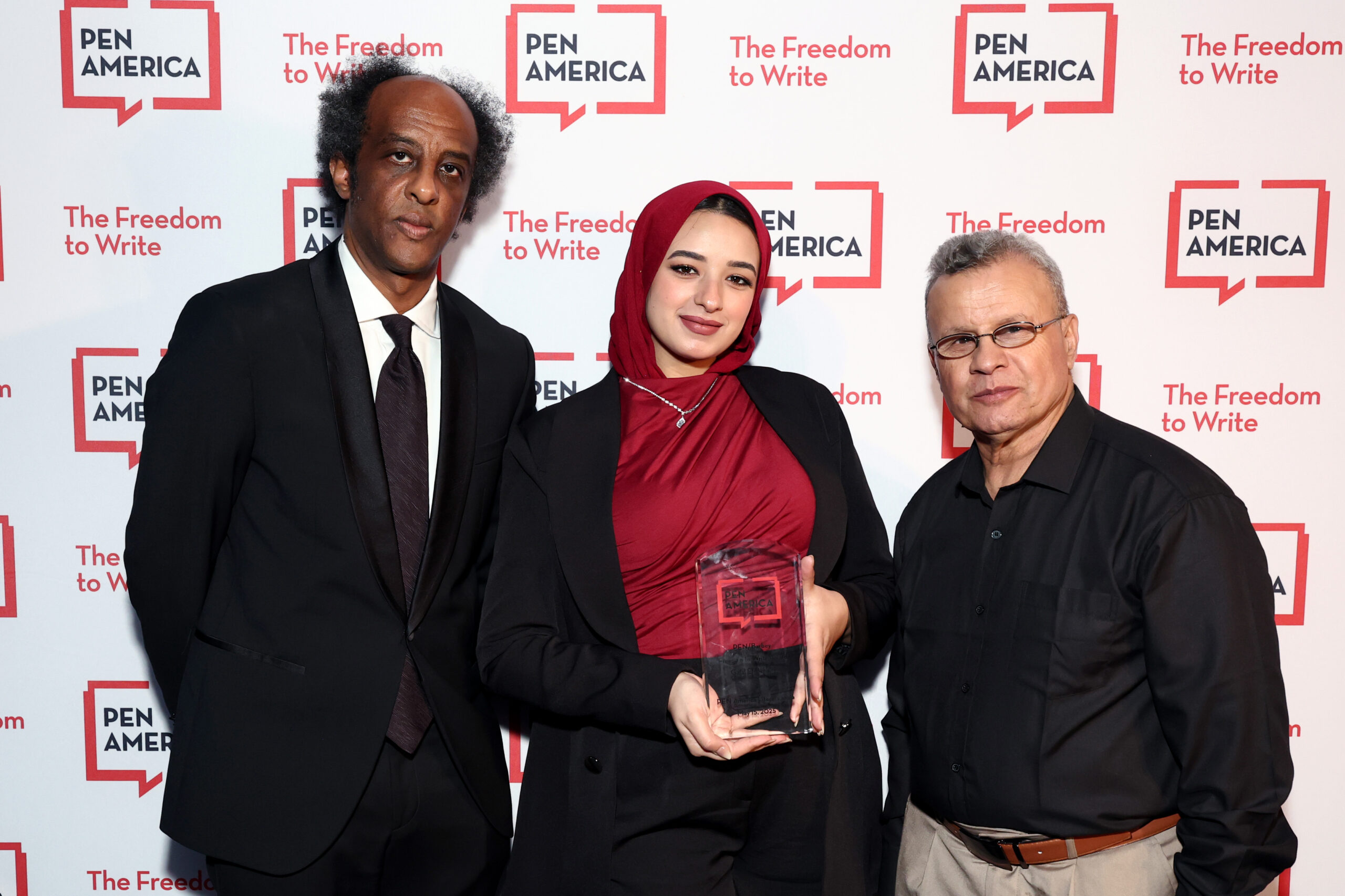
I am proud that Palestinian women journalists have been recognized internationally for their courage in reporting under fire, and honored across platforms, conferences, and award stages.
While reporting from inside Gaza, we have delivered written, visual, and audio testimonies despite the immense dangers targeting the Palestinian press. The journalistic community has lost 36 women journalists, directly or indirectly, from among 256 journalists killed in this war, including journalist Mariam Abu Deqa, targeted directly during coverage, and journalist Fatima Hassouneh, killed while inside her own home. Each of them carries the story of a Palestinian woman who stood firm despite all she endured.
Making the Silence Speak
“Memory needs a heart that does not tremble,” began 28-year-old journalist Esraa Al-Ar’eer, from Gaza City and displaced in Khan Younis. She adds, “Every day we lost something close—a home, a neighbor, a street, a dream. But what we did not lose was the voice. Women’s voices were like a thin thread guiding us back to our humanity when the war tried to rip it away.”
Esraa lost her husband and two of her children when their home was bombed. She and her injured daughter were pulled from the rubble. Her studio and all her photographic equipment were destroyed.
She says, “The women journalists who appeared through the smoke were not only reporting events, they were making the silent things speak: the faces of children, the movement of hands searching through debris, the trembling of the sky as rockets dropped.”
Esraa believes young women writers played a crucial role in “anchoring memory, so that the war does not swallow the details that shape our daily lives,” something clearly reflected in the posts they shared on social media, and in the influence of young women poets as well.
Even after losing all her equipment and her only high-quality phone camera, Esraa refused to stand still. “I tried to carry women’s voices through writing. I borrowed phones from friends so I could photograph and publish some stories. It was difficult, but we believe we carry a message—and we must deliver it.”
Preserving Stories
Ranin Al-Madhloum, 39, an engineer from Gaza City, says: “If it weren’t for the women who painted, wrote, and filmed, so many stories would have died with their owners. Documentation during the war turned loss into a record of life.”
After losing her home and living in a tent, she observes: “Women paid a heavy price, but they were also the most committed to preserving stories and the most capable of expressing what war meant.”
She believes women’s art during the war became “a protective wall for our narrative—from drawings born out of darkness to voice recordings and diaries shared across the world during and after the war. For us, the war did not end—it only changed names and shapes.”
Every day we lost something close—a home, a neighbor, a street, a dream. But what we did not lose was the voice. Women’s voices were like a thin thread guiding us back to our humanity when the war tried to rip it away.
‘Their Deaths Moved the World”
The voices of women in Gaza—writers, artists, and journalists—are more than witnesses to what happened. They have shattered the global silence.
“Their deaths moved the world,” says Umayma Hamdan, 33, a nurse from northern Gaza, recounting how several women journalists became symbols of courage.
“They moved toward danger with no guarantee of life, simply to deliver the truth. They made the world hear Gaza not as breaking news, but as a human story.”
They have become a memory vault, living testimony, and engines of justice and communal healing after months of violence and devastation.
Women have played and will continue to play a critical role, both now and in the future, amid war and reconstruction in Gaza.
Rebuilding Memory
Writer Rabi’a Al-Dreimli, 45, says women writers and artists “reshape the world when it breaks.”
“Art became a form of collective healing,” she explains. “The women artists of Gaza gave our pain a new language—sometimes the colors of ash, sometimes the colors of survival.”
She adds, “The articles written, the paintings created, the graphic art produced—all of it became windows through which the world could see our pain without distortion or exaggeration. These works will become part of the visual memory guiding future reconstruction.”
As for reconstruction, she insists it is “not merely bricks and concrete, but narrative and identity.”
“Reconstruction is not a stone project—it is a rebuilding of meaning. And women are the ones most capable of weaving meaning.”
She explains that women’s voices are essential in shaping plans and policies, because they witnessed the collapse from the inside: the loss of privacy in shelters, the transformation of motherhood, and the unraveling of homes in ways that go far beyond physical walls.
“To exclude women from planning,” she warns, “is to build a city with no memory.”
Witnesses and Creators
Amal Siam, director of the Women’s Affairs Center, affirms that women’s voices in Gaza are not supplementary—they are central.
“All the testimonies make this clear,” she says. “The women of Gaza—whether writers, artists, journalists, or simply ordinary women holding a phone to record what happened—played a dual role. They were both witnesses and creators of the narrative, storytellers and survivors, small points of light in a vast night.”
As discussions about reconstruction grow, Siam notes that the future will need their voices as much as it needs planners and engineers: “Rebuilding begins with restoring the human being before restoring the stone.”
She explains that women-led organizations are already working with journalists, writers, and artists to document oral histories, archive photos, texts, and local music, and create safe digital platforms to preserve this cultural material and make it accessible to researchers and international audiences.
She adds, “The war proved that women—especially journalists—conducted critical field documentation that helped human rights organizations collect evidence of violations for future accountability. Some of this material has already been used effectively.”
Siam recommends directing structured funding to women in the cultural and media sectors: emergency grants, support funds for projects and workshops, and practical training programs such as digital security, investigative journalism, and cultural project management.
She also calls for safe archival platforms—local and international—to preserve literary, artistic, and journalistic works while protecting victims’ privacy.
Most importantly, she believes women must be included in the decision-making bodies of local and national reconstruction committees, whether in urban planning, resource distribution, or educational programs, to ensure policies are informed by women’s lived experiences.
Siam concludes that the voices of Gaza’s women are not an additional contribution to the media or cultural landscape—they are a pillar of any transparent and sustainable project of reconstruction and cultural justice.
Supporting, protecting, and empowering them will secure the community’s true memory and give reconstruction a chance to be more inclusive and just, enriched with a deep understanding of the everyday needs that global eyes often overlook.
This piece was originally written in Arabic and translated to English by PEN America staff. Ibtisam Mahdi is participating in the Alternative Human Rights Expo on Dec. 4, a virtual event in support of women human rights defenders organized by the Gulf Centre for Human Rights and over 25 co-sponsors, including PEN America. Read more from Mahdi at +972 Magazine and The Intercept.